VS

SEAT Ibiza vs Renault Clio comparison

Compare performance (150 HP vs 158 HP), boot space and price (16,800 £ vs 17,100 £ ) at a glance. Find out which car is the better choice for you – SEAT Ibiza or Renault Clio?

SEAT Ibiza vs Renault Clio: Key differences

SEAT Ibiza

  • marginally cheaper
  • very slightly quicker 0–100 km/h
  • very slightly lighter
  • barely more trunk space
details

Renault Clio

4.7 (1 Reviews)
rate
  • only slightly more power
  • noticeably more efficient
details

All details on performance, efficiency, range and trunk space can be found in the technical comparison below – including user reviews for both models.

By Achim Sedelmaier

Ibiza

Renault Clio VS SEAT Ibiza — a practical, buyer-focused showdown

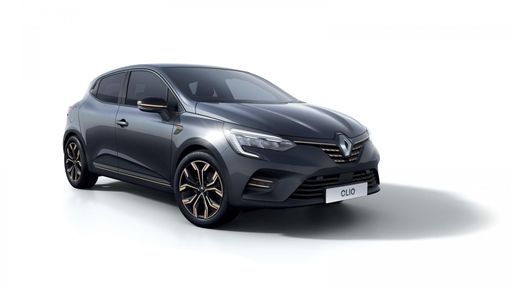
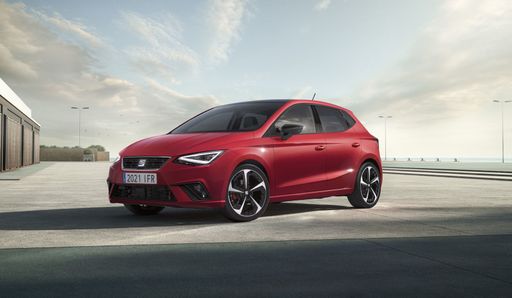
Renault Clio VS SEAT Ibiza sets up a familiar city-versus-country tension: the Clio brings hybrid efficiency and modern infotainment, while the Ibiza trades some digital polish for more interior room and a livelier driving character. The Renault Clio feels like a tech-forward compact that prioritises low running costs and calm highway manners. The SEAT Ibiza leans into space, simplicity and a more engaging chassis that rewards enthusiastic cornering. This comparison looks beyond specs to show how those differences matter on daily routes, school runs and weekend trips.
Clio

Character and driving feel

The Renault Clio is composed and efficiency-led: its hybrid system smooths urban crawling and gives a relaxed, grown-up impression on the motorway, but the powertrain sometimes hesitates when you demand sudden punch. The SEAT Ibiza is more playful — lighter steering, crisper turn-in and a chassis that rewards a lively driver with direct feedback, especially in the sportier setups. That trade-off means Clio owners enjoy a quieter, less demanding drive while Ibiza drivers get more immediate engagement at the cost of a firmer ride and louder engine note. Choose Clio if you want serenity and economy; pick Ibiza if you prefer an agile, entertaining small car.

Ibiza

Cabin feel, practicality and daily usability

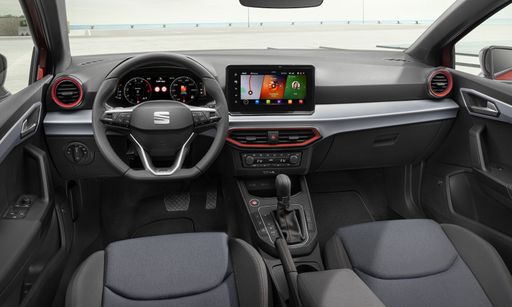
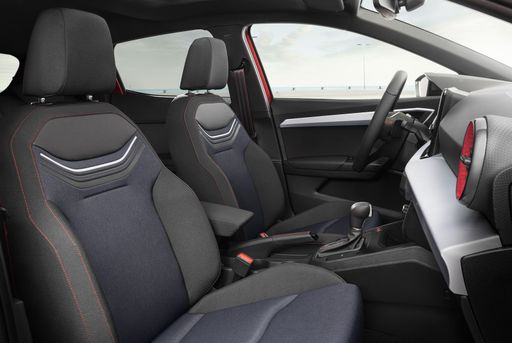
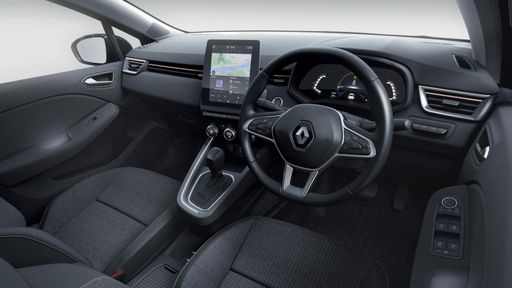
The Renault Clio presents a more modern cabin experience with a fluid, Google-based infotainment and convenient physical climate controls, but middle trims reveal visible hard plastics and a tighter rear bench. The SEAT Ibiza feels more utilitarian and straightforward: its cockpit is easy to use, materials are plain but solid, and the rear seats and boot are unusually generous for a small hatch. Practical knock-on effects are clear — Clio offers extra child-seat flexibility and tech perks for families who prioritise kids and connectivity, while Ibiza gives real advantage to shoppers who frequently load luggage or carry taller passengers. Both have high boot sills and a slight compromise in load ergonomics, but the Ibiza’s space wins out for everyday hauling.

Clio

City friendliness and manoeuvrability

In town the Renault Clio’s hybrid low-speed manners and compact footprint make stop-start driving less stressful and more economical, and its steering feels precise for urban lanes. The SEAT Ibiza is also city-capable thanks to good outward visibility and straightforward controls, but it can be a touch less nimble in very tight turns where its slightly larger turning circle shows. Practical parking is a toss-up: Clio benefits from its low-emissions urban mode and electronic aids, whereas Ibiza’s glass area and seat position give a more confident view when threading into tight spaces. If you value silent, low-cost commuting in congested streets, Clio has the edge; for visibility and simple ergonomics, Ibiza feels more reassuring.

Ibiza

Long-distance behaviour and comfort

On long runs the Renault Clio impresses with calm highway composure and notably lower fuel consumption when the hybrid system is doing the work, creating a relaxed long-distance cruiser for frequent motorway use. The SEAT Ibiza holds its own with supportive front seats and a chassis that remains composed, but larger wheels or sportier setups make it feel firmer and expose more road and engine noise at sustained speeds. For families planning long trips, Ibiza’s larger, well-shaped boot and generous rear legroom make loading and passenger comfort easier, while Clio’s quieter cabin and better economy reduce fatigue and running costs. The decision comes down to whether you prioritise rear passenger space and luggage capacity (Ibiza) or long-distance serenity and fuel efficiency (Clio).

Clio

Buyer fit and the trade-offs to consider

If your shopping list starts with the lowest running costs, a modern infotainment experience and relaxed motorway behaviour, the Renault Clio aligns cleanly with that brief and rewards commuters and small families who value tech and economy. If you need the most usable interior and boot space, straightforward ergonomics, and a more engaging drive for weekend routes, the SEAT Ibiza is the more practical, fun-to-drive choice and typically nudges the budget down at purchase. Both cars make sensible compromises — Clio trades rear space and some loading convenience for efficiency and polish, Ibiza trades refinement and high‑tech appeal for practicality and driving feel. Read the technical comparison next to match those trade-offs against the specific engines, cargo dimensions and equipment levels that matter for your everyday use.

Here’s where it gets real: The technical differences in detail

Ibiza

Costs and Efficiency:

Price and efficiency are key factors when choosing a car – and this is often where the real differences emerge.

SEAT Ibiza is marginally cheaper – starting at 16,800 £ , while the Renault Clio costs 17,100 £ . That’s a price difference of around 215 £.

Fuel consumption also shows a difference: the Renault Clio uses 4.1 L/100km and is noticeably more efficient than the SEAT Ibiza with 5 L/100km. The difference is about 0.9 L/100km.

Clio

Engine and Performance:

Under the bonnet, it becomes clear which model is tuned for sportiness and which one takes the lead when you hit the accelerator.

When it comes to engine power, the Renault Clio offers only slightly more power – delivering 158 HP compared to 150 HP. That’s roughly 8 HP more horsepower.

When accelerating from 0 to 100 km/h, the SEAT Ibiza is very slightly quicker – completing the sprint in 8.1 s, while the Renault Clio takes 8.3 s. That’s about 0.2 s quicker.

There’s also a difference in torque: the SEAT Ibiza delivers noticeably more torque with 250 Nm compared to 190 Nm. That’s about 60 Nm more.

Ibiza

Space and Everyday Use:

Whether family car or daily driver – which one offers more room, flexibility and comfort?

Both vehicles offer seating for 5 people.

In terms of curb weight, SEAT Ibiza is very slightly lighter – 1,111 kg compared to 1,202 kg. The difference is around 91 kg.

Looking at boot space, the SEAT Ibiza offers barely more boot space – 355 L compared to 327 L. That’s a difference of about 28 L.

When it comes to payload, the SEAT Ibiza carries somewhat more – 522 kg compared to 463 kg. That’s a difference of about 59 kg.

Who wins the race in the data check?

The Renault Clio is narrowly ahead in the objective data comparison.
This result only shows which model scores more points on paper – not which of the two cars feels right for you.

from £17,100
Clio

Renault Clio

  • Engine Type Petrol, Full Hybrid
  • Transmission Manuel, Automatic
  • Drive Type Front-Wheel Drive
  • Power HP 115 - 158 HP
  • Consumption L/100km 4.1 - 5.2 L/100km
SEAT Ibiza
Renault Clio

Costs and Consumption

View detailed analysis

Engine and Performance

View detailed analysis

Dimensions and Body

View detailed analysis

SEAT Ibiza

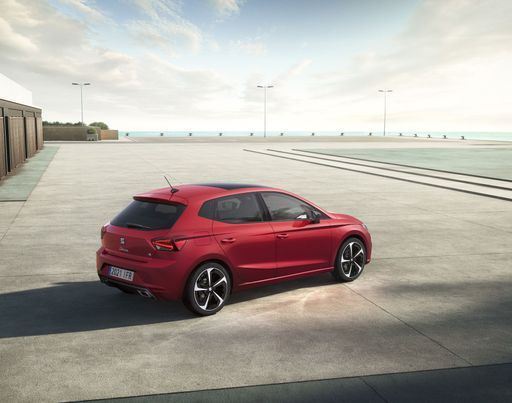
The SEAT Ibiza is a cheeky, well-priced hatchback that blends sharp styling with a grown-up driving character, making it a smart choice for city commuters who still want a bit of fun. Inside it's practical and neatly finished, with sensible kit and easygoing manners that make everyday life less fussy — a car that doesn't try too hard but gets the job done with a smile.

details

Renault Clio

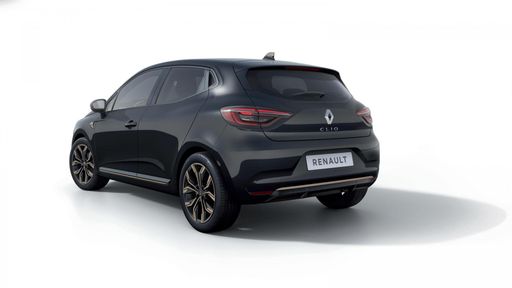
The Renault Clio is a smartly styled and practical compact hatch that feels at home in city traffic while offering a surprisingly refined ride. It pairs user-friendly tech and a comfortable interior with a reputation for being economical and easy to live with.

details
SEAT Ibiza
Renault Clio

Costs and Consumption

Price
16,800 - 28,600 £
Price
17,100 - 23,700 £
Consumption L/100km
5 - 5.7 L/100km
Consumption L/100km
4.1 - 5.2 L/100km
Consumption kWh/100km
-
Consumption kWh/100km
-
Electric Range
-
Electric Range
-
Battery Capacity
-
Battery Capacity
-
co2
114 - 128 g/km
co2
92 - 118 g/km
Fuel tank capacity
-
Fuel tank capacity
-

Dimensions and Body

Body Type
Hatchback
Body Type
Hatchback
Seats
5
Seats
5
Doors
-
Doors
-
Curb weight
1,111 - 1,231 kg
Curb weight
1,202 - 1,316 kg
Trunk capacity
355 L
Trunk capacity
301 - 327 L
Length
-
Length
-
Width
1,780 mm
Width
1,768 mm
Height
-
Height
-
Max trunk capacity
-
Max trunk capacity
-
Payload
489 - 522 kg
Payload
453 - 463 kg

Engine and Performance

Engine Type
Petrol
Engine Type
Petrol, Full Hybrid
Transmission
Manuel, Automatic
Transmission
Manuel, Automatic
Transmission Detail
Manual Gearbox, Dual-Clutch Automatic
Transmission Detail
Manual Gearbox, Dual-Clutch Automatic, Automatic Gearbox
Drive Type
Front-Wheel Drive
Drive Type
Front-Wheel Drive
Power HP
80 - 150 HP
Power HP
115 - 158 HP
Acceleration 0-100km/h
8.1 - 15.3 s
Acceleration 0-100km/h
8.3 - 10.3 s
Max Speed
-
Max Speed
-
Torque
95 - 250 Nm
Torque
190 Nm
Number of Cylinders
3 - 4
Number of Cylinders
3 - 4
Power kW
59 - 110 kW
Power kW
84 - 116 kW
Engine capacity
999 - 1,498 cm3
Engine capacity
1,199 - 1,789 cm3

General

Model Year
2025
Model Year
2026
CO2 Efficiency Class
D, C
CO2 Efficiency Class
C, D, B
Brand
SEAT
Brand
Renault
DriveDuel uses data analysis and artificial intelligence to evaluate vehicle data and create content. Content is regularly reviewed and improved. The displayed prices are estimates based on German list prices, adjusted to the respective country’s VAT. Country-specific registration taxes are not included. This information is not legally binding.