VS

Skoda Kamiq vs Audi Q2 comparison

Compare performance (150 HP vs 300 HP), boot space and price (22,300 £ vs 24,900 £ ) at a glance. Find out which car is the better choice for you – Skoda Kamiq or Audi Q2?

Skoda Kamiq vs Audi Q2: Key differences

Skoda Kamiq

5 (5 Reviews)
rate
  • somewhat cheaper
  • marginally lighter
details

Audi Q2

4.7 (4 Reviews)
rate
  • considerably more power
  • a bit more efficient
  • significantly quicker 0–100 km/h
  • barely more trunk space
details

All details on performance, efficiency, range and trunk space can be found in the technical comparison below – including user reviews for both models.

By Achim Sedelmaier

Kamiq

Overview: Audi Q2 VS Skoda Kamiq — compact SUVs with different priorities

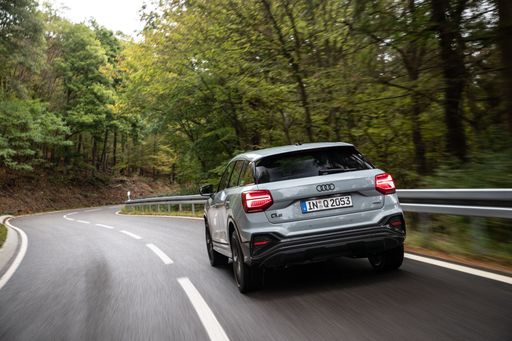
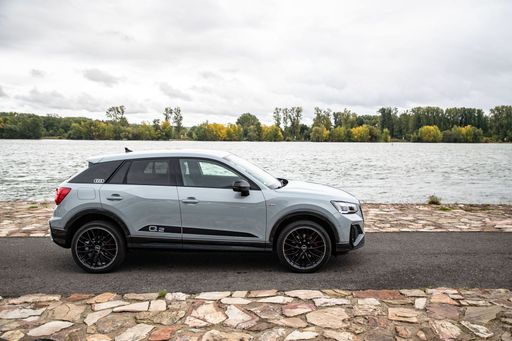
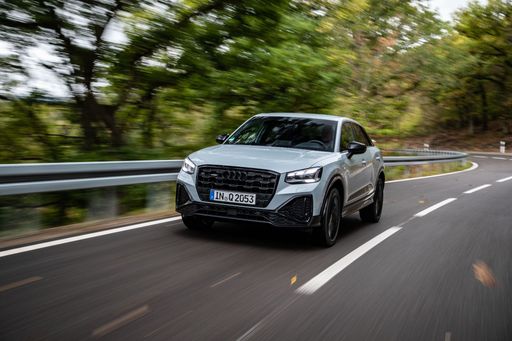
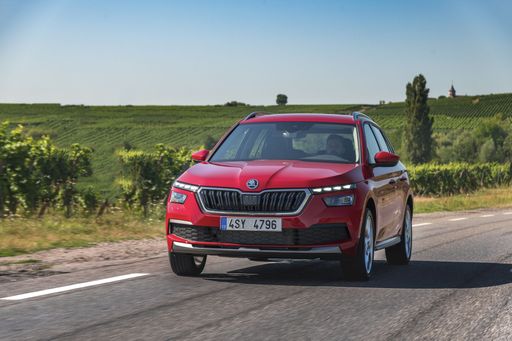
Audi Q2 VS Skoda Kamiq frames a clear choice between a compact premium-minded crossover and a pragmatic, room-first small SUV. The Audi Q2 sells a tighter, more polished cabin experience and a sharper driving demeanor, while the Skoda Kamiq sells space, everyday usefulness and lower running costs. Buyers quickly feel the trade-off: pay up for Audi styling, materials and sharper handling, or choose Skoda for bigger rear seats, smarter storage and better value. Both cars suit urban life, but they approach it from opposite angles — prestige and poise versus plain‑spoken practicality.
Q2

Character and driving: agility versus calm confidence

The Audi Q2 drives with a firmer, more direct edge that rewards someone who values crisp turn‑in and a planted feel through bends. The Skoda Kamiq is calmer, with softer suspension tuning and a more relaxed steering weight that privileges comfort over cornering thrills. That means the Q2 feels more engaging on twisty roads and confident at higher speeds, whereas the Kamiq soaks up everyday imperfections and lets occupants arrive less fatigued. Both can feel a little jerky at very low speeds due to their dual‑clutch gearboxes, but the sensation is more noticeable in different situations depending on which gearbox mapping you experience. Choose Q2 if you want a sprightlier, premium drive; pick Kamiq if you want forgiving, easygoing manners for daily miles.

Kamiq

Comfort and long‑distance behavior: taut premium or roomy serenity

On long trips the Skoda Kamiq leans into comfort and low running noise, making motorway miles feel undemanding and efficient. The Audi Q2 offers supportive front seats and a composed highway presence, but its suspension is firmer and large wheels can transmit more buzz and sharpness into the cabin. Practically, the Kamiq’s real-world fuel friendliness and calmer ride reduce fatigue and stops on long runs, while the Q2 trades some of that for sharper body control and a generally more refined petrol engine feel. Noise levels depend on engine choice, so a quieter Q2 petrol will narrow the gap, yet the Kamiq’s overall serenity and fuel economy tend to favour long-distance practicality. Think of the Kamiq as the less tiring long-haul companion and the Q2 as the more alert, premium cruiser.

Q2

Cabin, controls and perceived quality: premium polish vs clever simplicity

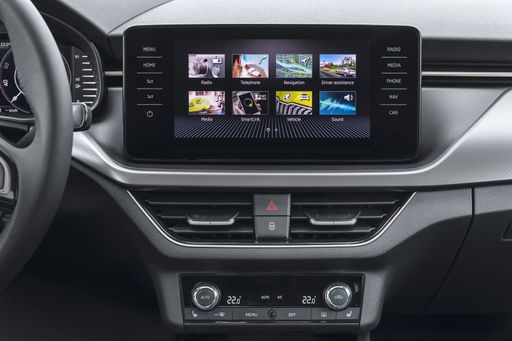
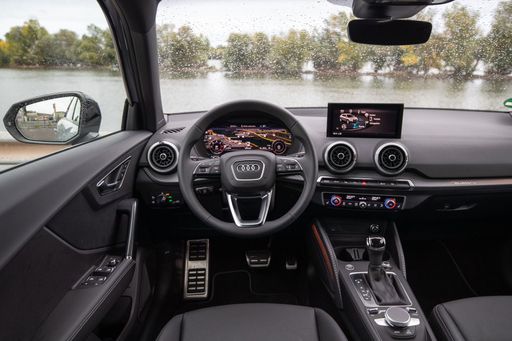
The Audi Q2 makes a stronger first impression with upscale switchgear and a design that reads as more premium, although hard plastics are still present in less visible areas. The Skoda Kamiq trades gloss for usefulness: large door openings, clear climate knobs and numerous small storage solutions that make everyday life easier. Infotainment is a split story — the Q2 benefits from a newer touchscreen and virtual cockpit in recent updates, while the Kamiq’s system is straightforward but can feel laggy and inconsistent depending on trim. In short, Audi Q2 feels polished and deliberate in its interface, whereas Skoda Kamiq feels pragmatic and functional; one impresses on touch and finish, the other on everyday ergonomics and clever details.

Kamiq

Practicality and usability: rear‑seat real estate and boot usability

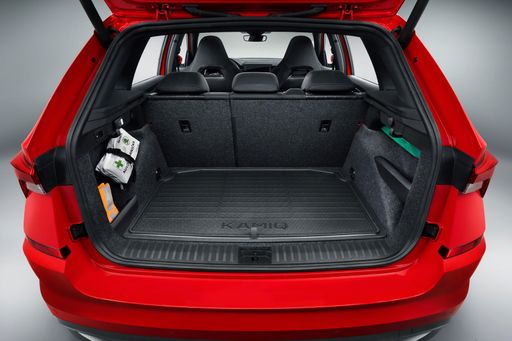
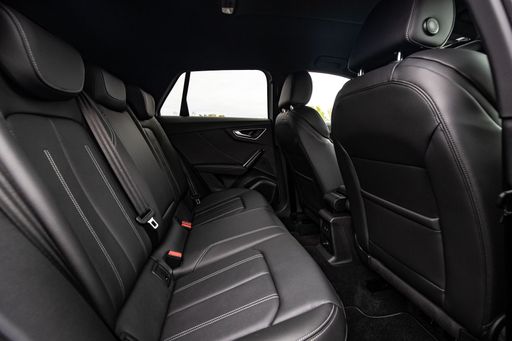
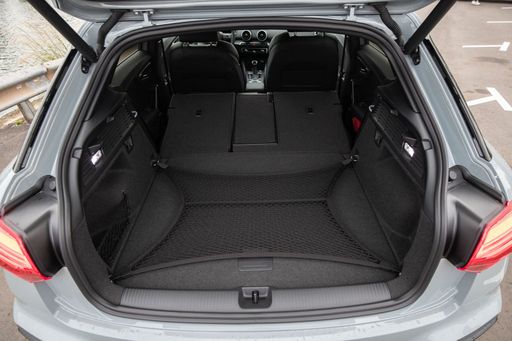
If rear-seat space and easy loading are priorities, the Skoda Kamiq is the more practical choice with noticeably more legroom, wider rear access and clever storage items that families will appreciate. The Audi Q2 offers a neat, well-shaped boot with optional load-floor features that help on occasion, but rear passenger space is tighter and door openings are less generous. That difference matters in daily situations — child seats, booster cushions and tall passengers are more comfortably accommodated in the Kamiq, while the Q2 suits smaller crews who prize a premium cabin and compact exterior. Pricing also tilts the decision: the Kamiq starts from a lower position, so you often get more usable kit or space for the same money compared with the Q2. Ultimately, Kamiq favours usability and value, Q2 favours style and a tighter footprint.

Q2

Buyer fit: which shopper should test which car next

If you’re a city professional or buyer who values badge, tactile materials and a sharper driving experience, the Audi Q2 will feel like a small premium coupé‑SUV and reward that preference. If your priority is rear-seat space, low running costs, and a no‑nonsense, family‑friendly interior, the Skoda Kamiq will more often hit the practical sweet spot without theatrics. Both cars have trade-offs in infotainment and gearbox manners, so your test drive should focus on the gearbox behaviour at low speed and the rear‑seat comfort with the people you carry most. Read on to the technical comparison for the detailed engine, consumption and dimension differences that make those everyday trade-offs concrete for purchase decisions.

Here’s where it gets real: The technical differences in detail

Kamiq

Costs and Efficiency:

Price and efficiency are often the first things buyers look at. Here it becomes clear which model has the long-term edge – whether at the pump, the plug, or in purchase price.

Skoda Kamiq is somewhat cheaper – starting at 22,300 £ , while the Audi Q2 costs 24,900 £ . That’s a price difference of around 2,589 £.

Fuel consumption also shows a difference: the Audi Q2 uses 4.8 L/100km and is a bit more efficient than the Skoda Kamiq with 5.3 L/100km. The difference is about 0.5 L/100km.

Q2

Engine and Performance:

Power, torque and acceleration are the classic benchmarks for car enthusiasts – and here, some clear differences start to show.

When it comes to engine power, the Audi Q2 offers considerably more power – delivering 300 HP compared to 150 HP. That’s roughly 150 HP more horsepower.

When accelerating from 0 to 100 km/h, the Audi Q2 is significantly quicker – completing the sprint in 4.9 s, while the Skoda Kamiq takes 8.1 s. That’s about 3.2 s quicker.

There’s also a difference in torque: the Audi Q2 delivers visibly more torque with 400 Nm compared to 250 Nm. That’s about 150 Nm more.

Kamiq

Space and Everyday Use:

Cabin size, boot volume and payload all play a role in everyday practicality. Here, comfort and flexibility make the difference.

Both vehicles offer seating for 5 people.

In terms of curb weight, Skoda Kamiq is marginally lighter – 1,231 kg compared to 1,330 kg. The difference is around 99 kg.

Looking at boot space, the Audi Q2 offers barely more boot space – 405 L compared to 400 L. That’s a difference of about 5 L.

When it comes to payload, the Skoda Kamiq carries marginally more – 539 kg compared to 510 kg. That’s a difference of about 29 kg.

Who wins the race in the data check?

The Audi Q2 holds a decisive overall lead in the objective data comparison.
This result only shows which model scores more points on paper – not which of the two cars feels right for you.

from £24,900
Q2

Audi Q2

  • Engine Type Petrol, Diesel
  • Transmission Manuel, Automatic
  • Drive Type Front-Wheel Drive, All-Wheel Drive
  • Power HP 116 - 300 HP
  • Consumption L/100km 4.8 - 8.1 L/100km
Skoda Kamiq
Audi Q2

Costs and Consumption

View detailed analysis

Engine and Performance

View detailed analysis

Dimensions and Body

View detailed analysis

Skoda Kamiq

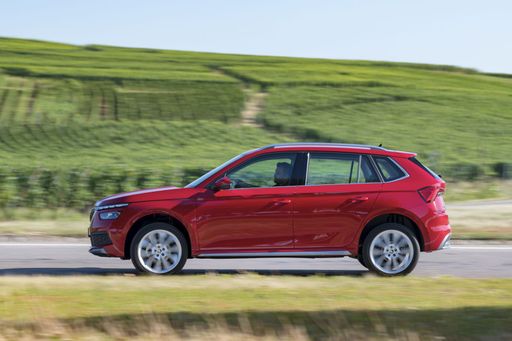
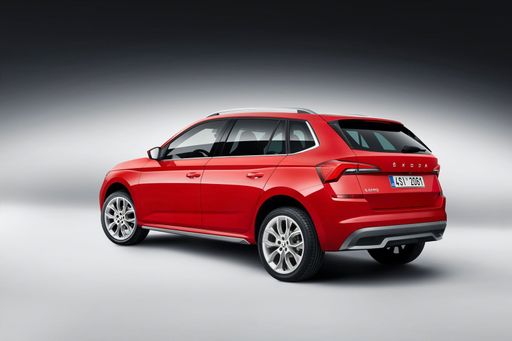
The Skoda Kamiq is a practical, well-built small crossover that mixes city-friendly manners with surprisingly versatile interior space and clever storage solutions. It offers a comfortable ride, user-friendly technology and solid value, making it a sensible choice for everyday driving.

details

Audi Q2

The Audi Q2 packs Audi’s premium attitude into a compact, cheeky package that turns city streets into a runway for tasteful design and clever practicality. It’s an easy car to live with thanks to an upscale cabin, composed manners and sprightly handling, and while it won’t satisfy someone chasing sports-car thrills, it’s a smart, stylish pick for buyers who want substance with a wink.

details
Skoda Kamiq
Audi Q2

Costs and Consumption

Price
22,300 - 32,700 £
Price
24,900 - 43,600 £
Consumption L/100km
5.3 - 5.7 L/100km
Consumption L/100km
4.8 - 8.1 L/100km
Consumption kWh/100km
-
Consumption kWh/100km
-
Electric Range
-
Electric Range
-
Battery Capacity
-
Battery Capacity
-
co2
121 - 128 g/km
co2
127 - 183 g/km
Fuel tank capacity
-
Fuel tank capacity
-

Dimensions and Body

Body Type
SUV
Body Type
SUV
Seats
5
Seats
5
Doors
-
Doors
-
Curb weight
1,231 - 1,340 kg
Curb weight
1,330 - 1,610 kg
Trunk capacity
400 L
Trunk capacity
355 - 405 L
Length
-
Length
-
Width
1,793 mm
Width
1,794 - 1,802 mm
Height
-
Height
-
Max trunk capacity
-
Max trunk capacity
-
Payload
439 - 539 kg
Payload
450 - 510 kg

Engine and Performance

Engine Type
Petrol
Engine Type
Petrol, Diesel
Transmission
Manuel, Automatic
Transmission
Manuel, Automatic
Transmission Detail
Manual Gearbox, Dual-Clutch Automatic
Transmission Detail
Manual Gearbox, Dual-Clutch Automatic
Drive Type
Front-Wheel Drive
Drive Type
Front-Wheel Drive, All-Wheel Drive
Power HP
95 - 150 HP
Power HP
116 - 300 HP
Acceleration 0-100km/h
8.1 - 11 s
Acceleration 0-100km/h
4.9 - 10.5 s
Max Speed
-
Max Speed
-
Torque
175 - 250 Nm
Torque
200 - 400 Nm
Number of Cylinders
3 - 4
Number of Cylinders
3 - 4
Power kW
70 - 110 kW
Power kW
85 - 221 kW
Engine capacity
999 - 1,498 cm3
Engine capacity
999 - 1,984 cm3

General

Model Year
2025
Model Year
2025
CO2 Efficiency Class
D
CO2 Efficiency Class
D, F, E, G
Brand
Skoda
Brand
Audi
DriveDuel uses data analysis and artificial intelligence to evaluate vehicle data and create content. Content is regularly reviewed and improved. The displayed prices are estimates based on German list prices, adjusted to the respective country’s VAT. Country-specific registration taxes are not included. This information is not legally binding.