VS

Skoda Kamiq vs Dacia Duster comparison

Compare performance (150 HP vs 158 HP), boot space and price (22,300 £ vs 16,300 £ ) at a glance. Find out which car is the better choice for you – Skoda Kamiq or Dacia Duster?

Skoda Kamiq vs Dacia Duster: Key differences

Skoda Kamiq

5 (5 Reviews)
rate
  • somewhat quicker 0–100 km/h
  • slightly lighter

Dacia Duster

5 (2 Reviews)
rate
  • visibly cheaper
  • only slightly more power
  • somewhat more efficient
  • clearly more trunk space

All details on performance, efficiency, range and trunk space can be found in the technical comparison below – including user reviews for both models.

Kamiq

Introduction

In the increasingly competitive compact SUV segment, two models stand out for their distinctive features and capabilities: the Dacia Duster and the Skoda Kamiq. Both vehicles come with a range of engines, impressive specifications, and innovations designed to enhance the driving experience. This article delves into a detailed comparison of the Duster and Kamiq, examining their technical specifications, innovations, and overall value.

Duster

Design and Dimensions

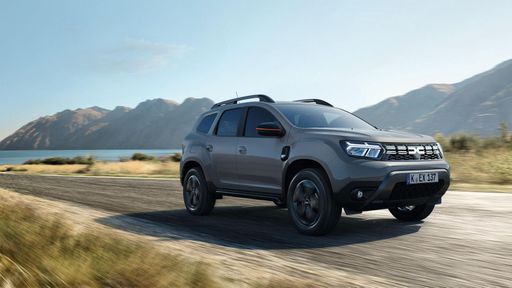
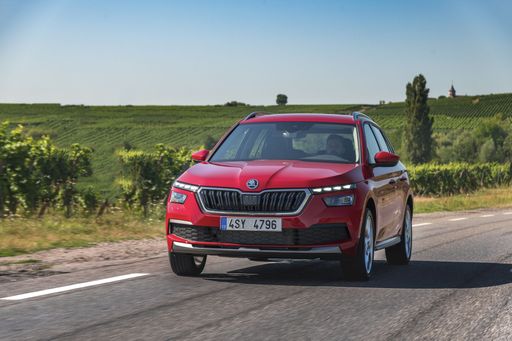
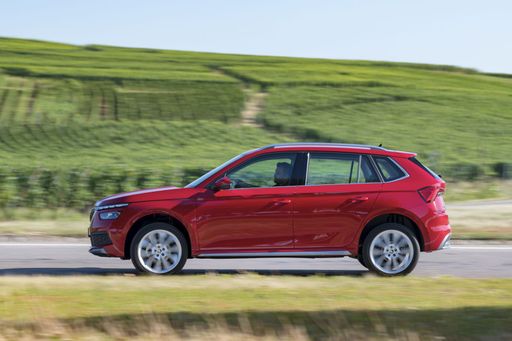
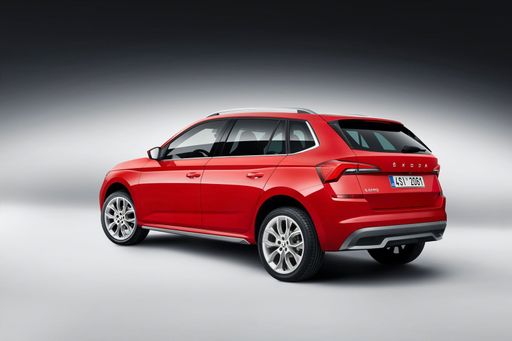
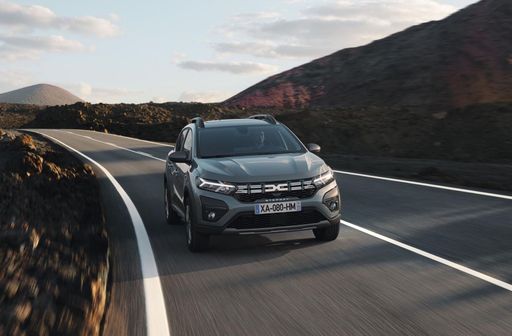
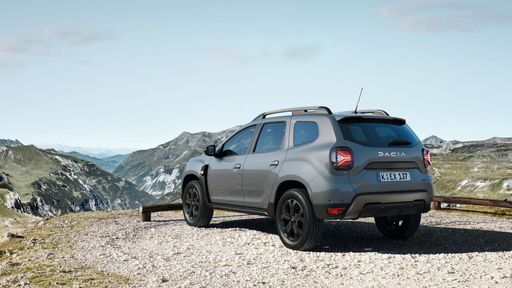
The Dacia Duster presents a rugged, no-nonsense SUV look, while the Skoda Kamiq boasts a more refined and modern design. The Duster measures 4343 mm in length and 1813 mm in width, giving it a robust stance on the road. In contrast, the Kamiq is slightly shorter at 4241 mm and narrower at 1793 mm. Both vehicles cater to users looking for practicality, but the Duster's taller height of 1656 mm (compared to the Kamiq's 1562 mm) can provide a commanding view of the road and added interior headroom.

Kamiq

Powertrain and Performance

When it comes to powertrains, the Dacia Duster offers a broader range of choices. Customers can select from LPG, full hybrid, or petrol MHEV engines, with power outputs ranging from 91 to 140 HP. This versatility allows for greater customization according to the driver’s needs. Additionally, it supports both manual and automatic transmissions alongside options for front-wheel and all-wheel drive, catering to various driving preferences.

The Skoda Kamiq, on the other hand, focuses on petrol engines, offering power ranging from 95 to 150 HP. It features manual and dual-clutch automatic transmissions, but its front-wheel-drive system may limit some off-road capabilities compared to the all-wheel-drive options available with the Duster. Both vehicles exhibit impressive performance, with the Duster achieving 0-100 km/h in as little as 9.9 seconds, while the Kamiq can reach the same benchmark in as little as 8.3 seconds.

Duster

Fuel Efficiency and Environmental Impact

In today's environmentally conscious market, fuel efficiency is paramount. The Dacia Duster showcases competitive fuel consumption figures, with traditional petrol engines achieving between 5 to 8.1 L/100km, complemented by its lower CO2 emissions of up to 127 g/km. The fuel tank capacity of 50-55 L allows for respectable ranges between refueling.

The Skoda Kamiq, with its petrol engine lineup, provides slightly better consumption figures, ranging from 5.4 to 5.7 L/100km. With a similar fuel tank capacity of 50 L, the Kamiq can cover extensive distances on a single tank, making it a practical choice for frequent travelers.

Kamiq

Interior Space and Comfort

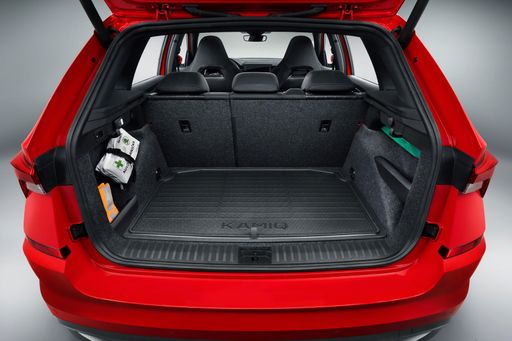
Inside, both the Duster and Kamiq offer ample seating for five passengers, although the Duster's trunk capacity varies between 430 to 517 L, depending on the configuration. This range makes it a strong contender for those who prioritize cargo space. Meanwhile, the Kamiq offers 400 L of boot space, which is still commendable but slightly less than the Duster.

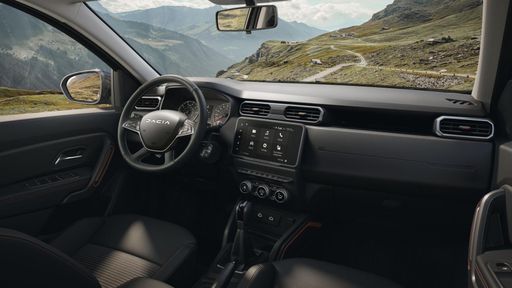
Furthermore, the interior of the Kamiq often receives praise for its high-quality materials and user-friendly layout, enhancing overall comfort. The Duster, while more utilitarian, still provides adequate comfort for passengers and focuses on functionality, making it an excellent option for adventurous families.

Duster

Innovative Features and Technology

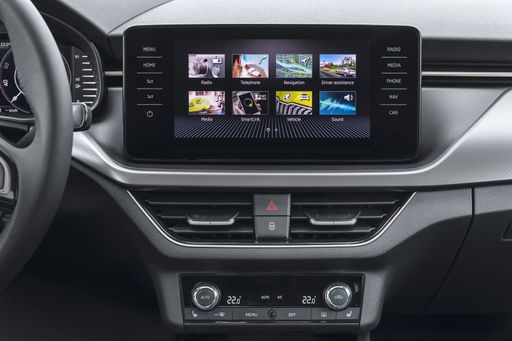
In terms of technological advancements, both vehicles come equipped with a range of driver-assistance systems. The Dacia Duster incorporates modern infotainment options but tends to focus more on reliability than luxury. On the other hand, the Skoda Kamiq steps up with more advanced options, such as a customizable digital cockpit and enhanced connectivity features, which appeal to tech-savvy drivers.

Kamiq

Conclusion: Which SUV is Right for You?

Choosing between the Dacia Duster and the Skoda Kamiq ultimately comes down to individual priorities. The Duster excels in versatility and cargo space, making it ideal for families and outdoor enthusiasts. Meanwhile, the Kamiq stands out with its refined styling, advanced technology, and slightly better fuel efficiency. Each model has its strengths, so potential buyers should consider their specific needs and preferences when making a decision. Whether you lean towards practicality or a touch of sophistication, both the Duster and Kamiq offer compelling options in the compact SUV market.

Here’s where it gets real: The technical differences in detail

Kamiq

Costs and Efficiency:

Price and efficiency are often the first things buyers look at. Here it becomes clear which model has the long-term edge – whether at the pump, the plug, or in purchase price.

Dacia Duster is visibly cheaper – starting at 16,300 £ , while the Skoda Kamiq costs 22,300 £ . That’s a price difference of around 5,991 £.

Fuel consumption also shows a difference: the Dacia Duster uses 4.7 L/100km and is somewhat more efficient than the Skoda Kamiq with 5.3 L/100km. The difference is about 0.6 L/100km.

Duster

Engine and Performance:

Power, torque and acceleration are the classic benchmarks for car enthusiasts – and here, some clear differences start to show.

When it comes to engine power, the Dacia Duster offers only slightly more power – delivering 158 HP compared to 150 HP. That’s roughly 8 HP more horsepower.

When accelerating from 0 to 100 km/h, the Skoda Kamiq is somewhat quicker – completing the sprint in 8.1 s, while the Dacia Duster takes 9.4 s. That’s about 1.3 s quicker.

Looking at top speed, the Skoda Kamiq is moderately faster – reaching 216 km/h, while the Dacia Duster tops out at 180 km/h. The difference is around 36 km/h.

There’s also a difference in torque: the Skoda Kamiq delivers barely more torque with 250 Nm compared to 230 Nm. That’s about 20 Nm more.

Kamiq

Space and Everyday Use:

Beyond pure performance, interior space and usability matter most in daily life. This is where you see which car is more practical and versatile.

Both vehicles offer seating for 5 people.

In terms of curb weight, Skoda Kamiq is slightly lighter – 1,231 kg compared to 1,377 kg. The difference is around 146 kg.

Looking at boot space, the Dacia Duster offers clearly more boot space – 517 L compared to 400 L. That’s a difference of about 117 L.

For maximum load capacity, the Dacia Duster offers moderately more capacity – up to 1,609 L, about 214 L more than the Skoda Kamiq.

When it comes to payload, the Skoda Kamiq carries moderately more – 539 kg compared to 453 kg. That’s a difference of about 86 kg.

Who wins the race in the data check?

The Dacia Duster is clearly ahead overall in the objective data comparison.
This result only shows which model scores more points on paper – not which of the two cars feels right for you.

from £16,300
Duster

Dacia Duster

  • Engine Type : Petrol MHEV, Full Hybrid, LPG
  • Transmission : Manuel, Automatic
  • Drive Type : Front-Wheel Drive, All-Wheel Drive
  • Power HP : 115 - 158 HP
  • Consumption L/100km : 4.7 - 7.6 L/100km
Skoda Kamiq
Dacia Duster

Costs and Consumption

View detailed analysis

Engine and Performance

View detailed analysis

Dimensions and Body

View detailed analysis

Skoda Kamiq

The Skoda Kamiq is a neatly packaged city crossover that pairs practical space with unshowy, thoughtful design. It’s easy to live with, economical to run and full of clever details that make daily driving feel intelligently sorted rather than flashy.

details

Dacia Duster

The Dacia Duster is a no-nonsense compact SUV that delivers rugged practicality and surprisingly comfortable everyday driving without fuss. It might not win any beauty contests, but its honest design, easy-to-live-with cabin and tough attitude make it a smart pick for buyers who want reliable transport without luxury frills.

details
Skoda Kamiq
Dacia Duster

Costs and Consumption

Price
22,300 - 32,700 £
Price
16,300 - 24,900 £
Consumption L/100km
5.3 - 5.7 L/100km
Consumption L/100km
4.7 - 7.6 L/100km
Consumption kWh/100km
-
Consumption kWh/100km
-
Electric Range
-
Electric Range
-
Battery Capacity
-
Battery Capacity
0.6 kWh
co2
121 - 128 g/km
co2
107 - 140 g/km
Fuel tank capacity
50 L
Fuel tank capacity
50 L

Dimensions and Body

Body Type
SUV
Body Type
SUV
Seats
5
Seats
5
Doors
5
Doors
5
Curb weight
1,231 - 1,340 kg
Curb weight
1,377 - 1,455 kg
Trunk capacity
400 L
Trunk capacity
348 - 517 L
Length
4,241 mm
Length
4,343 mm
Width
1,793 mm
Width
1,813 mm
Height
1,562 mm
Height
1,656 - 1,659 mm
Max trunk capacity
1,395 L
Max trunk capacity
1,414 - 1,609 L
Payload
439 - 539 kg
Payload
402 - 453 kg

Engine and Performance

Engine Type
Petrol
Engine Type
Petrol MHEV, Full Hybrid, LPG
Transmission
Manuel, Automatic
Transmission
Manuel, Automatic
Transmission Detail
Manual Gearbox, Dual-Clutch Automatic
Transmission Detail
Manual Gearbox, Automated Manual, Dual-Clutch Automatic
Drive Type
Front-Wheel Drive
Drive Type
Front-Wheel Drive, All-Wheel Drive
Power HP
95 - 150 HP
Power HP
115 - 158 HP
Acceleration 0-100km/h
8.1 - 11 s
Acceleration 0-100km/h
9.4 - 11.7 s
Max Speed
183 - 216 km/h
Max Speed
180 km/h
Torque
175 - 250 Nm
Torque
190 - 230 Nm
Number of Cylinders
3 - 4
Number of Cylinders
3 - 4
Power kW
70 - 110 kW
Power kW
84 - 116 kW
Engine capacity
999 - 1,498 cm3
Engine capacity
1,199 - 1,789 cm3

General

Model Year
2,025
Model Year
2,025 - 2,026
CO2 Efficiency Class
D
CO2 Efficiency Class
D, C
Brand
Skoda
Brand
Dacia
DriveDuel uses data analysis and artificial intelligence to evaluate vehicle data and create content. Content is regularly reviewed and improved. The displayed prices are estimates based on German list prices, adjusted to the respective country’s VAT. Country-specific registration taxes are not included. This information is not legally binding.