VS

Skoda Kamiq vs Kia Stonic comparison

Compare performance (150 HP vs 115 HP), boot space and price (22,300 £ vs 20,100 £ ) at a glance. Find out which car is the better choice for you – Skoda Kamiq or Kia Stonic?

Skoda Kamiq vs Kia Stonic: Key differences

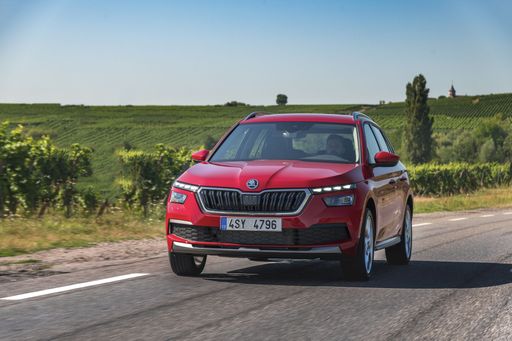
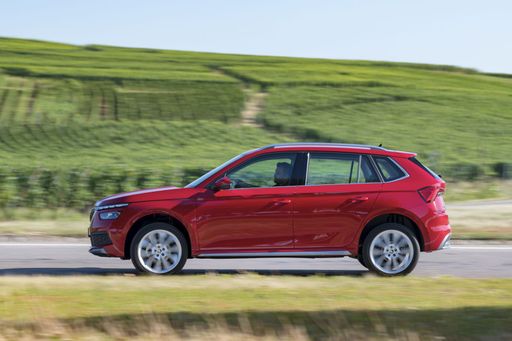
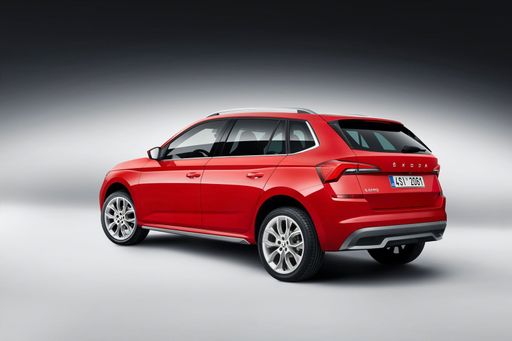
Skoda Kamiq

5 (5 Reviews)
rate
  • markedly more power
  • barely more efficient
  • markedly quicker 0–100 km/h
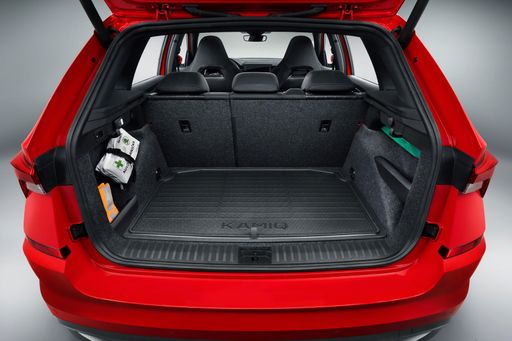
  • moderately more trunk space

Kia Stonic

4.6 (2 Reviews)
rate
  • somewhat cheaper
  • barely lighter

All details on performance, efficiency, range and trunk space can be found in the technical comparison below – including user reviews for both models.

Kamiq

Kia Stonic vs Skoda Kamiq: A Head-to-Head Comparison

The compact SUV segment is rapidly growing in popularity, offering a blend of style, practicality, and technology. Two strong contenders in this arena are the Kia Stonic and the Skoda Kamiq. Both vehicles balance functionality with modern design, but which one stands out more in terms of technical specifications and innovative features? Let’s take a closer look.

Stonic

Technical Specifications: Engine and Performance

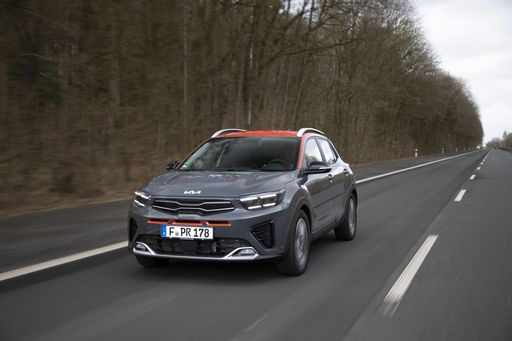
The Kia Stonic offers a choice of petrol and mild hybrid engines, with power outputs ranging from 79 HP to 100 HP. Its torque figures vary from 113 Nm to 172 Nm, providing adequate power for urban driving and highway cruising. Acceleration from 0-100 km/h is reasonable, clocking in at between 11.3 and 14.2 seconds, depending on the variant selected. Top speeds reach up to 179 km/h, with a fuel consumption of approximately 5.5 to 5.8 L/100km.

On the other hand, the Skoda Kamiq boasts a more robust lineup of engines, with power outputs of 95 HP, 115 HP, and even a sporty 150 HP option. Its torque range is also impressive, with figures climbing up to 250 Nm in the higher-powered models. Acceleration is peppier in the Kamiq, especially with the fastest variant achieving 0-100 km/h in just 8.3 seconds. Thanks to slightly better fuel efficiency, the Kamiq records consumption figures as low as 5.4 L/100km.

Kamiq

Dimensions and Design

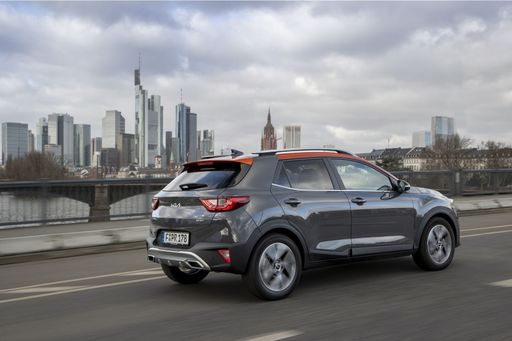
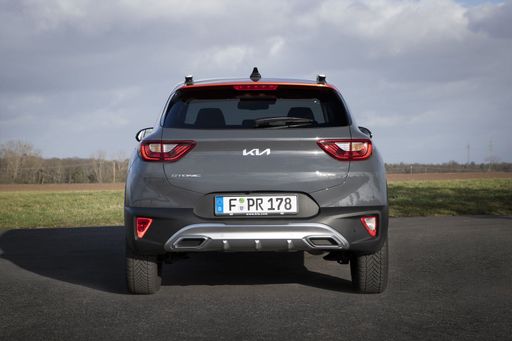
In terms of size, the Kia Stonic measures 4,140 mm in length, 1,760 mm in width, and stands 1,505 mm tall. It has a trunk capacity of 352 L, which is decent for a vehicle in this category. Meanwhile, the Skoda Kamiq is slightly larger at 4,241 mm long and 1,793 mm wide, with a height of 1,562 mm. It also offers more trunk space, boasting a capacity of 400 L—an essential advantage for families and individuals needing more cargo room.

Stonic

Interior Comfort and Technology

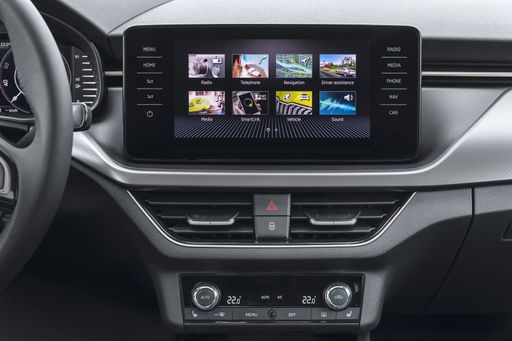
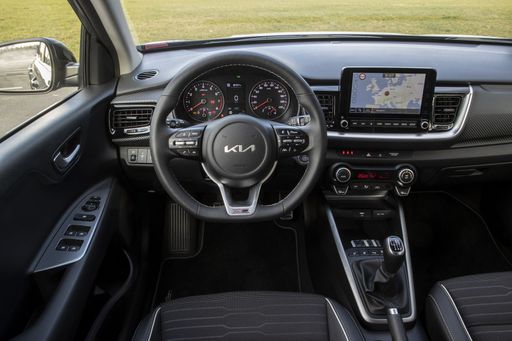
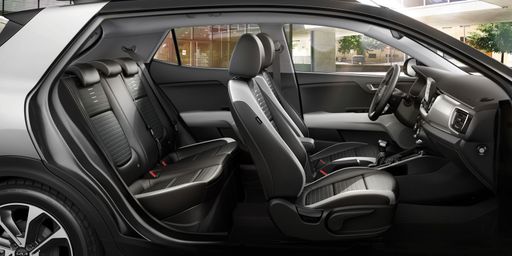
Inside the Kia Stonic, you’ll find pleasantly styled interiors boasting ample technology features. It’s outfitted with an intuitive infotainment system supporting Apple CarPlay and Android Auto. Versatile seat arrangements and a well-designed dashboard layout enhance the overall driving experience. However, it does face challenges when it comes to overall interior noise insulation at higher speeds.

In contrast, the Skoda Kamiq excels in interior quality, featuring high-end materials and a refined design. The Kamiq's infotainment system is user-friendly and comes with a range of advanced tech features, such as a digital driver's display and superior connectivity options. Additionally, the Kamiq promises a quieter cabin, making it an excellent choice for longer journeys.

Kamiq

Safety Features and Innovations

Safety is of paramount importance in this segment. The Kia Stonic is equipped with several advanced safety features, including lane-keeping assist, automatic emergency braking, and a comprehensive airbag system. Its safety ratings are commendable, often earning high marks in crash tests.

The Skoda Kamiq doesn't fall behind in this aspect either, offering similar safety tech alongside features like blind-spot monitoring, adaptive cruise control, and traffic sign recognition. These innovations enhance driver confidence and ensure a safer driving experience irrespective of the conditions.

Stonic

Conclusion: Which SUV Reigns Supreme?

Ultimately, both the Kia Stonic and Skoda Kamiq present compelling cases for buyers in the compact SUV market. The Stonic appeals with its sporty design and value for money, while the Kamiq shines through its spaciousness, performance options, and superior tech features. Potential buyers will need to assess their personal preferences—be it sporty driving dynamics or a quieter, more comfortable ride—before making the final choice.

Regardless of your decision, both vehicles reflect the current trends in the automotive industry, blending style, practicality, and advanced technology to meet the needs of today’s consumers.

Here’s where it gets real: The technical differences in detail

Kamiq

Costs and Efficiency:

When it comes to price and running costs, the biggest differences usually appear. This is often where you see which car fits your budget better in the long run.

Kia Stonic is somewhat cheaper – starting at 20,100 £ , while the Skoda Kamiq costs 22,300 £ . That’s a price difference of around 2,134 £.

Fuel consumption also shows a difference: the Skoda Kamiq uses 5.3 L/100km and is barely more efficient than the Kia Stonic with 5.6 L/100km. The difference is about 0.3 L/100km.

Stonic

Engine and Performance:

Power, torque and acceleration say a lot about how a car feels on the road. This is where you see which model delivers more driving dynamics.

When it comes to engine power, the Skoda Kamiq offers markedly more power – delivering 150 HP compared to 115 HP. That’s roughly 35 HP more horsepower.

When accelerating from 0 to 100 km/h, the Skoda Kamiq is markedly quicker – completing the sprint in 8.1 s, while the Kia Stonic takes 10.7 s. That’s about 2.6 s quicker.

Looking at top speed, the Skoda Kamiq is moderately faster – reaching 216 km/h, while the Kia Stonic tops out at 182 km/h. The difference is around 34 km/h.

There’s also a difference in torque: the Skoda Kamiq delivers somewhat more torque with 250 Nm compared to 200 Nm. That’s about 50 Nm more.

Kamiq

Space and Everyday Use:

Whether family car or daily driver – which one offers more room, flexibility and comfort?

Both vehicles offer seating for 5 people.

In terms of curb weight, Kia Stonic is barely lighter – 1,205 kg compared to 1,231 kg. The difference is around 26 kg.

Looking at boot space, the Skoda Kamiq offers moderately more boot space – 400 L compared to 352 L. That’s a difference of about 48 L.

For maximum load capacity, the Skoda Kamiq offers a bit more capacity – up to 1,395 L, about 240 L more than the Kia Stonic.

When it comes to payload, the Skoda Kamiq carries somewhat more – 539 kg compared to 445 kg. That’s a difference of about 94 kg.

Who wins the race in the data check?

The Skoda Kamiq is far ahead overall in the objective data comparison.
This result only shows which model scores more points on paper – not which of the two cars feels right for you.

from £22,300
Kamiq

Skoda Kamiq

  • Engine Type : Petrol
  • Transmission : Manuel, Automatic
  • Drive Type : Front-Wheel Drive
  • Power HP : 95 - 150 HP
  • Consumption L/100km : 5.3 - 5.7 L/100km
Skoda Kamiq
Kia Stonic

Costs and Consumption

View detailed analysis

Engine and Performance

View detailed analysis

Dimensions and Body

View detailed analysis

Skoda Kamiq

The Skoda Kamiq is a neatly packaged city crossover that pairs practical space with unshowy, thoughtful design. It’s easy to live with, economical to run and full of clever details that make daily driving feel intelligently sorted rather than flashy.

details

Kia Stonic

The Kia Stonic is a sprightly compact crossover that mixes city-friendly agility with a cheeky, modern design — perfect for buyers who want style without sacrificing sense. Inside it serves up clever practicality and a bright, well-equipped cabin, making everyday driving feel a bit more fun than it has any right to be.

details
Skoda Kamiq
Kia Stonic

Costs and Consumption

Price
22,300 - 32,700 £
Price
20,100 - 26,600 £
Consumption L/100km
5.3 - 5.7 L/100km
Consumption L/100km
5.6 - 5.9 L/100km
Consumption kWh/100km
-
Consumption kWh/100km
-
Electric Range
-
Electric Range
-
Battery Capacity
-
Battery Capacity
-
co2
121 - 128 g/km
co2
127 - 133 g/km
Fuel tank capacity
50 L
Fuel tank capacity
45 L

Dimensions and Body

Body Type
SUV
Body Type
SUV
Seats
5
Seats
5
Doors
5
Doors
5
Curb weight
1,231 - 1,340 kg
Curb weight
1,205 - 1,270 kg
Trunk capacity
400 L
Trunk capacity
352 L
Length
4,241 mm
Length
4,165 mm
Width
1,793 mm
Width
1,760 mm
Height
1,562 mm
Height
1,520 mm
Max trunk capacity
1,395 L
Max trunk capacity
1,155 L
Payload
439 - 539 kg
Payload
440 - 445 kg

Engine and Performance

Engine Type
Petrol
Engine Type
Petrol, Petrol MHEV
Transmission
Manuel, Automatic
Transmission
Manuel, Automatic
Transmission Detail
Manual Gearbox, Dual-Clutch Automatic
Transmission Detail
Manual Gearbox, Dual-Clutch Automatic
Drive Type
Front-Wheel Drive
Drive Type
Front-Wheel Drive
Power HP
95 - 150 HP
Power HP
100 - 115 HP
Acceleration 0-100km/h
8.1 - 11 s
Acceleration 0-100km/h
10.7 - 12.1 s
Max Speed
183 - 216 km/h
Max Speed
179 - 182 km/h
Torque
175 - 250 Nm
Torque
172 - 200 Nm
Number of Cylinders
3 - 4
Number of Cylinders
3
Power kW
70 - 110 kW
Power kW
74 - 85 kW
Engine capacity
999 - 1,498 cm3
Engine capacity
998 cm3

General

Model Year
2,025
Model Year
2,025
CO2 Efficiency Class
D
CO2 Efficiency Class
D
Brand
Skoda
Brand
Kia
DriveDuel uses data analysis and artificial intelligence to evaluate vehicle data and create content. Content is regularly reviewed and improved. The displayed prices are estimates based on German list prices, adjusted to the respective country’s VAT. Country-specific registration taxes are not included. This information is not legally binding.