VS

Skoda Karoq vs Ford Kuga comparison

Compare performance (190 HP vs 243 HP), boot space and price (29,100 £ vs 34,200 £ ) at a glance. Find out which car is the better choice for you – Skoda Karoq or Ford Kuga?

Skoda Karoq vs Ford Kuga: Key differences

Skoda Karoq

4.6 (2 Reviews)
rate
  • slightly cheaper
  • very slightly quicker 0–100 km/h
  • slightly lighter

Ford Kuga

4.2 (6 Reviews)
rate
  • noticeably more power
  • significantly more efficient

All details on performance, efficiency, range and trunk space can be found in the technical comparison below – including user reviews for both models.

Karoq

Head-to-head: Ford Kuga VS Skoda Karoq — the compact-SUV showdown

Ford Kuga VS Skoda Karoq sits neatly under the umbrella of the compact crossover class, and this is where buyers stop scrolling and start measuring feelings as much as figures. If you want a quick sense of difference, think of the Ford Kuga as the more assertive, road-focused proposition and the Skoda Karoq as the quietly competent family-minded companion. This comparison page is built for shoppers who already know the names and need real-world contrasts — not just spec-sheets. Read on for how each car behaves in daily life, what owning one says about you, and which traits matter most on the road.
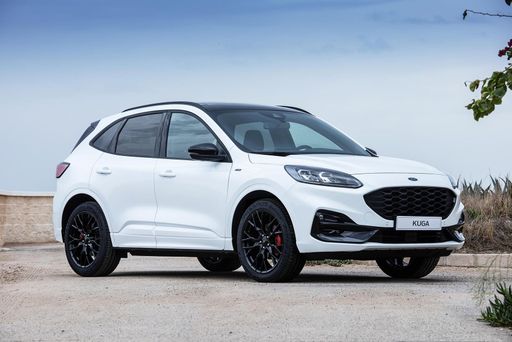
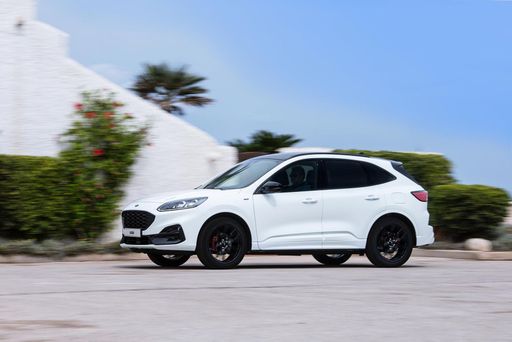
Kuga

Character clash: street-smart versus sensible

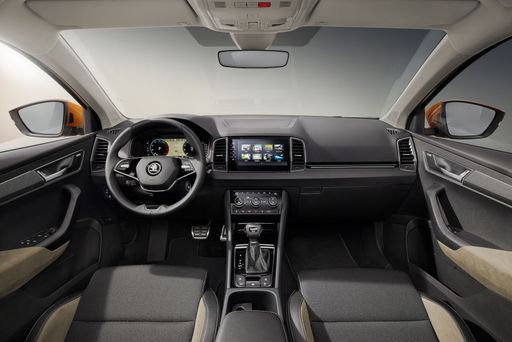
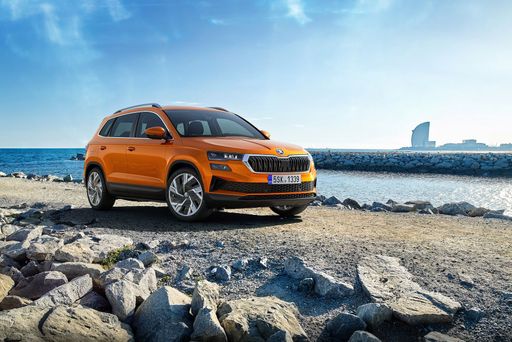
The Ford Kuga arrives with a more dynamic stance and a temperament that hints at driver engagement, while the Skoda Karoq trades drama for measured practicality and a calmer presence. Where the Kuga feels willing to hustle on twisty roads and rewards a firmer setup, the Karoq prefers predictability and a softer blend that puts passengers at ease. Materials and interior mood also diverge — the Kuga leans toward sporty touches and techy flair, the Karoq towards functional, tidy ergonomics that don’t shout for attention. Both have their charm, but they wear it differently: one is expressive, the other quietly assured.

Karoq

Daily life: commute, school runs and long weekends

For everyday use the Skoda Karoq tends to feel roomier and more serviceable in the kind of family-focused routines — groceries, car seats and weekend kit slot in with less fuss. The Ford Kuga rewards longer commutes and motorway miles with a composed, planted feel that makes extended driving less tiring. In tight city parking the Karoq’s friendly footprint and clear sightlines make urban chores less annoying, while the Kuga’s sharper manners suit buyers who mix city life with regular country roads. Practical differences are more about what you carry and how you enjoy the drive than any single headline stat.

Kuga

Buying for image: bragging rights or buttoned-down sense?

Choose the Ford Kuga if you want a car that signals a bit of sporty intent and modern tech — it shows up as the fresher, slightly more aspirational option in a driveway. Opt for the Skoda Karoq if understatement and sensible choices define your taste; it lands as dependable rather than flashy and rewards buyers who value functionality over fanfare. The Kuga plays well with those who like to be seen enjoying the route as much as the destination, the Karoq suits people who prefer their possessions to earn their keep every day. Both let you justify the purchase — but for very different reasons.

Karoq

Who should pick the Ford Kuga?

If your life involves long commutes, regular motorway miles or you simply enjoy a tauter driving experience, the Ford Kuga will feel like the more natural fit. It’s also attractive to buyers who want noticeable tech and a confident road presence without stepping up to a performance SUV. You’ll appreciate the Kuga if you prioritise a composed highway ride and a cabin that reads a touch more modern, even if that means slightly less emphasis on pure cargo flexibility. In short, the Kuga suits drivers who want to enjoy the journey as part of the purchase decision.

Kuga

Who should pick the Skoda Karoq — and where the Kuga still tempts

The Skoda Karoq is aimed at fuss-free family buyers and pragmatic owners who prize space, straightforward ergonomics and quiet day-to-day reliability, and it wears that sensible badge with confidence. If you value easy loading, clear practicality and a soothing, no-drama cabin, the Karoq will likely end the debate for you — though the Ford Kuga remains tempting if you sometimes crave a livelier drive. Neither choice is wrong, they’re just different tools for different lives, so scroll down to the technical section below to see which traits line up with your priorities.

Here’s where it gets real: The technical differences in detail

Karoq

Costs and Efficiency:

Looking at overall running costs, both models reveal some interesting differences in everyday economy.

Skoda Karoq is slightly cheaper – starting at 29,100 £ , while the Ford Kuga costs 34,200 £ . That’s a price difference of around 5,160 £.

Fuel consumption also shows a difference: the Ford Kuga uses 2.8 L/100km and is significantly more efficient than the Skoda Karoq with 4.9 L/100km. The difference is about 2.1 L/100km.

Kuga

Engine and Performance:

Under the bonnet, it becomes clear which model is tuned for sportiness and which one takes the lead when you hit the accelerator.

When it comes to engine power, the Ford Kuga offers noticeably more power – delivering 243 HP compared to 190 HP. That’s roughly 53 HP more horsepower.

When accelerating from 0 to 100 km/h, the Skoda Karoq is very slightly quicker – completing the sprint in 7 s, while the Ford Kuga takes 7.3 s. That’s about 0.3 s quicker.

There’s also a difference in torque: the Skoda Karoq delivers markedly more torque with 360 Nm compared to 240 Nm. That’s about 120 Nm more.

Karoq

Space and Everyday Use:

Beyond pure performance, interior space and usability matter most in daily life. This is where you see which car is more practical and versatile.

Both vehicles offer seating for 5 people.

In terms of curb weight, Skoda Karoq is slightly lighter – 1,380 kg compared to 1,526 kg. The difference is around 146 kg.

When it comes to payload, the Ford Kuga carries only slightly more – 550 kg compared to 549 kg. That’s a difference of about 1 kg.

Who wins the race in the data check?

The Ford Kuga holds a decisive overall lead in the objective data comparison.
This result only shows which model scores more points on paper – not which of the two cars feels right for you.

from £34,200
Kuga

Ford Kuga

  • Engine Type : Petrol, Full Hybrid, Plugin Hybrid
  • Transmission : Manuel, Automatic
  • Drive Type : Front-Wheel Drive, All-Wheel Drive
  • Power HP : 150 - 243 HP
  • Consumption L/100km : 2.8 - 6.8 L/100km
  • Electric Range : 68 km
Skoda Karoq
Ford Kuga

Costs and Consumption

View detailed analysis

Engine and Performance

View detailed analysis

Dimensions and Body

View detailed analysis

Skoda Karoq

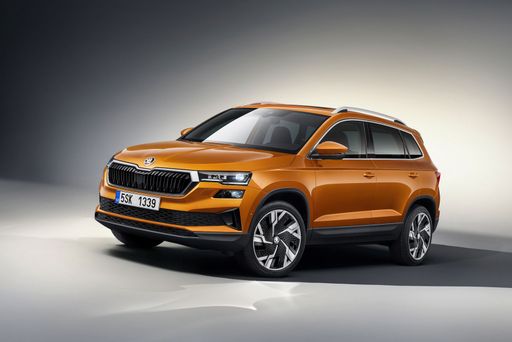
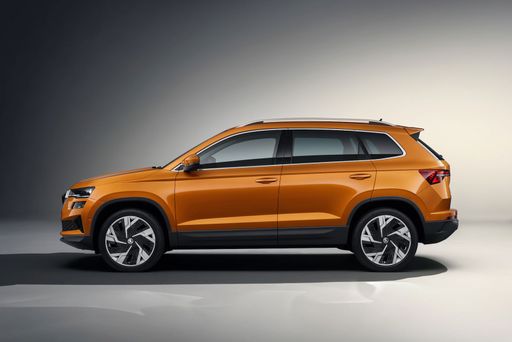
The Skoda Karoq is a smart, unfussy compact SUV that blends roomy practicality with a pleasantly composed driving character. It won’t turn heads at a car meet, but it will make daily life easier with clever storage, sensible ergonomics and a reassuringly grown-up ride.

details

Ford Kuga

The Kuga is Ford’s adaptable family SUV that blends usable space with a surprisingly lively driving character, making daily commutes and weekend escapes equally enjoyable. With smart interior packaging, an easy-to-use infotainment setup and composed road manners, it’s a sensible choice for buyers who want a bit of fun without the fuss.

details
Skoda Karoq
Ford Kuga

Costs and Consumption

Price
29,100 - 41,700 £
Price
34,200 - 46,300 £
Consumption L/100km
4.9 - 7.6 L/100km
Consumption L/100km
2.8 - 6.8 L/100km
Consumption kWh/100km
-
Consumption kWh/100km
-
Electric Range
-
Electric Range
68 km
Battery Capacity
-
Battery Capacity
-
co2
128 - 173 g/km
co2
55 - 154 g/km
Fuel tank capacity
50 - 55 L
Fuel tank capacity
-

Dimensions and Body

Body Type
SUV
Body Type
SUV
Seats
5
Seats
5
Doors
5
Doors
-
Curb weight
1,380 - 1,655 kg
Curb weight
1,526 - 1,859 kg
Trunk capacity
521 L
Trunk capacity
-
Length
4,390 mm
Length
-
Width
1,841 mm
Width
1,882 mm
Height
1,624 mm
Height
-
Max trunk capacity
1,630 L
Max trunk capacity
-
Payload
456 - 549 kg
Payload
541 - 550 kg

Engine and Performance

Engine Type
Petrol, Diesel
Engine Type
Petrol, Full Hybrid, Plugin Hybrid
Transmission
Manuel, Automatic
Transmission
Manuel, Automatic
Transmission Detail
Manual Gearbox, Dual-Clutch Automatic
Transmission Detail
Manual Gearbox, CVT, Automatic Gearbox
Drive Type
Front-Wheel Drive, All-Wheel Drive
Drive Type
Front-Wheel Drive, All-Wheel Drive
Power HP
115 - 190 HP
Power HP
150 - 243 HP
Acceleration 0-100km/h
7 - 11.2 s
Acceleration 0-100km/h
7.3 - 9.9 s
Max Speed
192 - 210 km/h
Max Speed
-
Torque
200 - 360 Nm
Torque
240 Nm
Number of Cylinders
3 - 4
Number of Cylinders
3 - 4
Power kW
85 - 140 kW
Power kW
111 - 178 kW
Engine capacity
999 - 1,984 cm3
Engine capacity
1,496 - 2,488 cm3

General

Model Year
2,025
Model Year
2,025
CO2 Efficiency Class
D, E, F
CO2 Efficiency Class
E, D, B
Brand
Skoda
Brand
Ford
DriveDuel uses data analysis and artificial intelligence to evaluate vehicle data and create content. Content is regularly reviewed and improved. The displayed prices are estimates based on German list prices, adjusted to the respective country’s VAT. Country-specific registration taxes are not included. This information is not legally binding.