VS

Skoda Karoq vs Peugeot 3008 comparison

Compare performance (190 HP vs 325 HP), boot space and price (29,100 £ vs 35,100 £ ) at a glance. Find out which car is the better choice for you – Skoda Karoq or Peugeot 3008?

Skoda Karoq vs Peugeot 3008: Key differences

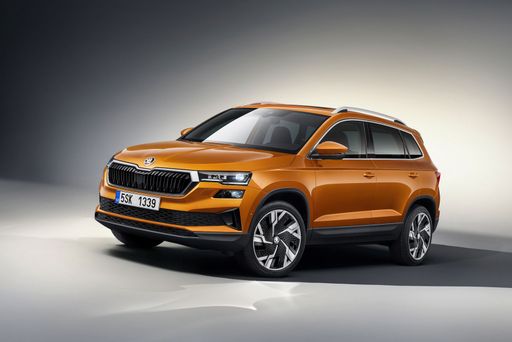
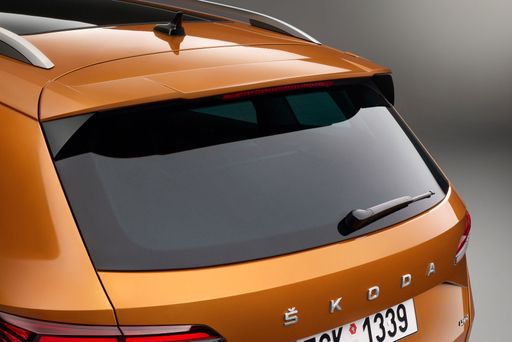
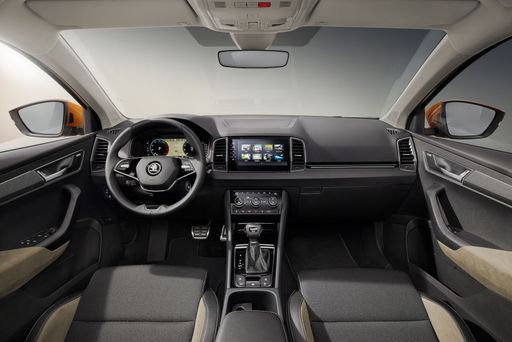
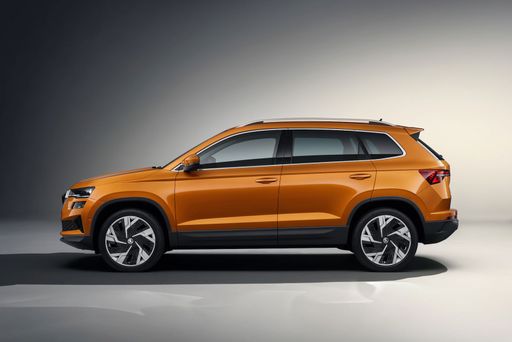
Skoda Karoq

4.6 (2 Reviews)
rate
  • noticeably cheaper
  • a bit lighter
  • very slightly more trunk space

Peugeot 3008

3.4 (4 Reviews)
rate
  • substantially more power
  • considerably more efficient
  • moderately quicker 0–100 km/h

All details on performance, efficiency, range and trunk space can be found in the technical comparison below – including user reviews for both models.

Karoq

The Battle of the SUVs: Peugeot 3008 vs Skoda Karoq

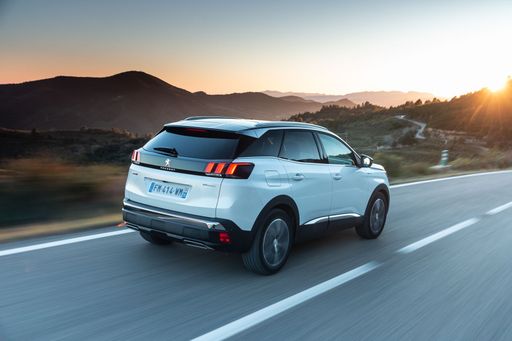
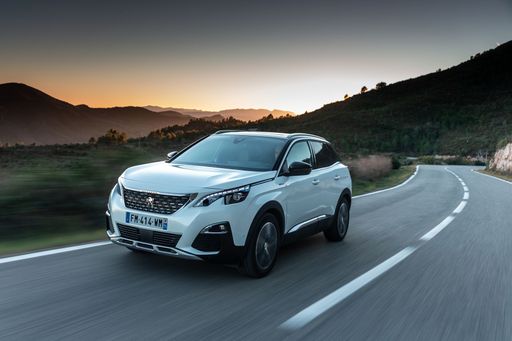
In today's fast-paced automotive world, the SUV segment remains a benchmark for innovation, performance, and versatility. Two stand-out contenders in this category are the Peugeot 3008 and the Skoda Karoq. Both vehicles boast dynamic designs and impressive specs but cater to slightly different shopper preferences. Let's dive into the technical aspects and innovations offered by these two SUVs for the 2024 model year.
3008

Engine Options and Performance

The Peugeot 3008 provides a diverse range of powertrains, with options spanning Petrol MHEV, Plugin Hybrid, and Electric configurations. Its electric variant offers an impressive range of up to 698 km, backed by a powerful 96.9 kWh battery. Petrol options range between 136 HP to 231 HP, ensuring versatility for both urban and long-distance drivers. The 3008 promises a swift acceleration from 0 to 100 km/h in just 8.4 seconds for its top variant, paired with a maximum speed of 220 km/h.

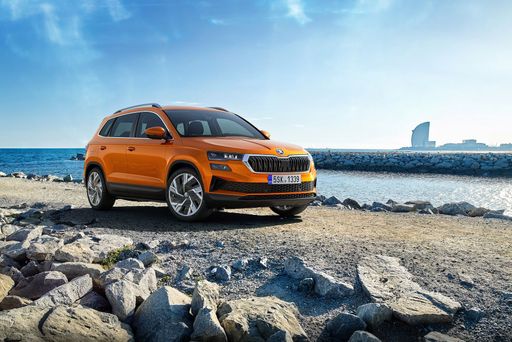
On the flip side, the Skoda Karoq offers more traditional internal combustion engines with petrol and diesel variants. Its engines deliver between 115 HP and 190 HP, with torque extending up to 360 Nm for top diesel variants. The Karoq can accelerate from 0 to 100 km/h in 7 seconds for its high-performance model, achieving a maximum speed of 221 km/h. Additionally, its varied transmission options—manual and dual-clutch automatic—provide drivers with greater control over their driving experience.

Karoq

Fuel Efficiency and Environmental Considerations

The Peugeot 3008 shines in fuel efficiency, especially with its Plugin Hybrid option achieving a consumption rate of just 0.9 L/100km and electric consumption between 17.2 and 17.7 kWh/100km. Its CO2 emissions can be as low as 0 g/km, emphasizing its commitment to sustainability.

The Skoda Karoq, while traditionally powered, offers a respectable range of consumption figures, with diesel engines achieving as low as 4.9 L/100km. However, its CO2 efficiency class ranges from D to F, reflecting its conventional engine orientation.

3008

Design and Practicality

Both SUVs offer practicality with five doors and ample trunk space. The Peugeot 3008 has a boot capacity of 520 liters, cloaked in a sleek body measuring 4542 mm in length and 1895 mm in width. It's a vehicle that manages to offer a commanding presence on the road while still being easy to maneuver.

The Skoda Karoq closely matches, with a trunk capacity of 521 liters and a slightly compact body size of 4390 mm in length and 1841 mm in width. Its versatile design, combined with superior build quality, underscores Skoda's reputation for delivering reliable and functional vehicles.

Karoq

Final Thoughts

Choosing between the Peugeot 3008 and the Skoda Karoq is no easy task. The 3008 is perfect for those seeking a blend of cutting-edge electric options and advanced hybrid mechanisms. It's a forward-thinking choice for environmentally conscious drivers.

The Karoq, however, appeals to traditionalists who value an established brand known for durable quality and performance reliability. While it doesn't break new ground in sustainability, it makes up for it with familiar driving dynamics and easier maintenance.

Ultimately, your choice will depend on what you prioritize—the innovative spirit and green credentials of the Peugeot 3008 or the trusted reliability and simplicity of the Skoda Karoq.

Here’s where it gets real: The technical differences in detail

Karoq

Costs and Efficiency:

Price and efficiency are often the first things buyers look at. Here it becomes clear which model has the long-term edge – whether at the pump, the plug, or in purchase price.

Skoda Karoq is noticeably cheaper – starting at 29,100 £ , while the Peugeot 3008 costs 35,100 £ . That’s a price difference of around 6,060 £.

Fuel consumption also shows a difference: the Peugeot 3008 uses 2.4 L/100km and is considerably more efficient than the Skoda Karoq with 4.9 L/100km. The difference is about 2.5 L/100km.

3008

Engine and Performance:

Under the bonnet, it becomes clear which model is tuned for sportiness and which one takes the lead when you hit the accelerator.

When it comes to engine power, the Peugeot 3008 offers substantially more power – delivering 325 HP compared to 190 HP. That’s roughly 135 HP more horsepower.

When accelerating from 0 to 100 km/h, the Peugeot 3008 is moderately quicker – completing the sprint in 6 s, while the Skoda Karoq takes 7 s. That’s about 1 s quicker.

Looking at top speed, the Skoda Karoq is only slightly faster – reaching 210 km/h, while the Peugeot 3008 tops out at 201 km/h. The difference is around 9 km/h.

There’s also a difference in torque: the Peugeot 3008 delivers markedly more torque with 511 Nm compared to 360 Nm. That’s about 151 Nm more.

Karoq

Space and Everyday Use:

Whether family car or daily driver – which one offers more room, flexibility and comfort?

Both vehicles offer seating for 5 people.

In terms of curb weight, Skoda Karoq is a bit lighter – 1,380 kg compared to 1,648 kg. The difference is around 268 kg.

Looking at boot space, the Skoda Karoq offers very slightly more boot space – 521 L compared to 520 L. That’s a difference of about 1 L.

For maximum load capacity, the Skoda Karoq offers very slightly more capacity – up to 1,630 L, about 150 L more than the Peugeot 3008.

When it comes to payload, the Skoda Karoq carries slightly more – 549 kg compared to 467 kg. That’s a difference of about 82 kg.

Who wins the race in the data check?

The Peugeot 3008 holds a decisive overall lead in the objective data comparison.
This result only shows which model scores more points on paper – not which of the two cars feels right for you.

from £35,100
3008

Peugeot 3008

  • Engine Type : Electric, Petrol MHEV, Plugin Hybrid
  • Transmission : Automatic
  • Drive Type : Front-Wheel Drive, All-Wheel Drive
  • Power HP : 145 - 325 HP
  • Consumption L/100km : 2.4 - 5.4 L/100km
  • Consumption kWh/100km : 16.9 - 17.6 kWh/100km
  • Electric Range : 81 - 698 km
Skoda Karoq
Peugeot 3008

Costs and Consumption

View detailed analysis

Engine and Performance

View detailed analysis

Dimensions and Body

View detailed analysis

Skoda Karoq

The Skoda Karoq is a smart, unfussy compact SUV that blends roomy practicality with a pleasantly composed driving character. It won’t turn heads at a car meet, but it will make daily life easier with clever storage, sensible ergonomics and a reassuringly grown-up ride.

details

Peugeot 3008

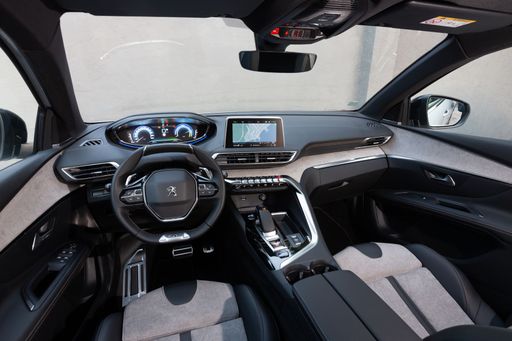
The Peugeot 3008 blends bold French styling with a surprisingly grown-up interior that makes even dull commutes feel a little bit special. Practical enough for family life yet lively to drive, it’s a clever all‑rounder that stands out from the crossover crowd without shouting for attention.

details
Skoda Karoq
Peugeot 3008

Costs and Consumption

Price
29,100 - 41,700 £
Price
35,100 - 52,000 £
Consumption L/100km
4.9 - 7.6 L/100km
Consumption L/100km
2.4 - 5.4 L/100km
Consumption kWh/100km
-
Consumption kWh/100km
16.9 - 17.6 kWh/100km
Electric Range
-
Electric Range
81 - 698 km
Battery Capacity
-
Battery Capacity
0.4 - 96.9 kWh
co2
128 - 173 g/km
co2
0 - 121 g/km
Fuel tank capacity
50 - 55 L
Fuel tank capacity
55 L

Dimensions and Body

Body Type
SUV
Body Type
SUV
Seats
5
Seats
5
Doors
5
Doors
5
Curb weight
1,380 - 1,655 kg
Curb weight
1,648 - 2,266 kg
Trunk capacity
521 L
Trunk capacity
470 - 520 L
Length
4,390 mm
Length
4,542 mm
Width
1,841 mm
Width
1,895 mm
Height
1,624 mm
Height
1,641 mm
Max trunk capacity
1,630 L
Max trunk capacity
1,430 - 1,480 L
Payload
456 - 549 kg
Payload
432 - 467 kg

Engine and Performance

Engine Type
Petrol, Diesel
Engine Type
Electric, Petrol MHEV, Plugin Hybrid
Transmission
Manuel, Automatic
Transmission
Automatic
Transmission Detail
Manual Gearbox, Dual-Clutch Automatic
Transmission Detail
Reduction Gearbox, Dual-Clutch Automatic
Drive Type
Front-Wheel Drive, All-Wheel Drive
Drive Type
Front-Wheel Drive, All-Wheel Drive
Power HP
115 - 190 HP
Power HP
145 - 325 HP
Acceleration 0-100km/h
7 - 11.2 s
Acceleration 0-100km/h
6 - 10.2 s
Max Speed
192 - 210 km/h
Max Speed
170 - 201 km/h
Torque
200 - 360 Nm
Torque
230 - 511 Nm
Number of Cylinders
3 - 4
Number of Cylinders
3 - 4
Power kW
85 - 140 kW
Power kW
107 - 239 kW
Engine capacity
999 - 1,984 cm3
Engine capacity
1,199 - 1,598 cm3

General

Model Year
2,025
Model Year
2,024 - 2,026
CO2 Efficiency Class
D, E, F
CO2 Efficiency Class
A, D, B
Brand
Skoda
Brand
Peugeot
DriveDuel uses data analysis and artificial intelligence to evaluate vehicle data and create content. Content is regularly reviewed and improved. The displayed prices are estimates based on German list prices, adjusted to the respective country’s VAT. Country-specific registration taxes are not included. This information is not legally binding.