VS

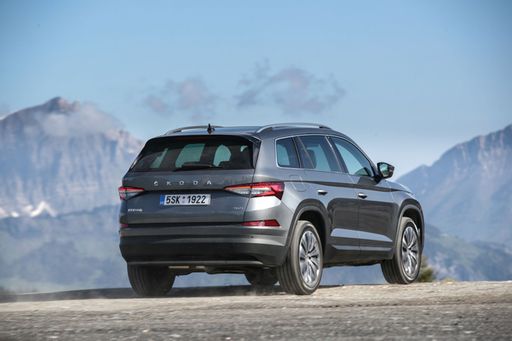
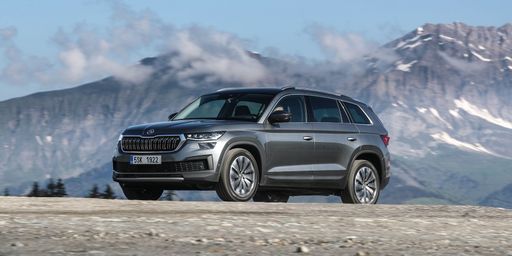
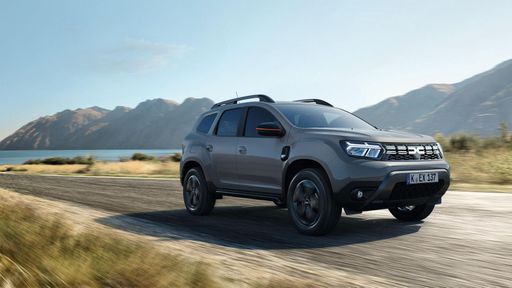
Skoda Kodiaq vs Dacia Duster comparison

Compare performance (265 HP vs 158 HP), boot space and price (37,900 £ vs 16,300 £ ) at a glance. Find out which car is the better choice for you – Skoda Kodiaq or Dacia Duster?

Skoda Kodiaq vs Dacia Duster: Key differences

Skoda Kodiaq

5 (4 Reviews)
rate
  • substantially more power
  • significantly more efficient
  • clearly quicker 0–100 km/h
  • substantially more trunk space

Dacia Duster

5 (2 Reviews)
rate
  • clearly cheaper
  • markedly lighter

All details on performance, efficiency, range and trunk space can be found in the technical comparison below – including user reviews for both models.

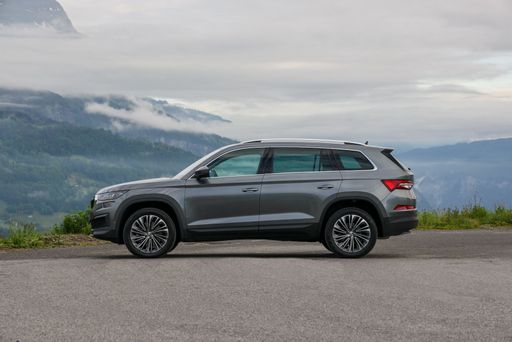
Kodiaq

A Showdown of SUVs: Dacia Duster vs. Skoda Kodiaq

In the bustling SUV market, two models consistently draw attention for their distinct attributes and value propositions: the Dacia Duster and the Skoda Kodiaq. Each offers its own set of enticing features and specifications tailored to different driving needs and preferences. This article delves into a detailed comparison of these two standout SUVs for 2024, focusing on their technical aspects and innovations.
Duster

Engine Options and Performance

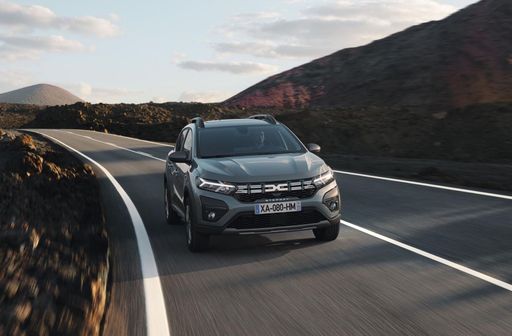
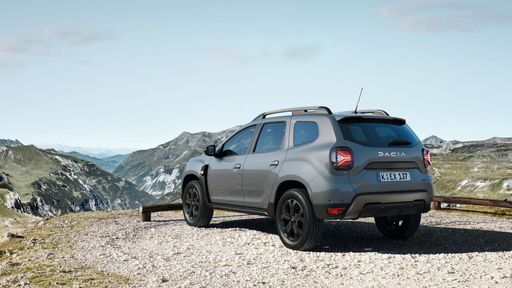
The Dacia Duster provides a range of engine choices to suit various driving styles. It includes options such as LPG, Petrol MHEV, and Full Hybrid, with power outputs ranging from 91 to 140 HP. Its top speeds range from 160 to 180 km/h, with acceleration from 0-100 km/h between 9.9 and 14 seconds. Additionally, the Duster features either a manual gearbox or an automated manual transmission, catering to traditionalists and modern drivers alike.

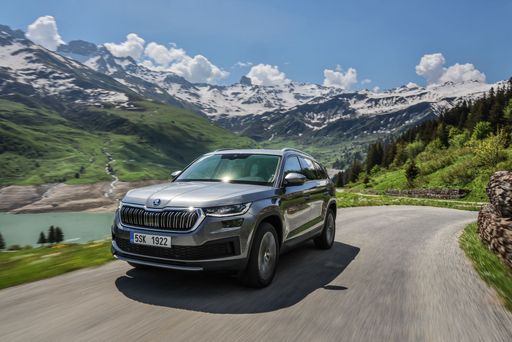
In contrast, the Skoda Kodiaq is available with Plugin Hybrid, Petrol MHEV, Diesel, and Petrol engines, delivering power between 150 and 265 HP. Its more robust performance is highlighted by a 0-100 km/h acceleration time as low as 6.3 seconds and a maximum speed of up to 231 km/h with a dual-clutch automatic transmission for seamless gear shifts.

Kodiaq

Efficiency and Eco-Friendly Innovations

When it comes to fuel efficiency and emissions, the Skoda Kodiaq shines with its Plugin Hybrid option, boasting an electric range of up to 123 km and a CO2 emission as low as 9 g/km. The Dacia Duster, while not offering a plug-in variant, still maintains competitive fuel economy with consumption figures as low as 5 L/100 km and CO2 emissions starting from 114 g/km. However, the Kodiaq leads in eco-efficiency with better ratings primarily due to its advanced hybrid options and lower emissions.

Duster

Space and Practicality

Both vehicles cater to family needs with spacious interiors, although the Kodiaq offers a more generous trunk capacity, ranging from 745 to 910 liters, compared to 430 to 517 liters in the Duster. This provides the Kodiaq an edge for those who prioritize cargo space. The Duster, with its compact dimensions, is slightly more city-friendly, measuring 4343 mm in length compared to the Kodiaq's 4758 mm, making parking and maneuverability easier in urban environments.

Kodiaq

Comfort and Features

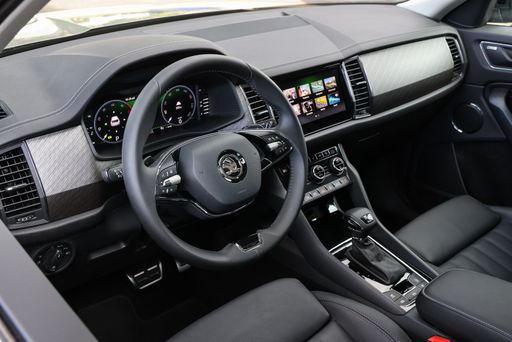
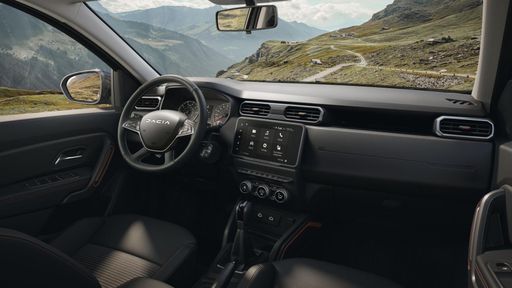
In terms of comfort, both SUVs come equipped with a suite of modern amenities. The Skoda Kodiaq leans towards luxury with advanced infotainment systems and a refined interior, reflecting its position in the higher price range. Meanwhile, the Dacia Duster offers commendable comfort features for its segment, providing a practical and value-focused option.

Duster

Final Verdict

The choice between the Dacia Duster and the Skoda Kodiaq ultimately depends on individual priorities. For those seeking a budget-friendly, practical SUV with decent performance and efficiency, the Duster stands out as an attractive option. However, if premium features, superior performance, and greater versatility are key considerations, the Skoda Kodiaq presents a compelling case despite its higher price tag.

Whether it's the rugged charm of the Duster or the sophisticated allure of the Kodiaq, these SUVs continue to captivate with their unique strengths and remain popular choices among SUV enthusiasts.

Here’s where it gets real: The technical differences in detail

Kodiaq

Costs and Efficiency:

Price and efficiency are key factors when choosing a car – and this is often where the real differences emerge.

Dacia Duster is clearly cheaper – starting at 16,300 £ , while the Skoda Kodiaq costs 37,900 £ . That’s a price difference of around 21,600 £.

Fuel consumption also shows a difference: the Skoda Kodiaq uses 1.5 L/100km and is significantly more efficient than the Dacia Duster with 4.7 L/100km. The difference is about 3.2 L/100km.

Duster

Engine and Performance:

Power, torque and acceleration are the classic benchmarks for car enthusiasts – and here, some clear differences start to show.

When it comes to engine power, the Skoda Kodiaq offers substantially more power – delivering 265 HP compared to 158 HP. That’s roughly 107 HP more horsepower.

When accelerating from 0 to 100 km/h, the Skoda Kodiaq is clearly quicker – completing the sprint in 6.3 s, while the Dacia Duster takes 9.4 s. That’s about 3.1 s quicker.

Looking at top speed, the Skoda Kodiaq is visibly faster – reaching 226 km/h, while the Dacia Duster tops out at 180 km/h. The difference is around 46 km/h.

There’s also a difference in torque: the Skoda Kodiaq delivers clearly more torque with 400 Nm compared to 230 Nm. That’s about 170 Nm more.

Kodiaq

Space and Everyday Use:

Whether family car or daily driver – which one offers more room, flexibility and comfort?

Both vehicles offer seating for 5 people.

In terms of curb weight, Dacia Duster is markedly lighter – 1,377 kg compared to 1,684 kg. The difference is around 307 kg.

Looking at boot space, the Skoda Kodiaq offers substantially more boot space – 910 L compared to 517 L. That’s a difference of about 393 L.

For maximum load capacity, the Skoda Kodiaq offers clearly more capacity – up to 2,105 L, about 496 L more than the Dacia Duster.

When it comes to payload, the Skoda Kodiaq carries slightly more – 563 kg compared to 453 kg. That’s a difference of about 110 kg.

Who wins the race in the data check?

The Skoda Kodiaq is clearly superior overall in the objective data comparison.
This result only shows which model scores more points on paper – not which of the two cars feels right for you.

from £37,900
Kodiaq

Skoda Kodiaq

  • Engine Type : Petrol, Petrol MHEV, Diesel, Plugin Hybrid
  • Transmission : Automatic
  • Drive Type : All-Wheel Drive, Front-Wheel Drive
  • Power HP : 150 - 265 HP
  • Consumption L/100km : 1.5 - 8.2 L/100km
  • Electric Range : 119 - 122 km
Skoda Kodiaq
Dacia Duster

Costs and Consumption

View detailed analysis

Engine and Performance

View detailed analysis

Dimensions and Body

View detailed analysis

Skoda Kodiaq

The Skoda Kodiaq blends sensible practicality with surprising style, so families and weekend adventurers get roomy comfort without looking like a moving van. It feels calm and composed on the road, packs clever storage and user-friendly tech, and manages to deliver a near-premium vibe without the pretension.

details

Dacia Duster

The Dacia Duster is a no-nonsense compact SUV that delivers rugged practicality and surprisingly comfortable everyday driving without fuss. It might not win any beauty contests, but its honest design, easy-to-live-with cabin and tough attitude make it a smart pick for buyers who want reliable transport without luxury frills.

details
Skoda Kodiaq
Dacia Duster

Costs and Consumption

Price
37,900 - 50,600 £
Price
16,300 - 24,900 £
Consumption L/100km
1.5 - 8.2 L/100km
Consumption L/100km
4.7 - 7.6 L/100km
Consumption kWh/100km
-
Consumption kWh/100km
-
Electric Range
119 - 122 km
Electric Range
-
Battery Capacity
-
Battery Capacity
0.6 kWh
co2
35 - 186 g/km
co2
107 - 140 g/km
Fuel tank capacity
58 L
Fuel tank capacity
50 L

Dimensions and Body

Body Type
SUV
Body Type
SUV
Seats
5
Seats
5
Doors
5
Doors
5
Curb weight
1,684 - 1,970 kg
Curb weight
1,377 - 1,455 kg
Trunk capacity
745 - 910 L
Trunk capacity
348 - 517 L
Length
4,758 mm
Length
4,343 mm
Width
1,864 mm
Width
1,813 mm
Height
1,679 - 1,683 mm
Height
1,656 - 1,659 mm
Max trunk capacity
2,105 L
Max trunk capacity
1,414 - 1,609 L
Payload
460 - 563 kg
Payload
402 - 453 kg

Engine and Performance

Engine Type
Petrol, Petrol MHEV, Diesel, Plugin Hybrid
Engine Type
Petrol MHEV, Full Hybrid, LPG
Transmission
Automatic
Transmission
Manuel, Automatic
Transmission Detail
Dual-Clutch Automatic
Transmission Detail
Manual Gearbox, Automated Manual, Dual-Clutch Automatic
Drive Type
All-Wheel Drive, Front-Wheel Drive
Drive Type
Front-Wheel Drive, All-Wheel Drive
Power HP
150 - 265 HP
Power HP
115 - 158 HP
Acceleration 0-100km/h
6.3 - 9.7 s
Acceleration 0-100km/h
9.4 - 11.7 s
Max Speed
226 km/h
Max Speed
180 km/h
Torque
250 - 400 Nm
Torque
190 - 230 Nm
Number of Cylinders
4
Number of Cylinders
3 - 4
Power kW
110 - 195 kW
Power kW
84 - 116 kW
Engine capacity
1,498 - 1,984 cm3
Engine capacity
1,199 - 1,789 cm3

General

Model Year
2,024 - 2,025
Model Year
2,025 - 2,026
CO2 Efficiency Class
F, G, E, B
CO2 Efficiency Class
D, C
Brand
Skoda
Brand
Dacia
DriveDuel uses data analysis and artificial intelligence to evaluate vehicle data and create content. Content is regularly reviewed and improved. The displayed prices are estimates based on German list prices, adjusted to the respective country’s VAT. Country-specific registration taxes are not included. This information is not legally binding.