VS

Skoda Kodiaq vs Ford Kuga comparison

Compare performance (265 HP vs 243 HP), boot space and price (37,900 £ vs 34,200 £ ) at a glance. Find out which car is the better choice for you – Skoda Kodiaq or Ford Kuga?

Skoda Kodiaq vs Ford Kuga: Key differences

Skoda Kodiaq

5 (4 Reviews)
rate
  • barely more power
  • considerably more efficient
  • considerably more electric range
  • moderately quicker 0–100 km/h

Ford Kuga

4.2 (6 Reviews)
rate
  • moderately cheaper
  • slightly lighter

All details on performance, efficiency, range and trunk space can be found in the technical comparison below – including user reviews for both models.

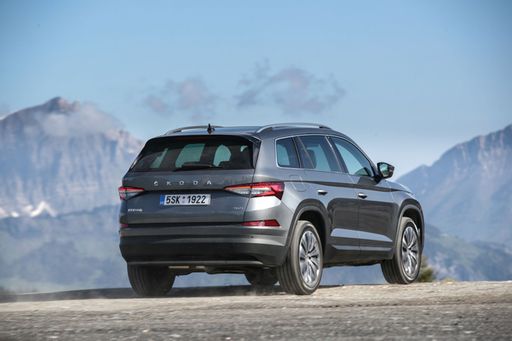
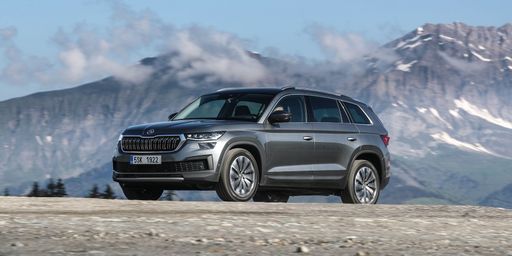
Kodiaq

In the world of SUVs, the Ford Kuga and Skoda Kodiaq have emerged as two formidable contenders, each appealing to a slightly different market segment. This article aims to dissect their offerings across various parameters including technical features, performance metrics, and innovative technologies.
Kuga

Engine Options and Performance

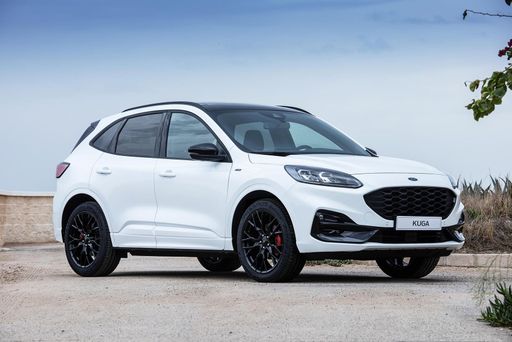
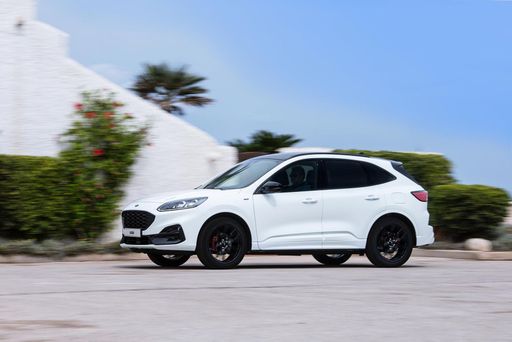
The Ford Kuga boasts a diverse range of engine options catering to a wide spectrum of preferences. Available engines include petrol, full hybrid, and plug-in hybrid configurations, generating power outputs ranging from 150 HP to an impressive 243 HP. This provides versatility for various driving styles and needs. The Kuga offers a choice of manual and automatic transmissions, with front-wheel drive and all-wheel drive variants.

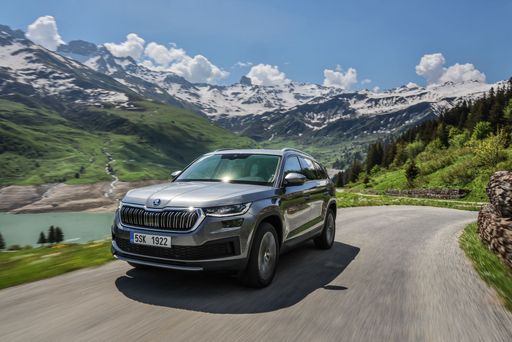
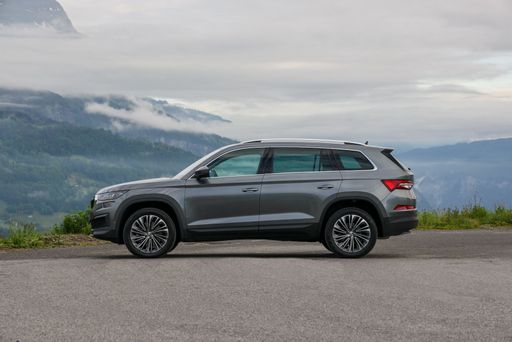
On the other hand, the Skoda Kodiaq presents a mix of petrol, diesel, and hybrid options, specifically including a petrol MHEV and plug-in hybrid model. Its power range starts from 150 HP and goes up to 204 HP. The Kodiaq is equipped with a sophisticated automatic double-clutch transmission that enhances driving performance and fuel efficiency. Both SUVs demonstrate strong performance with the Ford Kuga's 0-100 km/h times between 7.3 to 9.5 seconds, while the Kodiaq ranges from 7.8 to 9.7 seconds, depending on the variant.

Kodiaq

Fuel Efficiency and Eco-Friendliness

In terms of fuel efficiency, the Ford Kuga offers an impressive lineup of consumption figures, with the hybrid variants demonstrating remarkably low fuel usage of up to 0.9 L/100km for electric driving. The electric-only range of 69 km for Kuga’s plug-in hybrid variant adds to its eco-friendliness, making it suitable for daily commutes.

The Skoda Kodiaq, meanwhile, also emphasizes efficiency with fuel consumption ranging from 0.4 to 7.6 L/100km depending on the model. Its plug-in hybrid variant can achieve an electric range of 123 km, making it a practical choice for those who wish to minimize their carbon footprint while enjoying spacious interiors.

Kuga

Interior Space and Comfort

When it comes to interior space, the Skoda Kodiaq takes the lead. With a trunk capacity of 745 to 910 liters, it is ideal for families or travelers needing extra storage. The Ford Kuga provides a respectable trunk capacity of 412 liters, which may suffice for day-to-day use but falls short when compared to its rival.

Both vehicles accommodate five passengers comfortably, but the Kodiaq offers more headroom and legroom thanks to its larger dimensions (length of 4758 mm vs. Kuga's 4604 mm). This spaciousness translates to an overall more comfortable driving experience.

Kodiaq

Safety and Innovations

The Ford Kuga is well-equipped with a suite of safety features, including advanced driver assistance systems such as adaptive cruise control, lane-keeping assist, and automatic emergency braking. These innovations enhance the driver’s peace of mind, making it a suitable option for safety-conscious buyers.

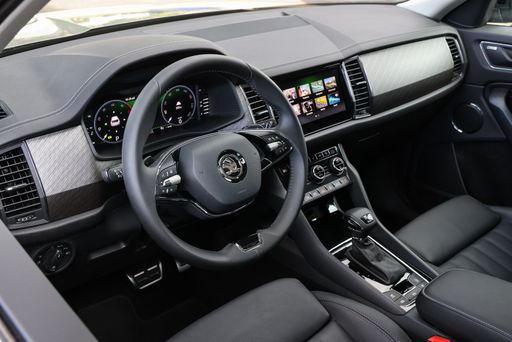
The Skoda Kodiaq also excels in safety, launching with similar features and additional advantages like Skoda's Virtual Cockpit, which provides a digital instrument cluster that can be customized to display various driving stats and settings. This standout feature contributes to a tech-savvy feel within the cabin.

Kuga

Conclusion: Which SUV Reigns Supreme?

Both the Ford Kuga and Skoda Kodiaq have their unique strengths, making them worthy competitors in the SUV segment. The Kuga is more performance-oriented with its multiple hybrid options and robust powertrain capabilities, while the Kodiaq shines in terms of space and innovative tech features.

Ultimately, the choice for prospective buyers will hinge on individual preferences—are you looking for a sporty drive with hybrid flexibility or a spacious family SUV loaded with tech? Either way, both models offer a compelling case for their respective user bases.

Here’s where it gets real: The technical differences in detail

Kodiaq

Costs and Efficiency:

Looking at overall running costs, both models reveal some interesting differences in everyday economy.

Ford Kuga is moderately cheaper – starting at 34,200 £ , while the Skoda Kodiaq costs 37,900 £ . That’s a price difference of around 3,635 £.

Fuel consumption also shows a difference: the Skoda Kodiaq uses 1.5 L/100km and is considerably more efficient than the Ford Kuga with 2.8 L/100km. The difference is about 1.3 L/100km.

As for electric range, the Skoda Kodiaq offers considerably more range – reaching up to 122 km, about 54 km more than the Ford Kuga.

Kuga

Engine and Performance:

Under the bonnet, it becomes clear which model is tuned for sportiness and which one takes the lead when you hit the accelerator.

When it comes to engine power, the Skoda Kodiaq offers barely more power – delivering 265 HP compared to 243 HP. That’s roughly 22 HP more horsepower.

When accelerating from 0 to 100 km/h, the Skoda Kodiaq is moderately quicker – completing the sprint in 6.3 s, while the Ford Kuga takes 7.3 s. That’s about 1 s quicker.

There’s also a difference in torque: the Skoda Kodiaq delivers visibly more torque with 400 Nm compared to 240 Nm. That’s about 160 Nm more.

Kodiaq

Space and Everyday Use:

Beyond pure performance, interior space and usability matter most in daily life. This is where you see which car is more practical and versatile.

Both vehicles offer seating for 5 people.

In terms of curb weight, Ford Kuga is slightly lighter – 1,526 kg compared to 1,684 kg. The difference is around 158 kg.

When it comes to payload, the Skoda Kodiaq carries barely more – 563 kg compared to 550 kg. That’s a difference of about 13 kg.

Who wins the race in the data check?

The Skoda Kodiaq holds a decisive overall lead in the objective data comparison.
This result only shows which model scores more points on paper – not which of the two cars feels right for you.

from £37,900
Kodiaq

Skoda Kodiaq

  • Engine Type : Petrol, Petrol MHEV, Diesel, Plugin Hybrid
  • Transmission : Automatic
  • Drive Type : All-Wheel Drive, Front-Wheel Drive
  • Power HP : 150 - 265 HP
  • Consumption L/100km : 1.5 - 8.2 L/100km
  • Electric Range : 119 - 122 km
Skoda Kodiaq
Ford Kuga

Costs and Consumption

View detailed analysis

Engine and Performance

View detailed analysis

Dimensions and Body

View detailed analysis

Skoda Kodiaq

The Skoda Kodiaq blends sensible practicality with surprising style, so families and weekend adventurers get roomy comfort without looking like a moving van. It feels calm and composed on the road, packs clever storage and user-friendly tech, and manages to deliver a near-premium vibe without the pretension.

details

Ford Kuga

The Kuga is Ford’s adaptable family SUV that blends usable space with a surprisingly lively driving character, making daily commutes and weekend escapes equally enjoyable. With smart interior packaging, an easy-to-use infotainment setup and composed road manners, it’s a sensible choice for buyers who want a bit of fun without the fuss.

details
Skoda Kodiaq
Ford Kuga

Costs and Consumption

Price
37,900 - 50,600 £
Price
34,200 - 46,300 £
Consumption L/100km
1.5 - 8.2 L/100km
Consumption L/100km
2.8 - 6.8 L/100km
Consumption kWh/100km
-
Consumption kWh/100km
-
Electric Range
119 - 122 km
Electric Range
68 km
Battery Capacity
-
Battery Capacity
-
co2
35 - 186 g/km
co2
55 - 154 g/km
Fuel tank capacity
58 L
Fuel tank capacity
-

Dimensions and Body

Body Type
SUV
Body Type
SUV
Seats
5
Seats
5
Doors
5
Doors
-
Curb weight
1,684 - 1,970 kg
Curb weight
1,526 - 1,859 kg
Trunk capacity
745 - 910 L
Trunk capacity
-
Length
4,758 mm
Length
-
Width
1,864 mm
Width
1,882 mm
Height
1,679 - 1,683 mm
Height
-
Max trunk capacity
2,105 L
Max trunk capacity
-
Payload
460 - 563 kg
Payload
541 - 550 kg

Engine and Performance

Engine Type
Petrol, Petrol MHEV, Diesel, Plugin Hybrid
Engine Type
Petrol, Full Hybrid, Plugin Hybrid
Transmission
Automatic
Transmission
Manuel, Automatic
Transmission Detail
Dual-Clutch Automatic
Transmission Detail
Manual Gearbox, CVT, Automatic Gearbox
Drive Type
All-Wheel Drive, Front-Wheel Drive
Drive Type
Front-Wheel Drive, All-Wheel Drive
Power HP
150 - 265 HP
Power HP
150 - 243 HP
Acceleration 0-100km/h
6.3 - 9.7 s
Acceleration 0-100km/h
7.3 - 9.9 s
Max Speed
226 km/h
Max Speed
-
Torque
250 - 400 Nm
Torque
240 Nm
Number of Cylinders
4
Number of Cylinders
3 - 4
Power kW
110 - 195 kW
Power kW
111 - 178 kW
Engine capacity
1,498 - 1,984 cm3
Engine capacity
1,496 - 2,488 cm3

General

Model Year
2,024 - 2,025
Model Year
2,025
CO2 Efficiency Class
F, G, E, B
CO2 Efficiency Class
E, D, B
Brand
Skoda
Brand
Ford
DriveDuel uses data analysis and artificial intelligence to evaluate vehicle data and create content. Content is regularly reviewed and improved. The displayed prices are estimates based on German list prices, adjusted to the respective country’s VAT. Country-specific registration taxes are not included. This information is not legally binding.