VS

Skoda Kodiaq vs Mazda CX-80 comparison

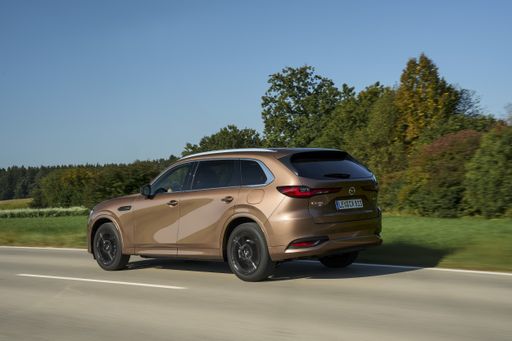
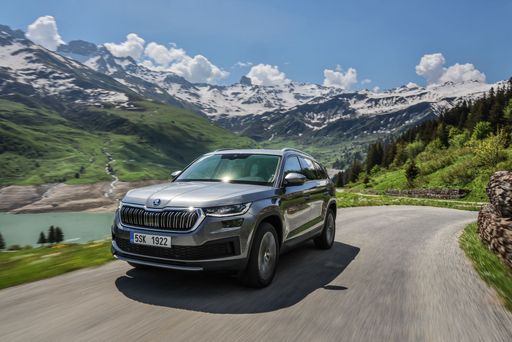
Compare performance (265 HP vs 327 HP), boot space and price (37,900 £ vs 49,300 £ ) at a glance. Find out which car is the better choice for you – Skoda Kodiaq or Mazda CX-80?

Skoda Kodiaq vs Mazda CX-80: Key differences

Skoda Kodiaq

4.9 (5 Reviews)
rate
  • noticeably cheaper
  • substantially more efficient
  • significantly more electric range
  • only slightly quicker 0–100 km/h
  • clearly lighter
  • considerably more trunk space
details

Mazda CX-80

3.1 (1 Reviews)
rate
  • moderately more power
details

All details on performance, efficiency, range and trunk space can be found in the technical comparison below – including user reviews for both models.

By Achim Sedelmaier

Kodiaq

An In-Depth Comparison: Mazda CX-80 vs. Skoda Kodiaq

The automotive landscape is continuously evolving, with manufacturers pushing the boundaries of technology, performance, and innovation. In the competitive mid-size SUV segment, two contenders are making waves: the Mazda CX-80 and the Skoda Kodiaq. Both vehicles cater to families and adventure seekers alike, offering ample space, advanced features, and a range of powertrains. However, which one takes the lead in this head-to-head comparison? Let’s dive into the details.
CX-80

Design and Dimensions

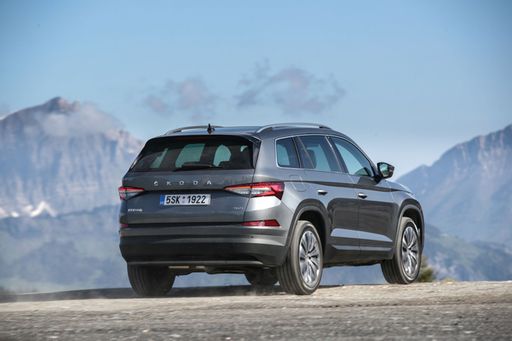
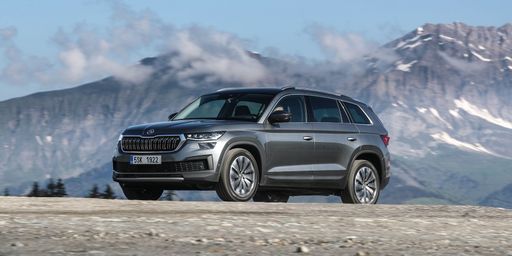
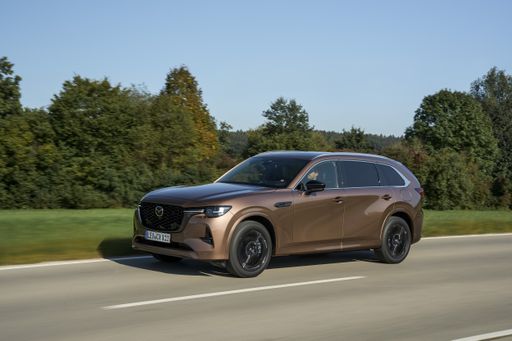
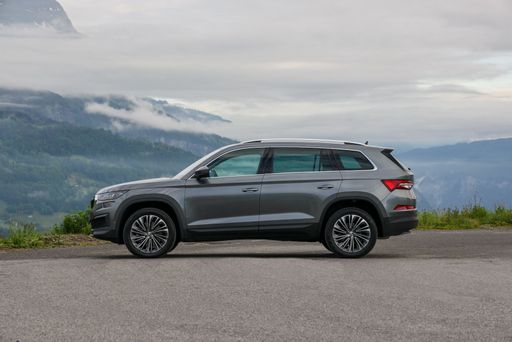
With a length of 4995 mm, the Mazda CX-80 is larger than the Skoda Kodiaq, which measures 4758 mm. The width of the CX-80 at 1890 mm slightly surpasses the Kodiaq's 1864 mm, while the height is comparable, with the CX-80 at 1714 mm and the Kodiaq between 1679-1683 mm. This additional size in the CX-80 translates to a more spacious cabin and potentially better cargo capacity. The CX-80 also boasts a modern, sleek design consistent with Mazda's KODO philosophy, while the Kodiaq presents a more practical, angular aesthetic typical of Skoda’s design language.

Kodiaq

Powertrains and Performance

Both SUVs offer a variety of engine options that appeal to different types of drivers. The Mazda CX-80 features two engines: a powerful 327 HP Plug-in Hybrid and a 254 HP Diesel MHEV. For those focused on sustainability, the electric range of up to 60 km is a notable advantage. The CX-80 excels in acceleration, achieving 0-100 km/h in just 6.8 seconds for the hybrid variant, while its maximum speed can reach 195 km/h.

On the other hand, the Skoda Kodiaq's lineup includes a 204 HP Plugin Hybrid, a 193 HP Petrol MHEV, and various petrol and diesel options totaling four engines. The Kodiaq offers impressive flexibility with different power outputs, achieving 0-100 km/h in a respectable 7.8 seconds. However, in terms of performance metrics, the CX-80 takes the edge with higher maximum power and quicker acceleration.

CX-80

Fuel Efficiency and Emissions

The Mazda CX-80 demonstrates exceptional fuel efficiency, particularly with its plug-in hybrid, consuming just 1.6 L/100km. The diesel variant, while less efficient than its hybrid counterpart, still performs well at 5.7 L/100km. In contrast, the Kodiaq’s fuel consumption varies significantly depending on the engine choice, with the most economical diesel model consuming around 5.3 L/100km. Both vehicles receive a 'B' efficiency class rating, but the CX-80's hybrid evidently stands out as a more eco-friendly option with lower CO2 emissions, registering at 35 g/km compared to Kodiaq's higher emissions range.

Kodiaq

Interior Space and Features

Inside, both SUVs prioritize comfort and versatility. The Mazda CX-80 offers seating for up to seven passengers, making it a great choice for larger families or those needing extra space. However, the Skoda Kodiaq provides exceptional trunk capacity, boasting between 745 to 910 liters, compared to the CX-80's 258 liters. This is a considerable advantage for those who need a generous amount of cargo space for long road trips.

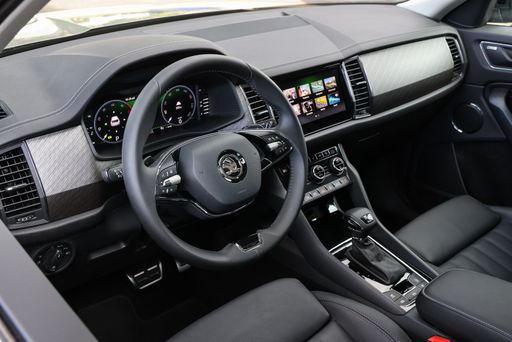
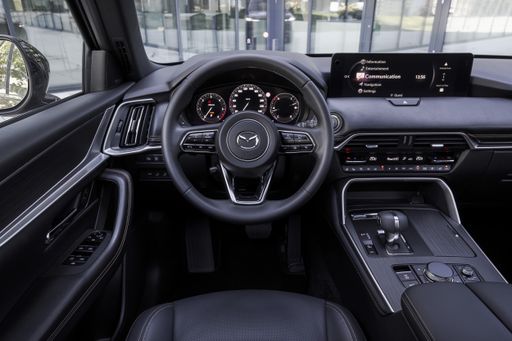
In terms of technology, both models are equipped with the latest infotainment systems. While Mazda's interface is often praised for its user-friendly layout, Skoda offers innovative features like a virtual cockpit, which enhances the driver's experience. Both vehicles also come with a full suite of safety features, including advanced driver assistance systems.

CX-80

Conclusion: Which One Reigns Supreme?

While both the Mazda CX-80 and Skoda Kodiaq cater to similar markets, their strengths vary significantly. The CX-80 excels in performance and efficiency, making it the choice for those prioritizing driving dynamics and sustainability. On the other hand, the Kodiaq shines with its vast interior space and practicality, appealing particularly to families who need room for both passengers and cargo.

Ultimately, the decision will hinge on individual preferences: whether one leans towards performance and innovation or practicality and spaciousness, both vehicles present fantastic options in the competitive SUV market.

Here’s where it gets real: The technical differences in detail

Kodiaq

Costs and Efficiency:

When it comes to price and running costs, the biggest differences usually appear. This is often where you see which car fits your budget better in the long run.

Skoda Kodiaq is noticeably cheaper – starting at 37,900 £ , while the Mazda CX-80 costs 49,300 £ . That’s a price difference of around 11,451 £.

Fuel consumption also shows a difference: the Skoda Kodiaq uses 1.5 L/100km and is substantially more efficient than the Mazda CX-80 with 4 L/100km. The difference is about 2.5 L/100km.

As for electric range, the Skoda Kodiaq offers significantly more range – reaching up to 122 km, about 62 km more than the Mazda CX-80.

CX-80

Engine and Performance:

Under the bonnet, it becomes clear which model is tuned for sportiness and which one takes the lead when you hit the accelerator.

When it comes to engine power, the Mazda CX-80 offers moderately more power – delivering 327 HP compared to 265 HP. That’s roughly 62 HP more horsepower.

When accelerating from 0 to 100 km/h, the Skoda Kodiaq is only slightly quicker – completing the sprint in 6.3 s, while the Mazda CX-80 takes 6.8 s. That’s about 0.5 s quicker.

There’s also a difference in torque: the Mazda CX-80 delivers visibly more torque with 550 Nm compared to 400 Nm. That’s about 150 Nm more.

Kodiaq

Space and Everyday Use:

Cabin size, boot volume and payload all play a role in everyday practicality. Here, comfort and flexibility make the difference.

Seats: Mazda CX-80 offers more seats – 7 vs 5.

In terms of curb weight, Skoda Kodiaq is clearly lighter – 1,684 kg compared to 2,131 kg. The difference is around 447 kg.

Looking at boot space, the Skoda Kodiaq offers considerably more boot space – 910 L compared to 258 L. That’s a difference of about 652 L.

When it comes to payload, the Mazda CX-80 carries a bit more – 650 kg compared to 563 kg. That’s a difference of about 87 kg.

Who wins the race in the data check?

The Skoda Kodiaq is decisively ahead in the objective data comparison.
This result only shows which model scores more points on paper – not which of the two cars feels right for you.

from £37,900
Kodiaq

Skoda Kodiaq

  • Engine Type Petrol, Petrol MHEV, Diesel, Plugin Hybrid
  • Transmission Automatic
  • Drive Type All-Wheel Drive, Front-Wheel Drive
  • Power HP 150 - 265 HP
  • Consumption L/100km 1.5 - 8.2 L/100km
  • Electric Range 119 - 122 km
Skoda Kodiaq
Mazda CX-80

Costs and Consumption

View detailed analysis

Engine and Performance

View detailed analysis

Dimensions and Body

View detailed analysis

Skoda Kodiaq

The Skoda Kodiaq is a practical, well built family SUV that puts space, comfort and usefulness ahead of showy gimmicks. Its composed ride, clever interior packaging and sensible feature set make it an easy, unpretentious choice for daily driving and longer journeys.

details

Mazda CX-80

The Mazda CX-80 brings polished, near-premium styling and a cabin that feels far classier than its badge might imply. It steers with a composed, engaging character and packs the sensible practicality families want — with just enough flair to make school runs feel a little less ordinary.

details
Skoda Kodiaq
Mazda CX-80

Costs and Consumption

Price
37,900 - 50,600 £
Price
49,300 - 61,400 £
Consumption L/100km
1.5 - 8.2 L/100km
Consumption L/100km
4 - 5.6 L/100km
Consumption kWh/100km
-
Consumption kWh/100km
-
Electric Range
119 - 122 km
Electric Range
60 km
Battery Capacity
-
Battery Capacity
-
co2
35 - 186 g/km
co2
91 - 146 g/km
Fuel tank capacity
-
Fuel tank capacity
-

Dimensions and Body

Body Type
SUV
Body Type
SUV
Seats
5
Seats
7
Doors
-
Doors
-
Curb weight
1,684 - 1,970 kg
Curb weight
2,131 - 2,240 kg
Trunk capacity
745 - 910 L
Trunk capacity
258 L
Length
-
Length
-
Width
1,864 mm
Width
1,890 mm
Height
-
Height
-
Max trunk capacity
-
Max trunk capacity
-
Payload
460 - 563 kg
Payload
649 - 650 kg

Engine and Performance

Engine Type
Petrol, Petrol MHEV, Diesel, Plugin Hybrid
Engine Type
Plugin Hybrid, Diesel MHEV
Transmission
Automatic
Transmission
Automatic
Transmission Detail
Dual-Clutch Automatic
Transmission Detail
Automatic Gearbox
Drive Type
All-Wheel Drive, Front-Wheel Drive
Drive Type
All-Wheel Drive
Power HP
150 - 265 HP
Power HP
254 - 327 HP
Acceleration 0-100km/h
6.3 - 9.7 s
Acceleration 0-100km/h
6.8 - 8.4 s
Max Speed
-
Max Speed
-
Torque
250 - 400 Nm
Torque
500 - 550 Nm
Number of Cylinders
4
Number of Cylinders
4 - 6
Power kW
110 - 195 kW
Power kW
187 - 241 kW
Engine capacity
1,498 - 1,984 cm3
Engine capacity
2,488 - 3,283 cm3

General

Model Year
2,024 - 2,025
Model Year
2025
CO2 Efficiency Class
F, G, E, B
CO2 Efficiency Class
B, E
Brand
Skoda
Brand
Mazda
DriveDuel uses data analysis and artificial intelligence to evaluate vehicle data and create content. Content is regularly reviewed and improved. The displayed prices are estimates based on German list prices, adjusted to the respective country’s VAT. Country-specific registration taxes are not included. This information is not legally binding.