VS

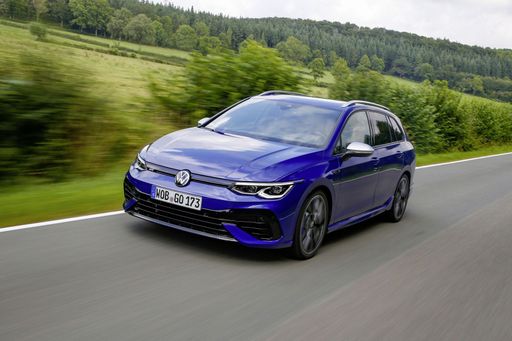
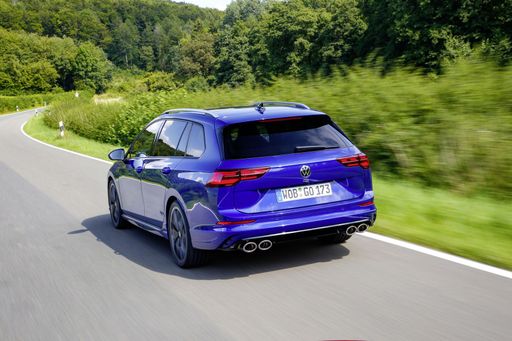
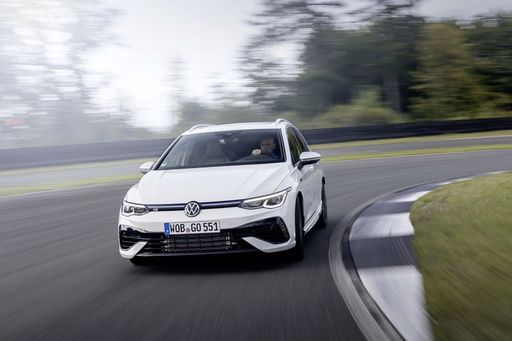
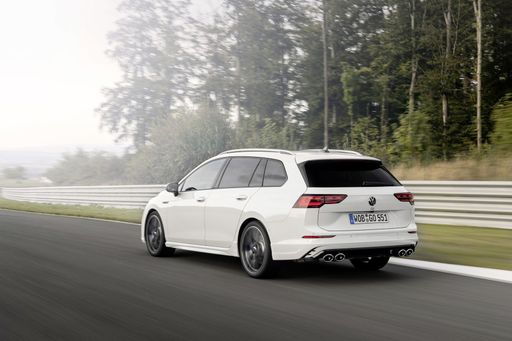
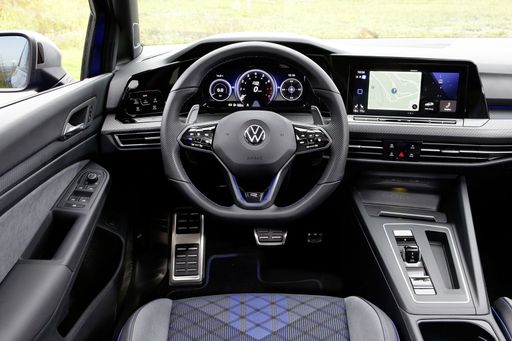
Skoda Kodiaq vs VW Golf Variant comparison

Compare performance (265 HP vs 204 HP), boot space and price (37,900 £ vs 28,800 £ ) at a glance. Find out which car is the better choice for you – Skoda Kodiaq or VW Golf Variant?

Skoda Kodiaq vs VW Golf Variant: Key differences

Skoda Kodiaq

4.9 (5 Reviews)
rate
  • markedly more power
  • significantly more efficient
  • only slightly quicker 0–100 km/h
  • visibly more trunk space
details

VW Golf Variant

  • noticeably cheaper
  • markedly lighter
details

All details on performance, efficiency, range and trunk space can be found in the technical comparison below – including user reviews for both models.

By Achim Sedelmaier

Kodiaq

Choosing Your Next Ride: Skoda Kodiaq vs VW Golf Variant

When it comes to choosing a reliable and performance-oriented car, the Skoda Kodiaq and VW Golf Variant are compelling options in their respective segments. While one is a robust SUV perfect for adventurous journeys, the other is a versatile wagon ideal for urban and suburban commutes. Let’s delve into the technical details and innovations these two popular models offer.
Golf Variant

Performance and Power

The Skoda Kodiaq stands out with its range of engine options, including plug-in hybrid, petrol mild-hybrid (MHEV), diesel, and petrol variants. With power outputs ranging from 150 to 265 HP, the Kodiaq can offer dynamic performance across different terrains. It features a dual-clutch automatic transmission and is available in both front-wheel and all-wheel drive configurations.

On the other hand, the VW Golf Variant offers petrol MHEV, petrol, and diesel engine types. Its power spectrum ranges from 116 to 333 HP, making it versatile for various driving needs. It provides the convenience of both automatic and manual drive, enhancing the driver’s experience with responsive dual-clutch technology.

Kodiaq

Fuel Efficiency and Emissions

The Skoda Kodiaq showcases impressive fuel efficiency, especially with its plug-in hybrid variant consuming as low as 0.4 L/100 km. Its electric range extends up to 123 km, powered by a 19.7 kWh battery, which is commendable for eco-conscious drivers. The Kodiaq’s CO2 efficiency class spans B to G, allowing for environmentally-responsible driving.

Meanwhile, the Golf Variant offers moderate fuel consumption rates ranging between 4.4 to 8.5 L/100 km depending on the engine chosen. With CO2 outputs from 115 to 194 g/km, it maintains a commendable balance between performance and environmental consciousness, categorized under efficiency classes D to G.

Golf Variant

Interior Comfort and Storage

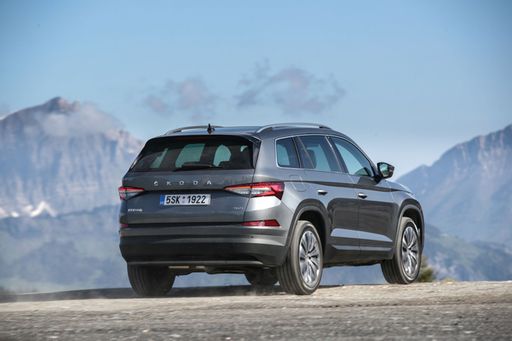
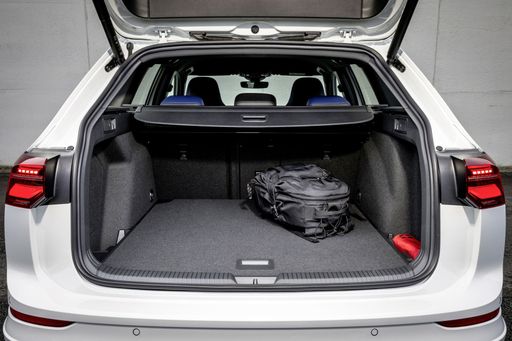
Interior space is a remarkable advantage of the Skoda Kodiaq, providing seating for five and a massive trunk capacity of up to 910 L. Its versatile interior design can cater to a variety of passenger and cargo needs, making it an excellent choice for families and adventurers alike.

The VW Golf Variant also seats five passengers and offers a generous trunk capacity of 611 L. Its compact yet spacious design ensures comfortable travel, making it apt for both everyday commutes and longer journeys.

Kodiaq

Dimensions and Design

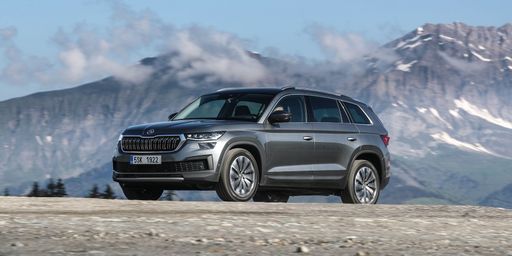
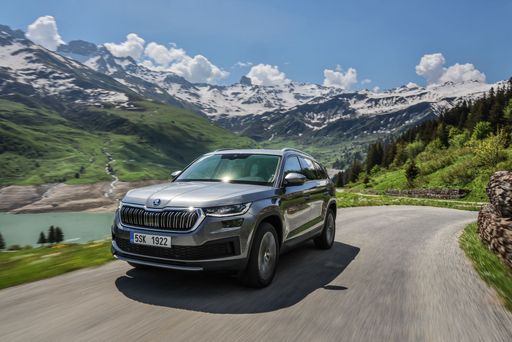
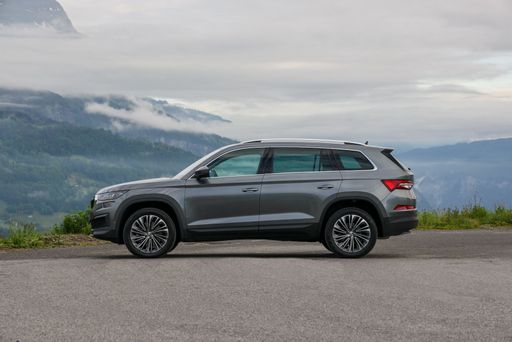
The Kodiaq’s robust dimensions reflect its SUV stature with a length of 4761 mm, width of 1864 mm, and a height reaching up to 1683 mm. Its imposing build is complemented by advanced driver assistance and safety features, ensuring a safe driving experience.

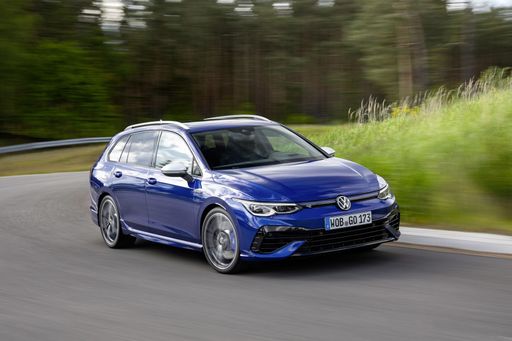
Conversely, the Golf Variant is tailored for agility and style in urban landscapes. With a length of 4631 mm, width of 1789 mm, and height of 1487 mm, it's sleek and efficient. Its design promises not just convenience in navigation but also an aesthetically pleasing drive.

Golf Variant

Conclusion

Ultimately, the choice between the Skoda Kodiaq and the VW Golf Variant comes down to lifestyle needs and preferences. The Kodiaq, with its spaciousness and advanced hybrid technology, appeals to those seeking a versatile and eco-friendly SUV. On the other hand, the Golf Variant offers a perfect blend of performance and practicality for those inclined towards a sophisticated wagon. Both models showcase remarkable technical prowess and innovation, setting a high standard in their classes.

Here’s where it gets real: The technical differences in detail

Kodiaq

Costs and Efficiency:

Price and efficiency are often the first things buyers look at. Here it becomes clear which model has the long-term edge – whether at the pump, the plug, or in purchase price.

VW Golf Variant is noticeably cheaper – starting at 28,800 £ , while the Skoda Kodiaq costs 37,900 £ . That’s a price difference of around 9,030 £.

Fuel consumption also shows a difference: the Skoda Kodiaq uses 1.5 L/100km and is significantly more efficient than the VW Golf Variant with 4.3 L/100km. The difference is about 2.8 L/100km.

Golf Variant

Engine and Performance:

Under the bonnet, it becomes clear which model is tuned for sportiness and which one takes the lead when you hit the accelerator.

When it comes to engine power, the Skoda Kodiaq offers markedly more power – delivering 265 HP compared to 204 HP. That’s roughly 61 HP more horsepower.

When accelerating from 0 to 100 km/h, the Skoda Kodiaq is only slightly quicker – completing the sprint in 6.3 s, while the VW Golf Variant takes 6.5 s. That’s about 0.2 s quicker.

There’s also a difference in torque: the Skoda Kodiaq delivers marginally more torque with 400 Nm compared to 360 Nm. That’s about 40 Nm more.

Kodiaq

Space and Everyday Use:

Whether family car or daily driver – which one offers more room, flexibility and comfort?

Both vehicles offer seating for 5 people.

In terms of curb weight, VW Golf Variant is markedly lighter – 1,366 kg compared to 1,684 kg. The difference is around 318 kg.

Looking at boot space, the Skoda Kodiaq offers visibly more boot space – 910 L compared to 611 L. That’s a difference of about 299 L.

When it comes to payload, the Skoda Kodiaq carries marginally more – 563 kg compared to 547 kg. That’s a difference of about 16 kg.

Who wins the race in the data check?

The Skoda Kodiaq is decisively ahead in the objective data comparison.
This result only shows which model scores more points on paper – not which of the two cars feels right for you.

from £37,900
Kodiaq

Skoda Kodiaq

  • Engine Type Petrol, Petrol MHEV, Diesel, Plugin Hybrid
  • Transmission Automatic
  • Drive Type All-Wheel Drive, Front-Wheel Drive
  • Power HP 150 - 265 HP
  • Consumption L/100km 1.5 - 8.2 L/100km
  • Electric Range 119 - 122 km
Skoda Kodiaq
VW Golf Variant

Costs and Consumption

View detailed analysis

Engine and Performance

View detailed analysis

Dimensions and Body

View detailed analysis

Skoda Kodiaq

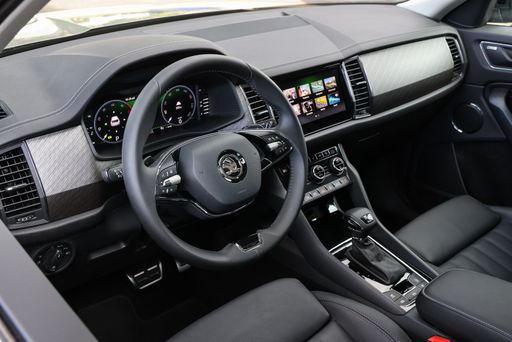
The Skoda Kodiaq is a practical, well built family SUV that puts space, comfort and usefulness ahead of showy gimmicks. Its composed ride, clever interior packaging and sensible feature set make it an easy, unpretentious choice for daily driving and longer journeys.

details

VW Golf Variant

The Golf Estate packs Volkswagen's familiar poise into a practical, grown-up estate that quietly makes everyday life easier without shouting for attention. It's clever, comfortable and roomy enough for weekend kit or family chaos, offering smart packaging and refined manners that make it a sensible and surprisingly stylish choice for buyers who need space but don't want a van.

details
Skoda Kodiaq
VW Golf Variant

Costs and Consumption

Price
37,900 - 50,600 £
Price
28,800 - 38,800 £
Consumption L/100km
1.5 - 8.2 L/100km
Consumption L/100km
4.3 - 7 L/100km
Consumption kWh/100km
-
Consumption kWh/100km
-
Electric Range
119 - 122 km
Electric Range
-
Battery Capacity
-
Battery Capacity
-
co2
35 - 186 g/km
co2
114 - 159 g/km
Fuel tank capacity
-
Fuel tank capacity
-

Dimensions and Body

Body Type
SUV
Body Type
Estate
Seats
5
Seats
5
Doors
-
Doors
-
Curb weight
1,684 - 1,970 kg
Curb weight
1,366 - 1,551 kg
Trunk capacity
745 - 910 L
Trunk capacity
611 L
Length
-
Length
-
Width
1,864 mm
Width
1,789 mm
Height
-
Height
-
Max trunk capacity
-
Max trunk capacity
-
Payload
460 - 563 kg
Payload
509 - 547 kg

Engine and Performance

Engine Type
Petrol, Petrol MHEV, Diesel, Plugin Hybrid
Engine Type
Petrol, Petrol MHEV, Diesel
Transmission
Automatic
Transmission
Manuel, Automatic
Transmission Detail
Dual-Clutch Automatic
Transmission Detail
Manual Gearbox, Dual-Clutch Automatic
Drive Type
All-Wheel Drive, Front-Wheel Drive
Drive Type
Front-Wheel Drive, All-Wheel Drive
Power HP
150 - 265 HP
Power HP
116 - 204 HP
Acceleration 0-100km/h
6.3 - 9.7 s
Acceleration 0-100km/h
6.5 - 10.5 s
Max Speed
-
Max Speed
-
Torque
250 - 400 Nm
Torque
220 - 360 Nm
Number of Cylinders
4
Number of Cylinders
4
Power kW
110 - 195 kW
Power kW
85 - 150 kW
Engine capacity
1,498 - 1,984 cm3
Engine capacity
1,498 - 1,984 cm3

General

Model Year
2,024 - 2,025
Model Year
2025
CO2 Efficiency Class
F, G, E, B
CO2 Efficiency Class
D, F, C
Brand
Skoda
Brand
VW
DriveDuel uses data analysis and artificial intelligence to evaluate vehicle data and create content. Content is regularly reviewed and improved. The displayed prices are estimates based on German list prices, adjusted to the respective country’s VAT. Country-specific registration taxes are not included. This information is not legally binding.