VS

Skoda Kodiaq vs VW Tiguan - Differences and prices compared

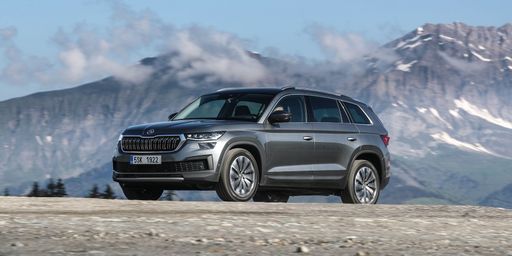
Compare performance (265 HP vs 272 HP), boot space and price (36800 £ vs 33300 £ ) at a glance. Find out which car is the better choice for you – Skoda Kodiaq or VW Tiguan?

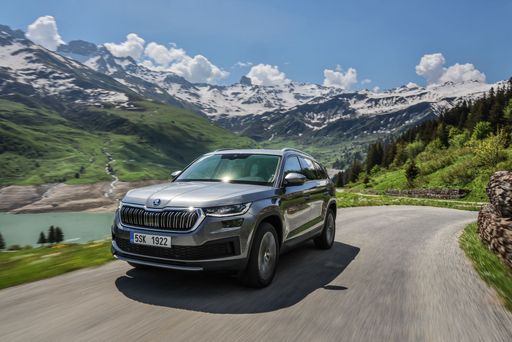
Kodiaq

Skoda Kodiaq vs VW Tiguan: A Comprehensive SUV Comparison

The mid-size SUV segment is becoming increasingly competitive, with various models vying for supremacy. Today, we delve into two prominent contenders: the Skoda Kodiaq and the VW Tiguan. Both vehicles are crafted by the same automotive group, yet they exhibit distinct characteristics that cater to different consumer preferences. In this comparison, we will examine the technical specifications, performance, and innovative features of these vehicles.

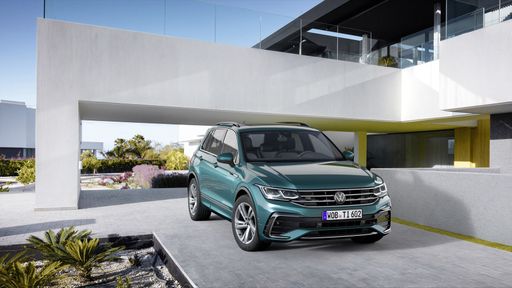
Tiguan

Engine Variants and Performance

Both the Skoda Kodiaq and VW Tiguan come equipped with a diverse range of engine options. The Kodiaq boasts four engine variants across petrol, diesel, and hybrid platforms, with power outputs ranging from 150 hp to an impressive 265 hp. The vehicle offers torque figures up to 400 Nm, allowing for formidable acceleration. The Kodiaq can achieve 0-100 km/h in as little as 6.3 seconds with its most powerful engine.

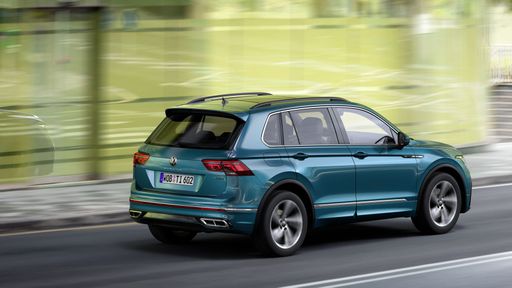
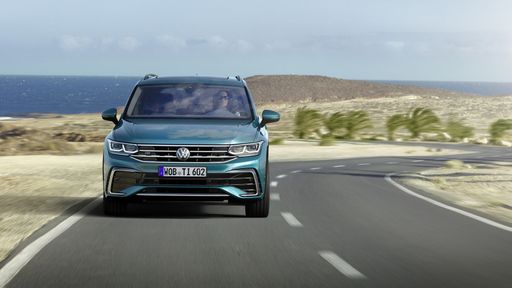
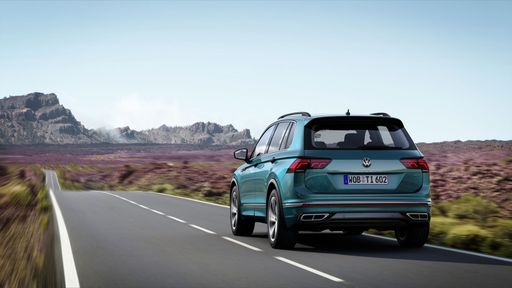
On the other hand, the VW Tiguan presents a similar engine lineup but stands out with higher power in certain variants, reaching up to 272 hp. Its torque reaches similar levels, ensuring robust performance. The fastest Tiguan variant can also sprint from 0-100 km/h in just 5.9 seconds, showcasing its sporty prowess.

Kodiaq

Fuel Efficiency and Emissions

When it comes to fuel consumption, both SUVs have eco-friendly options. The Skoda Kodiaq rates an impressive 0.4 L/100 km for its plug-in hybrid version, while the Tiguan matches it in the hybrid category, providing efficiency for eco-conscious drivers. The diesel variants for both vehicles present competitive fuel consumption figures in the 5 to 8 L/100 km range.

In terms of CO2 emissions, the Kodiaq and Tiguan also perform similarly, with some models exhibiting emissions as low as 9 g/km, making both SUVs appealing for those looking to minimize their carbon footprint.

Tiguan

Dimensions and Cargo Space

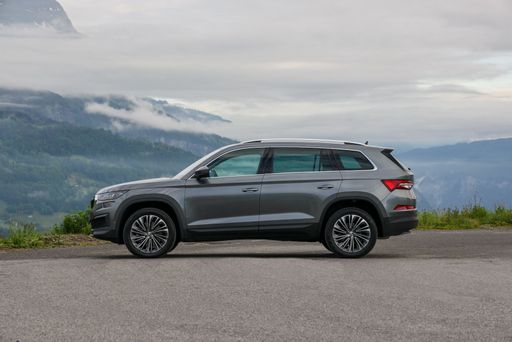
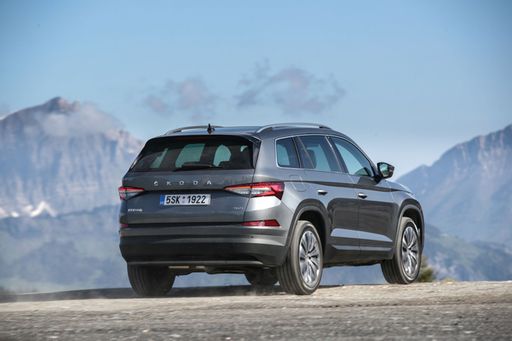
Dimensions play a vital role in the practicality of an SUV. The Skoda Kodiaq spans 4758 mm in length, making it slightly longer than the Tiguan's 4539 mm. The Kodiaq also outshines in cargo space, boasting a trunk capacity of 745 liters, which is a significant advantage for families or those requiring additional storage.

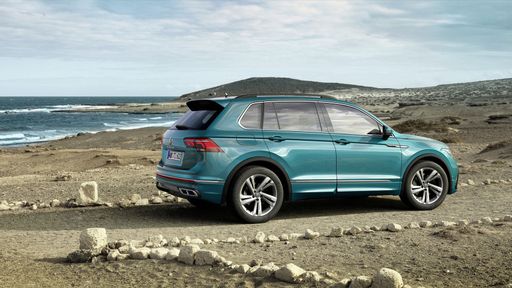
Contrastingly, the Tiguan offers a maximum cargo capacity of 652 liters, which, while less than the Kodiaq, is still adequate for urban dwellers and weekend adventurers alike.

Kodiaq

Innovative Features and Technology

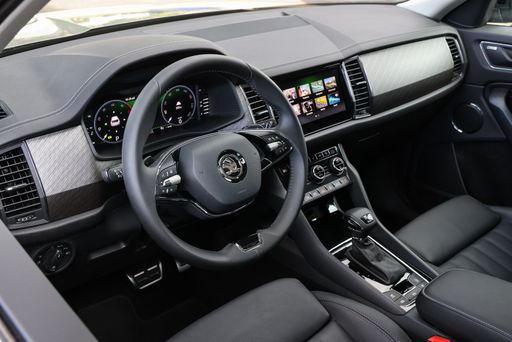
On the technological front, both SUVs come equipped with a host of innovative features. The Kodiaq offers a digital cockpit that seamlessly integrates with its infotainment system, as well as driver assistance features such as adaptive cruise control and lane assist. Additionally, its spacious interior is designed with a focus on comfort, featuring premium materials and state-of-the-art technology.

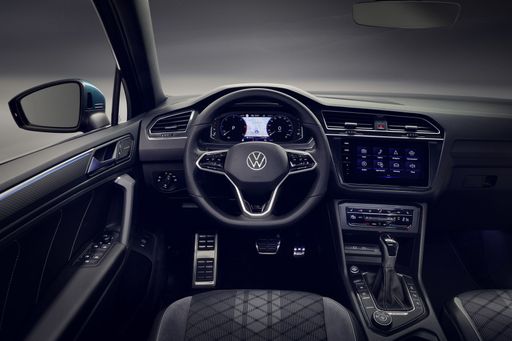
Similarly, the Tiguan includes VW's updated infotainment system that supports smartphone connectivity via Apple CarPlay and Android Auto. The cabin design emphasizes a modern aesthetic with user-friendly controls and driver-centric features. The Tiguan also excels in terms of safety technology, with advanced monitoring systems to assist drivers in various driving conditions.

Tiguan

Driving Dynamics and Comfort

In terms of driving experience, both the Skoda Kodiaq and VW Tiguan provide a balanced ride. The Kodiaq offers a more comfortable and spacious interior, perfect for long journeys or family outings. Its suspension setup is tuned for comfort, allowing it to tackle rough roads with ease.

The Tiguan, on the other hand, emphasizes sportier handling, making it feel more agile on the road. Drivers may appreciate the Tiguan's precise steering and responsive throttle, providing spirited performance without sacrificing comfort during daily commutes.

Kodiaq

Final Thoughts: Which SUV Should You Choose?

Choosing between the Skoda Kodiaq and VW Tiguan ultimately boils down to individual preferences and requirements. The Kodiaq is ideal for those needing extra space and practicality, while the Tiguan caters to those who seek a sportier drive with excellent technology. Both SUVs stand as testaments to their brands' commitment to quality, innovation, and performance, making either choice a solid investment in the mid-size SUV segment.

Skoda Kodiaq

5 (2 Reviews)
rate

VW Tiguan

4 (6 Reviews)
rate

Here’s where it gets real: The technical differences in detail

Tiguan

Costs and Efficiency:

Price and efficiency are key factors when choosing a car – and this is often where the real differences emerge.

VW Tiguan has a to a small extent advantage in terms of price – it starts at 33300 £ , while the Skoda Kodiaq costs 36800 £ . That’s a price difference of around 3548 £.

Fuel consumption also shows a difference: VW Tiguan manages with 1.40 L and is therefore slight more efficient than the Skoda Kodiaq with 1.50 L. The difference is about 0.10 L per 100 km.

As for electric range, the VW Tiguan performs minimal better – achieving up to 126 km, about 4 km more than the Skoda Kodiaq.

Kodiaq

Engine and Performance:

Power, torque and acceleration say a lot about how a car feels on the road. This is where you see which model delivers more driving dynamics.

When it comes to engine power, the VW Tiguan has a slight edge – offering 272 HP compared to 265 HP. That’s roughly 7 HP more horsepower.

In acceleration from 0 to 100 km/h, the VW Tiguan is hardly perceptible quicker – completing the sprint in 5.90 s, while the Skoda Kodiaq takes 6.30 s. That’s about 0.40 s faster.

In terms of top speed, the VW Tiguan performs slight better – reaching 242 km/h, while the Skoda Kodiaq tops out at 231 km/h. The difference is around 11 km/h.

Both models offer the same torque – 400 Nm.

Tiguan

Space and Everyday Use:

Beyond pure performance, interior space and usability matter most in daily life. This is where you see which car is more practical and versatile.

Both vehicles offer seating for 5 people.

In curb weight, VW Tiguan is minimal lighter – 1599 kg compared to 1684 kg. The difference is around 85 kg.

In terms of boot space, the Skoda Kodiaq offers noticeable more room – 910 L compared to 652 L. That’s a difference of about 258 L.

In maximum load capacity, the Skoda Kodiaq performs noticeable better – up to 2105 L, which is about 455 L more than the VW Tiguan.

When it comes to payload, Skoda Kodiaq minimal takes the win – 563 kg compared to 533 kg. That’s a difference of about 30 kg.

Who wins the race in the data check?

The Skoda Kodiaq holds a very small edge in the objective data comparison.
This result only shows which model scores more points on paper – not which of the two cars feels right for you.

Skoda Kodiaq
VW Tiguan

Costs and Consumption

View detailed analysis

Engine and Performance

View detailed analysis

Dimensions and Body

View detailed analysis
from about £36,800
Kodiaq

Skoda Kodiaq

  • Engine Type : Petrol, Petrol MHEV, Diesel, Plugin Hybrid
  • Transmission : Automatic
  • Drive Type : All-Wheel Drive, Front-Wheel Drive
  • Power HP : 150 - 265 HP
  • Consumption L/100km : 1.5 - 8.2 L
  • Electric Range : 119 - 122 km

Skoda Kodiaq

5 (2 Reviews)
rate

The Skoda Kodiaq blends sensible practicality with surprising style, so families and weekend adventurers get roomy comfort without looking like a moving van. It feels calm and composed on the road, packs clever storage and user-friendly tech, and manages to deliver a near-premium vibe without the pretension.

details

VW Tiguan

4 (6 Reviews)
rate

The VW Tiguan blends sensible family practicality with a dash of German polish, delivering a calm, reassuring ride and a cabin that never feels like an afterthought. For buyers who want an SUV that’s easy to live with yet still nicely dressed, the Tiguan is the grown‑up choice that keeps a cheeky wink in reserve.

details
Skoda Kodiaq
VW Tiguan

Costs and Consumption

Price
36800 - 49600 £
Price
33300 - 51900 £
Consumption L/100km
1.5 - 8.2 L
Consumption L/100km
1.4 - 8.4 L
Consumption kWh/100km
-
Consumption kWh/100km
-
Electric Range
119 - 122 km
Electric Range
118 - 126 km
Battery Capacity
-
Battery Capacity
19.70 kWh
co2
35 - 186 g/km
co2
32 - 190 g/km
Fuel tank capacity
55 - 58 L
Fuel tank capacity
45 - 58 L

Dimensions and Body

Body Type
SUV
Body Type
SUV
Seats
5
Seats
5
Doors
5
Doors
5
Curb weight
1684 - 1970 kg
Curb weight
1599 - 1890 kg
Trunk capacity
745 - 910 L
Trunk capacity
490 - 652 L
Length
4758 - 4761 mm
Length
4539 mm
Width
1864 mm
Width
1842 - 1859 mm
Height
1663 - 1683 mm
Height
1656 - 1658 mm
Max trunk capacity
2105 L
Max trunk capacity
1486 - 1650 L
Payload
460 - 563 kg
Payload
460 - 533 kg

Engine and Performance

Engine Type
Petrol, Petrol MHEV, Diesel, Plugin Hybrid
Engine Type
Petrol, Petrol MHEV, Diesel, Plugin Hybrid
Transmission
Automatic
Transmission
Automatic
Transmission Detail
Dual-Clutch Automatic
Transmission Detail
Dual-Clutch Automatic
Drive Type
All-Wheel Drive, Front-Wheel Drive
Drive Type
All-Wheel Drive, Front-Wheel Drive
Power HP
150 - 265 HP
Power HP
130 - 272 HP
Acceleration 0-100km/h
6.3 - 9.7 s
Acceleration 0-100km/h
5.9 - 10.6 s
Max Speed
205 - 231 km/h
Max Speed
210 - 242 km/h
Torque
250 - 400 Nm
Torque
220 - 400 Nm
Number of Cylinders
4
Number of Cylinders
4
Power kW
110 - 195 kW
Power kW
96 - 200 kW
Engine capacity
1498 - 1984 cm3
Engine capacity
1498 - 1984 cm3

General

Model Year
2024 - 2025
Model Year
2024 - 2025
CO2 Efficiency Class
F, G, E, B
CO2 Efficiency Class
G, D, E, F, B
Brand
Skoda
Brand
VW
What drive types are available for the Skoda Kodiaq?

The Skoda Kodiaq is available as All-Wheel Drive or Front-Wheel Drive.

The prices shown are estimates based on German list prices, adjusted for local VAT. Local registration taxes (e.g. NoVA, BPM or CO2 malus) are not included. This information is not legally binding.