
 Deutschland
 France
 Nederland
 Great Britain
 Sverige
 Norge
Norge Danmark
 Suomi
Suomi Italia
 Polska
 España
VS
SsangYong Korando vs Volvo XC60 - Differences and prices compared
Compare performance (190 HP vs 455 HP), boot space and price (27000 £ vs 49200 £ ) at a glance. Find out which car is the better choice for you – SsangYong Korando or Volvo XC60?
Korando
Costs and Efficiency:
Looking at overall running costs, both models reveal some interesting differences in everyday economy.
SsangYong Korando has a convincingly advantage in terms of price – it starts at 27000 £ , while the Volvo XC60 costs 49200 £ . That’s a price difference of around 22200 £.
Fuel consumption also shows a difference: Volvo XC60 manages with 2.80 L and is therefore convincingly more efficient than the SsangYong Korando with 7.50 L. The difference is about 4.70 L per 100 km.
As for electric range, the SsangYong Korando performs significantly better – achieving up to 339 km, about 257 km more than the Volvo XC60.
XC60
Engine and Performance:
Power, torque and acceleration say a lot about how a car feels on the road. This is where you see which model delivers more driving dynamics.
When it comes to engine power, the Volvo XC60 has a clearly edge – offering 455 HP compared to 190 HP. That’s roughly 265 HP more horsepower.
In acceleration from 0 to 100 km/h, the Volvo XC60 is significantly quicker – completing the sprint in 4.90 s, while the SsangYong Korando takes 8.40 s. That’s about 3.50 s faster.
In terms of top speed, the SsangYong Korando performs minimal better – reaching 191 km/h, while the Volvo XC60 tops out at 180 km/h. The difference is around 11 km/h.
There’s also a difference in torque: Volvo XC60 pulls decisively stronger with 709 Nm compared to 360 Nm. That’s about 349 Nm difference.
Ad · Affiliate
As an Amazon Associate, we earn from qualifying purchases.
Korando
Space and Everyday Use:
Cabin size, boot volume and payload all play a role in everyday practicality. Here, comfort and flexibility make the difference.
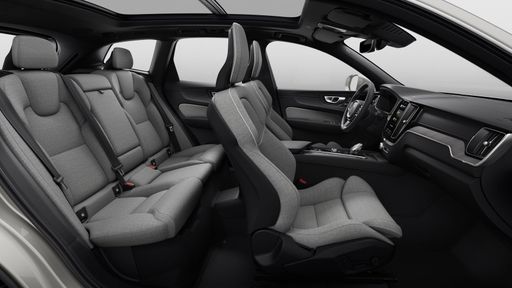
Both vehicles offer seating for 5 people.
In curb weight, SsangYong Korando is noticeable lighter – 1517 kg compared to 1900 kg. The difference is around 383 kg.
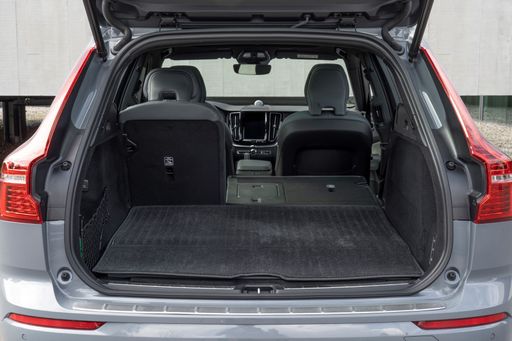
In terms of boot space, the SsangYong Korando offers somewhat more room – 551 L compared to 483 L. That’s a difference of about 68 L.
In maximum load capacity, the Volvo XC60 performs to a small extent better – up to 1543 L, which is about 295 L more than the SsangYong Korando.
When it comes to payload, Volvo XC60 somewhat takes the win – 550 kg compared to 463 kg. That’s a difference of about 87 kg.
Who comes out on top?
Overall, the Volvo XC60 shows itself to be leaves the rival little chance and secures the title of DriveDuel Champion.
It convinces with the more balanced overall package and proves to be the more versatile choice for everyday use.
from about £49,200
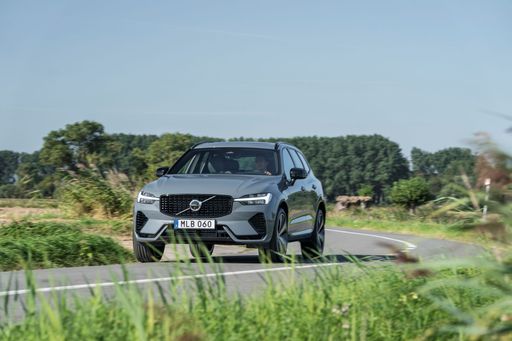
Volvo XC60
SsangYong Korando
Volvo XC60
Costs and Consumption
View detailed analysis
View detailed analysis
Engine and Performance
View detailed analysis
View detailed analysis
Dimensions and Body
View detailed analysis
View detailed analysis
SsangYong Korando
4.4 (1 Reviews)
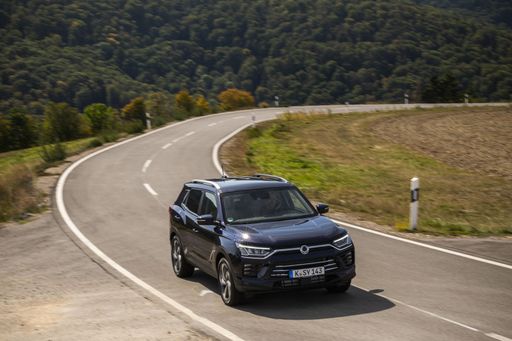
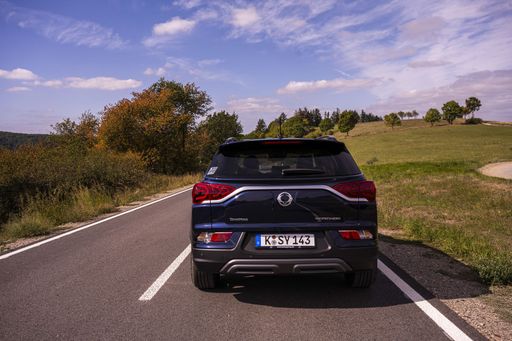
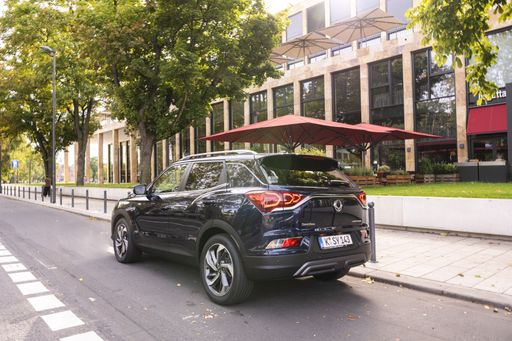
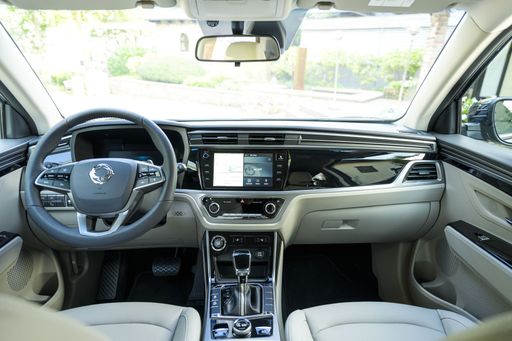
The SsangYong Korando pairs bold, modern styling with a surprisingly roomy and practical cabin, so it looks confident at the lights and handles the daily grind without fuss. It swaps flashy badges for honest value, offering a composed ride, useful equipment and wallet-friendly running that make it an appealing pick for buyers who'd rather spend on weekends than on extravagant finance packages.
details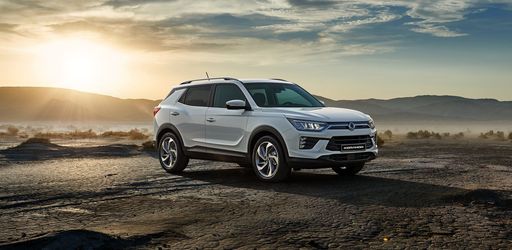
Volvo XC60
5 (2 Reviews)
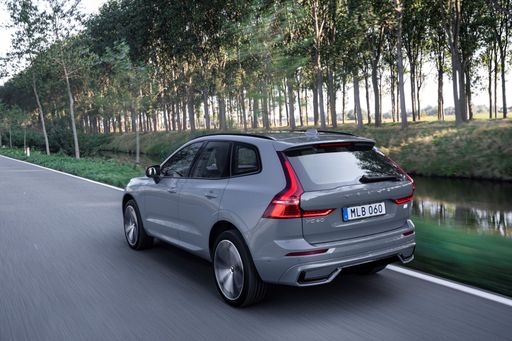
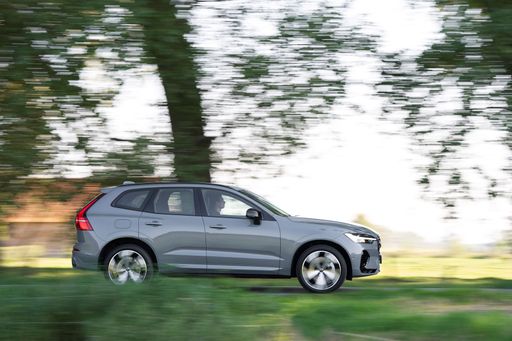
The Volvo XC60 blends Scandinavian calm with confident presence, offering a cabin that feels plush without shouting for attention. It’s a smart pick for buyers after a composed ride, clever practicality and thoughtful safety touches — it even makes running the family shuttle feel almost serene, which is a small miracle.
details
SsangYong Korando
Volvo XC60
Costs and Consumption |
|
|---|---|
|
Price
27000 - 42000 £
|
Price
49200 - 75100 £
|
|
Consumption L/100km
7.5 - 8.6 L
|
Consumption L/100km
2.8 - 7.5 L
|
|
Consumption kWh/100km
16.80 kWh
|
Consumption kWh/100km
-
|
|
Electric Range
339 km
|
Electric Range
74 - 82 km
|
|
Battery Capacity
-
|
Battery Capacity
14.70 kWh
|
|
co2
0 - 197 g/km
|
co2
64 - 169 g/km
|
|
Fuel tank capacity
50 L
|
Fuel tank capacity
71 L
|
Dimensions and Body |
|
|---|---|
|
Body Type
SUV
|
Body Type
SUV
|
|
Seats
5
|
Seats
5
|
|
Doors
5
|
Doors
5
|
|
Curb weight
1517 - 1840 kg
|
Curb weight
1900 - 2150 kg
|
|
Trunk capacity
551 L
|
Trunk capacity
468 - 483 L
|
|
Length
4450 - 4465 mm
|
Length
4708 mm
|
|
Width
1870 mm
|
Width
1902 mm
|
|
Height
1620 - 1645 mm
|
Height
1651 - 1655 mm
|
|
Max trunk capacity
1248 L
|
Max trunk capacity
1528 - 1543 L
|
|
Payload
410 - 463 kg
|
Payload
510 - 550 kg
|
Engine and Performance |
|
|---|---|
|
Engine Type
Petrol, Electric
|
Engine Type
Petrol MHEV, Plugin Hybrid
|
|
Transmission
Manuel, Automatic
|
Transmission
Automatic
|
|
Transmission Detail
Manual Gearbox, Automatic Gearbox, Reduction Gearbox
|
Transmission Detail
Automatic Gearbox
|
|
Drive Type
Front-Wheel Drive, All-Wheel Drive
|
Drive Type
All-Wheel Drive
|
|
Power HP
163 - 190 HP
|
Power HP
250 - 455 HP
|
|
Acceleration 0-100km/h
8.40 s
|
Acceleration 0-100km/h
4.9 - 6.9 s
|
|
Max Speed
156 - 191 km/h
|
Max Speed
180 km/h
|
|
Torque
260 - 360 Nm
|
Torque
350 - 709 Nm
|
|
Number of Cylinders
4
|
Number of Cylinders
4
|
|
Power kW
120 - 140 kW
|
Power kW
184 - 335 kW
|
|
Engine capacity
1497 cm3
|
Engine capacity
1969 cm3
|
General |
|
|---|---|
|
Model Year
2021 - 2023
|
Model Year
2025
|
|
CO2 Efficiency Class
F, G, A
|
CO2 Efficiency Class
F, B
|
|
Brand
SsangYong
|
Brand
Volvo
|
What drive types are available for the SsangYong Korando?
Available configurations include Front-Wheel Drive or All-Wheel Drive.
The prices shown are estimates based on German list prices, adjusted for local VAT. Local registration taxes (e.g. NoVA, BPM or CO2 malus) are not included. This information is not legally binding.