VS

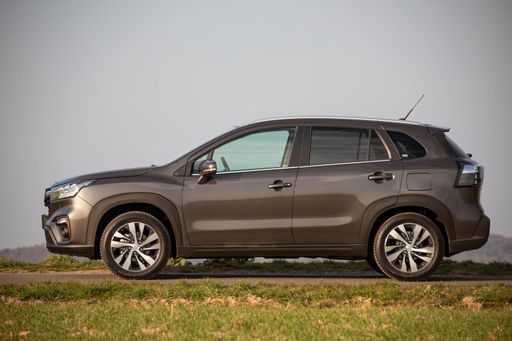
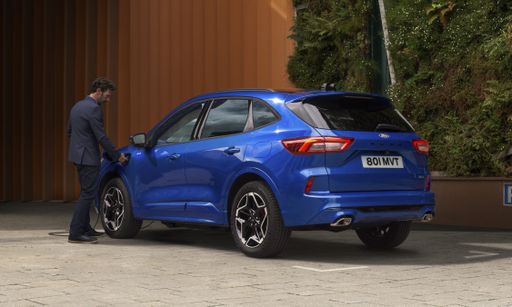
Suzuki S-Cross vs Ford Kuga comparison

Compare performance (110 HP vs 243 HP), boot space and price (21,800 £ vs 34,200 £ ) at a glance. Find out which car is the better choice for you – Suzuki S-Cross or Ford Kuga?

Suzuki S-Cross vs Ford Kuga: Key differences

Suzuki S-Cross

4.7 (6 Reviews)
rate
  • substantially cheaper
  • slightly lighter
details

Ford Kuga

4.3 (7 Reviews)
rate
  • significantly more power
  • significantly more efficient
details

All details on performance, efficiency, range and trunk space can be found in the technical comparison below – including user reviews for both models.

By Achim Sedelmaier

S-Cross

Ford Kuga VS Suzuki S-Cross: quick read for comparison shoppers

Ford Kuga VS Suzuki S-Cross sets up a clear choice between a driver‑centric, tech‑heavy compact SUV and a more pragmatic, value‑focused rival. The Ford Kuga leans into sharper handling, a large infotainment setup and hybrid variants that pay off around town, while the Suzuki S‑Cross trades technology gloss for straightforward controls, generous kit and an honest, lightweight feel. Price and running‑cost expectations fall in different places: the Kuga asks for a bigger outlay in exchange for refinement and agility, the S‑Cross rewards buyers with lower entry cost and sensible equipment. That split informs everything from how they ride to what fits in the boot, so read on with your priorities in mind.
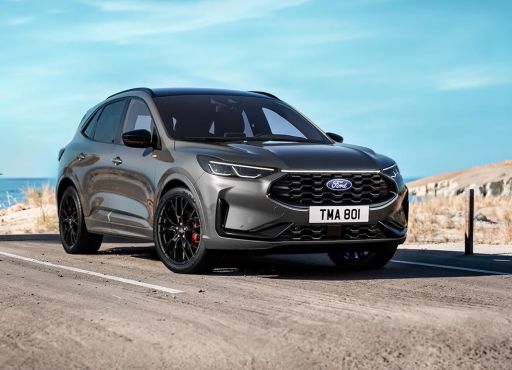
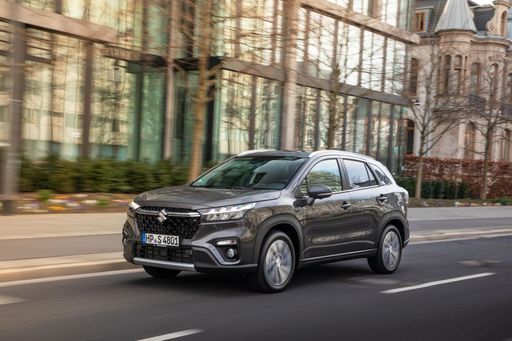
Kuga

Comfort and long‑distance behaviour

The Ford Kuga and Suzuki S‑Cross feel different on long trips: the Kuga is quieter at steady speeds and settles into a composed, motorway‑cruiser character, but its suspension can be noticeably firmer over poor surfaces and the hybrid drive can get noisy under hard acceleration. The S‑Cross cushions bumps more willingly and makes day‑to‑day motorway driving comfortable, yet it tends to let more tyre and wind noise into the cabin at higher speeds. If you cover lots of miles on smooth A‑roads the Kuga’s low noise and stable manners feel premium; if your routes include broken surfaces or you prefer a softer ride, the S‑Cross will be easier on your back. Both are competent over distance, but the type of comfort they offer — quiet refinement versus forgiving compliance — is where they diverge.

S-Cross

City friendliness and everyday usability

In town the Ford Kuga rewards drivers with direct steering, a compact turning circle and strong hybrid economy in stop‑start traffic, though its reliance on touchscreen controls for things like climate can be fiddly in everyday use. The Suzuki S‑Cross is archetypally city‑friendly: light steering, tactile buttons and a straightforward layout make it simple to live with and park, and the optional AllGrip gives extra confidence on slippery streets. The Kuga’s hybrid variants are more economical for commuters who can charge or benefit from regenerative systems, while the S‑Cross keeps ownership costs low without needing special infrastructure. So for tight urban duties you choose between technological efficiency and button‑driven practicality.

Kuga

Cabin feel and perceived quality

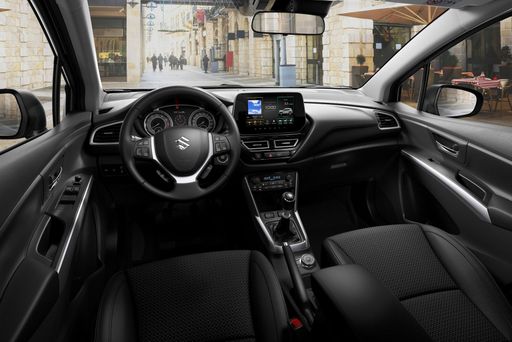
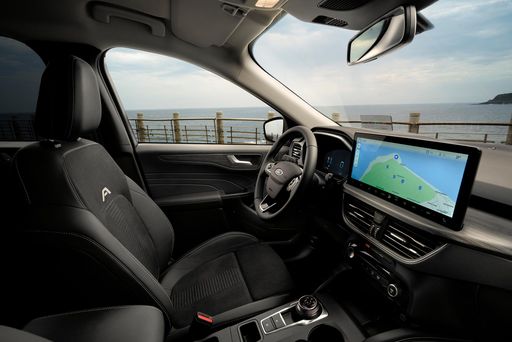
Step inside the Ford Kuga and you notice a contemporary dashboard dominated by a big screen and crisp graphics, but also a lot of hard plastics and details that don’t feel particularly upscale; the impression is modern and functional rather than luxurious. The Suzuki S‑Cross presents a simpler, more utilitarian interior — lots of hard surfaces, but logical switchgear and an honest, robust feel that will age without fuss. For buyers who want a techy cabin that looks current the Kuga feels more advanced, even if it disappoints on tactile polish; for those who prioritise straightforward ergonomics and fewer software quirks, the S‑Cross’s no‑nonsense cabin will feel less frustrating day to day. Both cabins are practical, but they aim their appeals at different sensibilities.

S-Cross

Practicality, seating and luggage usability

Practical space is another trade‑off: the Ford Kuga gives you a sliding rear bench that increases flexibility for passengers and cargo, making it handy for family life and variable loads, though certain hybrid versions eat into boot space. The Suzuki S‑Cross tends to be more straightforwardly spacious in its conventional mild‑hybrid layouts with a flat, adjustable load floor that’s easy to use, while its full‑hybrid options reduce luggage room noticeably. If you need flexible rear legroom and a neater rear seat solution the Kuga has the edge, but if you regularly carry bulky weekly shopping, prams or sports kit the S‑Cross’s usable boot in its MHEV form is more forgiving. Both fit five adults, but how they accommodate luggage and bulky items points to different everyday strengths.

Kuga

Who each car suits — buyer fit and trade‑offs before the specs

The Ford Kuga is best for buyers who prioritise a more engaging drive, modern infotainment and hybrid efficiency in mixed urban and highway use, and who are willing to pay a bit more and accept a firmer ride for those benefits. The Suzuki S‑Cross will appeal to pragmatic buyers who want simple controls, lower initial cost, solid equipment levels and an easy‑to‑use boot, plus the option of extra traction with AllGrip if you need it in winter. If you care most about driving dynamics and tech features, lean toward the Kuga; if budget, straightforward ergonomics and day‑to‑day practicality matter most, the S‑Cross is a smarter fit. Below this editorial comparison we break down powertrains, efficiency, dimensions and equipment to help you match those qualitative differences to the numbers.

Here’s where it gets real: The technical differences in detail

S-Cross

Costs and Efficiency:

Price and efficiency are key factors when choosing a car – and this is often where the real differences emerge.

Suzuki S-Cross is substantially cheaper – starting at 21,800 £ , while the Ford Kuga costs 34,200 £ . That’s a price difference of around 12,480 £.

Fuel consumption also shows a difference: the Ford Kuga uses 2.8 L/100km and is significantly more efficient than the Suzuki S-Cross with 5.3 L/100km. The difference is about 2.5 L/100km.

Kuga

Engine and Performance:

Power, torque and acceleration say a lot about how a car feels on the road. This is where you see which model delivers more driving dynamics.

When it comes to engine power, the Ford Kuga offers significantly more power – delivering 243 HP compared to 110 HP. That’s roughly 133 HP more horsepower.

There’s also a difference in torque: the Ford Kuga delivers only slightly more torque with 240 Nm compared to 235 Nm. That’s about 5 Nm more.

S-Cross

Space and Everyday Use:

Beyond pure performance, interior space and usability matter most in daily life. This is where you see which car is more practical and versatile.

Both vehicles offer seating for 5 people.

In terms of curb weight, Suzuki S-Cross is slightly lighter – 1,280 kg compared to 1,526 kg. The difference is around 246 kg.

When it comes to payload, the Ford Kuga carries markedly more – 550 kg compared to 405 kg. That’s a difference of about 145 kg.

Who wins the race in the data check?

The Ford Kuga is far ahead overall in the objective data comparison.
This result only shows which model scores more points on paper – not which of the two cars feels right for you.

from £34,200
Kuga

Ford Kuga

  • Engine Type Petrol, Full Hybrid, Plugin Hybrid
  • Transmission Manuel, Automatic
  • Drive Type Front-Wheel Drive, All-Wheel Drive
  • Power HP 150 - 243 HP
  • Consumption L/100km 2.8 - 6.8 L/100km
  • Electric Range 68 km
Suzuki S-Cross
Ford Kuga

Costs and Consumption

View detailed analysis

Engine and Performance

View detailed analysis

Dimensions and Body

View detailed analysis

Suzuki S-Cross

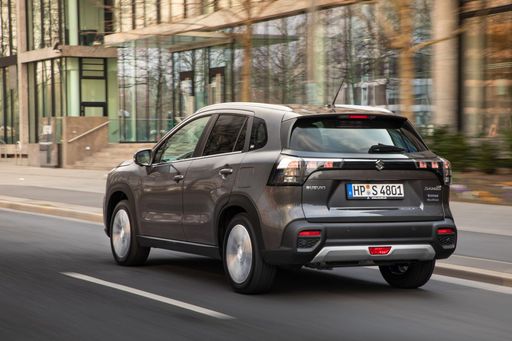
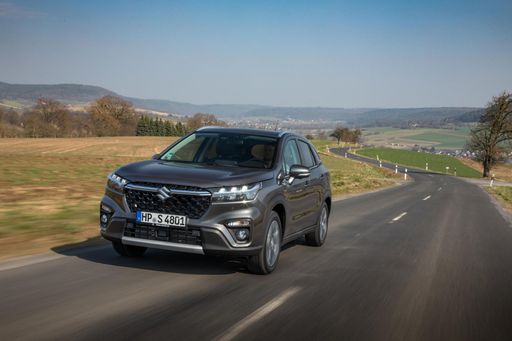
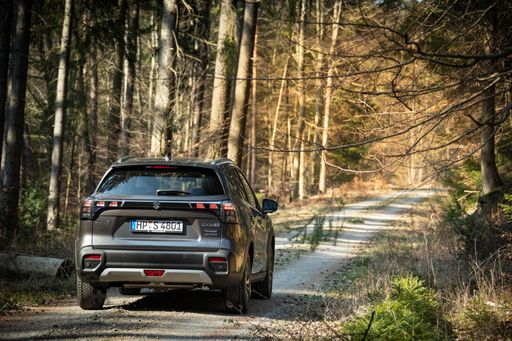
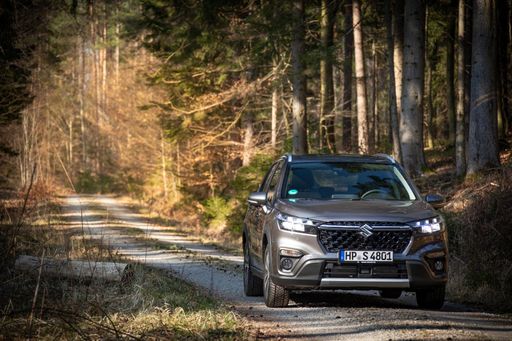
The Suzuki S-Cross is a practical, well-built compact crossover that puts comfort, efficiency and everyday reliability first. With a roomy cabin, straightforward technology and sensible design, it’s a no-nonsense choice for buyers seeking a versatile family car.

details

Ford Kuga

The Ford Kuga is a practical and comfortable compact SUV that balances everyday usability with a composed ride and adaptable interior. It offers sensible tech and safety features, making it a solid choice for families or anyone seeking a versatile, easy-to-live-with crossover.

details
Suzuki S-Cross
Ford Kuga

Costs and Consumption

Price
21,800 - 34,200 £
Price
34,200 - 46,300 £
Consumption L/100km
5.3 - 5.8 L/100km
Consumption L/100km
2.8 - 6.8 L/100km
Consumption kWh/100km
-
Consumption kWh/100km
-
Electric Range
-
Electric Range
68 km
Battery Capacity
-
Battery Capacity
-
co2
119 - 138 g/km
co2
55 - 154 g/km
Fuel tank capacity
-
Fuel tank capacity
-

Dimensions and Body

Body Type
SUV
Body Type
SUV
Seats
5
Seats
5
Doors
-
Doors
-
Curb weight
1,280 - 1,385 kg
Curb weight
1,526 - 1,859 kg
Trunk capacity
430 L
Trunk capacity
-
Length
-
Length
-
Width
1,785 mm
Width
1,882 mm
Height
-
Height
-
Max trunk capacity
-
Max trunk capacity
-
Payload
395 - 405 kg
Payload
541 - 550 kg

Engine and Performance

Engine Type
Petrol MHEV
Engine Type
Petrol, Full Hybrid, Plugin Hybrid
Transmission
Manuel, Automatic
Transmission
Manuel, Automatic
Transmission Detail
Manual Gearbox, Automatic Gearbox
Transmission Detail
Manual Gearbox, CVT, Automatic Gearbox
Drive Type
Front-Wheel Drive, All-Wheel Drive
Drive Type
Front-Wheel Drive, All-Wheel Drive
Power HP
110 HP
Power HP
150 - 243 HP
Acceleration 0-100km/h
-
Acceleration 0-100km/h
7.3 - 9.9 s
Max Speed
-
Max Speed
-
Torque
235 Nm
Torque
240 Nm
Number of Cylinders
4
Number of Cylinders
3 - 4
Power kW
81 kW
Power kW
111 - 178 kW
Engine capacity
1,373 cm3
Engine capacity
1,496 - 2,488 cm3

General

Model Year
2025
Model Year
2025
CO2 Efficiency Class
D, E
CO2 Efficiency Class
E, D, B
Brand
Suzuki
Brand
Ford
DriveDuel uses data analysis and artificial intelligence to evaluate vehicle data and create content. Content is regularly reviewed and improved. The displayed prices are estimates based on German list prices, adjusted to the respective country’s VAT. Country-specific registration taxes are not included. This information is not legally binding.