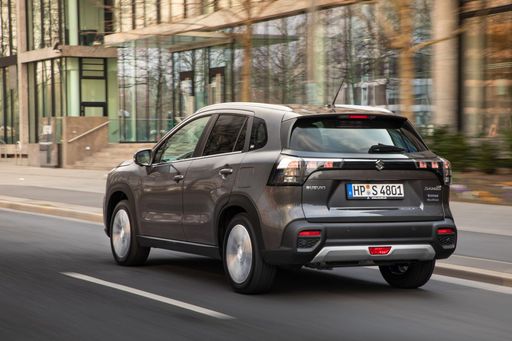
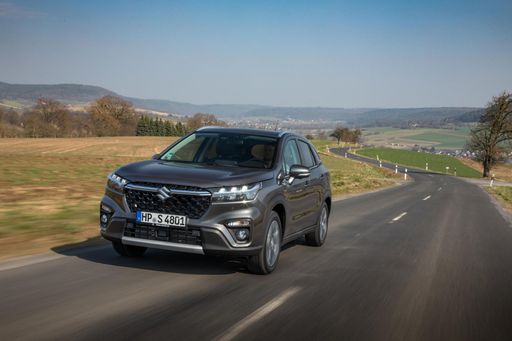
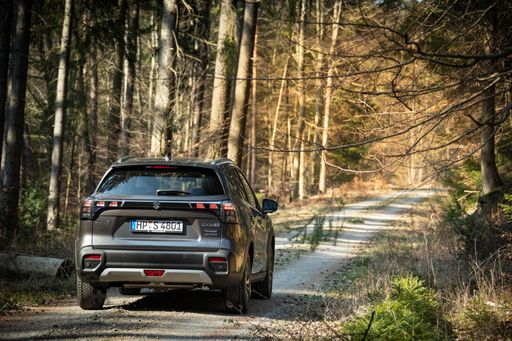
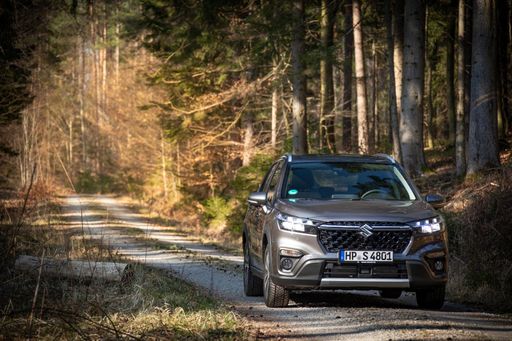
@ Suzuki Motor Corporation
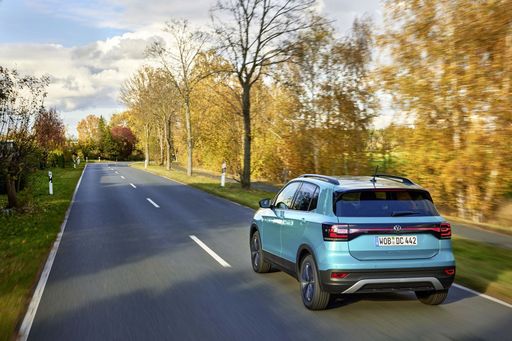
@ Volkswagen AG / VW Media
VS

Suzuki S-Cross vs VW T-Cross – Which car suits you better?

Two cars, one duel: Suzuki S-Cross meets VW T-Cross.
Which one wins in performance, efficiency and value for money? Find out now!

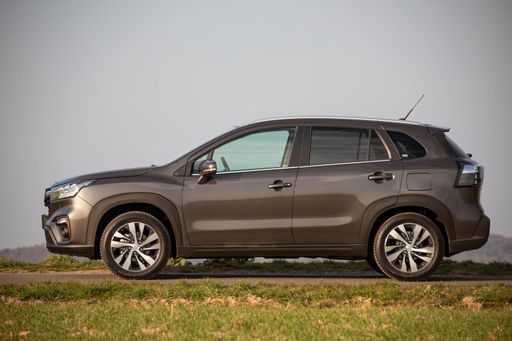
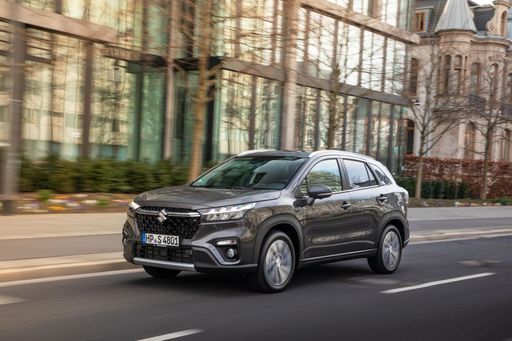
S-Cross @ Suzuki Motor Corporation

Comparing Two Compact SUVs: The Suzuki S-Cross vs. VW T-Cross

The compact SUV segment has been gaining immense popularity among urban drivers, and two contenders have caught the attention of car enthusiasts and buyers alike: the Suzuki S-Cross and the Volkswagen T-Cross. Both vehicles bring unique styling, advanced technology, and efficient powertrains to the table. In this article, we'll dive into the technical aspects, innovations, and features of these two impressive SUVs to help you decide which one is the better fit for your lifestyle.
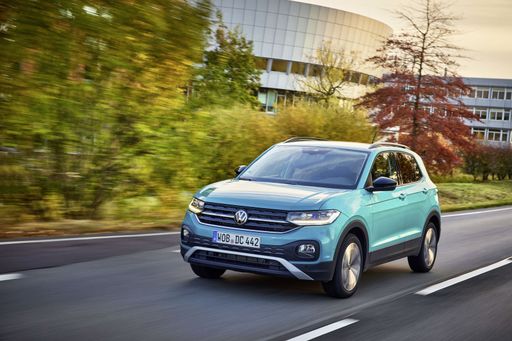
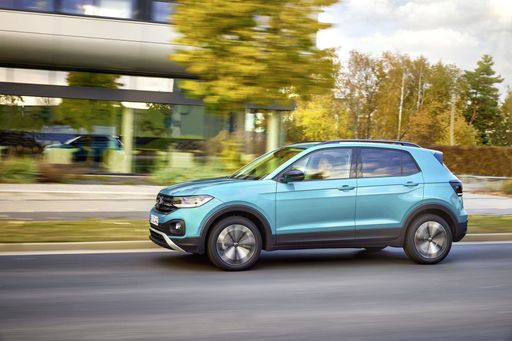
T-Cross @ Volkswagen AG / VW Media

Powertrains and Performance

The Suzuki S-Cross offers a choice of a full hybrid and petrol mild-hybrid engine options, producing a range of power outputs from 116 to 129 HP. The S-Cross is equipped with both an automatic and manual transmission option, including an automated manual gearbox for heightened driving dynamics. With a torque of 235 Nm, this SUV can accelerate from 0-100 km/h in just 9.5 seconds, making it efficient for both city and highway driving. The S-Cross also boasts a top speed of up to 195 km/h.

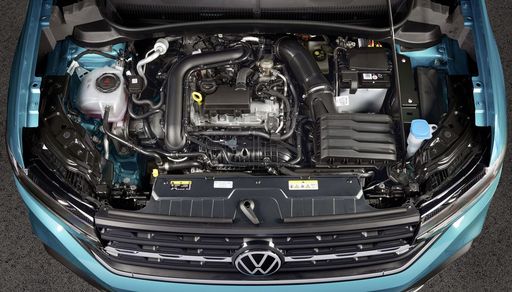
In contrast, the VW T-Cross features exclusively petrol engines with power outputs ranging from 95 to 150 HP. It offers more engine capacity choices, with the smaller engine being a 999 cm3 three-cylinder unit to a more powerful 1498 cm3 four-cylinder unit. The T-Cross primarily employs a manual gearbox but also offers a dual-clutch automatic for those who prefer a more seamless driving experience. The T-Cross exhibits impressive performance as well, achieving 0-100 km/h in as little as 8.4 seconds and a top speed reaching 200 km/h.

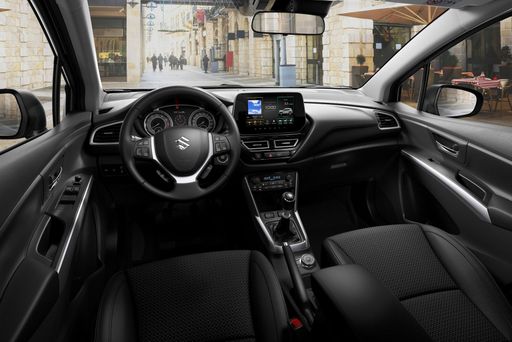
S-Cross @ Suzuki Motor Corporation

Fuel Efficiency

Fuel efficiency is a vital consideration when choosing an SUV, especially for urban commuting. The Suzuki S-Cross showcases commendable consumption figures ranging from 5.1 to 5.8 L/100 km, depending on the chosen variant, allowing drivers to enjoy longer trips without frequent refueling.

On the other hand, the VW T-Cross also holds its ground with fuel consumption figures between 5.6 to 6.0 L/100 km, which still makes it a relatively efficient option in this segment. Both SUVs fall within the CO2 efficiency class D, indicating environmental awareness and lower emissions.

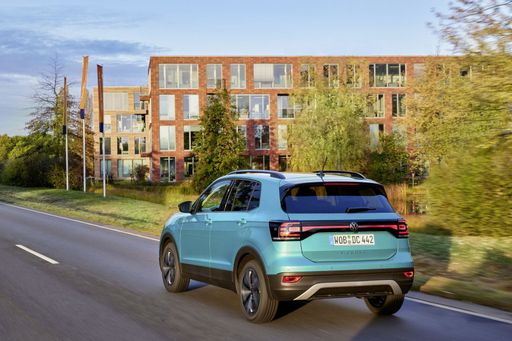
T-Cross @ Volkswagen AG / VW Media

Dimensions and Interior Space

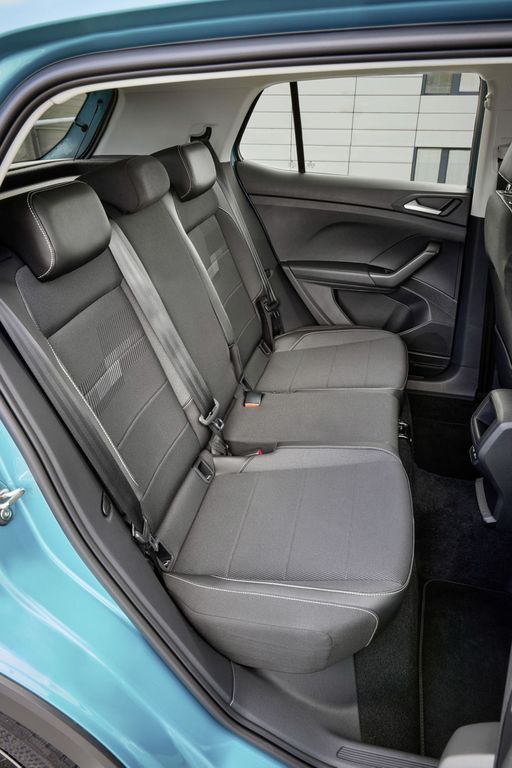
In terms of physical dimensions, the Suzuki S-Cross measures 4300 mm in length, 1785 mm in width, and stands 1580 mm tall. It provides ample trunk capacity of 430 liters, along with sufficient legroom for five occupants. This makes the S-Cross a spacious option, ideal for family outings and weekend getaways.

The VW T-Cross, while slightly shorter at 4127 mm, manages to offer a generous trunk space of 455 liters, slightly outpacing its rival in this area. Its dimensions of 1784 mm in width and a height of 1573 mm maintain practical interior space for five passengers, ensuring comfort during longer journeys.

S-Cross @ Suzuki Motor Corporation

Technological Innovations and Safety Features

Both models are equipped with a range of modern technological features designed to enhance driver experience and safety. The Suzuki S-Cross comes standard with a large touchscreen infotainment system, smartphone connectivity, and various advanced driver assistance systems, including adaptive cruise control and lane departure warning. These tech features enhance the overall driving experience and offer peace of mind on the road.

In comparison, the VW T-Cross also integrates a sophisticated infotainment system, providing seamless connectivity and digital services. Safety remains a priority, with features such as a comprehensive suite of safety systems, including automatic emergency braking and blind-spot monitoring, ensuring occupants' well-being.

T-Cross @ Volkswagen AG / VW Media

Conclusion: Which SUV Reigns Supreme?

Ultimately, both the Suzuki S-Cross and VW T-Cross present compelling choices in the compact SUV market. The S-Cross stands out with its hybrid options, efficient fuel consumption, and spacious interior, while the T-Cross shines with its performance, advanced tech features, and slightly larger trunk space. Buyers will need to weigh their requirements and preferences when deciding which model best suits their needs.

In this battle of compact SUVs, whether you prioritize efficiency and spaciousness or performance and technology, both the Suzuki S-Cross and VW T-Cross are worth considering. Choose wisely, and happy driving!

Here’s where it gets real: The technical differences in detail

S-Cross @ Suzuki Motor Corporation

Costs and Efficiency:

Price and efficiency are often the first things buyers look at. Here it becomes clear which model has the long-term edge – whether at the pump, the plug, or in purchase price.

VW T-Cross has a hardly perceptible advantage in terms of price – it starts at 21100 £, while the Suzuki S-Cross costs 21800 £. That’s a price difference of around 685 £.

Fuel consumption also shows a difference: Suzuki S-Cross manages with 5.30 L and is therefore barely noticeable more efficient than the VW T-Cross with 5.40 L. The difference is about 0.10 L per 100 km.

T-Cross @ Volkswagen AG / VW Media

Engine and Performance:

Under the bonnet, it becomes clear which model is tuned for sportiness and which one takes the lead when you hit the accelerator.

When it comes to engine power, the VW T-Cross has a clearly perceptible edge – offering 150 HP compared to 110 HP. That’s roughly 40 HP more horsepower.

In terms of top speed, the VW T-Cross performs barely noticeable better – reaching 200 km/h, while the Suzuki S-Cross tops out at 185 km/h. The difference is around 15 km/h.

There’s also a difference in torque: VW T-Cross pulls hardly perceptible stronger with 250 Nm compared to 235 Nm. That’s about 15 Nm difference.

S-Cross @ Suzuki Motor Corporation

Space and Everyday Use:

Cabin size, boot volume and payload all play a role in everyday practicality. Here, comfort and flexibility make the difference.

Both vehicles offer seating for 5 people.

In curb weight, VW T-Cross is hardly perceptible lighter – 1267 kg compared to 1280 kg. The difference is around 13 kg.

In terms of boot space, the VW T-Cross offers hardly perceptible more room – 455 L compared to 430 L. That’s a difference of about 25 L.

In maximum load capacity, the VW T-Cross performs hardly perceptible better – up to 1281 L, which is about 51 L more than the Suzuki S-Cross.

When it comes to payload, VW T-Cross slightly takes the win – 480 kg compared to 405 kg. That’s a difference of about 75 kg.

Who comes out on top?

Overall, the VW T-Cross shows itself to be dominates this comparison and secures the title of DriveDuel Champion.
It convinces with the more balanced overall package and proves to be the more versatile choice for everyday use.

from about £21,100
T-Cross @ Volkswagen AG / VW Media

VW T-Cross

  • Engine Type : Petrol
  • Transmission : Manuel, Automatic
  • Drive Type : Front-Wheel Drive
  • Power HP : 95 - 150 HP
  • Consumption L/100km : 5.4 - 6 L

Suzuki S-Cross

4.5 (2)
rate

The Suzuki S-Cross is a neatly packaged crossover that puts everyday practicality ahead of showy theatrics, offering a comfortable cabin and predictable handling that suit family life and weekend errands alike. It’s not a headline-grabber, but its sensible packaging, low-key charm and reputation for reliability make it a shrewd choice for buyers who prefer smart value over flash.

details

VW T-Cross

4 (1)
rate

The VW T-Cross turns everyday practicality into a style statement, offering a roomy-feeling cabin, clever storage and playful design that suits town life and family duties alike. On the road it's composed and relaxed, rewarding buyers who want the raised seating and confident presence of an SUV without the weighty compromises.

details
Suzuki S-Cross
VW T-Cross
S-Cross @ Suzuki Motor Corporation
T-Cross @ Volkswagen AG / VW Media

Costs and Consumption

Price
21800 - 34200 £
Price
21100 - 31500 £
Consumption L/100km
5.3 - 5.8 L
Consumption L/100km
5.4 - 6 L
Consumption kWh/100km
-
Consumption kWh/100km
-
Electric Range
-
Electric Range
-
Battery Capacity
-
Battery Capacity
-
co2
119 - 138 g/km
co2
124 - 136 g/km
Fuel tank capacity
47 L
Fuel tank capacity
40 L

Dimensions and Body

Body Type
SUV
Body Type
SUV
Seats
5
Seats
5
Doors
5
Doors
5
Curb weight
1280 - 1385 kg
Curb weight
1267 - 1338 kg
Trunk capacity
430 L
Trunk capacity
455 L
Length
4305 mm
Length
4127 mm
Width
1785 mm
Width
1784 mm
Height
1580 mm
Height
1573 mm
Max trunk capacity
1230 L
Max trunk capacity
1281 L
Payload
395 - 405 kg
Payload
463 - 480 kg

Engine and Performance

Engine Type
Petrol MHEV
Engine Type
Petrol
Transmission
Manuel, Automatic
Transmission
Manuel, Automatic
Transmission Detail
Manual Gearbox, Automatic Gearbox
Transmission Detail
Manual Gearbox, Dual-Clutch Automatic
Drive Type
Front-Wheel Drive, All-Wheel Drive
Drive Type
Front-Wheel Drive
Power HP
110 HP
Power HP
95 - 150 HP
Acceleration 0-100km/h
-
Acceleration 0-100km/h
8.4 - 11.3 s
Max Speed
180 - 185 km/h
Max Speed
180 - 200 km/h
Torque
235 Nm
Torque
175 - 250 Nm
Number of Cylinders
4
Number of Cylinders
3 - 4
Power kW
81 kW
Power kW
70 - 110 kW
Engine capacity
1373 cm3
Engine capacity
999 - 1498 cm3

General

Model Year
2025
Model Year
2024 - 2025
CO2 Efficiency Class
D, E
CO2 Efficiency Class
D, E
Brand
Suzuki
Brand
VW
What drive types are available for the Suzuki S-Cross?

The Suzuki S-Cross is available as Front-Wheel Drive or All-Wheel Drive.

The prices and data displayed are estimates based on German list prices and may vary by country. This information is not legally binding.