VS

Suzuki Swift vs Dacia Sandero comparison

Compare performance (82 HP vs 122 HP), boot space and price (17,100 £ vs 11,000 £ ) at a glance. Find out which car is the better choice for you – Suzuki Swift or Dacia Sandero?

Suzuki Swift vs Dacia Sandero: Key differences

Suzuki Swift

4.2 (4 Reviews)
rate
  • clearly more efficient
  • barely lighter
details

Dacia Sandero

3.3 (5 Reviews)
rate
  • substantially cheaper
  • visibly more power
details

All details on performance, efficiency, range and trunk space can be found in the technical comparison below – including user reviews for both models.

By Achim Sedelmaier

Swift

Head-to-head: Dacia Sandero VS Suzuki Swift — what this comparison is about

Dacia Sandero and Suzuki Swift represent two distinct propositions in the small-car market: one prioritises pure value and usable space, the other lightness, efficiency and city agility. This piece cuts through spec sheets to show how those philosophies feel day-to-day — character, cabin experience, practicality and where each car will frustrate or delight. Expect clear trade-offs: the Sandero gives you more tangible room and a lower price of entry, while the Swift rewards nimbleness and economical running. Read on for a buyer-focused view that prepares you for the detailed technical comparison that follows.
Sandero

Character on the road — calm torque versus light-footed agility

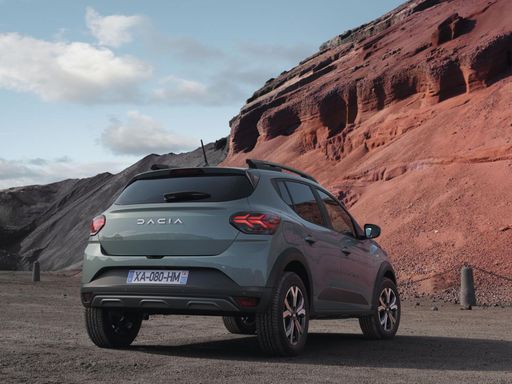
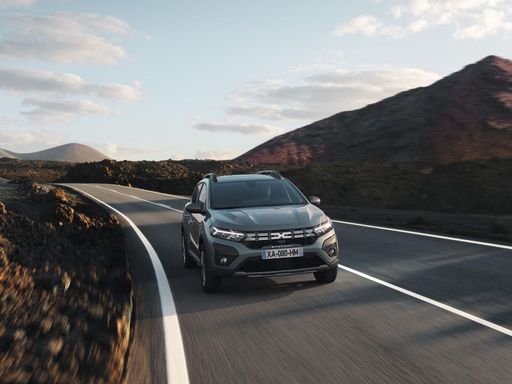
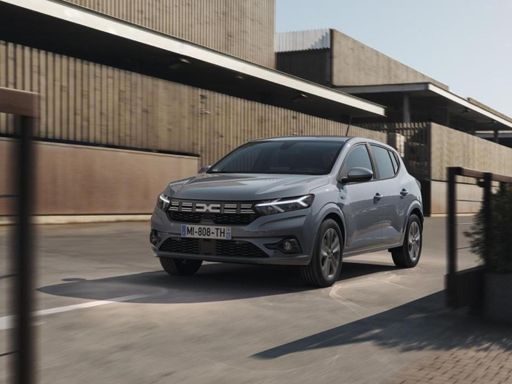
The Dacia Sandero feels like a straightforward, robust companion that leans on usable grunt and stability rather than sporting drama, so it will appeal to drivers who favour predictable, relaxed progress. The Suzuki Swift, by contrast, is built around lightness and a sharper steering feel that makes it more engaging in town and on twisty roads, giving a sense of agility the Sandero doesn’t try to match. That means the Sandero often feels more planted when carrying loads or overtaking with confidence, while the Swift rewards quicker inputs and cornering with a livelier personality. Buyers who prefer a composed, unexcitable car will lean to the Sandero; those who want a peppy, playful small car will prefer the Swift’s lighter-footed character.

Swift

Comfort and long-distance behaviour — louder roads, different compromises

On long runs the Dacia Sandero trades refinement for value: it is roomy up front and stable in a straight line but you’ll notice wind and tyre noise more readily as speeds climb. The Suzuki Swift shares some of that audible character at motorway pace, yet its lighter construction and higher revs make motorway cruising feel a touch more strained and less relaxed over long stretches. Suspension tuning also differs: the Sandero soaks up coarse bumps competently but can feel less composed over sharp joints, whereas the Swift is generally firmer and transmits more of the road surface to occupants. If quiet, fatigue-free autobahn travel is a priority, neither is luxury-class quiet, but the Sandero’s more relaxed delivery will suit long-haul pragmatists better than the Swift’s sporty leanings.

Sandero

City friendliness and everyday usability — compact ease versus straightforward practicality

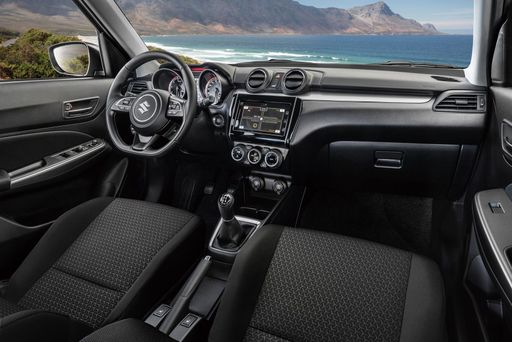
In urban use the Suzuki Swift’s compact footprint, excellent visibility and quick steering make parking and lane changes noticeably easier, and its generous standard tech eases daily routines. The Dacia Sandero is also city-capable but plays the straight-shooting role: simple controls, tall seating and a light steering feel that’s comfortable for short hops and easy reversing — it’s less about gadgetry and more about uncomplicated utility. That means the Swift feels slightly more effortless for tight-city manoeuvres and stop-start traffic, while the Sandero rewards drivers who prefer clear physical switches and a forgiving driving position. For shoppers prioritising tech and the most agile city manners, the Swift nudges ahead; for those wanting low fuss and clear ergonomics, the Sandero fits better.

Swift

Practicality, cabin feel and perceived quality — value with trade-offs vs neater finishing

The Dacia Sandero offers a noticeably more spacious front cabin and a sensible boot for everyday needs, delivering maximum cargo and interior room per pound spent, but its plastics and trim speak plainly of cost-saving choices. The Suzuki Swift presents a neater, slightly more refined cabin presentation and more generous standard equipment, yet it sacrifices some luggage practicality with a smaller, awkwardly shaped boot and higher loading lip. In daily life that means the Sandero will swallow shopping, strollers and weekend gear with less angst, while the Swift will feel cheerier inside and better equipped for shorter trips. Buyers who prioritise usable space and low purchase cost will value the Sandero, whereas those who want a tidier interior and richer kit will prefer the Swift despite the smaller load area.

Sandero

Who should buy which car — matching priorities to practical reality

If your checklist starts with the lowest possible running costs, maximum interior space up front and no-nonsense usability, the Dacia Sandero aligns clearly with that mission and will reduce regret for budget-conscious drivers. If your life is dominated by tight streets, frequent short trips and a desire for engaging, economical motoring with more standard equipment, the Suzuki Swift will feel better suited on a daily basis. Families or buyers focused on long motorway distances and premium refinement should be prepared to compromise with either choice, but the Sandero leans towards pragmatic space while the Swift leans towards agility and efficiency. With those buyer-fit trade-offs clear, the technical comparison that follows will show exactly how those real-world differences are achieved.

Here’s where it gets real: The technical differences in detail

Swift

Costs and Efficiency:

Looking at overall running costs, both models reveal some interesting differences in everyday economy.

Dacia Sandero is substantially cheaper – starting at 11,000 £ , while the Suzuki Swift costs 17,100 £ . That’s a price difference of around 6,180 £.

Fuel consumption also shows a difference: the Suzuki Swift uses 4.4 L/100km and is clearly more efficient than the Dacia Sandero with 5.3 L/100km. The difference is about 0.9 L/100km.

Sandero

Engine and Performance:

Power, torque and acceleration are the classic benchmarks for car enthusiasts – and here, some clear differences start to show.

When it comes to engine power, the Dacia Sandero offers visibly more power – delivering 122 HP compared to 82 HP. That’s roughly 40 HP more horsepower.

There’s also a difference in torque: the Dacia Sandero delivers considerably more torque with 200 Nm compared to 112 Nm. That’s about 88 Nm more.

Swift

Space and Everyday Use:

Beyond pure performance, interior space and usability matter most in daily life. This is where you see which car is more practical and versatile.

Both vehicles offer seating for 5 people.

In terms of curb weight, Suzuki Swift is barely lighter – 1,069 kg compared to 1,100 kg. The difference is around 31 kg.

When it comes to payload, the Dacia Sandero carries noticeably more – 436 kg compared to 296 kg. That’s a difference of about 140 kg.

Who wins the race in the data check?

The Dacia Sandero stands well ahead of its rival in the objective data comparison.
This result only shows which model scores more points on paper – not which of the two cars feels right for you.

from £11,000
Sandero

Dacia Sandero

  • Engine Type Petrol, LPG
  • Transmission Manuel, Automatic
  • Drive Type Front-Wheel Drive
  • Power HP 67 - 122 HP
  • Consumption L/100km 5.3 - 7.2 L/100km
Suzuki Swift
Dacia Sandero

Costs and Consumption

View detailed analysis

Engine and Performance

View detailed analysis

Dimensions and Body

View detailed analysis

Suzuki Swift

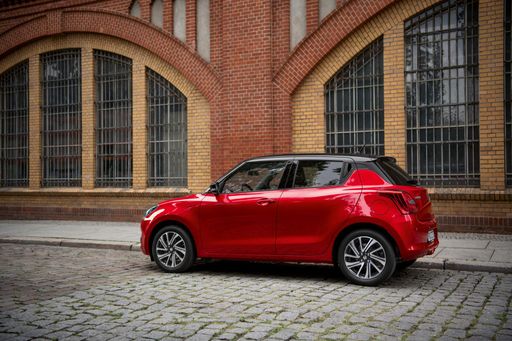
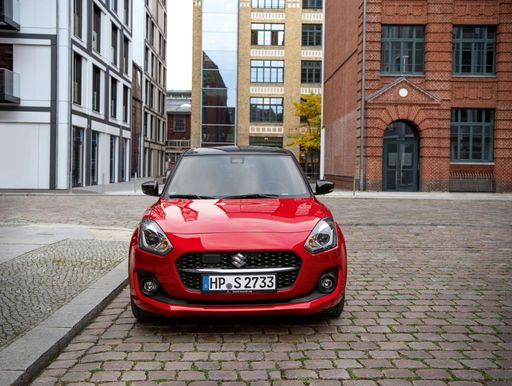
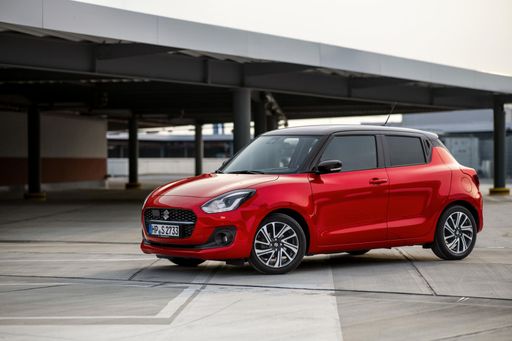
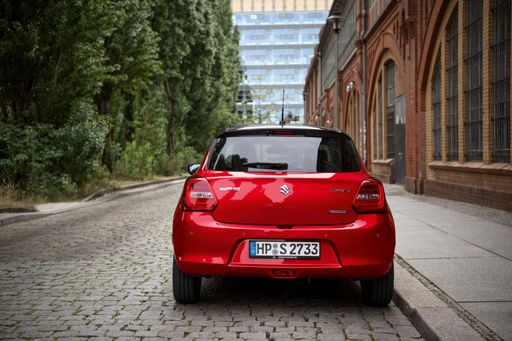
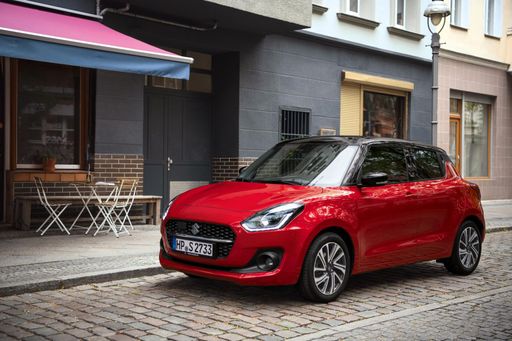
The Suzuki Swift is a cheeky little hatch that turns city streets into its playground with lively handling and a grin-inducing drive. Practical enough for daily chores, thrifty to run and kinder on your wallet than many rivals, it's a sensible pick for buyers who want fun without drama.

details

Dacia Sandero

The Sandero is a no-nonsense hatchback that prioritises practicality and low running costs, making it a smart choice for budget-minded buyers. It delivers a surprisingly roomy interior and straightforward, useful equipment so you get everyday usability without paying for unnecessary frills.

details
Suzuki Swift
Dacia Sandero

Costs and Consumption

Price
17,100 - 21,200 £
Price
11,000 - 16,300 £
Consumption L/100km
4.4 - 4.9 L/100km
Consumption L/100km
5.3 - 7.2 L/100km
Consumption kWh/100km
-
Consumption kWh/100km
-
Electric Range
-
Electric Range
-
Battery Capacity
-
Battery Capacity
-
co2
98 - 110 g/km
co2
111 - 131 g/km
Fuel tank capacity
-
Fuel tank capacity
-

Dimensions and Body

Body Type
Hatchback
Body Type
Hatchback
Seats
5
Seats
5
Doors
-
Doors
-
Curb weight
1,069 - 1,145 kg
Curb weight
1,100 - 1,297 kg
Trunk capacity
-
Trunk capacity
328 - 372 L
Length
-
Length
-
Width
1,735 mm
Width
1,853 mm
Height
-
Height
-
Max trunk capacity
-
Max trunk capacity
-
Payload
282 - 296 kg
Payload
385 - 436 kg

Engine and Performance

Engine Type
Petrol MHEV
Engine Type
Petrol, LPG
Transmission
Manuel, Automatic
Transmission
Manuel, Automatic
Transmission Detail
Manual Gearbox, CVT
Transmission Detail
Manual Gearbox, Dual-Clutch Automatic
Drive Type
Front-Wheel Drive, All-Wheel Drive
Drive Type
Front-Wheel Drive
Power HP
82 HP
Power HP
67 - 122 HP
Acceleration 0-100km/h
-
Acceleration 0-100km/h
9.7 - 16.7 s
Max Speed
-
Max Speed
-
Torque
112 Nm
Torque
95 - 200 Nm
Number of Cylinders
3
Number of Cylinders
3
Power kW
61 kW
Power kW
49 - 90 kW
Engine capacity
1,197 cm3
Engine capacity
999 - 1,199 cm3

General

Model Year
2025
Model Year
2025
CO2 Efficiency Class
C
CO2 Efficiency Class
D, C
Brand
Suzuki
Brand
Dacia
DriveDuel uses data analysis and artificial intelligence to evaluate vehicle data and create content. Content is regularly reviewed and improved. The displayed prices are estimates based on German list prices, adjusted to the respective country’s VAT. Country-specific registration taxes are not included. This information is not legally binding.