VS

Suzuki Vitara vs Honda HR-V comparison

Compare performance (184 HP vs 131 HP), boot space and price (23,600 £ vs 29,700 £ ) at a glance. Find out which car is the better choice for you – Suzuki Vitara or Honda HR-V?

Suzuki Vitara vs Honda HR-V: Key differences

Suzuki Vitara

4.5 (4 Reviews)
rate
  • markedly cheaper
  • clearly more power
  • only slightly more efficient
  • clearly quicker 0–100 km/h
  • a bit lighter
  • a bit more trunk space
details

Honda HR-V

4.3 (15 Reviews)
rate
details

All details on performance, efficiency, range and trunk space can be found in the technical comparison below – including user reviews for both models.

By Achim Sedelmaier

Vitara

Introduction: A Clash of Titans

When it comes to the world of compact SUVs, Honda and Suzuki have established themselves as formidable players. Both brands sport impressive line-ups that cater to a diverse range of consumers, but how do they stack up against each other? In this comparison, we will explore the key technical aspects, innovations, and features of two popular models: the Honda HR-V and the Suzuki Vitara. These vehicles represent the latest advancements from their respective manufacturers for the model years 2022 and 2024.
HR-V

Design and Dimensions

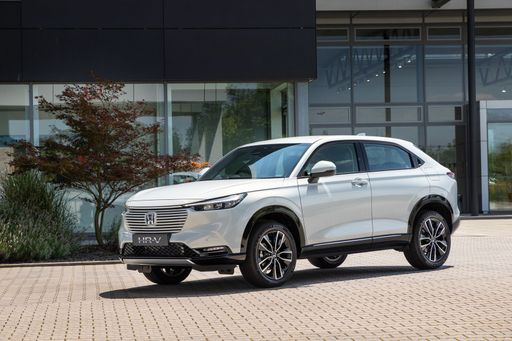
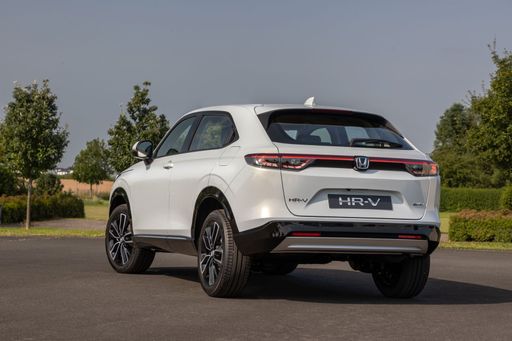
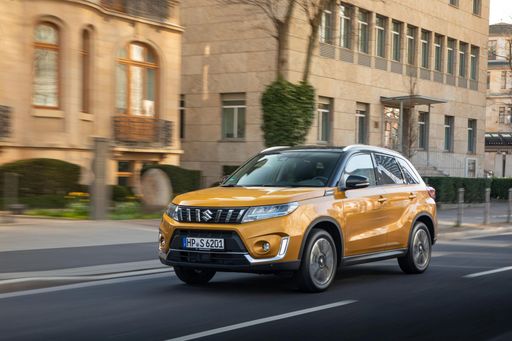
The Honda HR-V, with a length of 4340 mm and a height of 1582 mm, stands out with its sleek curves and modern aesthetic. It is designed to provide a spacious interior for up to five passengers, boasting a trunk capacity of 335 liters. Conversely, the Suzuki Vitara is slightly smaller, measuring 4185 mm in length and 1595 mm in height. Despite its more compact size, the Vitara offers a respectable trunk capacity, with options reaching up to 375 liters.

Vitara

Powertrains and Performance

Under the hood, the Honda HR-V is equipped with a full hybrid engine that produces 130 HP and 253 Nm of torque. This efficient powertrain delivers a smooth drive, aided by an automatic CVT transmission. The HR-V offers a commendable fuel consumption of just 5.4 L/100km, allowing it to cover long distances with ease. The acceleration from 0-100 km/h is recorded at 10.7 seconds, with a top speed of 170 km/h.

In comparison, the Suzuki Vitara provides a wider choice of powertrains, including petrol mild hybrid and full hybrid options. The base model produces 116 HP, while upper trims reach up to 129 HP and torque figures vary between 235 Nm and 235 Nm. The Vitara also benefits from a nimble performance with a 0-100 km/h acceleration time as low as 9.5 seconds and a top speed reaching up to 190 km/h. Its fuel efficiency is impressive as well, with consumption figures between 5.0 and 5.6 L/100km.

HR-V

Transmission Options

The Honda HR-V’s singular automatic CVT system is engineered for optimal efficiency and smooth transitions, perfect for urban commuting. On the other hand, Suzuki offers a more versatile approach. The Vitara presents both manual and automated manual transmission options, granting drivers more control over their driving experience. The combination of front-wheel and all-wheel drive choices further adds to its appeal, allowing for enhanced traction in varied driving conditions.

Vitara

Technological Innovations

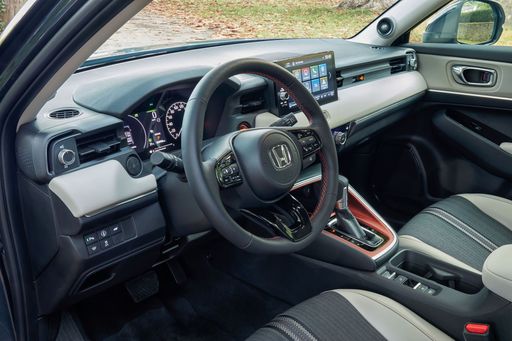
Honda has equipped the HR-V with cutting-edge technology, including advanced safety features and driver aids. Its CO2 emissions stand at 122 g/km, placing it within the D efficiency class. The vehicle’s infotainment system also showcases a user-friendly interface, ensuring a connected and enjoyable ride.

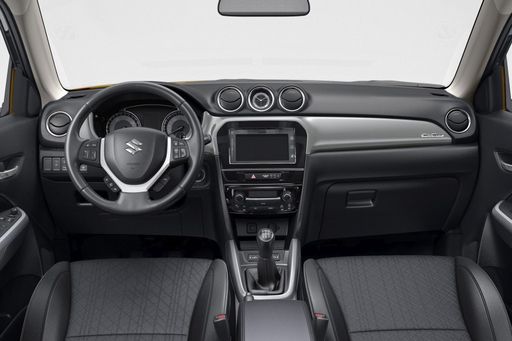
Suzuki does not fall short either. The Vitara is fitted with numerous tech-savvy features, such as a multi-functional display and safety technologies that garnered attention in the industry. With CO2 emissions as low as 113 g/km for efficient models, the Vitara also secures a place within the C efficiency class, making it an attractive option for eco-conscious consumers.

HR-V

Conclusion: Choosing Your Champion

Both the Honda HR-V and Suzuki Vitara represent the best of their respective brands, each excelling in particular areas. The HR-V shines in hybrid technology and larger cargo space, while the Vitara impresses with a variety of engine options and superior acceleration. Ultimately, your choice will depend on personal preferences, driving habits, and priorities—whether it be power, efficiency, or technological innovations. Whichever you choose, you will drive away in a well-engineered compact SUV ready to take on the road.

Here’s where it gets real: The technical differences in detail

Vitara

Costs and Efficiency:

Looking at overall running costs, both models reveal some interesting differences in everyday economy.

Suzuki Vitara is markedly cheaper – starting at 23,600 £ , while the Honda HR-V costs 29,700 £ . That’s a price difference of around 6,171 £.

Fuel consumption also shows a difference: the Suzuki Vitara uses 5.3 L/100km and is only slightly more efficient than the Honda HR-V with 5.4 L/100km. The difference is about 0.1 L/100km.

HR-V

Engine and Performance:

Power, torque and acceleration are the classic benchmarks for car enthusiasts – and here, some clear differences start to show.

When it comes to engine power, the Suzuki Vitara offers clearly more power – delivering 184 HP compared to 131 HP. That’s roughly 53 HP more horsepower.

When accelerating from 0 to 100 km/h, the Suzuki Vitara is clearly quicker – completing the sprint in 7.4 s, while the Honda HR-V takes 10.6 s. That’s about 3.2 s quicker.

There’s also a difference in torque: the Suzuki Vitara delivers moderately more torque with 307 Nm compared to 253 Nm. That’s about 54 Nm more.

Vitara

Space and Everyday Use:

Beyond pure performance, interior space and usability matter most in daily life. This is where you see which car is more practical and versatile.

Both vehicles offer seating for 5 people.

In terms of curb weight, Suzuki Vitara is a bit lighter – 1,255 kg compared to 1,452 kg. The difference is around 197 kg.

Looking at boot space, the Suzuki Vitara offers a bit more boot space – 375 L compared to 319 L. That’s a difference of about 56 L.

When it comes to payload, the Suzuki Vitara carries only slightly more – 425 kg compared to 418 kg. That’s a difference of about 7 kg.

Who wins the race in the data check?

The Suzuki Vitara stands well ahead of its rival in the objective data comparison.
This result only shows which model scores more points on paper – not which of the two cars feels right for you.

from £23,600
Vitara

Suzuki Vitara

  • Engine Type : Petrol MHEV, Electric
  • Transmission : Automatic, Manuel
  • Drive Type : Front-Wheel Drive, All-Wheel Drive
  • Power HP : 110 - 184 HP
  • Consumption L/100km : 5.3 - 5.8 L/100km
  • Consumption kWh/100km : 14.9 - 16.6 kWh/100km
  • Electric Range : 344 - 426 km
Suzuki Vitara
Honda HR-V

Costs and Consumption

View detailed analysis

Engine and Performance

View detailed analysis

Dimensions and Body

View detailed analysis

Suzuki Vitara

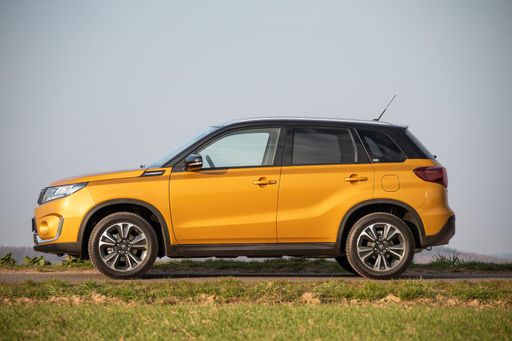
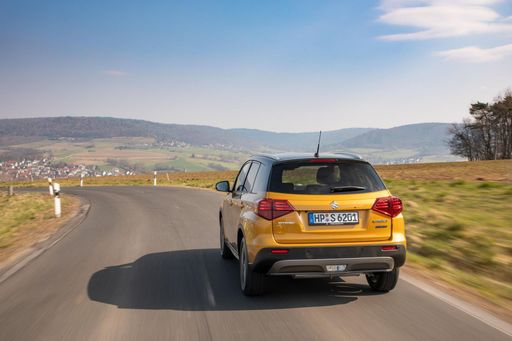
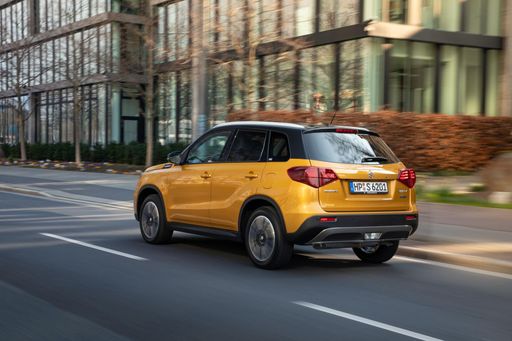
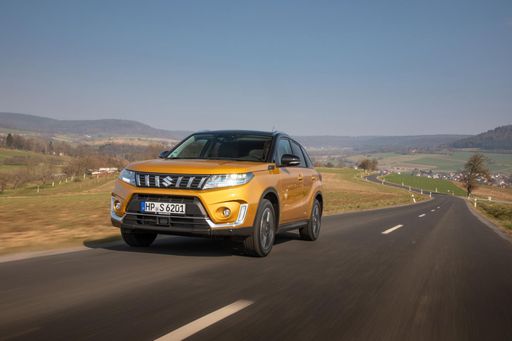
The Vitara is a city-smart SUV with a cheeky streak of off-road promise, perfect for drivers who want practicality without pretense. It’s honest, easy to live with and surprisingly likeable, a sensible companion for everyday adventures and weekend escapes.

details

Honda HR-V

The Honda HR-V is the sensible compact crossover that blends roomy practicality with a composed, friendly drive, making it an easy pick for buyers who want everyday usability without fuss. It won’t thrill hardcore enthusiasts, but its clever packaging, comfortable cabin and low-key styling make life simpler — and that’s exactly the point.

details
Suzuki Vitara
Honda HR-V

Costs and Consumption

Price
23,600 - 36,800 £
Price
29,700 - 35,400 £
Consumption L/100km
5.3 - 5.8 L/100km
Consumption L/100km
5.4 L/100km
Consumption kWh/100km
14.9 - 16.6 kWh/100km
Consumption kWh/100km
-
Electric Range
344 - 426 km
Electric Range
-
Battery Capacity
-
Battery Capacity
-
co2
0 - 137 g/km
co2
122 g/km
Fuel tank capacity
-
Fuel tank capacity
-

Dimensions and Body

Body Type
SUV
Body Type
SUV
Seats
5
Seats
5
Doors
-
Doors
-
Curb weight
1,255 - 1,935 kg
Curb weight
1,452 kg
Trunk capacity
310 - 375 L
Trunk capacity
319 L
Length
-
Length
-
Width
1,775 - 1,800 mm
Width
-
Height
-
Height
-
Max trunk capacity
-
Max trunk capacity
-
Payload
395 - 425 kg
Payload
418 kg

Engine and Performance

Engine Type
Petrol MHEV, Electric
Engine Type
Full Hybrid
Transmission
Automatic, Manuel
Transmission
Automatic
Transmission Detail
Automatic Gearbox, Manual Gearbox
Transmission Detail
CVT
Drive Type
Front-Wheel Drive, All-Wheel Drive
Drive Type
Front-Wheel Drive
Power HP
110 - 184 HP
Power HP
131 HP
Acceleration 0-100km/h
7.4 - 9.6 s
Acceleration 0-100km/h
10.6 - 10.8 s
Max Speed
-
Max Speed
-
Torque
193 - 307 Nm
Torque
253 Nm
Number of Cylinders
4
Number of Cylinders
4
Power kW
81 - 135 kW
Power kW
96 kW
Engine capacity
1,373 cm3
Engine capacity
1,498 cm3

General

Model Year
2,025 - 2,026
Model Year
2025
CO2 Efficiency Class
D, E, A
CO2 Efficiency Class
D
Brand
Suzuki
Brand
Honda
DriveDuel uses data analysis and artificial intelligence to evaluate vehicle data and create content. Content is regularly reviewed and improved. The displayed prices are estimates based on German list prices, adjusted to the respective country’s VAT. Country-specific registration taxes are not included. This information is not legally binding.