VS

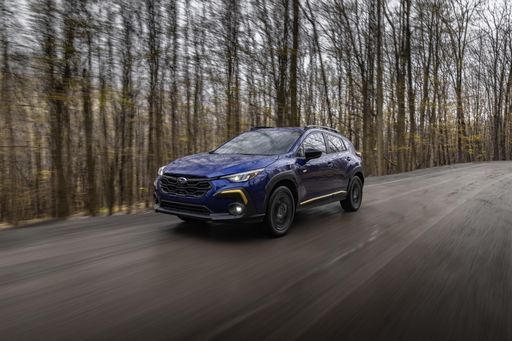
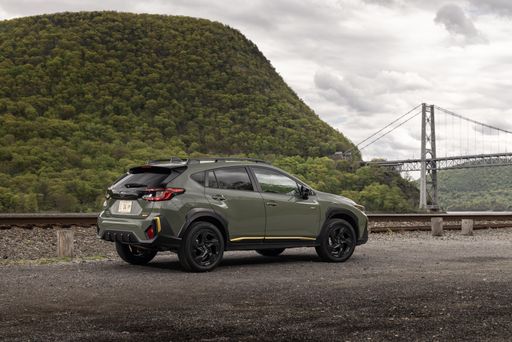
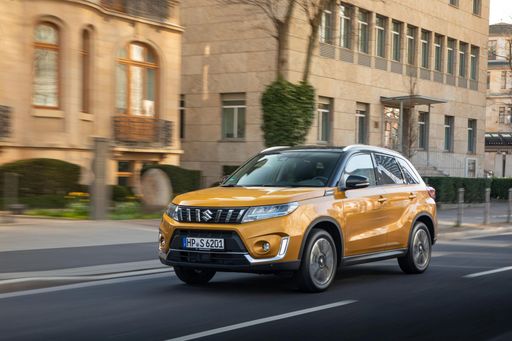
Suzuki Vitara vs Subaru Crosstrek comparison

Compare performance (184 HP vs 136 HP), boot space and price (23,600 £ vs 29,800 £ ) at a glance. Find out which car is the better choice for you – Suzuki Vitara or Subaru Crosstrek?

Suzuki Vitara vs Subaru Crosstrek: Key differences

Suzuki Vitara

4.5 (3 Reviews)
rate
  • clearly cheaper
  • visibly more power
  • significantly more efficient
  • clearly quicker 0–100 km/h
  • markedly lighter
  • slightly more trunk space

Subaru Crosstrek

4.3 (3 Reviews)
rate

All details on performance, efficiency, range and trunk space can be found in the technical comparison below – including user reviews for both models.

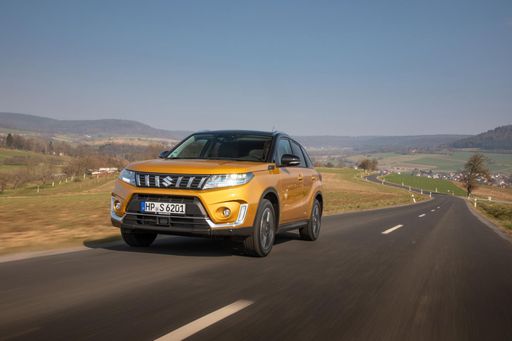
Vitara

When it comes to compact SUVs, the Subaru Crosstrek and Suzuki Vitara stand out as popular choices for drivers seeking versatility and performance. With both vehicles boasting unique features and cutting-edge technologies, this comparison will delve into their technical aspects and innovations, ultimately assisting you in making an informed choice.
Crosstrek

Performance and Powertrain

The Subaru Crosstrek for 2024 is equipped with a 2.0-liter petrol MHEV engine producing a solid 136 HP and 182 Nm of torque. This power is transmitted through a smooth Continuously Variable Transmission (CVT) and is complemented by Subaru's renowned all-wheel-drive system, enhancing the vehicle's capability in varying terrains. The Crosstrek achieves a respectable 0-100 km/h acceleration in 10.8 seconds and has a top speed of 198 km/h, making it a robust choice for both city driving and off-road adventures.

On the other hand, the Suzuki Vitara offers multiple engine options, including petrol MHEV and full hybrid variants, with horsepower ranging from 116 to 129 HP. An appealing feature of the Vitara is its choice of transmission: potential buyers can opt for either a manual gearbox or an automated manual. The Vitara’s acceleration is commendable, with times ranging from 9.5 seconds to 12.7 seconds, depending on the engine choice. However, its top speed reaches 190 km/h, slightly below that of the Crosstrek.

Vitara

Fuel Efficiency

For the environmentally-conscious driver, fuel consumption is a critical factor. The Subaru Crosstrek has a consumption rate of 7.7 L/100 km, which, while acceptable, lags behind the Suzuki Vitara's impressive figures that range from 5.0 to 5.6 L/100 km, depending on the variant. This makes the Vitara not only a cost-effective option but also a more eco-friendly choice with lower CO2 emissions, falling into categories D and C, compared to the Crosstrek's F class.

Crosstrek

Dimensions and Cargo Capacity

In terms of size, the Subaru Crosstrek measures 4495 mm in length, 1800 mm in width, and 1600 mm in height, yielding a trunk capacity of 315 liters. This SUV comfortably seats five passengers and handles a curb weight between 1612 kg and 1628 kg. In contrast, the Suzuki Vitara is slightly more compact, measuring 4185 mm in length, 1775 mm in width, and 1595 mm in height, with cargo space between 289 to 375 liters. The lighter curb weight, ranging from 1255 kg to 1395 kg, gives the Vitara a nimbleness that can enhance its maneuverability in urban settings.

Vitara

Interior Features and Innovations

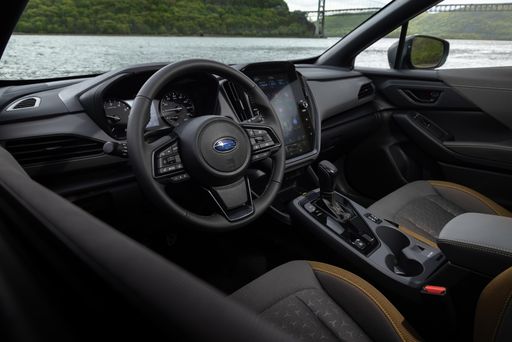
Both models offer a range of interior amenities that appeal to modern drivers. The Subaru Crosstrek comes equipped with user-friendly technology, including a touchscreen infotainment system with smartphone integration, making it easy to stay connected on the go. Comfort features such as supportive seats and a well-laid-out dashboard enhance the overall driving experience.

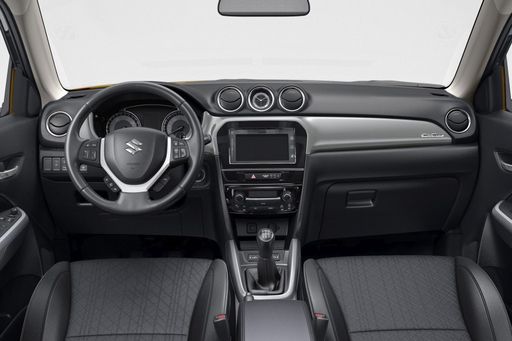
Meanwhile, the Suzuki Vitara shines with its driver-assistance technologies, including adaptive cruise control and lane-keeping assist, positioning it as a safer option for families and commuters alike. Additionally, its modern cabin design is bolstered by high-quality materials and an intuitive infotainment system, ensuring convenience for all passengers.

Crosstrek

Conclusion

In conclusion, the Subaru Crosstrek and Suzuki Vitara each bring their own strengths to the table. The Crosstrek offers robust off-road capability and powerful engine performance, while the Vitara excels in fuel economy and a lighter, more versatile design. Your ultimate choice will likely hinge on your specific driving needs—whether you prioritize off-road adventures or daily commuting efficiency, both models are worthy contenders in the compact SUV market.

Here’s where it gets real: The technical differences in detail

Vitara

Costs and Efficiency:

Looking at overall running costs, both models reveal some interesting differences in everyday economy.

Suzuki Vitara is clearly cheaper – starting at 23,600 £ , while the Subaru Crosstrek costs 29,800 £ . That’s a price difference of around 6,249 £.

Fuel consumption also shows a difference: the Suzuki Vitara uses 5 L/100km and is significantly more efficient than the Subaru Crosstrek with 7.7 L/100km. The difference is about 2.7 L/100km.

Crosstrek

Engine and Performance:

Under the bonnet, it becomes clear which model is tuned for sportiness and which one takes the lead when you hit the accelerator.

When it comes to engine power, the Suzuki Vitara offers visibly more power – delivering 184 HP compared to 136 HP. That’s roughly 48 HP more horsepower.

When accelerating from 0 to 100 km/h, the Suzuki Vitara is clearly quicker – completing the sprint in 7.4 s, while the Subaru Crosstrek takes 10.8 s. That’s about 3.4 s quicker.

Looking at top speed, the Subaru Crosstrek is marginally faster – reaching 198 km/h, while the Suzuki Vitara tops out at 190 km/h. The difference is around 8 km/h.

There’s also a difference in torque: the Suzuki Vitara delivers clearly more torque with 307 Nm compared to 182 Nm. That’s about 125 Nm more.

Vitara

Space and Everyday Use:

Whether family car or daily driver – which one offers more room, flexibility and comfort?

Both vehicles offer seating for 5 people.

In terms of curb weight, Suzuki Vitara is markedly lighter – 1,255 kg compared to 1,595 kg. The difference is around 340 kg.

Looking at boot space, the Suzuki Vitara offers slightly more boot space – 375 L compared to 315 L. That’s a difference of about 60 L.

For maximum load capacity, the Subaru Crosstrek offers somewhat more capacity – up to 1,314 L, about 194 L more than the Suzuki Vitara.

When it comes to payload, the Subaru Crosstrek carries a bit more – 505 kg compared to 425 kg. That’s a difference of about 80 kg.

Who wins the race in the data check?

The Suzuki Vitara is far ahead overall in the objective data comparison.
This result only shows which model scores more points on paper – not which of the two cars feels right for you.

from £23,600
Vitara

Suzuki Vitara

  • Engine Type : Petrol MHEV, Full Hybrid, Electric
  • Transmission : Manuel, Automatic
  • Drive Type : Front-Wheel Drive, All-Wheel Drive
  • Power HP : 110 - 184 HP
  • Consumption L/100km : 5 - 5.9 L/100km
  • Consumption kWh/100km : 14.9 - 16.6 kWh/100km
  • Electric Range : 344 - 426 km
Suzuki Vitara
Subaru Crosstrek

Costs and Consumption

View detailed analysis

Engine and Performance

View detailed analysis

Dimensions and Body

View detailed analysis

Suzuki Vitara

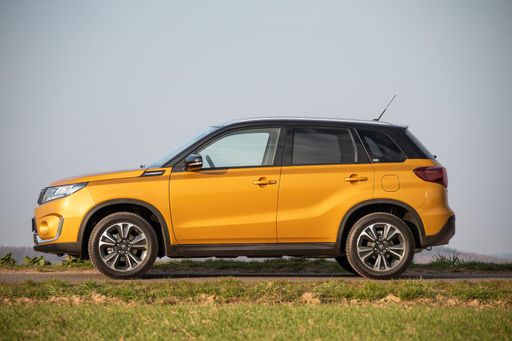
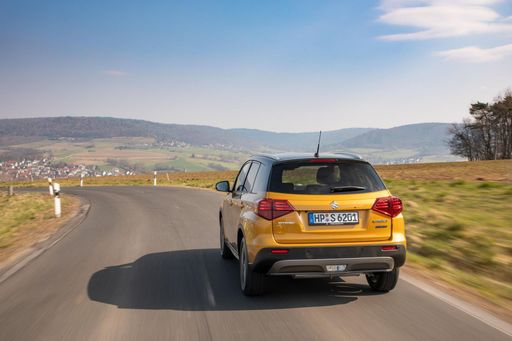
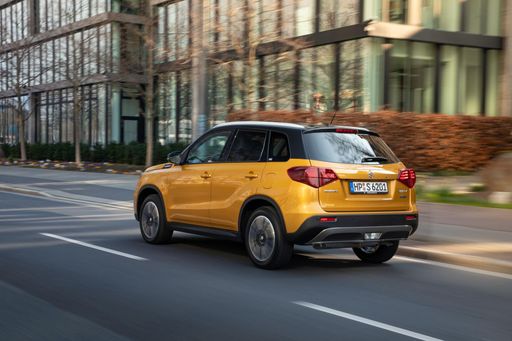
The Vitara is a city-smart SUV with a cheeky streak of off-road promise, perfect for drivers who want practicality without pretense. It’s honest, easy to live with and surprisingly likeable, a sensible companion for everyday adventures and weekend escapes.

details

Subaru Crosstrek

The Subaru Crosstrek is a compact, go-anywhere crossover that blends rugged good looks with Subaru's familiar all-wheel-drive confidence, so it feels equally at home on backroads and in the supermarket car park. It delivers practical, reliable transport with a comfy ride and sensible features — not the flashiest cabin, but great for buyers who prefer substance over sparkle.

details
Suzuki Vitara
Subaru Crosstrek

Costs and Consumption

Price
23,600 - 36,800 £
Price
29,800 - 34,900 £
Consumption L/100km
5 - 5.9 L/100km
Consumption L/100km
7.7 L/100km
Consumption kWh/100km
14.9 - 16.6 kWh/100km
Consumption kWh/100km
-
Electric Range
344 - 426 km
Electric Range
-
Battery Capacity
-
Battery Capacity
-
co2
0 - 138 g/km
co2
174 g/km
Fuel tank capacity
47 L
Fuel tank capacity
48 L

Dimensions and Body

Body Type
SUV
Body Type
SUV
Seats
5
Seats
5
Doors
5
Doors
5
Curb weight
1,255 - 1,935 kg
Curb weight
1,595 - 1,628 kg
Trunk capacity
289 - 375 L
Trunk capacity
315 L
Length
4,185 mm
Length
4,495 mm
Width
1,775 - 1,800 mm
Width
1,800 mm
Height
1,595 mm
Height
1,600 mm
Max trunk capacity
1,046 - 1,120 L
Max trunk capacity
1,297 - 1,314 L
Payload
375 - 425 kg
Payload
472 - 505 kg

Engine and Performance

Engine Type
Petrol MHEV, Full Hybrid, Electric
Engine Type
Petrol MHEV
Transmission
Manuel, Automatic
Transmission
Automatic
Transmission Detail
Manual Gearbox, Automated Manual, Automatic Gearbox
Transmission Detail
CVT
Drive Type
Front-Wheel Drive, All-Wheel Drive
Drive Type
All-Wheel Drive
Power HP
110 - 184 HP
Power HP
136 HP
Acceleration 0-100km/h
7.4 - 12.7 s
Acceleration 0-100km/h
10.8 s
Max Speed
180 - 190 km/h
Max Speed
198 km/h
Torque
193 - 307 Nm
Torque
182 Nm
Number of Cylinders
4
Number of Cylinders
4
Power kW
81 - 135 kW
Power kW
100 kW
Engine capacity
1,373 - 1,462 cm3
Engine capacity
1,995 cm3

General

Model Year
2,024 - 2,026
Model Year
2,024
CO2 Efficiency Class
D, C, E, A
CO2 Efficiency Class
F
Brand
Suzuki
Brand
Subaru
DriveDuel uses data analysis and artificial intelligence to evaluate vehicle data and create content. Content is regularly reviewed and improved. The displayed prices are estimates based on German list prices, adjusted to the respective country’s VAT. Country-specific registration taxes are not included. This information is not legally binding.