VS

Tesla Model 3 vs VW ID.5 comparison

Compare performance (460 HP vs 340 HP), boot space and price (31,700 £ vs 36,800 £ ) at a glance. Find out which car is the better choice for you – Tesla Model 3 or VW ID.5?

Tesla Model 3 vs VW ID.5: Key differences

Tesla Model 3

3.8 (4 Reviews)
rate
  • moderately cheaper
  • visibly more power
  • clearly more efficient
  • clearly more electric range
  • substantially quicker 0–100 km/h
  • slightly lighter
  • marginally more trunk space

VW ID.5

2.9 (2 Reviews)
rate

All details on performance, efficiency, range and trunk space can be found in the technical comparison below – including user reviews for both models.

Model 3

The electric vehicle market is heating up, and as two of the most compelling contenders in the segment, the VW ID.5 and Tesla Model 3 offer distinct approaches to electrification. As the automotive landscape shifts towards sustainable mobility, this comparison explores their technical prowess, innovations, and overall driving experience.
ID.5

Design and Body Type

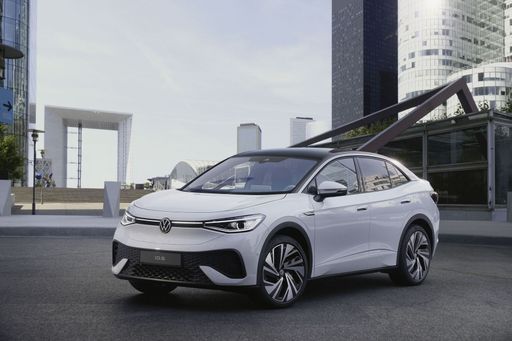
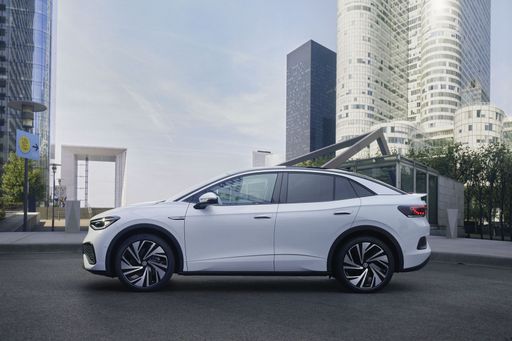
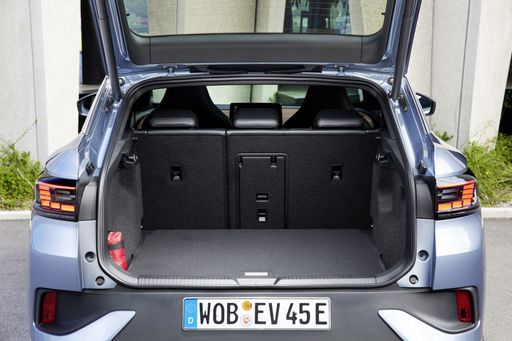
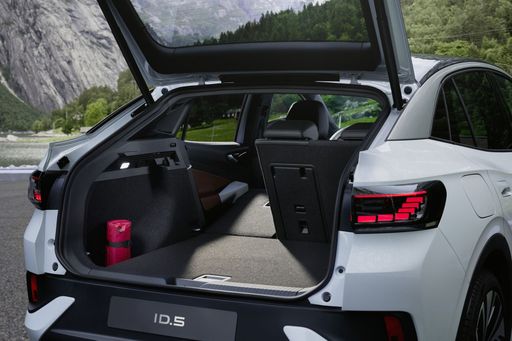
The VW ID.5 is categorized as an SUV, boasting a robust stance with a length of 4,599 mm, width of 1,852 mm, and height of 1,618 mm. Its spacious cabin is built for comfort, accommodating up to five passengers, and offers a trunk capacity of 549 liters.

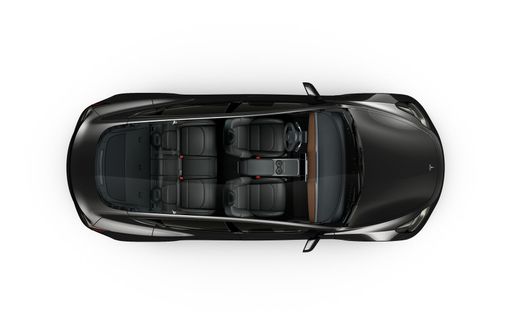
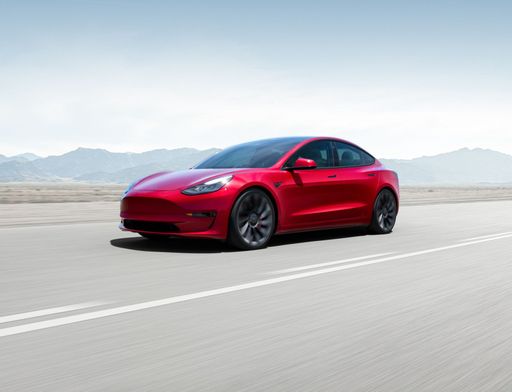
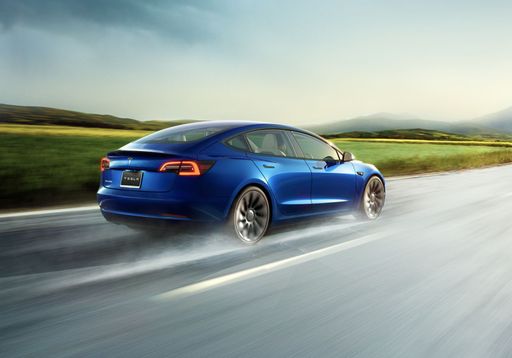
In contrast, the Tesla Model 3 is a stylish hatchback with a more aerodynamic profile, measuring 4,720 mm in length and 1,850 mm in width, with a height of 1,441 mm. It also seats five and provides a slightly larger trunk space of 594 liters, making it practical for everyday use.

Model 3

Performance and Powertrain

Under the hood, both vehicles are equipped with electric powertrains, but the specs diverge significantly. The VW ID.5 offers two engine options with power outputs ranging from 170 HP to a robust 340 HP in the all-wheel-drive variant. It accelerates from 0 to 100 km/h in as little as 5.4 seconds for the high-performance model.

On the other hand, the Tesla Model 3 brings even more muscle to the table, producing up to 460 HP in its Performance variant, achieving an exhilarating 0-100 km/h time of just 3.1 seconds. With its rear-wheel drive and all-wheel drive configurations, the Model 3 promises a thrilling drive that emphasizes both speed and handling.

ID.5

Range and Efficiency

When considering electric range, the VW ID.5 reflects commendable figures. Its range varies from 365 km to an impressive 563 km, depending on the configuration, supported by battery capacities of 52 kWh to 77 kWh. The consumption rates are competitive, ranging between 15.6 and 16.6 kWh/100 km.

Conversely, the Tesla Model 3 excels in efficiency, with a maximum electric range of 702 km. Its battery options of 62 kWh and 79 kWh result in consumption rates between 12.5 and 16.5 kWh/100 km, enhancing its appeal for long-distance travel. This efficiency, coupled with rapid charging capabilities, positions the Model 3 as a leader in its class.

Model 3

Technology and Innovations

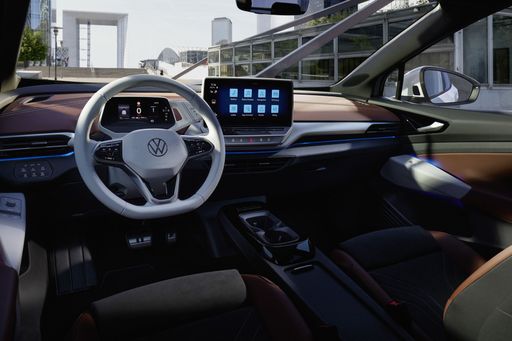
Both vehicles incorporate advanced technologies and innovative features. The VW ID.5 is equipped with the latest infotainment system, boasting a responsive touchscreen interface and intuitive voice controls, making it user-friendly. Additionally, it includes a suite of driver assistance features that enhance safety and convenience.

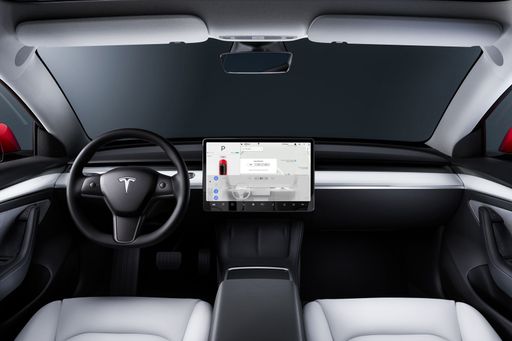
The Tesla Model 3, however, takes technology to another level with its Autopilot capabilities and over-the-air software updates, ensuring that owners benefit from the latest features and enhancements. The minimalist interior, dominated by a large central touchscreen, merges functionality with modern aesthetics, shifting the paradigm for driver-centric design.

ID.5

Conclusion

In summary, both the VW ID.5 and Tesla Model 3 present compelling arguments for those considering electric vehicles. While the VW ID.5 offers a spacious and family-oriented SUV experience with solid performance and practical features, the Tesla Model 3 shines with its superior range, performance, and cutting-edge technology.

Ultimately, the choice between the two will depend on individual preferences—whether one favors the SUV versatility of the ID.5 or the sporty, tech-forward allure of the Model 3. As the electric car market continues to evolve, both models stand as testaments to the innovation within the automotive industry.

Here’s where it gets real: The technical differences in detail

Model 3

Costs and Efficiency:

Price and efficiency are key factors when choosing a car – and this is often where the real differences emerge.

Tesla Model 3 is moderately cheaper – starting at 31,700 £ , while the VW ID.5 costs 36,800 £ . That’s a price difference of around 5,126 £.

In terms of energy consumption, the Tesla Model 3 is clearly more efficient: consuming 13 kWh/100km compared to 15.7 kWh/100km for the VW ID.5. That’s a difference of about 2.7 kWh/100km.

As for electric range, the Tesla Model 3 offers clearly more range – reaching up to 750 km, about 191 km more than the VW ID.5.

ID.5

Engine and Performance:

Power, torque and acceleration are the classic benchmarks for car enthusiasts – and here, some clear differences start to show.

When it comes to engine power, the Tesla Model 3 offers visibly more power – delivering 460 HP compared to 340 HP. That’s roughly 120 HP more horsepower.

When accelerating from 0 to 100 km/h, the Tesla Model 3 is substantially quicker – completing the sprint in 3.1 s, while the VW ID.5 takes 5.4 s. That’s about 2.3 s quicker.

Looking at top speed, the Tesla Model 3 is visibly faster – reaching 262 km/h, while the VW ID.5 tops out at 180 km/h. The difference is around 82 km/h.

There’s also a difference in torque: the VW ID.5 delivers very slightly more torque with 679 Nm compared to 660 Nm. That’s about 19 Nm more.

Model 3

Space and Everyday Use:

Cabin size, boot volume and payload all play a role in everyday practicality. Here, comfort and flexibility make the difference.

Both vehicles offer seating for 5 people.

In terms of curb weight, Tesla Model 3 is slightly lighter – 1,772 kg compared to 1,963 kg. The difference is around 191 kg.

Looking at boot space, the Tesla Model 3 offers marginally more boot space – 594 L compared to 549 L. That’s a difference of about 45 L.

When it comes to payload, the VW ID.5 carries noticeably more – 549 kg compared to 377 kg. That’s a difference of about 172 kg.

Who wins the race in the data check?

The Tesla Model 3 is decisively ahead in the objective data comparison.
This result only shows which model scores more points on paper – not which of the two cars feels right for you.

from £31,700
Model 3

Tesla Model 3

  • Engine Type : Electric
  • Transmission : Automatic
  • Drive Type : All-Wheel Drive, Rear-Wheel Drive
  • Power HP : 283 - 460 HP
  • Consumption kWh/100km : 13 - 16.7 kWh/100km
  • Electric Range : 534 - 750 km
Tesla Model 3
VW ID.5

Costs and Consumption

View detailed analysis

Engine and Performance

View detailed analysis

Dimensions and Body

View detailed analysis

Tesla Model 3

The Tesla Model 3 slices through daily commuting with a silent, confident shove that makes petrolheads reassess their life choices, while its minimalist cabin feels more like a slick gadget gallery than a traditional car interior. For buyers after a fuss-free, tech-forward electric with plenty of grin factor and low running drama, it’s hard to beat—just don't be surprised when the car updates itself overnight.

details

VW ID.5

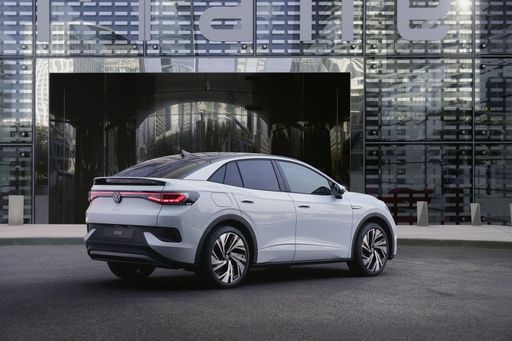
VW ID.5 dresses electric power in a sleek, coupe-like profile that turns sensible motoring into something a touch more stylish and smug. Inside it’s spacious and user-friendly, with calm, confidence-inspiring driving that suits buyers who want EV simplicity without the sci‑fi theatrics.

details
Tesla Model 3
VW ID.5

Costs and Consumption

Price
31,700 - 50,100 £
Price
36,800 - 48,400 £
Consumption L/100km
-
Consumption L/100km
-
Consumption kWh/100km
13 - 16.7 kWh/100km
Consumption kWh/100km
15.7 - 16.6 kWh/100km
Electric Range
534 - 750 km
Electric Range
363 - 559 km
Battery Capacity
83 kWh
Battery Capacity
52 - 79 kWh
co2
0 g/km
co2
0 g/km
Fuel tank capacity
-
Fuel tank capacity
-

Dimensions and Body

Body Type
Sedan
Body Type
SUV
Seats
5
Seats
5
Doors
4
Doors
5
Curb weight
1,772 - 1,929 kg
Curb weight
1,963 - 2,233 kg
Trunk capacity
594 L
Trunk capacity
549 L
Length
4,724 mm
Length
4,582 - 4,599 mm
Width
1,850 mm
Width
1,852 mm
Height
1,431 mm
Height
1,601 - 1,618 mm
Max trunk capacity
-
Max trunk capacity
1,561 L
Payload
303 - 377 kg
Payload
517 - 549 kg

Engine and Performance

Engine Type
Electric
Engine Type
Electric
Transmission
Automatic
Transmission
Automatic
Transmission Detail
Reduction Gearbox
Transmission Detail
Reduction Gearbox
Drive Type
All-Wheel Drive, Rear-Wheel Drive
Drive Type
Rear-Wheel Drive, All-Wheel Drive
Power HP
283 - 460 HP
Power HP
170 - 340 HP
Acceleration 0-100km/h
3.1 - 6.2 s
Acceleration 0-100km/h
5.4 - 8.9 s
Max Speed
262 km/h
Max Speed
160 - 180 km/h
Torque
420 - 660 Nm
Torque
310 - 679 Nm
Number of Cylinders
-
Number of Cylinders
-
Power kW
208 - 338 kW
Power kW
125 - 250 kW
Engine capacity
-
Engine capacity
-

General

Model Year
2,025
Model Year
2,024 - 2,025
CO2 Efficiency Class
A
CO2 Efficiency Class
A
Brand
Tesla
Brand
VW
DriveDuel uses data analysis and artificial intelligence to evaluate vehicle data and create content. Content is regularly reviewed and improved. The displayed prices are estimates based on German list prices, adjusted to the respective country’s VAT. Country-specific registration taxes are not included. This information is not legally binding.