VS

Tesla Model Y vs Kia EV9 comparison

Compare performance (460 HP vs 508 HP), boot space and price (34,300 £ vs 54,200 £ ) at a glance. Find out which car is the better choice for you – Tesla Model Y or Kia EV9?

Tesla Model Y vs Kia EV9: Key differences

Tesla Model Y

4.5 (4 Reviews)
rate
  • clearly cheaper
  • clearly more efficient
  • moderately more electric range
  • clearly quicker 0–100 km/h
  • clearly lighter
  • substantially more trunk space

Kia EV9

5 (1 Reviews)
rate
  • marginally more power

All details on performance, efficiency, range and trunk space can be found in the technical comparison below – including user reviews for both models.

Model Y

A Head-to-Head Battle: Kia EV9 vs. Tesla Model Y

As electric vehicles increasingly dominate the automotive market, the competition is heating up between various models. Among the standout options are the Kia EV9 and the Tesla Model Y, both of which offer exceptional features and performance that cater to the modern driver. In this article, we delve deeper into their technical specifications and innovative features to understand which SUV brings more to the table.
EV9

Design and Dimensions

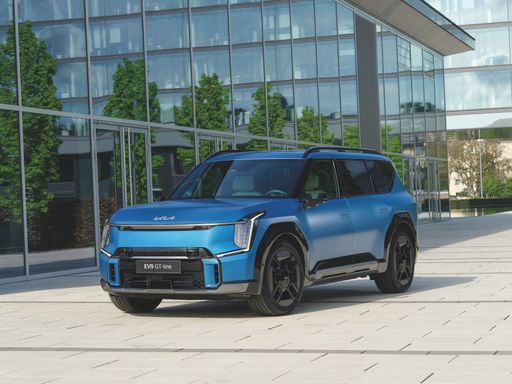
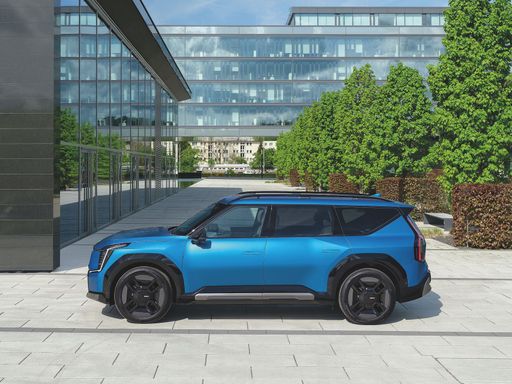
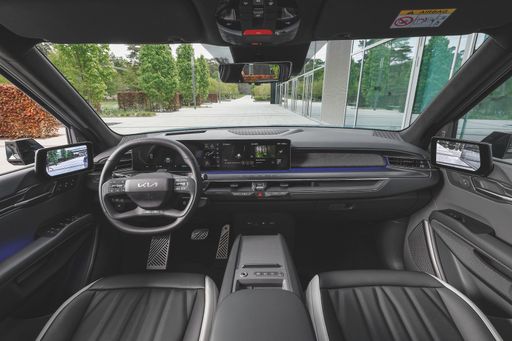
The Kia EV9 is a robust SUV, standing at 5010 mm long, 1980 mm wide, and between 1755 mm and 1780 mm high, depending on the trim. This muscular stance provides a commanding view of the road and ample interior space for passengers and cargo alike. It offers seating for up to 7 people, making it an ideal choice for families.

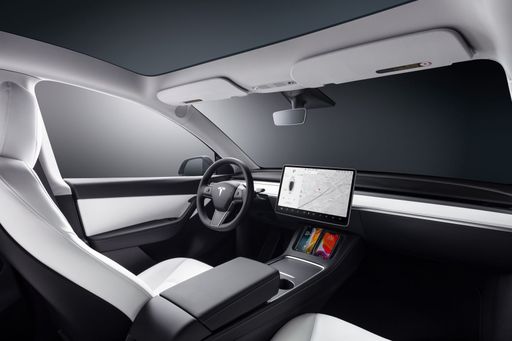
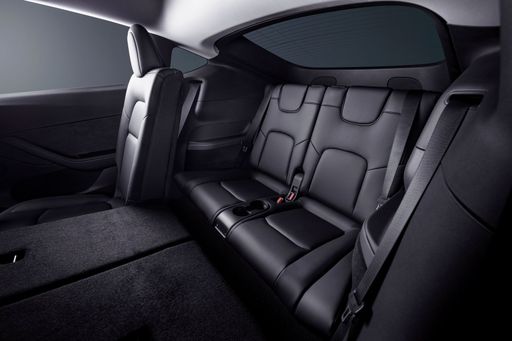
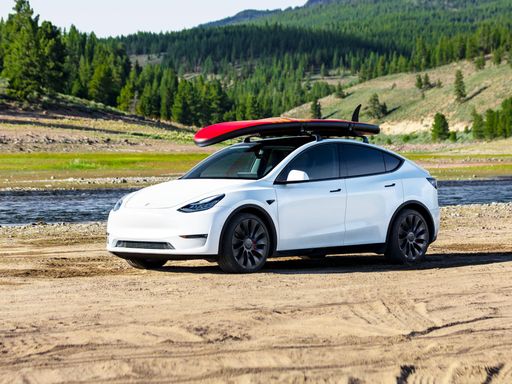
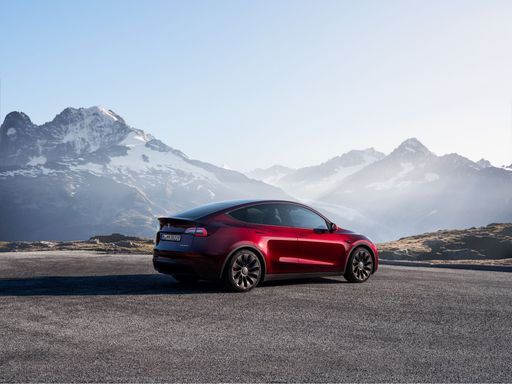
On the other hand, the Tesla Model Y is slightly smaller, measuring 4751 mm in length, 1921 mm in width, and 1624 mm in height. Though it offers two seating configurations, 5 or 7 seats, its interior space shines due to clever design and premium materials. With up to 854 liters of trunk capacity, it also accommodates more luggage than the EV9's 333 liters.

Model Y

Powertrain and Performance

When it comes to performance, both the Kia EV9 and the Tesla Model Y utilize electric powertrains with automatic transmissions. The EV9 is available in both rear-wheel and all-wheel drive configurations, producing power outputs of 204 HP for the lower-end model and up to 385 HP for the more powerful variant. Its torque peaks at 700 Nm, allowing it to accelerate from 0 to 100 km/h in as little as 5.3 seconds.

In contrast, the Tesla Model Y boasts more powerful options, with power ratings ranging from 299 HP in the base variant to a staggering 534 HP in the Performance model. With torque peaking at 660 Nm and acceleration times as rapid as 3.7 seconds, the Model Y firmly establishes itself as a performance-oriented electric SUV.

EV9

Driving Range and Efficiency

Range plays a crucial role in choosing an electric vehicle, and here, we're presented with differing capabilities. The Kia EV9 surpasses the Model Y with a maximum electric range of 563 km on the larger battery variant. However, its energy consumption is slightly higher, measuring between 20.2 to 22.8 kWh/100 km, depending on the model.

In contrast, the Tesla Model Y excels in efficiency, with energy consumption ranging from a mere 14.9 to 17.3 kWh/100 km. The longest range available for the Model Y is 600 km, although this is achieved with its largest battery capacity of 79 kWh.

Model Y

Innovative Features and Technology

Both models are brimming with innovative technologies aimed at enhancing driver experience. The Kia EV9 features a range of tech offerings, including advanced driver-assistance systems, a large infotainment screen, and multiple connectivity options, focusing on comfort and convenience.

Tesla, known for its emphasis on technology, equips the Model Y with its acclaimed Autopilot feature, offering impressive semi-autonomous driving capabilities. The user interface is highly intuitive, centered around a large touchscreen that controls nearly every aspect of the vehicle.

EV9

Conclusion: Choosing Your EV

In summary, both the Kia EV9 and Tesla Model Y stand out in the rapidly evolving electric vehicle market, each with its unique strengths. The EV9 caters more toward families needing space and comfort, while the Model Y appeals to performance enthusiasts and tech-savvy users looking for innovation and driving excitement.

Ultimately, the choice between the two comes down to personal preferences, such as desired space, performance, and technology. Regardless of which EV you select, both vehicles signify the exciting future of sustainable automotive innovation.

Here’s where it gets real: The technical differences in detail

Model Y

Costs and Efficiency:

When it comes to price and running costs, the biggest differences usually appear. This is often where you see which car fits your budget better in the long run.

Tesla Model Y is clearly cheaper – starting at 34,300 £ , while the Kia EV9 costs 54,200 £ . That’s a price difference of around 19,885 £.

In terms of energy consumption, the Tesla Model Y is clearly more efficient: consuming 12.7 kWh/100km compared to 19.5 kWh/100km for the Kia EV9. That’s a difference of about 6.8 kWh/100km.

As for electric range, the Tesla Model Y offers moderately more range – reaching up to 657 km, about 94 km more than the Kia EV9.

EV9

Engine and Performance:

Power, torque and acceleration say a lot about how a car feels on the road. This is where you see which model delivers more driving dynamics.

When it comes to engine power, the Kia EV9 offers marginally more power – delivering 508 HP compared to 460 HP. That’s roughly 48 HP more horsepower.

When accelerating from 0 to 100 km/h, the Tesla Model Y is clearly quicker – completing the sprint in 3.5 s, while the Kia EV9 takes 4.6 s. That’s about 1.1 s quicker.

Looking at top speed, the Tesla Model Y is barely faster – reaching 201 km/h, while the Kia EV9 tops out at 200 km/h. The difference is around 1 km/h.

There’s also a difference in torque: the Kia EV9 delivers moderately more torque with 740 Nm compared to 660 Nm. That’s about 80 Nm more.

Model Y

Space and Everyday Use:

Beyond pure performance, interior space and usability matter most in daily life. This is where you see which car is more practical and versatile.

Both vehicles offer seating for 7 people.

In terms of curb weight, Tesla Model Y is clearly lighter – 1,953 kg compared to 2,392 kg. The difference is around 439 kg.

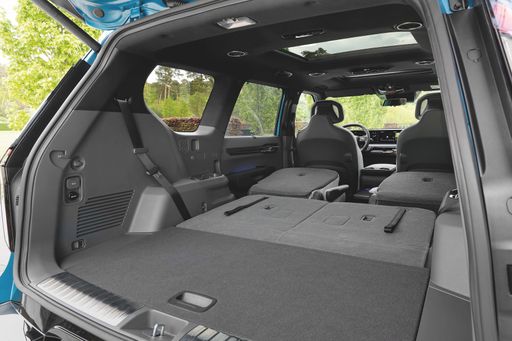
Looking at boot space, the Tesla Model Y offers substantially more boot space – 822 L compared to 333 L. That’s a difference of about 489 L.

For maximum load capacity, the Kia EV9 offers moderately more capacity – up to 2,393 L, about 255 L more than the Tesla Model Y.

When it comes to payload, the Kia EV9 carries noticeably more – 615 kg compared to 472 kg. That’s a difference of about 143 kg.

Who wins the race in the data check?

The Tesla Model Y holds a decisive overall lead in the objective data comparison.
This result only shows which model scores more points on paper – not which of the two cars feels right for you.

from £34,300
Model Y

Tesla Model Y

  • Engine Type : Electric
  • Transmission : Automatic
  • Drive Type : All-Wheel Drive, Rear-Wheel Drive
  • Power HP : 299 - 460 HP
  • Consumption kWh/100km : 12.7 - 16.2 kWh/100km
  • Electric Range : 534 - 657 km
Tesla Model Y
Kia EV9

Costs and Consumption

View detailed analysis

Engine and Performance

View detailed analysis

Dimensions and Body

View detailed analysis

Tesla Model Y

The Tesla Model Y blends SUV practicality with sports-car poke, wrapping a roomy, minimalist cabin and handy hatch into a slick, aerodynamic package that feels more Silicon Valley gadget than garage ornament. It’s an ideal pick for buyers who want effortless electric driving, regular software improvements and access to Tesla’s convenient charging network, though style-conscious shoppers should know it’s more about tech and efficiency than classic luxury.

details

Kia EV9

The Kia EV9 is a bold, boxy electric SUV that looks like it could swallow your luggage and the in‑laws, with an interior that feels more lounge than cockpit and a presence that makes smaller rivals suddenly feel shy. On the road it delivers calm long‑distance composure with enough shove to keep overtakes effortless, and its tech and practicality make it an easy, sensible choice for buyers who want electric without compromise.

details
Tesla Model Y
Kia EV9

Costs and Consumption

Price
34,300 - 53,100 £
Price
54,200 - 78,000 £
Consumption L/100km
-
Consumption L/100km
-
Consumption kWh/100km
12.7 - 16.2 kWh/100km
Consumption kWh/100km
19.5 - 22.8 kWh/100km
Electric Range
534 - 657 km
Electric Range
443 - 563 km
Battery Capacity
64.5 - 83 kWh
Battery Capacity
99.8 kWh
co2
0 g/km
co2
0 g/km
Fuel tank capacity
-
Fuel tank capacity
-

Dimensions and Body

Body Type
SUV
Body Type
SUV
Seats
5 - 7
Seats
6 - 7
Doors
5
Doors
5
Curb weight
1,953 - 2,108 kg
Curb weight
2,392 - 2,664 kg
Trunk capacity
822 L
Trunk capacity
333 L
Length
4,790 - 4,797 mm
Length
5,015 mm
Width
1,920 - 1,921 mm
Width
1,980 mm
Height
1,621 - 1,624 mm
Height
1,780 mm
Max trunk capacity
2,118 - 2,138 L
Max trunk capacity
2,318 - 2,393 L
Payload
435 - 472 kg
Payload
542 - 615 kg

Engine and Performance

Engine Type
Electric
Engine Type
Electric
Transmission
Automatic
Transmission
Automatic
Transmission Detail
Reduction Gearbox
Transmission Detail
Reduction Gearbox
Drive Type
All-Wheel Drive, Rear-Wheel Drive
Drive Type
All-Wheel Drive, Rear-Wheel Drive
Power HP
299 - 460 HP
Power HP
204 - 508 HP
Acceleration 0-100km/h
3.5 - 7.2 s
Acceleration 0-100km/h
4.6 - 9.4 s
Max Speed
201 km/h
Max Speed
200 km/h
Torque
420 - 660 Nm
Torque
350 - 740 Nm
Number of Cylinders
-
Number of Cylinders
-
Power kW
220 - 338 kW
Power kW
150 - 374 kW
Engine capacity
-
Engine capacity
-

General

Model Year
2,025 - 2,026
Model Year
2,023 - 2,025
CO2 Efficiency Class
A
CO2 Efficiency Class
A
Brand
Tesla
Brand
Kia
DriveDuel uses data analysis and artificial intelligence to evaluate vehicle data and create content. Content is regularly reviewed and improved. The displayed prices are estimates based on German list prices, adjusted to the respective country’s VAT. Country-specific registration taxes are not included. This information is not legally binding.