VS

Toyota C-HR+ vs Hyundai IONIQ 5 comparison

Compare performance (343 HP vs 229 HP), boot space and price (36,000 £ vs 43,300 £ ) at a glance. Find out which car is the better choice for you – Toyota C-HR+ or Hyundai IONIQ 5?

Toyota C-HR+ vs Hyundai IONIQ 5: Key differences

Toyota C-HR+

4.4 (1 Reviews)
rate
  • clearly cheaper
  • clearly more power
  • a bit more efficient
  • only slightly more electric range
  • significantly quicker 0–100 km/h
  • only slightly lighter
details

Hyundai IONIQ 5

4.9 (3 Reviews)
rate
  • moderately more trunk space
details

All details on performance, efficiency, range and trunk space can be found in the technical comparison below – including user reviews for both models.

By Achim Sedelmaier

C-HR+

Hyundai IONIQ 5 VS Toyota C-HR+: quick take

Hyundai IONIQ 5 VS Toyota C-HR+ sets up a clear contrast between an electric crossover built around spaciousness and charging speed and a compact, efficiency-first Toyota that thrives in daily urban use. The IONIQ 5 feels like a living room on wheels — long-legged, roomy in the rear and designed for relaxed highway miles, plus class-leading fast-charging tech that shortens stops. The Toyota C‑HR+ answers with frugal hybrid/PHEV running, a sharper footprint for town parking and an interior that punches above its compact dimensions in perceived quality. Choosing between them is less about absolute superiority and more about whether you prioritise long-distance comfort and charging convenience or low running costs and city friendliness. Below we unpack how those differences play out in everyday life.
IONIQ 5

Character and driving experience

The Hyundai IONIQ 5 drives like a composed long-distance cruiser: softly sprung, steady at speed and more about comfort than corner-carving, which suits motorway miles but leaves it feeling ponderous in tighter bends. The Toyota C‑HR+ is the opposite personality — lighter on its feet, more agile in traffic and rewarding to park, though its CVT-driven surge can sound strained when you demand quick acceleration. Where the IONIQ 5 soaks up distance with relaxation, the C‑HR+ rewards short bursts and frequent stop-start use with efficiency and a livelier urban demeanour. That trade-off means drivers who value lounge-like serenity will prefer the IONIQ 5, while people who want nimble city responses will find the C‑HR+ more satisfying. Both are polite and comfortable, but the feeling behind the wheel is distinct: calm and roomy versus compact and efficient.

C-HR+

Comfort, cabin feel and practicality

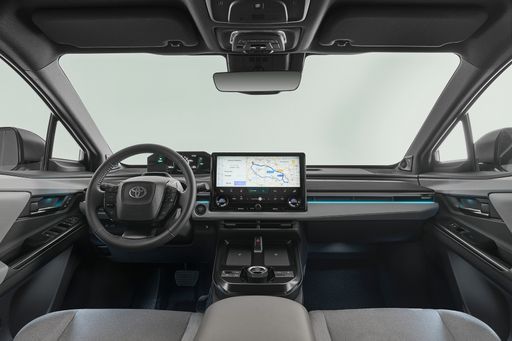
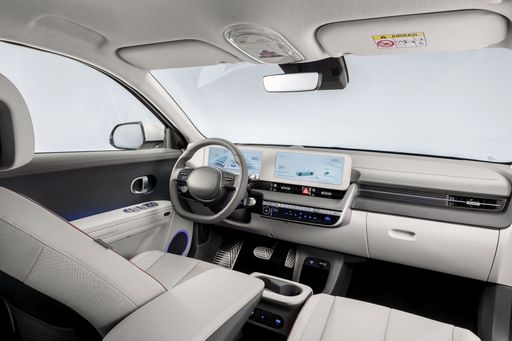
Inside, the Hyundai IONIQ 5 emphasises space — generous knee room, a flat centre floor and a sliding rear bench that make the back seat feel genuinely roomy; it’s ideal when passengers spend time there. The Toyota C‑HR+ offers a more intimate cabin with improved materials up front and crisp ergonomics, but rear headroom and the PHEV’s shrunken boot limit practicality for taller passengers or bulky weekend luggage. Practical extras separate them: the IONIQ 5 brings useful tech like vehicle-to-load power outlets that boost liveability on trips, whereas the C‑HR+ keeps things simple and efficient with user-friendly controls and proven hybrid convenience. If you regularly carry people in the back and need flexible space, the IONIQ 5 wins on utility; if cabin finish and compact usability matter more, the C‑HR+ will feel smarter in day-to-day use. In short, one prioritises passenger comfort and adaptability, the other prioritises polished touchpoints and city-oriented practicality.

IONIQ 5

Long-distance behaviour vs city friendliness

For motorway miles the Hyundai IONIQ 5 feels at home: stable, quiet and designed to minimise fatigue, with very fast DC charging that reduces the pain of longer trips. That advantage comes with a caveat — its real-world efficiency at sustained high speeds is not class-leading, so frequent long motorway legs may cost more energy than some rivals. The Toyota C‑HR+ excels in urban and suburban routines: excellent fuel/electric efficiency for commutes, compact dimensions for tight parking and a calm cruise at steady speeds, but it lacks the IONIQ 5’s rapid public charging capability and its bootspace penalises long-haul luggage. So commuters and city dwellers will appreciate the C‑HR+ for its low running costs and manoeuvrability, while touring families or those with access to high‑power chargers will benefit from the IONIQ 5’s charging speed and spaciousness. Each car shines in opposite environments — the question is where you spend most of your miles.

C-HR+

Perceived quality, tech and everyday usability

The IONIQ 5 presents a futuristic, airy cabin with many clever touches and growing numbers of physical buttons that improve daily usability; its novelty tech like V2L and an available HUD enhance real-world convenience. The C‑HR+ counters with a noticeably upgraded interior feel for Toyota standards, strong safety and assistance suites as standard, and straightforward infotainment that’s easy to use under stress. In practice the IONIQ 5’s technology feels more ambitious and occasionally more complex, while the C‑HR+ trades flash for clear, well‑executed systems that prioritise reliability and simplicity. That leaves buyers choosing between forward-looking features and tactile modernity versus conservative, well-integrated tech and strong assistant packaging. Both cabins work, but they create different emotional impressions: the IONIQ 5 impresses with space and novelty, the C‑HR+ with finish and familiar dependability.

IONIQ 5

Who should pick which car?

If your life revolves around family space, regular long-distance trips and access to fast public chargers, the Hyundai IONIQ 5 fits better: it rewards highway miles with calm, offers a truly roomy rear and gives you practical power outlets that broaden what a car can do. If you mostly drive in town, care deeply about low running costs, tighter parking and a sharper price-to-practicality balance, the Toyota C‑HR+ is the smarter urban companion despite compromises in rear room and boot volume. Budget-conscious buyers and those who prioritise perceived interior quality and safety tech will lean toward the C‑HR+, while buyers who want EV convenience, charging speed and rear-seat generosity will favour the IONIQ 5. The technical comparison that follows breaks these user-level contrasts into range, charging, cargo and performance details so you can match the numbers to the lifestyle trade-offs you just read about.

Here’s where it gets real: The technical differences in detail

C-HR+

Costs and Efficiency:

Price and efficiency are often the first things buyers look at. Here it becomes clear which model has the long-term edge – whether at the pump, the plug, or in purchase price.

Toyota C-HR+ is clearly cheaper – starting at 36,000 £ , while the Hyundai IONIQ 5 costs 43,300 £ . That’s a price difference of around 7,337 £.

In terms of energy consumption, the Toyota C-HR+ is a bit more efficient: consuming 13.4 kWh/100km compared to 15.6 kWh/100km for the Hyundai IONIQ 5. That’s a difference of about 2.2 kWh/100km.

As for electric range, the Toyota C-HR+ offers only slightly more range – reaching up to 607 km, about 37 km more than the Hyundai IONIQ 5.

IONIQ 5

Engine and Performance:

Power, torque and acceleration are the classic benchmarks for car enthusiasts – and here, some clear differences start to show.

When it comes to engine power, the Toyota C-HR+ offers clearly more power – delivering 343 HP compared to 229 HP. That’s roughly 114 HP more horsepower.

When accelerating from 0 to 100 km/h, the Toyota C-HR+ is significantly quicker – completing the sprint in 5.2 s, while the Hyundai IONIQ 5 takes 7.5 s. That’s about 2.3 s quicker.

There’s also a difference in torque: the Hyundai IONIQ 5 delivers marginally more torque with 350 Nm compared to 338 Nm. That’s about 12 Nm more.

C-HR+

Space and Everyday Use:

Whether family car or daily driver – which one offers more room, flexibility and comfort?

Both vehicles offer seating for 5 people.

In terms of curb weight, Toyota C-HR+ is only slightly lighter – 1,810 kg compared to 1,955 kg. The difference is around 145 kg.

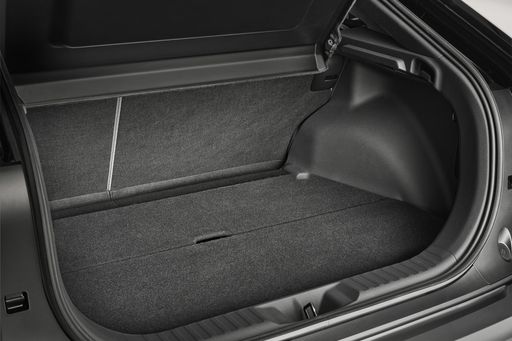
Looking at boot space, the Hyundai IONIQ 5 offers moderately more boot space – 520 L compared to 416 L. That’s a difference of about 104 L.

When it comes to payload, the Toyota C-HR+ carries somewhat more – 655 kg compared to 530 kg. That’s a difference of about 125 kg.

Who wins the race in the data check?

The Toyota C-HR+ is clearly superior overall in the objective data comparison.
This result only shows which model scores more points on paper – not which of the two cars feels right for you.

from £36,000
C-HR+

Toyota C-HR+

  • Engine Type Electric
  • Transmission Automatic
  • Drive Type Front-Wheel Drive, All-Wheel Drive
  • Power HP 167 - 343 HP
  • Consumption kWh/100km 13.4 - 15.5 kWh/100km
  • Electric Range 458 - 607 km
Toyota C-HR+
Hyundai IONIQ 5

Costs and Consumption

View detailed analysis

Engine and Performance

View detailed analysis

Dimensions and Body

View detailed analysis

Toyota C-HR+

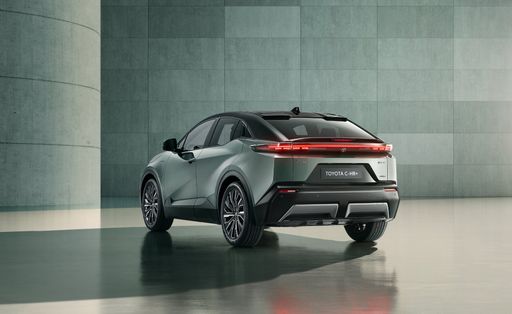
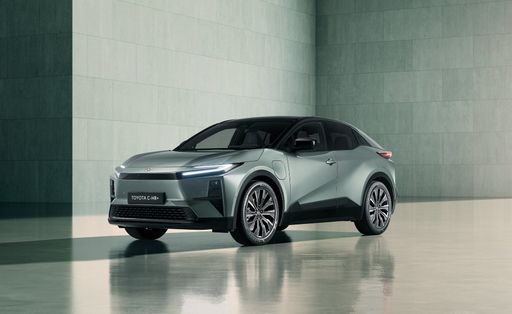
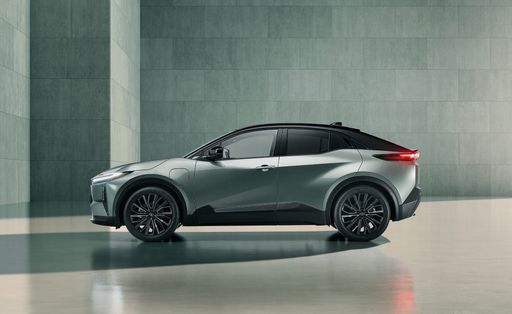
The Toyota C‑HR is a distinctive crossover that pairs bold, coupe‑like styling with a comfortable, composed ride suited to daily city and suburban driving. It appeals to buyers who value standout design, practical cabin packaging and a refined, easy‑to‑use experience rather than outright performance or rugged off‑road ability.

details

Hyundai IONIQ 5

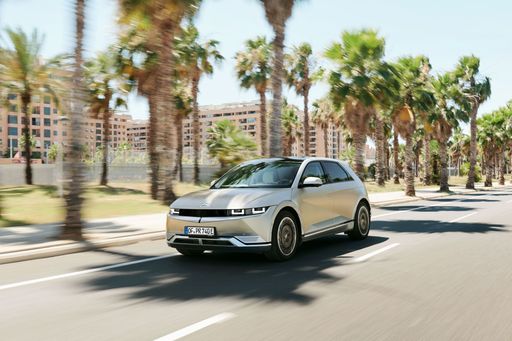
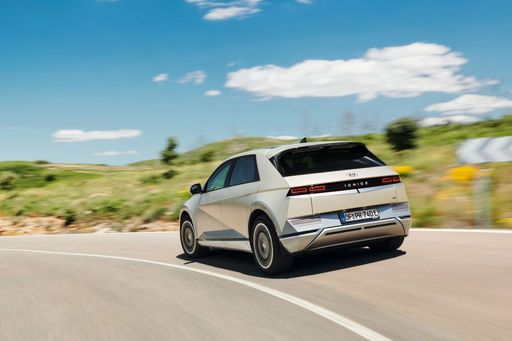
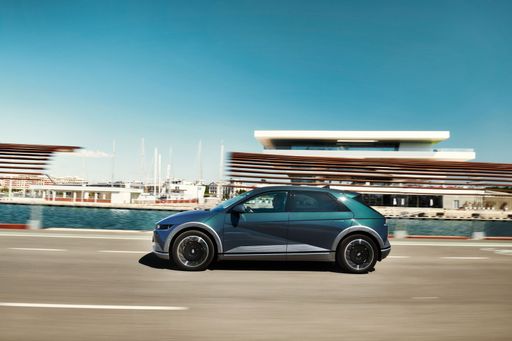
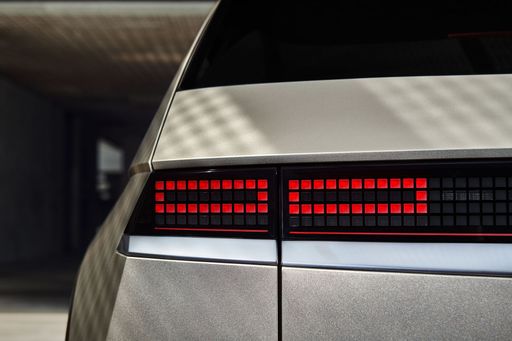
The Hyundai IONIQ 5 looks like a spaceship that moved into suburbia, pairing bold retro‑futuristic styling with a roomy, cleverly laid-out cabin that makes long trips surprisingly comfortable. Its electric character delivers instant, silky acceleration and low running costs, making it a smart, slightly cheeky pick for buyers who want tech, practicality and personality without the drama.

details
Toyota C-HR+
Hyundai IONIQ 5

Costs and Consumption

Price
36,000 - 46,300 £
Price
43,300 - 46,100 £
Consumption L/100km
-
Consumption L/100km
-
Consumption kWh/100km
13.4 - 15.5 kWh/100km
Consumption kWh/100km
15.6 - 16 kWh/100km
Electric Range
458 - 607 km
Electric Range
440 - 570 km
Battery Capacity
-
Battery Capacity
-
co2
0 g/km
co2
0 g/km
Fuel tank capacity
-
Fuel tank capacity
-

Dimensions and Body

Body Type
SUV
Body Type
SUV
Seats
5
Seats
5
Doors
-
Doors
-
Curb weight
1,810 - 2,010 kg
Curb weight
1,955 - 2,060 kg
Trunk capacity
416 L
Trunk capacity
520 L
Length
-
Length
-
Width
1,870 mm
Width
1,890 mm
Height
-
Height
-
Max trunk capacity
-
Max trunk capacity
-
Payload
550 - 655 kg
Payload
515 - 530 kg

Engine and Performance

Engine Type
Electric
Engine Type
Electric
Transmission
Automatic
Transmission
Automatic
Transmission Detail
Reduction Gearbox
Transmission Detail
Reduction Gearbox
Drive Type
Front-Wheel Drive, All-Wheel Drive
Drive Type
Rear-Wheel Drive
Power HP
167 - 343 HP
Power HP
170 - 229 HP
Acceleration 0-100km/h
5.2 - 8.4 s
Acceleration 0-100km/h
7.5 - 8.5 s
Max Speed
-
Max Speed
-
Torque
268 - 338 Nm
Torque
350 Nm
Number of Cylinders
-
Number of Cylinders
-
Power kW
123 - 252 kW
Power kW
125 - 168 kW
Engine capacity
-
Engine capacity
-

General

Model Year
2026
Model Year
2025
CO2 Efficiency Class
A
CO2 Efficiency Class
A
Brand
Toyota
Brand
Hyundai
DriveDuel uses data analysis and artificial intelligence to evaluate vehicle data and create content. Content is regularly reviewed and improved. The displayed prices are estimates based on German list prices, adjusted to the respective country’s VAT. Country-specific registration taxes are not included. This information is not legally binding.