VS

Toyota C-HR vs CUPRA Formentor comparison

Compare performance (223 HP vs 390 HP), boot space and price (29,100 £ vs 35,800 £ ) at a glance. Find out which car is the better choice for you – Toyota C-HR or CUPRA Formentor?

Toyota C-HR vs CUPRA Formentor: Key differences

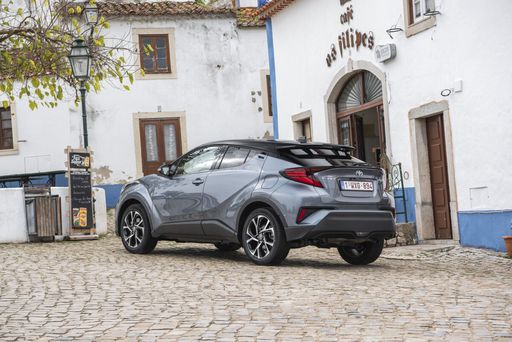
Toyota C-HR

4.8 (7 Reviews)
rate
  • clearly cheaper
details

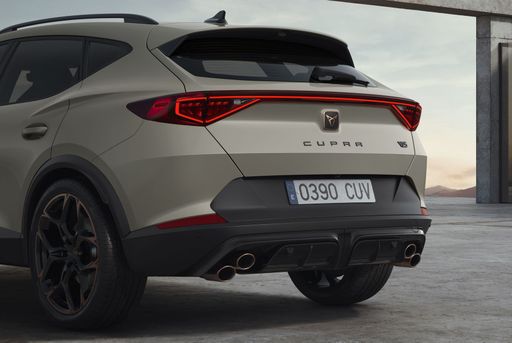
CUPRA Formentor

4.9 (2 Reviews)
rate
  • clearly more power
  • considerably more efficient
  • clearly more electric range
  • considerably quicker 0–100 km/h
  • barely lighter
  • very slightly more trunk space
details

All details on performance, efficiency, range and trunk space can be found in the technical comparison below – including user reviews for both models.

By Achim Sedelmaier

C-HR

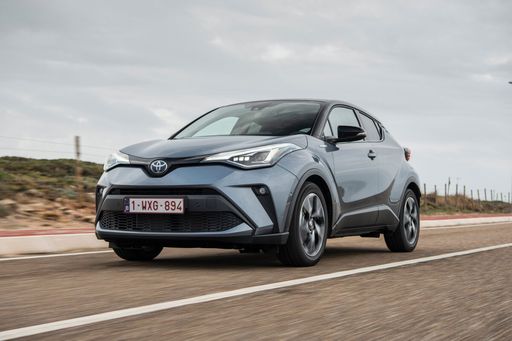
When it comes to compact SUVs, two models that have been generating significant buzz are the CUPRA Formentor and the Toyota C-HR. With a combination of performance, innovative technology, and striking designs, both vehicles present unique options for drivers looking to enhance their driving experience. This article will delve into a detailed comparison of these two distinct models, covering technical specifications, innovations, and what sets them apart on the road.
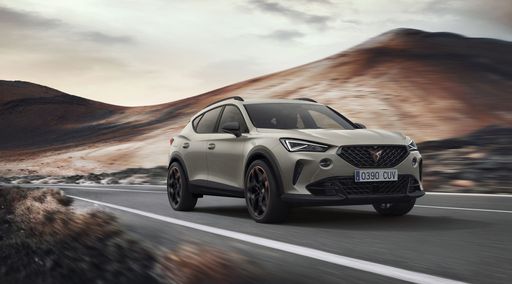
Formentor

Engine Options and Performance

The CUPRA Formentor offers a robust lineup of engine options that cater to different driving preferences. It features petrol, plug-in hybrid, petrol MHEV, and diesel engines, ranging from a spirited 150 HP to a blistering 333 HP in its high-performance variant. The Formentor promises impressive acceleration, with its quickest variant achieving 0-100 km/h in just 4.8 seconds. Additionally, with an array of drivetrain options, including both front-wheel and all-wheel drive, drivers can choose what best suits their lifestyle.

In contrast, the Toyota C-HR leans heavily on hybrid technology, offering full hybrid and plug-in hybrid options. The most powerful variant produces 223 HP, yet its acceleration is a slightly leisurely 7.4 seconds for 0-100 km/h. The C-HR focuses on efficiency with its impressive fuel consumption, clocking in at as low as 4.7 L/100 km, making it an excellent choice for eco-conscious consumers.

C-HR

Fuel Efficiency and Environmental Impact

If fuel efficiency is a priority, the C-HR excels with its hybrid drivetrain, achieving a remarkable average consumption of around 4.7 L/100 km. The electric range of the C-HR also stands at 67 km, allowing short errands to be completed without consuming any petrol. The low CO2 emissions of just 105 g/km and a CO2 efficiency class rating of B underscore Toyota's commitment to reducing environmental impact.

The CUPRA Formentor, while not as focused on ultra-low emissions as the C-HR, still provides compelling options for hybrid enthusiasts. With a plugin hybrid variant offering an electric range of up to 125 km and a CO2 efficiency class ranging from E to B, it balances performance and environmental considerations effectively.

Formentor

Interior Comfort and Technology

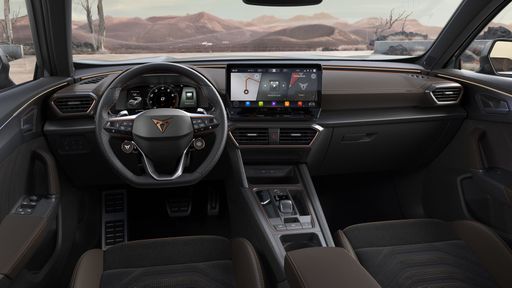
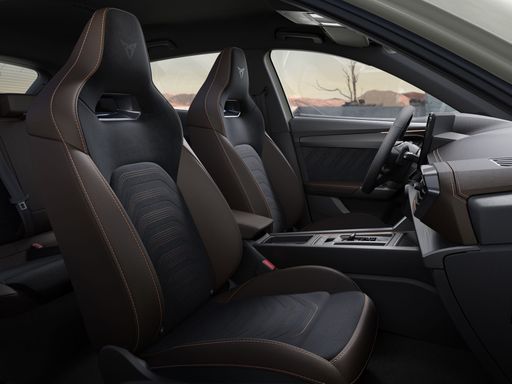
Both vehicles are designed with the driver's comfort in mind, but they approach the concept differently. The CUPRA Formentor boasts a sleek, sporty interior with premium materials and standout features like a digital cockpit, a large touchscreen infotainment system, and advanced connectivity options. With ample trunk space of up to 420 liters, it also offers practicality alongside its sporty persona.

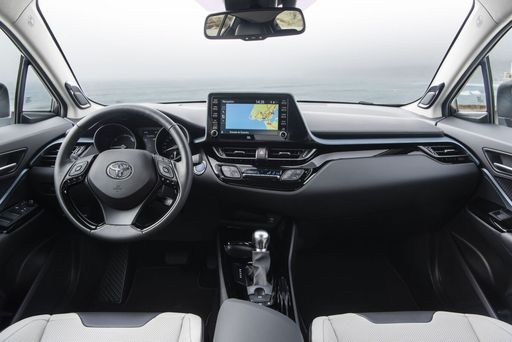
The Toyota C-HR, on the other hand, emphasizes a user-friendly experience. Its interior is characterized by an ergonomic layout and high-quality materials, making it a comfortable choice for family-oriented drivers. The Toyota model features a larger trunk capacity at 447 liters and an intuitive infotainment system supporting various smartphone integrations, perfect for tech-savvy users.

C-HR

Driving Experience and Handling

The CUPRA Formentor’s performance-oriented architecture translates into a dynamic driving experience. Its sharp handling, sporty suspension setup, and available all-wheel-drive system make it a thrill to drive on winding roads or highways. The driving modes available also allow the driver to tailor the vehicle’s responses to their preferences.

Conversely, the Toyota C-HR is tuned for a more comfortable ride, favoring stability and responsiveness over outright sportiness. The hybrid system provides a smooth driving experience, especially in urban settings, where it silently glides thanks to its electric motor. This makes the C-HR a fantastic choice for city dwellers.

Formentor

Conclusion: Which One is Right for You?

Ultimately, the choice between the CUPRA Formentor and the Toyota C-HR boils down to individual preferences. The Formentor is a perfect fit for those seeking performance, a sportier aesthetic, and multiple engine options, including high-powered variants. The availability of petrol and diesel options can also cater to a wider audience.

On the other hand, the C-HR stands out as an exceptional hybrid option that prioritizes fuel efficiency, environmental impact, and ease of use. With its smart interior and practical features, it attracts drivers looking for a reliable, eco-friendly compact SUV. Whichever you choose, both models have a lot to offer in the competitive SUV segment.

Here’s where it gets real: The technical differences in detail

C-HR

Costs and Efficiency:

Price and efficiency are key factors when choosing a car – and this is often where the real differences emerge.

Toyota C-HR is clearly cheaper – starting at 29,100 £ , while the CUPRA Formentor costs 35,800 £ . That’s a price difference of around 6,617 £.

Fuel consumption also shows a difference: the CUPRA Formentor uses 1.4 L/100km and is considerably more efficient than the Toyota C-HR with 2.3 L/100km. The difference is about 0.9 L/100km.

As for electric range, the CUPRA Formentor offers clearly more range – reaching up to 126 km, about 60 km more than the Toyota C-HR.

Formentor

Engine and Performance:

Under the bonnet, it becomes clear which model is tuned for sportiness and which one takes the lead when you hit the accelerator.

When it comes to engine power, the CUPRA Formentor offers clearly more power – delivering 390 HP compared to 223 HP. That’s roughly 167 HP more horsepower.

When accelerating from 0 to 100 km/h, the CUPRA Formentor is considerably quicker – completing the sprint in 4.2 s, while the Toyota C-HR takes 7.4 s. That’s about 3.2 s quicker.

C-HR

Space and Everyday Use:

Whether family car or daily driver – which one offers more room, flexibility and comfort?

Both vehicles offer seating for 5 people.

In terms of curb weight, CUPRA Formentor is barely lighter – 1,434 kg compared to 1,505 kg. The difference is around 71 kg.

Looking at boot space, the CUPRA Formentor offers very slightly more boot space – 450 L compared to 447 L. That’s a difference of about 3 L.

When it comes to payload, the CUPRA Formentor carries slightly more – 526 kg compared to 425 kg. That’s a difference of about 101 kg.

Who wins the race in the data check?

The CUPRA Formentor is far ahead overall in the objective data comparison.
This result only shows which model scores more points on paper – not which of the two cars feels right for you.

from £35,800
Formentor

CUPRA Formentor

  • Engine Type Petrol, Petrol MHEV, Diesel, Plugin Hybrid
  • Transmission Automatic, Manuel
  • Drive Type Front-Wheel Drive, All-Wheel Drive
  • Power HP 150 - 390 HP
  • Consumption L/100km 1.4 - 10.1 L/100km
  • Electric Range 117 - 126 km
Toyota C-HR
CUPRA Formentor

Costs and Consumption

View detailed analysis

Engine and Performance

View detailed analysis

Dimensions and Body

View detailed analysis

Toyota C-HR

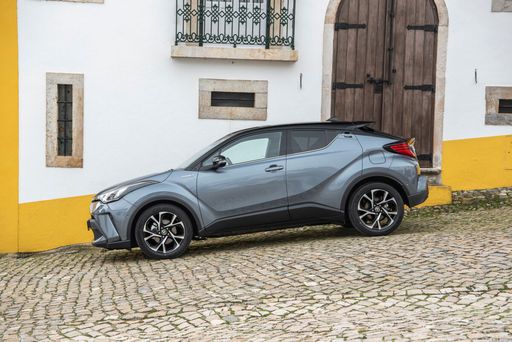
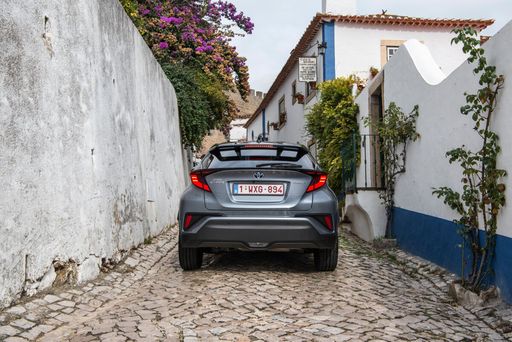
The Toyota C-HR is a bold, coupe-styled crossover that grabs attention with angular lines and a modern interior design. It’s aimed at comfortable urban driving and sensible efficiency, offering practical features and distinctive looks rather than rugged off-road ability.

details

CUPRA Formentor

The CUPRA Formentor blends sporty driving dynamics with crossover practicality, delivering sharp handling and an engaging character that makes it fun on twisty roads as well as in daily driving. Inside, it pairs a driver-focused cabin and premium materials with clever practicality, offering a confident, distinctive alternative to conventional SUVs.

details
Toyota C-HR
CUPRA Formentor

Costs and Consumption

Price
29,100 - 42,800 £
Price
35,800 - 62,500 £
Consumption L/100km
2.3 - 5.1 L/100km
Consumption L/100km
1.4 - 10.1 L/100km
Consumption kWh/100km
-
Consumption kWh/100km
-
Electric Range
66 km
Electric Range
117 - 126 km
Battery Capacity
-
Battery Capacity
-
co2
52 - 116 g/km
co2
32 - 229 g/km
Fuel tank capacity
-
Fuel tank capacity
-

Dimensions and Body

Body Type
SUV
Body Type
SUV
Seats
5
Seats
5
Doors
-
Doors
-
Curb weight
1,505 - 1,755 kg
Curb weight
1,434 - 1,742 kg
Trunk capacity
350 - 447 L
Trunk capacity
345 - 450 L
Length
-
Length
-
Width
1,832 mm
Width
1,839 - 1,852 mm
Height
-
Height
-
Max trunk capacity
-
Max trunk capacity
-
Payload
375 - 425 kg
Payload
439 - 526 kg

Engine and Performance

Engine Type
Full Hybrid, Plugin Hybrid
Engine Type
Petrol, Petrol MHEV, Diesel, Plugin Hybrid
Transmission
Automatic
Transmission
Automatic, Manuel
Transmission Detail
CVT
Transmission Detail
Dual-Clutch Automatic, Manual Gearbox
Drive Type
Front-Wheel Drive, All-Wheel Drive
Drive Type
Front-Wheel Drive, All-Wheel Drive
Power HP
140 - 223 HP
Power HP
150 - 390 HP
Acceleration 0-100km/h
7.4 - 9.9 s
Acceleration 0-100km/h
4.2 - 9 s
Max Speed
-
Max Speed
-
Torque
-
Torque
250 - 480 Nm
Number of Cylinders
4
Number of Cylinders
4 - 5
Power kW
103 - 164 kW
Power kW
110 - 287 kW
Engine capacity
1,798 - 1,987 cm3
Engine capacity
1,498 - 2,480 cm3

General

Model Year
2026
Model Year
2,024 - 2,026
CO2 Efficiency Class
C, D, B
CO2 Efficiency Class
G, E, D, F, B
Brand
Toyota
Brand
CUPRA
DriveDuel uses data analysis and artificial intelligence to evaluate vehicle data and create content. Content is regularly reviewed and improved. The displayed prices are estimates based on German list prices, adjusted to the respective country’s VAT. Country-specific registration taxes are not included. This information is not legally binding.