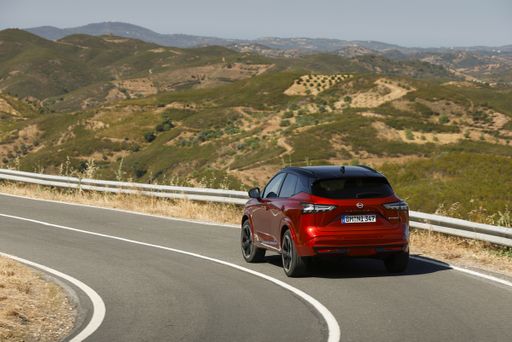
VS

Toyota C-HR vs Nissan Qashqai comparison

Compare performance (223 HP vs 205 HP), boot space and price (29,100 £ vs 29,600 £ ) at a glance. Find out which car is the better choice for you – Toyota C-HR or Nissan Qashqai?

Toyota C-HR vs Nissan Qashqai: Key differences

Toyota C-HR

4.8 (2 Reviews)
rate
  • only slightly cheaper
  • barely more power
  • clearly more efficient
  • very slightly quicker 0–100 km/h

Nissan Qashqai

4.9 (3 Reviews)
rate
  • marginally lighter
  • moderately more trunk space
C-HR

Two personalities in the crossover crowd

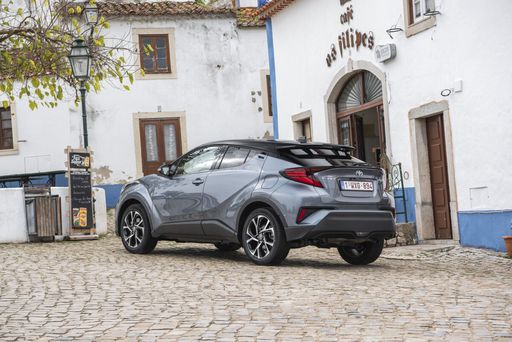
At first glance these two compact crossovers couldn’t be more different in attitude: the Nissan Qashqai plays the calm, sensible family type that knows how to blend in, while the Toyota C-HR prefers to be noticed, with design flourishes that flirt with the sporty end of the segment. Both aim squarely at drivers who need crossover practicality without the bulk of a full SUV, but they offer distinct approaches to that brief. One favours everyday usability and a reassuring presence, the other leans into style and personality to make a statement in town.
Qashqai

City life — comfort vs. charisma

In traffic and tight parking spots the differences become part of daily life: the Qashqai feels composed and easygoing, designed around clear sightlines and intuitive ergonomics, while the C-HR rewards you with sharper steering and a compact footprint that’s fun to hustle between lanes. The C-HR’s striking looks often double as an ego boost for style-conscious buyers, whereas the Qashqai’s more conservative demeanour is exactly what commuters and families appreciate when things get hectic. Both make city running simple, but they do it with different personalities — one pragmatic, the other playful.

C-HR

Country roads and motorway manners

On open roads the contrast persists: the Qashqai soaks up long distances with a calm, predictable ride that makes extended journeys less tiring, while the C-HR offers a firmer, more immediate feel that keeps you engaged behind the wheel. If you prefer a relaxed cruise with a focus on comfort, the Qashqai leans into that role neatly; if you favour a car that communicates through the steering and chassis, the C-HR delivers a livelier experience. Both are competent in their own ways, it just depends whether you value serenity or sparkle on the road.

Qashqai

Cabin life — practicality meets personality

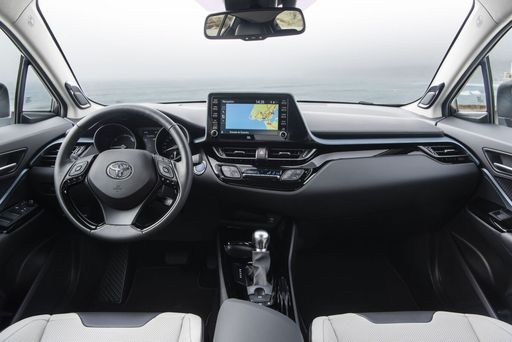
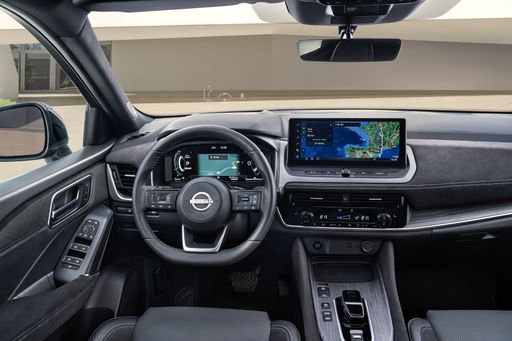
Step inside and the split continues: the Qashqai provides a user-friendly layout and flexible space that suits family duties and practical packing with minimal fuss, while the C-HR makes more of a design-led impression, with sculpted surfaces and a cockpit that feels younger and more avant-garde. Controls and visibility in the Qashqai skew toward straightforward usability, appealing to buyers who prioritise function, whereas the C-HR’s interior choices reward those who want a cabin that stands out from the crowd. Either way you get a comfortable place to spend time, but your priorities will decide which feels more like home.

C-HR

Living with one — who will it suit?

Thinking about ownership, the Qashqai is the safe, versatile choice for households that need a do-it-all car for school runs, shopping and longer escapes, while the C-HR is aimed at drivers who want efficiency wrapped in a head-turning package and don’t mind a few compromises for the sake of style. Maintenance, ease of use and day-to-day friendliness tilt the Qashqai toward family buyers and long-distance commuters, whereas urban drivers and image-conscious customers will find the C-HR hard to resist. It’s a matter of lifestyle rather than raw figures: choose the one that fits your routine and mood.

Qashqai

Ready to pick a side?

If you’ve been weighing practicality against personality, comfort against charisma, stick with us — we’ll unpack the finer points and show how each car performs in real-world tests so you can decide which one suits your life best; keep reading for the DriveDuel Champion reveal coming up next.

Here’s where it gets real: The technical differences in detail

C-HR

Costs and Efficiency:

Price and efficiency are key factors when choosing a car – and this is often where the real differences emerge.

Toyota C-HR is only slightly cheaper – starting at 29,100 £ , while the Nissan Qashqai costs 29,600 £ . That’s a price difference of around 471 £.

Fuel consumption also shows a difference: the Toyota C-HR uses 2.3 L/100km and is clearly more efficient than the Nissan Qashqai with 4.5 L/100km. The difference is about 2.2 L/100km.

Qashqai

Engine and Performance:

Under the bonnet, it becomes clear which model is tuned for sportiness and which one takes the lead when you hit the accelerator.

When it comes to engine power, the Toyota C-HR offers barely more power – delivering 223 HP compared to 205 HP. That’s roughly 18 HP more horsepower.

When accelerating from 0 to 100 km/h, the Toyota C-HR is very slightly quicker – completing the sprint in 7.4 s, while the Nissan Qashqai takes 7.6 s. That’s about 0.2 s quicker.

C-HR

Space and Everyday Use:

Whether family car or daily driver – which one offers more room, flexibility and comfort?

Both vehicles offer seating for 5 people.

In terms of curb weight, Nissan Qashqai is marginally lighter – 1,420 kg compared to 1,505 kg. The difference is around 85 kg.

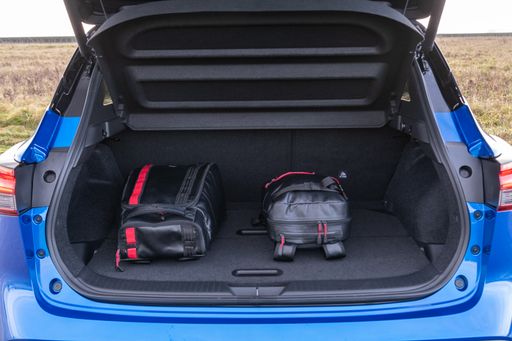
Looking at boot space, the Nissan Qashqai offers moderately more boot space – 504 L compared to 447 L. That’s a difference of about 57 L.

When it comes to payload, the Nissan Qashqai carries slightly more – 520 kg compared to 425 kg. That’s a difference of about 95 kg.

Who wins the race in the data check?

The Toyota C-HR is clearly superior overall in the objective data comparison.
This result only shows which model scores more points on paper – not which of the two cars feels right for you.

from £29,100
C-HR

Toyota C-HR

  • Engine Type : Full Hybrid, Plugin Hybrid
  • Transmission : Automatic
  • Drive Type : Front-Wheel Drive, All-Wheel Drive
  • Power HP : 140 - 223 HP
  • Consumption L/100km : 2.3 - 5.1 L/100km
  • Electric Range : 66 km
Toyota C-HR
Nissan Qashqai

Costs and Consumption

View detailed analysis

Engine and Performance

View detailed analysis

Dimensions and Body

View detailed analysis

Toyota C-HR

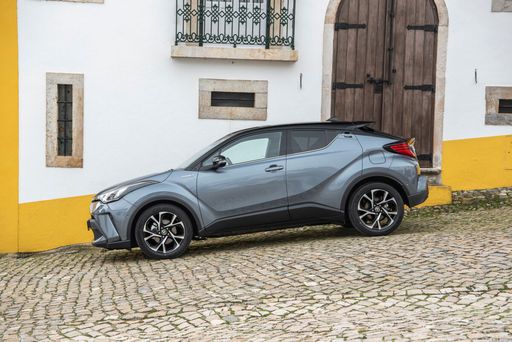
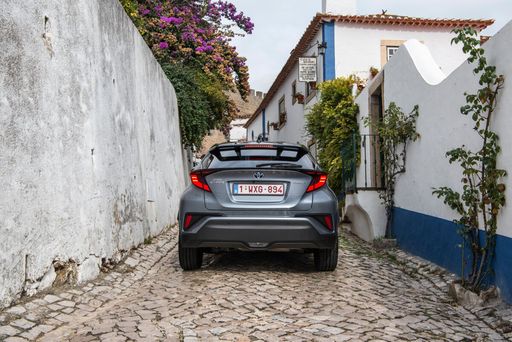
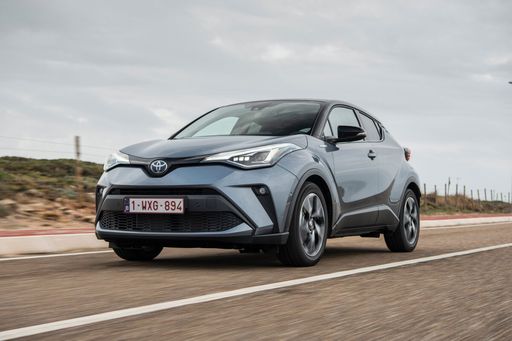
The Toyota C-HR cuts a striking figure with its angular styling and coupe-like profile, so you’ll never go unnoticed in the supermarket car park. It balances everyday practicality with a nimble, city-friendly personality, making routine commutes feel a touch more fun without asking for forgiveness.

details

Nissan Qashqai

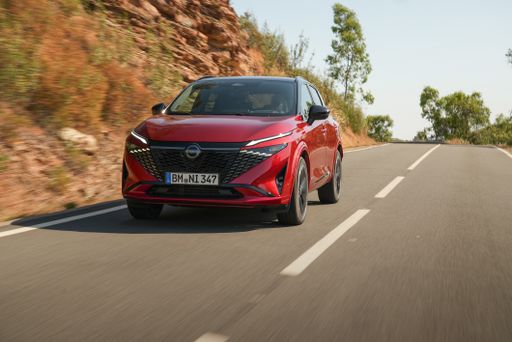
The Nissan Qashqai blends practical, family-friendly packaging with SUV styling that refuses to shout, making it a sensible and dependable choice for everyday life. It’s comfortable to live with, economical on the road, and neatly equipped enough to feel modern without ever feeling precious — perfect if you want crossover versatility without the drama.

details
Toyota C-HR
Nissan Qashqai

Costs and Consumption

Price
29,100 - 42,800 £
Price
29,600 - 39,900 £
Consumption L/100km
2.3 - 5.1 L/100km
Consumption L/100km
4.5 - 6.8 L/100km
Consumption kWh/100km
-
Consumption kWh/100km
-
Electric Range
66 km
Electric Range
-
Battery Capacity
-
Battery Capacity
-
co2
52 - 116 g/km
co2
102 - 154 g/km
Fuel tank capacity
-
Fuel tank capacity
55 L

Dimensions and Body

Body Type
SUV
Body Type
SUV
Seats
5
Seats
5
Doors
-
Doors
5
Curb weight
1,505 - 1,755 kg
Curb weight
1,420 - 1,665 kg
Trunk capacity
350 - 447 L
Trunk capacity
479 - 504 L
Length
-
Length
4,425 mm
Width
1,832 mm
Width
1,835 mm
Height
-
Height
1,625 mm
Max trunk capacity
-
Max trunk capacity
1,422 - 1,447 L
Payload
375 - 425 kg
Payload
466 - 520 kg

Engine and Performance

Engine Type
Full Hybrid, Plugin Hybrid
Engine Type
Petrol MHEV, Full Hybrid
Transmission
Automatic
Transmission
Manuel, Automatic
Transmission Detail
CVT
Transmission Detail
Manual Gearbox, CVT, Reduction Gearbox
Drive Type
Front-Wheel Drive, All-Wheel Drive
Drive Type
Front-Wheel Drive, All-Wheel Drive
Power HP
140 - 223 HP
Power HP
140 - 205 HP
Acceleration 0-100km/h
7.4 - 9.9 s
Acceleration 0-100km/h
7.6 - 10.2 s
Max Speed
-
Max Speed
170 - 206 km/h
Torque
-
Torque
240 - 330 Nm
Number of Cylinders
4
Number of Cylinders
3 - 4
Power kW
103 - 164 kW
Power kW
103 - 151 kW
Engine capacity
1,798 - 1,987 cm3
Engine capacity
1,332 - 1,498 cm3

General

Model Year
2,026
Model Year
2,025 - 2,026
CO2 Efficiency Class
C, D, B
CO2 Efficiency Class
E, C
Brand
Toyota
Brand
Nissan
DriveDuel uses data analysis and artificial intelligence to evaluate vehicle data and create content. Content is regularly reviewed and improved. The displayed prices are estimates based on German list prices, adjusted to the respective country’s VAT. Country-specific registration taxes are not included. This information is not legally binding.