VS

Toyota C-HR vs SEAT Arona comparison

Compare performance (223 HP vs 150 HP), boot space and price (29,100 £ vs 20,700 £ ) at a glance. Find out which car is the better choice for you – Toyota C-HR or SEAT Arona?

Toyota C-HR vs SEAT Arona: Key differences

Toyota C-HR

4.8 (7 Reviews)
rate
  • markedly more power
  • considerably more efficient
  • a bit quicker 0–100 km/h
  • somewhat more trunk space
details

SEAT Arona

4.9 (4 Reviews)
rate
  • substantially cheaper
  • noticeably lighter
details

All details on performance, efficiency, range and trunk space can be found in the technical comparison below – including user reviews for both models.

By Achim Sedelmaier

C-HR

SEAT Arona VS Toyota C-HR — quick snapshot for shoppers

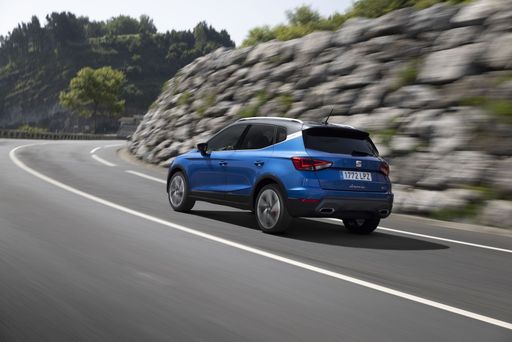
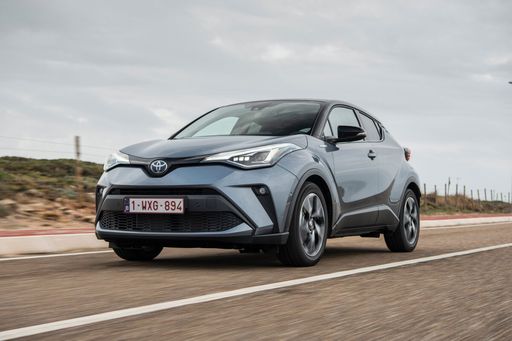
SEAT Arona VS Toyota C-HR puts a pragmatic, value‑focused urban crossover against a design‑led, hybrid‑focused rival that prizes efficiency and perceived refinement. The SEAT Arona feels compact, lively and straightforward: it’s easy to park, economical to run and tends to be the cheaper option at the showroom. The Toyota C‑HR, by contrast, trades some everyday space for a quieter, more refined cabin and the clear fuel advantages of hybrid powertrains. That trade‑off — affordability and agility versus refinement and low running costs — is the theme that runs through the rest of this comparison. Read on if you want to know which of those priorities matches how you actually use a car.
Arona

Driving character and comfort on real roads

The SEAT Arona leans toward a taut, engaging feel that rewards twisty B‑roads and tight city manoeuvres, with steering that communicates and a chassis that keeps the body under control. The Toyota C‑HR prioritises a softer, more composed ride and a calming cruising experience, especially when you take advantage of its hybrid drive in town. Where the Arona can feel a touch fidgety over rough surfaces and makes engine and road noise more audible at freeway speeds, the C‑HR masks motorway miles better but can reveal a droning character under hard acceleration. In practice that means the Arona feels more alive to drive, while the C‑HR feels more grown‑up and relaxed when you want serenity rather than sportiness.

C-HR

Cabin feel, controls and perceived quality

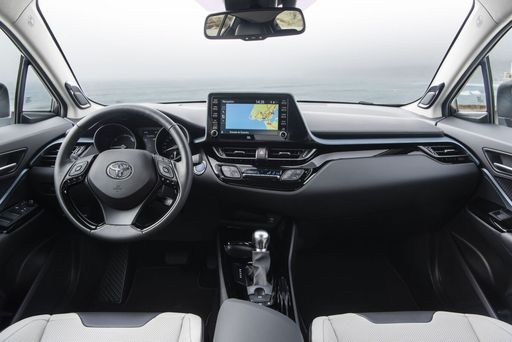
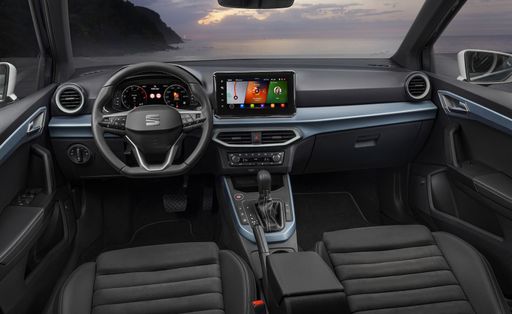
Inside, the Toyota C‑HR projects a clearer step up in materials and styling: graphics, switchgear and trim are arranged to feel modern and slightly premium for the segment. The SEAT Arona takes a more pragmatic route with hard plastics and purposefully placed physical buttons that make daily operation simple and unambiguous. Both cars offer good smartphone integration, though the Arona’s setup is often praised for its reliability while the C‑HR’s larger screen and cleaner presentation feel more contemporary. For buyers who want a tactile, user‑friendly cabin the Arona is reassuring; for those who want a cabin that reads as nicer and more thought‑out the C‑HR will be more satisfying.

Arona

Practicality, rear space and luggage usability

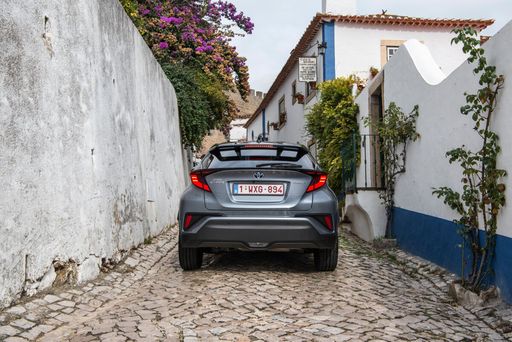
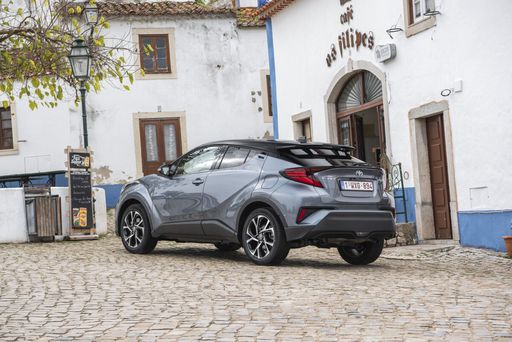
Practical needs expose different compromises: the SEAT Arona is compact but considers utility first, with a usable boot shape and sensible day‑to‑day ergonomics, even if the load lip and rear legroom aren’t class‑leading. The Toyota C‑HR often impresses with front‑seat comfort and style, but its sloping roofline and sculpted rear reduce headroom and create a smaller, more awkward cargo area — a reality that’s amplified on plug‑in variants. Families who regularly carry three adults or bulky weekend gear will notice the Arona’s more straightforward packaging, whereas couples or solo commuters who prize cabin ambience and lower fuel bills will tolerate the C‑HR’s tighter rear quarters. In short: Arona favours usable packaging, C‑HR favours form and efficiency at the cost of some utility.

C-HR

City driving, long trips and everyday usability

For city‑centric life the SEAT Arona feels at home: tight turning, light steering and a visibility package that simplifies parking and short hops. The Toyota C‑HR’s hybrid system gives it a decisive advantage in stop‑start traffic thanks to silent take‑offs and much lower consumption, making it excellent for long commuting runs and duty‑fleet buyers. On long motorway journeys the C‑HR tends to be the quieter and less tiring companion, whereas the Arona’s firmer setup and more audible drivetrain make extended runs feel busier. Therefore choose the Arona if urban agility and directness are your priority; choose the C‑HR if you want low running costs and a calmer long‑distance experience.

Arona

Which buyer each car suits — clear trade-offs

If you prioritise price, straightforward usability and a bit of driving fun the SEAT Arona is the better fit: it gives you a nimble, well‑connected B‑SUV without stretching the budget or complicating day‑to‑day life. If your checklist favours low real‑world fuel use, a more polished interior and a composed motorway demeanour, the Toyota C‑HR answers those needs — albeit with compromises in rear visibility and luggage flexibility. Both cars present sensible but different compromises, so your choice comes down to whether you value economy and refinement over pure utility and sharper handling. The technical comparison that follows will unpack how those real‑world differences map to drivetrain choices, comfort equipment and space — so you can match numbers to how you actually drive.

Here’s where it gets real: The technical differences in detail

C-HR

Costs and Efficiency:

Price and efficiency are key factors when choosing a car – and this is often where the real differences emerge.

SEAT Arona is substantially cheaper – starting at 20,700 £ , while the Toyota C-HR costs 29,100 £ . That’s a price difference of around 8,434 £.

Fuel consumption also shows a difference: the Toyota C-HR uses 2.3 L/100km and is considerably more efficient than the SEAT Arona with 5.3 L/100km. The difference is about 3 L/100km.

Arona

Engine and Performance:

Under the bonnet, it becomes clear which model is tuned for sportiness and which one takes the lead when you hit the accelerator.

When it comes to engine power, the Toyota C-HR offers markedly more power – delivering 223 HP compared to 150 HP. That’s roughly 73 HP more horsepower.

When accelerating from 0 to 100 km/h, the Toyota C-HR is a bit quicker – completing the sprint in 7.4 s, while the SEAT Arona takes 8.3 s. That’s about 0.9 s quicker.

C-HR

Space and Everyday Use:

Whether family car or daily driver – which one offers more room, flexibility and comfort?

Both vehicles offer seating for 5 people.

In terms of curb weight, SEAT Arona is noticeably lighter – 1,188 kg compared to 1,505 kg. The difference is around 317 kg.

Looking at boot space, the Toyota C-HR offers somewhat more boot space – 447 L compared to 400 L. That’s a difference of about 47 L.

When it comes to payload, the SEAT Arona carries slightly more – 522 kg compared to 425 kg. That’s a difference of about 97 kg.

Who wins the race in the data check?

The Toyota C-HR is far ahead overall in the objective data comparison.
This result only shows which model scores more points on paper – not which of the two cars feels right for you.

from £29,100
C-HR

Toyota C-HR

  • Engine Type Full Hybrid, Plugin Hybrid
  • Transmission Automatic
  • Drive Type Front-Wheel Drive, All-Wheel Drive
  • Power HP 140 - 223 HP
  • Consumption L/100km 2.3 - 5.1 L/100km
  • Electric Range 66 km
Toyota C-HR
SEAT Arona

Costs and Consumption

View detailed analysis

Engine and Performance

View detailed analysis

Dimensions and Body

View detailed analysis

Toyota C-HR

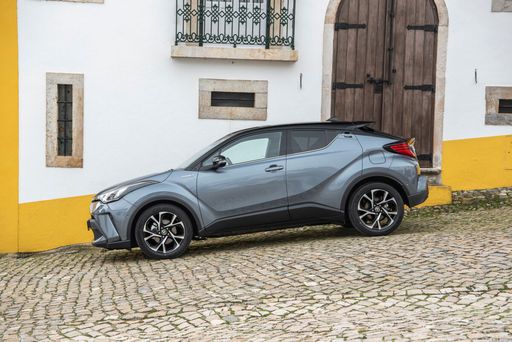
The Toyota C-HR is a bold, coupe-styled crossover that grabs attention with angular lines and a modern interior design. It’s aimed at comfortable urban driving and sensible efficiency, offering practical features and distinctive looks rather than rugged off-road ability.

details

SEAT Arona

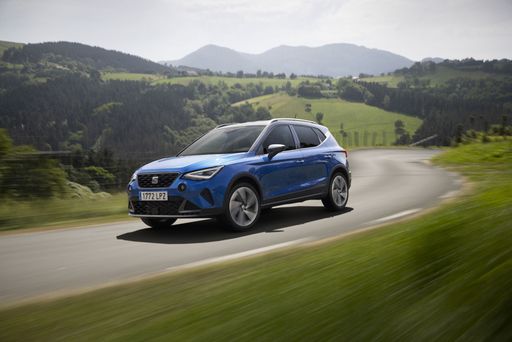
The SEAT Arona is a compact crossover that blends practical, city-friendly packaging with a sporty, youthful design. It delivers a comfortable ride, an intuitive cabin and economical running costs, making it a sensible pick for daily drives and weekend getaways.

details
Toyota C-HR
SEAT Arona

Costs and Consumption

Price
29,100 - 42,800 £
Price
20,700 - 30,300 £
Consumption L/100km
2.3 - 5.1 L/100km
Consumption L/100km
5.3 - 5.8 L/100km
Consumption kWh/100km
-
Consumption kWh/100km
-
Electric Range
66 km
Electric Range
-
Battery Capacity
-
Battery Capacity
-
co2
52 - 116 g/km
co2
120 - 132 g/km
Fuel tank capacity
-
Fuel tank capacity
-

Dimensions and Body

Body Type
SUV
Body Type
SUV
Seats
5
Seats
5
Doors
-
Doors
-
Curb weight
1,505 - 1,755 kg
Curb weight
1,188 - 1,268 kg
Trunk capacity
350 - 447 L
Trunk capacity
400 L
Length
-
Length
-
Width
1,832 mm
Width
1,780 mm
Height
-
Height
-
Max trunk capacity
-
Max trunk capacity
-
Payload
375 - 425 kg
Payload
502 - 522 kg

Engine and Performance

Engine Type
Full Hybrid, Plugin Hybrid
Engine Type
Petrol
Transmission
Automatic
Transmission
Manuel, Automatic
Transmission Detail
CVT
Transmission Detail
Manual Gearbox, Dual-Clutch Automatic
Drive Type
Front-Wheel Drive, All-Wheel Drive
Drive Type
Front-Wheel Drive
Power HP
140 - 223 HP
Power HP
95 - 150 HP
Acceleration 0-100km/h
7.4 - 9.9 s
Acceleration 0-100km/h
8.3 - 11.1 s
Max Speed
-
Max Speed
-
Torque
-
Torque
175 - 250 Nm
Number of Cylinders
4
Number of Cylinders
3 - 4
Power kW
103 - 164 kW
Power kW
70 - 110 kW
Engine capacity
1,798 - 1,987 cm3
Engine capacity
999 - 1,498 cm3

General

Model Year
2026
Model Year
2025
CO2 Efficiency Class
C, D, B
CO2 Efficiency Class
D
Brand
Toyota
Brand
SEAT
DriveDuel uses data analysis and artificial intelligence to evaluate vehicle data and create content. Content is regularly reviewed and improved. The displayed prices are estimates based on German list prices, adjusted to the respective country’s VAT. Country-specific registration taxes are not included. This information is not legally binding.