@ Toyota Motor Corporation
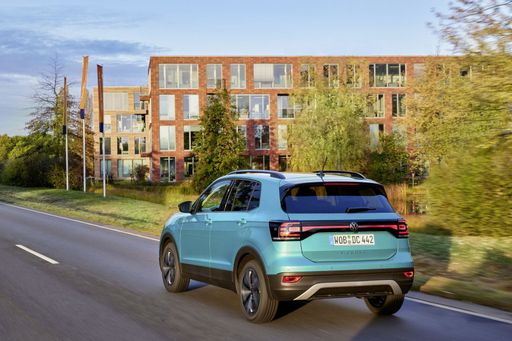
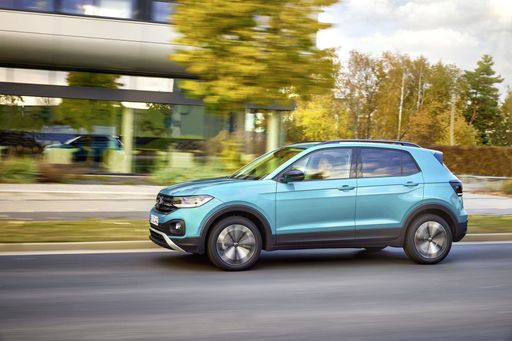
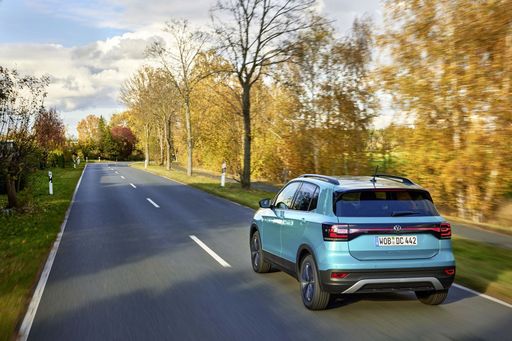
@ Volkswagen AG / VW Media
VS

Toyota C-HR vs VW T-Cross – Performance, range & efficiency compared

Compare performance, boot capacity, efficiency and price at a glance.
Find out which car is the better choice for you – Toyota C-HR or VW T-Cross?

C-HR @ Toyota Motor Corporation

A Clash of Compact SUVs: Toyota C-HR vs. VW T-Cross

The world of compact SUVs is fiercely competitive, and two models stand out in this segment: the Toyota C-HR and the VW T-Cross. Both vehicles cater to those looking for a balance of style, efficiency, and functionality. Let's break down these two popular models and see how they stack up against each other.
T-Cross @ Volkswagen AG / VW Media

Design and Build

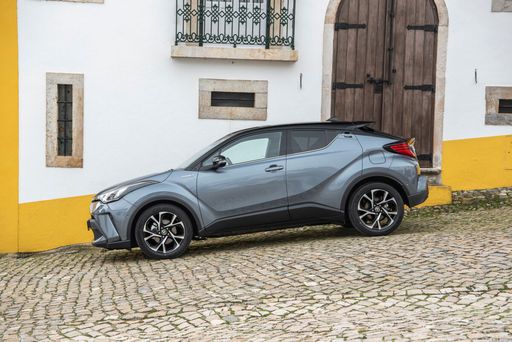
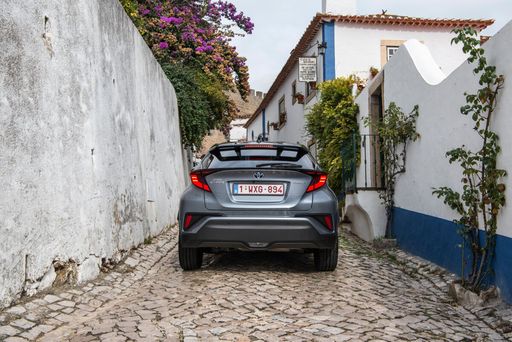
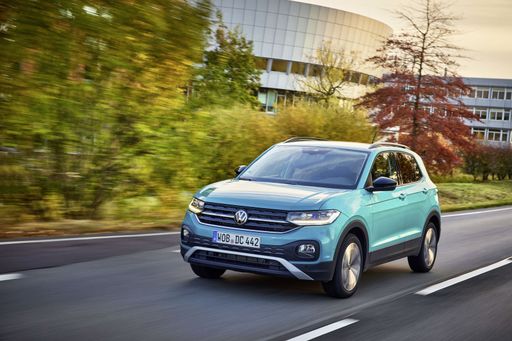
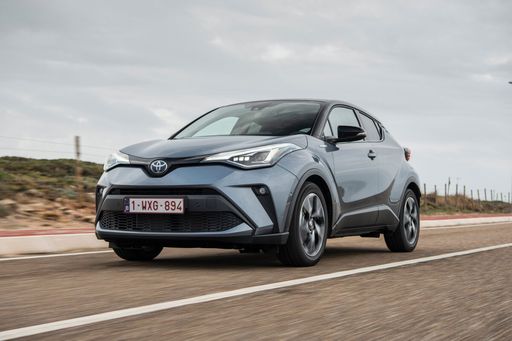
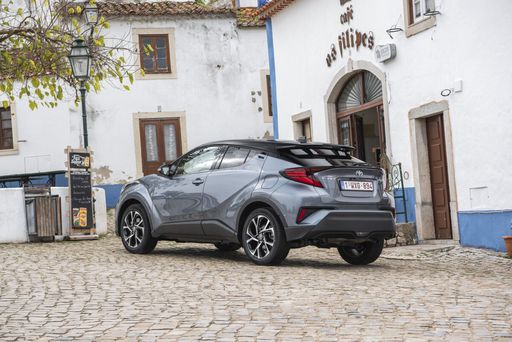
The Toyota C-HR exudes a futuristic and edgy design with its angular lines and coupé-like silhouette. It measures 4,362 mm in length, 1,832 mm in width, and up to 1,564 mm in height, offering a robust presence on the road. Meanwhile, the VW T-Cross presents a more traditional SUV appearance with compact dimensions, measuring 4,127 mm in length, 1,784 mm in width, and 1,573 mm in height.

C-HR @ Toyota Motor Corporation

Power and Performance

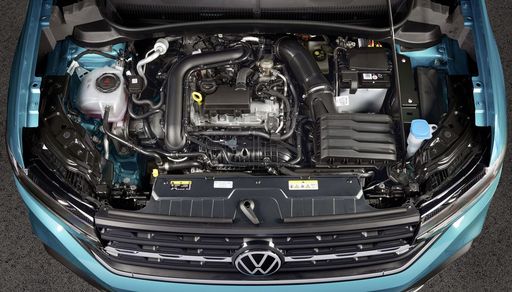
Beneath the hood, the C-HR presents a versatile powertrain lineup with its Full Hybrid and Plugin Hybrid options. It boasts power outputs ranging from 140 to 223 horsepower, allowing for varied performance options, with acceleration from 0 to 100 km/h completed in as little as 7.4 seconds. In contrast, the T-Cross keeps things simpler with its petrol engines, offering power outputs between 95 and 150 horsepower and a maximum speed of up to 200 km/h. The T-Cross reaches 100 km/h from a standstill in around 8.4 to 11.2 seconds, depending on the powertrain.

T-Cross @ Volkswagen AG / VW Media

Transmission and Drivetrain

The C-HR utilizes a Continuously Variable Transmission (CVT) in its automatic setup and offers both front-wheel and all-wheel drive configurations, catering to different driving preferences. The T-Cross provides both manual and dual-clutch automatic transmissions but only with a front-wheel-drive setup.

C-HR @ Toyota Motor Corporation

Efficiency and Environmental Impact

Fuel efficiency is where the C-HR shines, with consumption as low as 0.8 L/100 km for its plugin hybrid variant and CO2 emissions starting from just 19 g/km. The T-Cross, being purely petrol-driven, consumes between 5.6 and 6 L/100 km, resulting in CO2 emissions from 127 g/km upward.

T-Cross @ Volkswagen AG / VW Media

Interior and Practicality

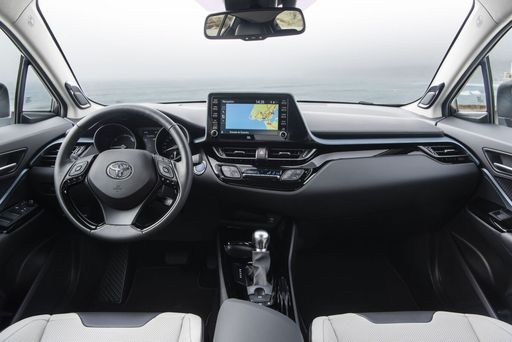
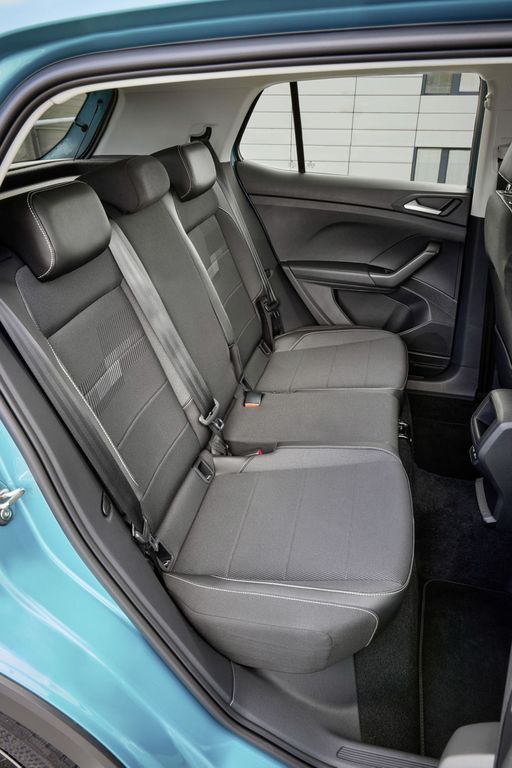
Both vehicles seat five and provide ample space for passengers and cargo. The trunk capacity of the C-HR varies between 350 and 447 liters, whereas the T-Cross offers a consistent 455 liters, providing an edge in cargo-carrying capability. The C-HR offers a modern interior with a focus on technology and comfort, whereas the T-Cross delivers straightforward functionality combined with quality materials.

C-HR @ Toyota Motor Corporation

Innovations and Features

Toyota's focus on hybrid technology is evident in the C-HR, which allows for electric-only driving for up to 68 km, depending on the version. Advanced driver-assistance systems are a standard in both models, enhancing safety and convenience for the driver.

T-Cross @ Volkswagen AG / VW Media

Conclusion

Choosing between the Toyota C-HR and the VW T-Cross ultimately depends on the consumer's priorities. For those prioritizing cutting-edge hybrid technology and eco-friendliness, the C-HR presents a compelling choice. On the other hand, those who prefer a straightforward, petrol-powered SUV with a focus on practicality and classic design would find the T-Cross appealing. Both models serve as excellent contenders in the compact SUV segment, each with its unique strengths.

Here’s where it gets real: The technical differences in detail

C-HR @ Toyota Motor Corporation

Costs and Efficiency:

Looking at overall running costs, both models reveal some interesting differences in everyday economy.

VW T-Cross has a clearly perceptible advantage in terms of price – it starts at 21100 £, while the Toyota C-HR costs 29100 £. That’s a price difference of around 8057 £.

Fuel consumption also shows a difference: Toyota C-HR manages with 0.80 L and is therefore convincingly more efficient than the VW T-Cross with 5.40 L. The difference is about 4.60 L per 100 km.

T-Cross @ Volkswagen AG / VW Media

Engine and Performance:

Power, torque and acceleration say a lot about how a car feels on the road. This is where you see which model delivers more driving dynamics.

When it comes to engine power, the Toyota C-HR has a clearly perceptible edge – offering 223 HP compared to 150 HP. That’s roughly 73 HP more horsepower.

In acceleration from 0 to 100 km/h, the Toyota C-HR is somewhat quicker – completing the sprint in 7.40 s, while the VW T-Cross takes 8.40 s. That’s about 1 s faster.

In terms of top speed, the VW T-Cross performs slight better – reaching 200 km/h, while the Toyota C-HR tops out at 180 km/h. The difference is around 20 km/h.

Space and Everyday Use:

Cabin size, boot volume and payload all play a role in everyday practicality. Here, comfort and flexibility make the difference.

Both vehicles offer seating for 5 people.

In curb weight, VW T-Cross is a bit lighter – 1267 kg compared to 1505 kg. The difference is around 238 kg.

In terms of boot space, the VW T-Cross offers hardly perceptible more room – 455 L compared to 447 L. That’s a difference of about 8 L.

In maximum load capacity, the VW T-Cross performs minimal better – up to 1281 L, which is about 126 L more than the Toyota C-HR.

When it comes to payload, VW T-Cross slightly takes the win – 480 kg compared to 425 kg. That’s a difference of about 55 kg.

Who wins the race?

The Toyota C-HR proves to be leaves the rival little chance and therefore becomes our DriveDuel Champion!
Toyota C-HR is the better all-rounder in this comparison.

from about £29,100
C-HR @ Toyota Motor Corporation

Toyota C-HR

  • Engine Type : Full Hybrid, Plugin Hybrid
  • Transmission : Automatic
  • Drive Type : Front-Wheel Drive, All-Wheel Drive
  • Power HP : 140 - 223 HP
  • Consumption L/100km : 0.8 - 5.1 L
  • Electric Range : 68 km

Toyota C-HR

5 (1)
rate

The Toyota C-HR cuts a striking figure with its angular styling and coupe-like profile, so you’ll never go unnoticed in the supermarket car park. It balances everyday practicality with a nimble, city-friendly personality, making routine commutes feel a touch more fun without asking for forgiveness.

details

VW T-Cross

4 (1)
rate

The VW T-Cross turns everyday practicality into a style statement, offering a roomy-feeling cabin, clever storage and playful design that suits town life and family duties alike. On the road it's composed and relaxed, rewarding buyers who want the raised seating and confident presence of an SUV without the weighty compromises.

details
Toyota C-HR
VW T-Cross
C-HR @ Toyota Motor Corporation
T-Cross @ Volkswagen AG / VW Media

Costs and Consumption

Price
29100 - 42800 £
Price
21100 - 31500 £
Consumption L/100km
0.8 - 5.1 L
Consumption L/100km
5.4 - 6 L
Consumption kWh/100km
-
Consumption kWh/100km
-
Electric Range
68 km
Electric Range
-
Battery Capacity
-
Battery Capacity
-
co2
17 - 115 g/km
co2
124 - 136 g/km
Fuel tank capacity
43 L
Fuel tank capacity
40 L

Dimensions and Body

Body Type
SUV
Body Type
SUV
Seats
5
Seats
5
Doors
5
Doors
5
Curb weight
1505 - 1755 kg
Curb weight
1267 - 1338 kg
Trunk capacity
350 - 447 L
Trunk capacity
455 L
Length
4362 mm
Length
4127 mm
Width
1832 mm
Width
1784 mm
Height
1558 - 1564 mm
Height
1573 mm
Max trunk capacity
1076 - 1155 L
Max trunk capacity
1281 L
Payload
375 - 425 kg
Payload
463 - 480 kg

Engine and Performance

Engine Type
Full Hybrid, Plugin Hybrid
Engine Type
Petrol
Transmission
Automatic
Transmission
Manuel, Automatic
Transmission Detail
CVT
Transmission Detail
Manual Gearbox, Dual-Clutch Automatic
Drive Type
Front-Wheel Drive, All-Wheel Drive
Drive Type
Front-Wheel Drive
Power HP
140 - 223 HP
Power HP
95 - 150 HP
Acceleration 0-100km/h
7.4 - 9.9 s
Acceleration 0-100km/h
8.4 - 11.3 s
Max Speed
175 - 180 km/h
Max Speed
180 - 200 km/h
Torque
-
Torque
175 - 250 Nm
Number of Cylinders
4
Number of Cylinders
3 - 4
Power kW
103 - 164 kW
Power kW
70 - 110 kW
Engine capacity
1798 - 1987 cm3
Engine capacity
999 - 1498 cm3

General

Model Year
2024 - 2025
Model Year
2024 - 2025
CO2 Efficiency Class
C, B
CO2 Efficiency Class
D, E
Brand
Toyota
Brand
VW
What drivetrain options does the Toyota C-HR have?

Available configurations include Front-Wheel Drive or All-Wheel Drive.

The prices and data displayed are estimates based on German list prices and may vary by country. This information is not legally binding.