VS

Toyota Corolla vs Mazda CX-30 comparison

Compare performance (178 HP vs 186 HP), boot space and price (28,600 £ vs 25,700 £ ) at a glance. Find out which car is the better choice for you – Toyota Corolla or Mazda CX-30?

Toyota Corolla vs Mazda CX-30: Key differences

Toyota Corolla

4.4 (2 Reviews)
rate
  • markedly more efficient
  • somewhat quicker 0–100 km/h
  • very slightly lighter
details

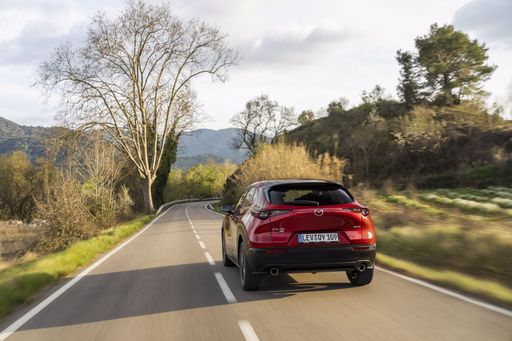
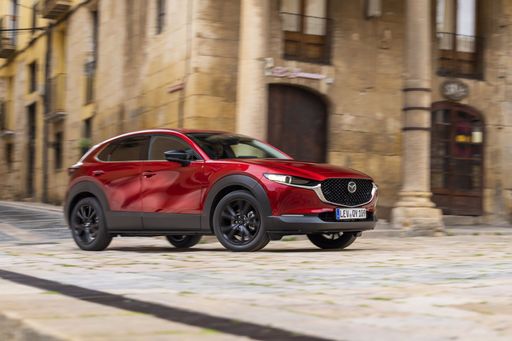
Mazda CX-30

4.5 (9 Reviews)
rate
  • slightly cheaper
  • very slightly more power
  • a bit more trunk space
details

All details on performance, efficiency, range and trunk space can be found in the technical comparison below – including user reviews for both models.

By Achim Sedelmaier

Corolla

Urban Elegance: Mazda CX-30 vs Toyota Corolla

When it comes to compact vehicles with a blend of style and performance, few can rival the allure of the Mazda CX-30 and the Toyota Corolla. Both models promise a compelling mix of design innovation, efficiency, and tech-savvy features. However, each car brings its unique charm to the table. Let's dive into the details of these automotive wonders to see how they compare.
CX-30

Design and Dimensions

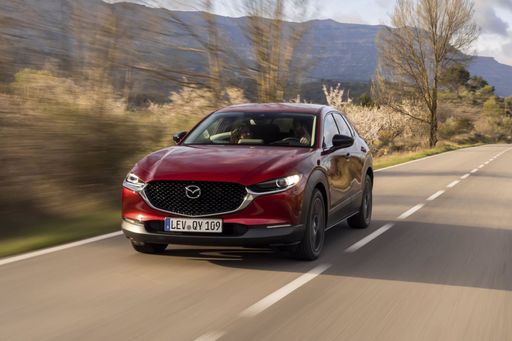
The Mazda CX-30 portrays itself as a sleek SUV, stretching 4,395 mm in length, 1,795 mm in width, and 1,540 mm in height. It is crafted with the intention of combining stylish urban aesthetics with the commanding presence of an SUV. The Mazda's trunk capacity of up to 430 liters ensures plenty of space for your gear, making it ideal for both daily errands and adventurous getaways.

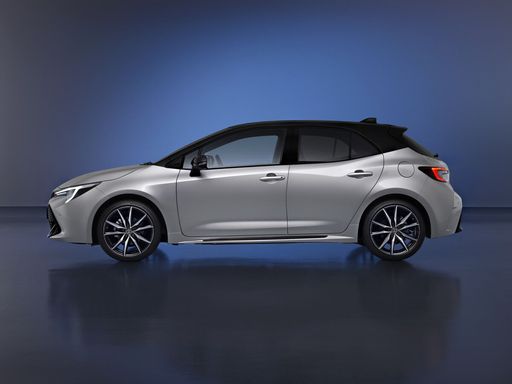
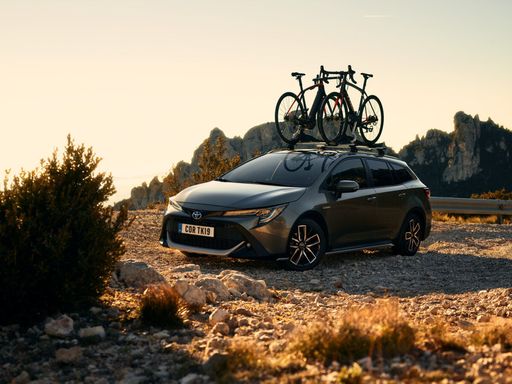
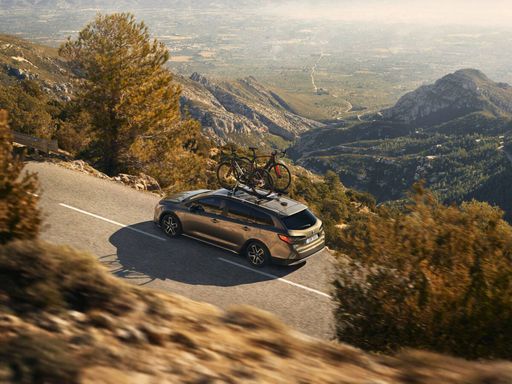
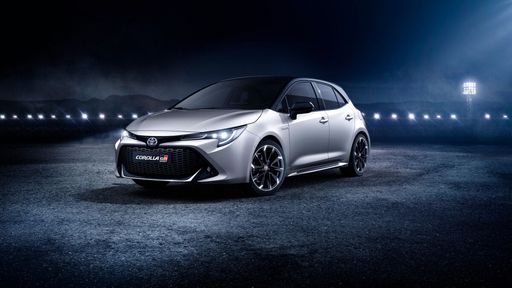
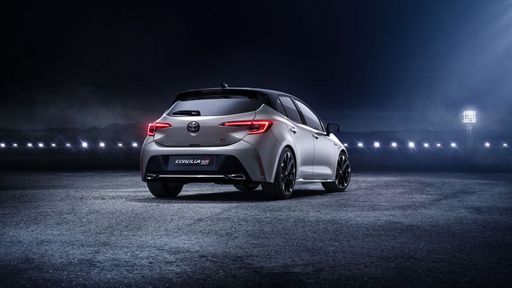
In contrast, the Toyota Corolla, a charismatic hatchback, measures slightly shorter at 4,370 mm in length, with a width of 1,790 mm and a height of 1,435 mm. The Corolla offers a trunk capacity ranging from 313 to 361 liters, which is ample for everyday use. Its compactness is perfect for city driving, offering easy maneuverability without sacrificing interior comfort.

Corolla

Powertrain and Performance

The Mazda CX-30 offers multiple variants, with horsepower ranging from 140 to 186 HP thanks to its petrol mild hybrid engines. Acceleration from 0-100 km/h is achieved in 8.3 to 10.3 seconds, depending on the configuration, with a maximum speed of up to 204 km/h. The CX-30 provides both manual and automatic transmissions, with the option of front-wheel drive or all-wheel drive, catering to diverse driving enthusiasts.

The Toyota Corolla adopts a more eco-friendly approach with its full hybrid system, delivering between 140 and 196 HP. The Corolla accelerates from 0-100 km/h in as little as 7.5 seconds with a top speed limited to 180 km/h. The CVT transmission coupled with front-wheel drive ensures a smooth and efficient ride, ideal for those prioritizing economy and ease of use.

CX-30

Efficiency and Environmental Impact

For environmentally conscious drivers, the Mazda CX-30 presents a commendable balance, with fuel consumption figures varying from 5.7 to 6.6 L/100km and a CO2 emission range of 129 to 148 g/km. Its mild hybrid technology contributes modestly to reducing carbon footprint without compromising performance.

The Corolla shines in this category, boasting an impressive fuel consumption between 4.4 and 4.6 L/100km, and emitting just 100 g/km of CO2. This efficiency is a testament to Toyota's commitment to sustainable mobility, potentially translating to lower fuel costs and a greener driving experience.

Corolla

Interior Comfort and Features

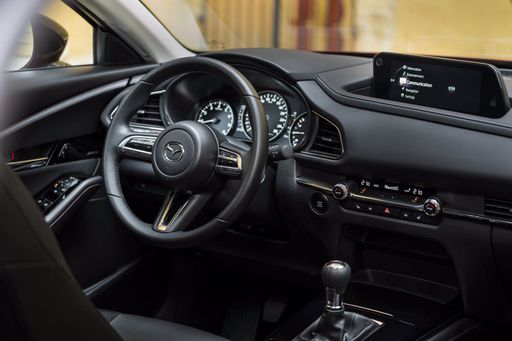
Inside, both vehicles comfortably seat five passengers. The CX-30 emphasizes luxury with available high-end materials, a modern infotainment system, and advanced driving aids that enhance the overall driving experience. Its spacious interior provides comfort akin to larger models, especially beneficial on longer journeys.

The Corolla's cabin focuses on practicality and user-friendliness, equipped with Toyota's latest technology suite, offering an intuitive interface and ample connectivity options. The driving experience is further enriched by its commitment to safety, including standard features such as lane-keeping assistance and adaptive cruise control.

CX-30

Conclusion: Choice of Lifestyle

Your decision between the Mazda CX-30 and the Toyota Corolla will inevitably come down to your lifestyle preferences and priorities. For those who desire the elevated driving position and adventurous spirit of an SUV with luxury inclinations, the Mazda CX-30 makes an excellent companion. On the other hand, urban dwellers and eco-conscious drivers might lean towards the Toyota Corolla, appreciating its environmental credentials and nimble footprint.

Whatever your choice, both vehicles represent strong contenders in the compact car segment, each delivering their own spectrum of innovations and appeal.

Here’s where it gets real: The technical differences in detail

Corolla

Costs and Efficiency:

When it comes to price and running costs, the biggest differences usually appear. This is often where you see which car fits your budget better in the long run.

Mazda CX-30 is slightly cheaper – starting at 25,700 £ , while the Toyota Corolla costs 28,600 £ . That’s a price difference of around 2,872 £.

Fuel consumption also shows a difference: the Toyota Corolla uses 4.4 L/100km and is markedly more efficient than the Mazda CX-30 with 5.7 L/100km. The difference is about 1.3 L/100km.

CX-30

Engine and Performance:

Under the bonnet, it becomes clear which model is tuned for sportiness and which one takes the lead when you hit the accelerator.

When it comes to engine power, the Mazda CX-30 offers very slightly more power – delivering 186 HP compared to 178 HP. That’s roughly 8 HP more horsepower.

When accelerating from 0 to 100 km/h, the Toyota Corolla is somewhat quicker – completing the sprint in 7.5 s, while the Mazda CX-30 takes 8.3 s. That’s about 0.8 s quicker.

Corolla

Space and Everyday Use:

Cabin size, boot volume and payload all play a role in everyday practicality. Here, comfort and flexibility make the difference.

Both vehicles offer seating for 5 people.

In terms of curb weight, Toyota Corolla is very slightly lighter – 1,420 kg compared to 1,455 kg. The difference is around 35 kg.

Looking at boot space, the Mazda CX-30 offers a bit more boot space – 430 L compared to 361 L. That’s a difference of about 69 L.

When it comes to payload, the Mazda CX-30 carries only slightly more – 496 kg compared to 450 kg. That’s a difference of about 46 kg.

Who wins the race in the data check?

The Toyota Corolla is narrowly ahead in the objective data comparison.
This result only shows which model scores more points on paper – not which of the two cars feels right for you.

from £28,600
Corolla

Toyota Corolla

  • Engine Type Full Hybrid
  • Transmission Automatic
  • Drive Type Front-Wheel Drive
  • Power HP 140 - 178 HP
  • Consumption L/100km 4.4 L/100km
Toyota Corolla
Mazda CX-30

Costs and Consumption

View detailed analysis

Engine and Performance

View detailed analysis

Dimensions and Body

View detailed analysis

Toyota Corolla

The Corolla is a reliable, no-nonsense compact car known for its practicality and composed ride. It’s economical to run, easy to maintain, and suits daily commuting while holding its value well.

details

Mazda CX-30

The Mazda CX-30 blends Mazda’s upscale styling with a compact crossover body, offering a refined interior and engaging driving dynamics. It’s a practical choice for buyers who want a premium feel and agile handling in a city-friendly package.

details
Toyota Corolla
Mazda CX-30

Costs and Consumption

Price
28,600 - 34,900 £
Price
25,700 - 37,200 £
Consumption L/100km
4.4 L/100km
Consumption L/100km
5.7 - 6.6 L/100km
Consumption kWh/100km
-
Consumption kWh/100km
-
Electric Range
-
Electric Range
-
Battery Capacity
-
Battery Capacity
-
co2
100 g/km
co2
129 - 148 g/km
Fuel tank capacity
43 L
Fuel tank capacity
-

Dimensions and Body

Body Type
Hatchback
Body Type
SUV
Seats
5
Seats
5
Doors
5
Doors
-
Curb weight
1,420 - 1,460 kg
Curb weight
1,455 - 1,587 kg
Trunk capacity
313 - 361 L
Trunk capacity
422 - 430 L
Length
4,370 mm
Length
-
Width
1,790 mm
Width
1,795 mm
Height
1,435 mm
Height
-
Max trunk capacity
1,004 - 1,052 L
Max trunk capacity
-
Payload
400 - 450 kg
Payload
458 - 496 kg

Engine and Performance

Engine Type
Full Hybrid
Engine Type
Petrol MHEV
Transmission
Automatic
Transmission
Manuel, Automatic
Transmission Detail
CVT
Transmission Detail
Manual Gearbox, Automatic Gearbox
Drive Type
Front-Wheel Drive
Drive Type
Front-Wheel Drive, All-Wheel Drive
Power HP
140 - 178 HP
Power HP
140 - 186 HP
Acceleration 0-100km/h
7.5 - 9.2 s
Acceleration 0-100km/h
8.3 - 10.3 s
Max Speed
180 km/h
Max Speed
-
Torque
-
Torque
238 - 240 Nm
Number of Cylinders
4
Number of Cylinders
4
Power kW
103 - 131 kW
Power kW
103 - 137 kW
Engine capacity
1,798 - 1,987 cm3
Engine capacity
1,998 - 2,488 cm3

General

Model Year
2025
Model Year
2025
CO2 Efficiency Class
C
CO2 Efficiency Class
D, E
Brand
Toyota
Brand
Mazda
DriveDuel uses data analysis and artificial intelligence to evaluate vehicle data and create content. Content is regularly reviewed and improved. The displayed prices are estimates based on German list prices, adjusted to the respective country’s VAT. Country-specific registration taxes are not included. This information is not legally binding.