VS

Toyota RAV4 vs Ford Kuga comparison

Compare performance (306 HP vs 243 HP), boot space and price (35,100 £ vs 34,200 £ ) at a glance. Find out which car is the better choice for you – Toyota RAV4 or Ford Kuga?

Toyota RAV4 vs Ford Kuga: Key differences

Toyota RAV4

4.8 (6 Reviews)
rate
  • noticeably more power
  • considerably more efficient
  • only slightly more electric range
  • markedly quicker 0–100 km/h

Ford Kuga

4.3 (5 Reviews)
rate
  • very slightly cheaper
  • somewhat lighter

All details on performance, efficiency, range and trunk space can be found in the technical comparison below – including user reviews for both models.

RAV4

Street Presence and First Date Appeal

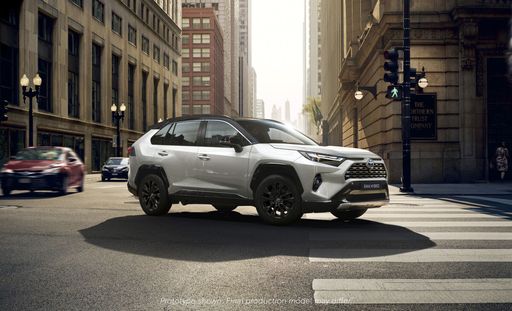
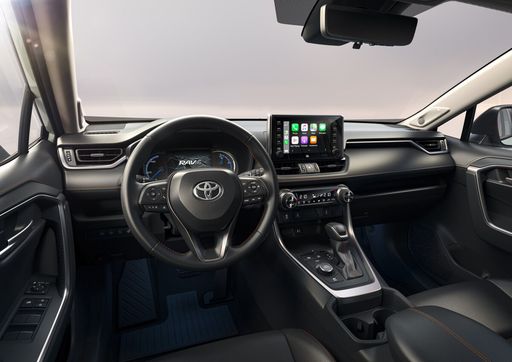
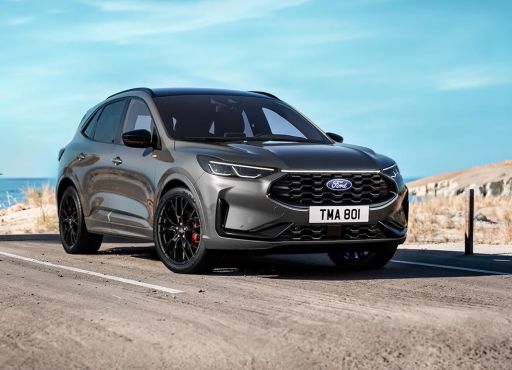
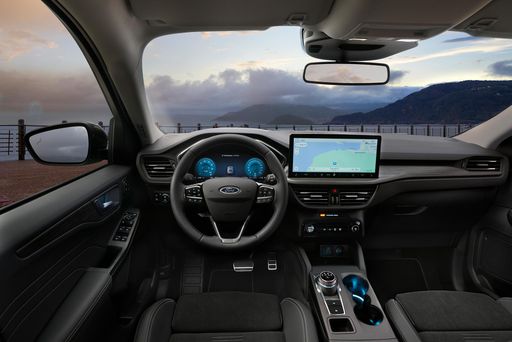
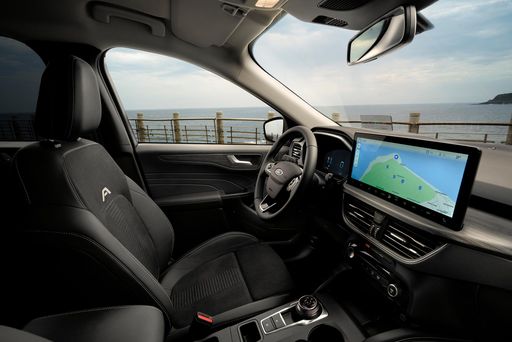
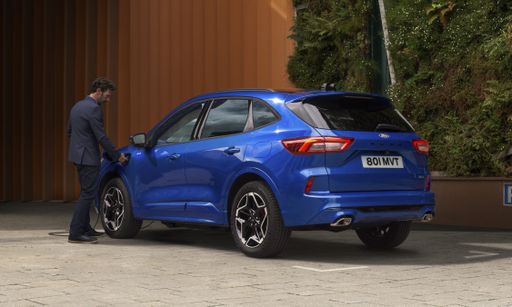
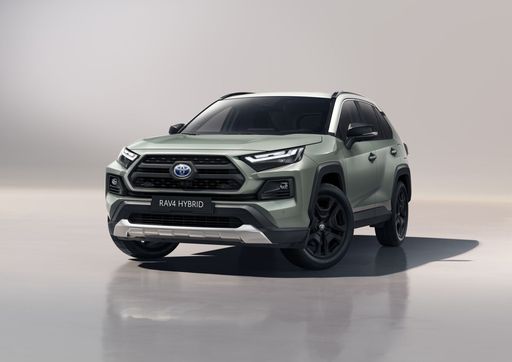
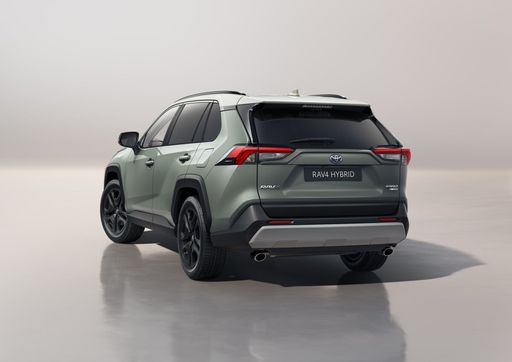
On the pavement, the two SUVs give very different vibes: the Ford Kuga leans toward a sporty, athletic look that catches the eye with taut lines, while the Toyota RAV4 goes for a sturdier, more rugged stance that promises practicality without apology. Both feel purposeful, but they attract different types: the Kuga flirts with the driver who wants a sporty image, the RAV4 reassures the buyer who values substance and a bit of off-road attitude. Interior finishes play into that personality split too, with materials and switchgear choices that support each car’s character. It’s a question of style preference as much as substance.
Kuga

City Streets and Daily Commuting

In town, ease of use and calmness matter more than headline figures, and both models try to make the daily commute painless in different ways. The Kuga feels nimble and responsive in traffic, rewarding quick lane changes and tight parking, while the RAV4 delivers a composed, reassuring presence that makes longer city drives less fatiguing. Controls and visibility are thoughtfully arranged in both cabins, although their driving seats and ergonomics tilt toward slightly different comfort philosophies. For commuters, it comes down to whether you want a sprightlier companion or a steadier, more relaxed ride.

RAV4

Long Haul Comfort and Highway Moods

On the open road the emphasis shifts to refinement and endurance — this is where seat comfort, suspension tuning and cabin quiet really count. The RAV4 tends to favour a more relaxed cruising mood, with an emphasis on composure and a sense of solidity that soothes long-distance miles, while the Kuga keeps things engaging and slightly firmer, which some drivers will find enlivening rather than tiring. Noise suppression and how the cars isolate road imperfections differ noticeably, shaping each trip’s character. If you spend many hours between cities, think about which passenger experience you want at the end of the day.

Kuga

Family Life and Weekend Logistics

Practicality wears many hats, from family-friendly ergonomics to how easily shopping and luggage are loaded and secured for weekend escapes. The RAV4 presents itself as the more utilitarian partner, with an interior layout that makes everyday chores feel straightforward, while the Kuga prioritises flexible usability with a slightly more dynamic cabin arrangement. Both are sensible choices for active families, but they approach the juggling act differently: one leans toward rugged convenience, the other toward adaptable everyday comfort. Think about how you load, organise and live with a car before you choose the personality you prefer.

RAV4

Driver Character and Road Manners

If you like to feel connected to the road, steering weight, chassis balance and throttle response will shape your emotional response to each car. The Kuga tends to reward an engaged driving style with crisp turn-in and a taut feel that appeals to those who enjoy a bit of zest, while the RAV4 favours a stable, assured behaviour that welcomes relaxed confidence over theatrics. Neither is dull, but they speak different languages: one writes in a sportier script, the other prefers a calm, pragmatic tone. Your choice will reflect whether you drive for thrills or for comfortable competence.

Kuga

Which Driver Should Read On?

Choosing between these two comes down to lifestyle: commuters looking for an agile daily companion, families prioritising straightforward utility, style-conscious drivers wanting a sporty image, or long-distance users craving serenity will each find strong arguments in favour of one car or the other. Both are well-schooled in usability and deliver distinct personalities that suit different routines and tastes. Keep reading — the DriveDuel Champion will be revealed afterwards.

Here’s where it gets real: The technical differences in detail

RAV4

Costs and Efficiency:

Price and efficiency are often the first things buyers look at. Here it becomes clear which model has the long-term edge – whether at the pump, the plug, or in purchase price.

Ford Kuga is very slightly cheaper – starting at 34,200 £ , while the Toyota RAV4 costs 35,100 £ . That’s a price difference of around 892 £.

Fuel consumption also shows a difference: the Toyota RAV4 uses 1 L/100km and is considerably more efficient than the Ford Kuga with 2.8 L/100km. The difference is about 1.8 L/100km.

As for electric range, the Toyota RAV4 offers only slightly more range – reaching up to 75 km, about 7 km more than the Ford Kuga.

Kuga

Engine and Performance:

Power, torque and acceleration are the classic benchmarks for car enthusiasts – and here, some clear differences start to show.

When it comes to engine power, the Toyota RAV4 offers noticeably more power – delivering 306 HP compared to 243 HP. That’s roughly 63 HP more horsepower.

When accelerating from 0 to 100 km/h, the Toyota RAV4 is markedly quicker – completing the sprint in 6 s, while the Ford Kuga takes 7.3 s. That’s about 1.3 s quicker.

RAV4

Space and Everyday Use:

Beyond pure performance, interior space and usability matter most in daily life. This is where you see which car is more practical and versatile.

Both vehicles offer seating for 5 people.

In terms of curb weight, Ford Kuga is somewhat lighter – 1,526 kg compared to 1,745 kg. The difference is around 219 kg.

When it comes to payload, the Toyota RAV4 carries only slightly more – 600 kg compared to 550 kg. That’s a difference of about 50 kg.

Who wins the race in the data check?

The Toyota RAV4 holds a decisive overall lead in the objective data comparison.
This result only shows which model scores more points on paper – not which of the two cars feels right for you.

from £35,100
RAV4

Toyota RAV4

  • Engine Type : Full Hybrid, Plugin Hybrid
  • Transmission : Automatic
  • Drive Type : Front-Wheel Drive, All-Wheel Drive
  • Power HP : 218 - 306 HP
  • Consumption L/100km : 1 - 5.6 L/100km
  • Electric Range : 75 km
Toyota RAV4
Ford Kuga

Costs and Consumption

View detailed analysis

Engine and Performance

View detailed analysis

Dimensions and Body

View detailed analysis

Toyota RAV4

The Toyota RAV4 feels like a sensible friend on the road, marrying dependable practicality with a dash of SUV personality that keeps daily driving from turning dull. Comfortable and easy to live with, it looks tough without shouting and quietly gets the job done — a sensible pick for buyers who want versatility without drama.

details

Ford Kuga

The Kuga is Ford’s adaptable family SUV that blends usable space with a surprisingly lively driving character, making daily commutes and weekend escapes equally enjoyable. With smart interior packaging, an easy-to-use infotainment setup and composed road manners, it’s a sensible choice for buyers who want a bit of fun without the fuss.

details
Toyota RAV4
Ford Kuga

Costs and Consumption

Price
35,100 - 55,700 £
Price
34,200 - 46,300 £
Consumption L/100km
1 - 5.6 L/100km
Consumption L/100km
2.8 - 6.8 L/100km
Consumption kWh/100km
-
Consumption kWh/100km
-
Electric Range
75 km
Electric Range
68 km
Battery Capacity
-
Battery Capacity
-
co2
22 - 128 g/km
co2
55 - 154 g/km
Fuel tank capacity
55 L
Fuel tank capacity
-

Dimensions and Body

Body Type
SUV
Body Type
SUV
Seats
5
Seats
5
Doors
5
Doors
-
Curb weight
1,745 - 1,910 kg
Curb weight
1,526 - 1,859 kg
Trunk capacity
520 - 580 L
Trunk capacity
-
Length
4,600 mm
Length
-
Width
1,855 mm
Width
1,882 mm
Height
1,685 mm
Height
-
Max trunk capacity
1,604 - 1,690 L
Max trunk capacity
-
Payload
390 - 600 kg
Payload
541 - 550 kg

Engine and Performance

Engine Type
Full Hybrid, Plugin Hybrid
Engine Type
Petrol, Full Hybrid, Plugin Hybrid
Transmission
Automatic
Transmission
Manuel, Automatic
Transmission Detail
CVT
Transmission Detail
Manual Gearbox, CVT, Automatic Gearbox
Drive Type
Front-Wheel Drive, All-Wheel Drive
Drive Type
Front-Wheel Drive, All-Wheel Drive
Power HP
218 - 306 HP
Power HP
150 - 243 HP
Acceleration 0-100km/h
6 - 8.4 s
Acceleration 0-100km/h
7.3 - 9.9 s
Max Speed
180 km/h
Max Speed
-
Torque
-
Torque
240 Nm
Number of Cylinders
4
Number of Cylinders
3 - 4
Power kW
160 - 225 kW
Power kW
111 - 178 kW
Engine capacity
2,487 cm3
Engine capacity
1,496 - 2,488 cm3

General

Model Year
2,024 - 2,025
Model Year
2,025
CO2 Efficiency Class
D, B
CO2 Efficiency Class
E, D, B
Brand
Toyota
Brand
Ford
DriveDuel uses data analysis and artificial intelligence to evaluate vehicle data and create content. Content is regularly reviewed and improved. The displayed prices are estimates based on German list prices, adjusted to the respective country’s VAT. Country-specific registration taxes are not included. This information is not legally binding.