VS

Toyota RAV4 vs Kia Sportage comparison

Compare performance (306 HP vs 288 HP), boot space and price (35,100 £ vs 30,200 £ ) at a glance. Find out which car is the better choice for you – Toyota RAV4 or Kia Sportage?

Toyota RAV4 vs Kia Sportage: Key differences

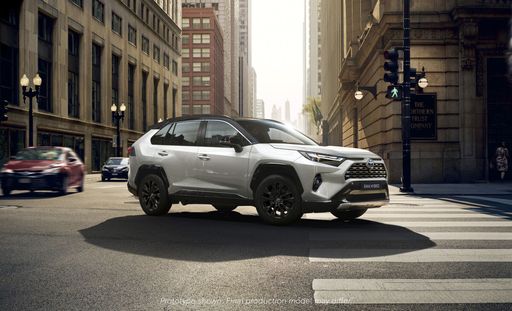
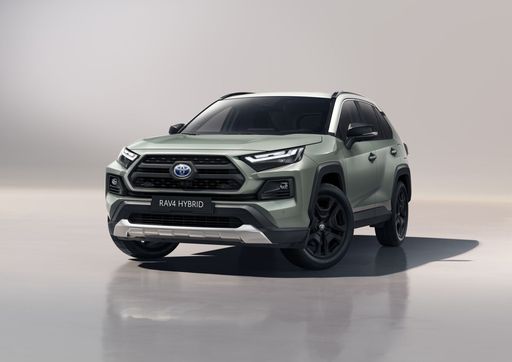
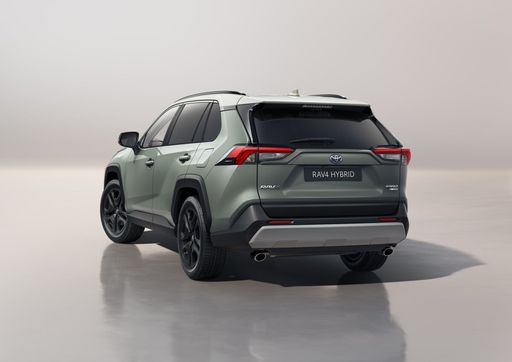
Toyota RAV4

4.8 (6 Reviews)
rate
  • only slightly more power
  • substantially more efficient
  • moderately more electric range
  • noticeably quicker 0–100 km/h

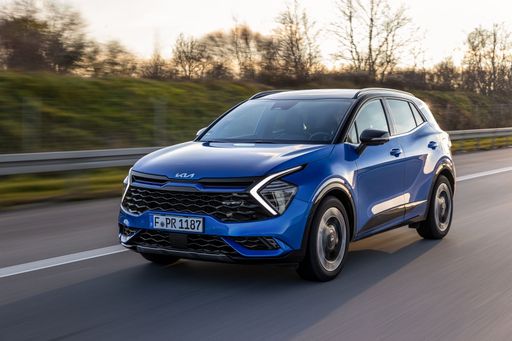
Kia Sportage

4.9 (2 Reviews)
rate
  • a bit cheaper
  • somewhat lighter
  • marginally more trunk space

All details on performance, efficiency, range and trunk space can be found in the technical comparison below – including user reviews for both models.

RAV4

Kia Sportage vs Toyota RAV4: The Battle of SUVs

The compact SUV segment continues to gain traction in the automotive market, and two heavyweights leading the charge are the Kia Sportage and the Toyota RAV4. Both models boast a combination of comfort, performance, and practicality, each bringing their own unique set of features and innovations. In this article, we will delve into the technical aspects of each vehicle to help you decide which SUV reigns supreme.
Sportage

Engine Specifications and Performance

The Kia Sportage offers a versatile lineup of engines including Diesel MHEV, Petrol MHEV, Full Hybrid, Petrol, and Plug-In Hybrid variants. With power outputs ranging from 136 hp to 252 hp, the Sportage caters to a diverse range of drivers. Its acceleration times can be impressive, with the quickest variant going from 0-100 km/h in just 8.3 seconds, while the most fuel-efficient options consume as little as 5 L/100 km.

On the other hand, the Toyota RAV4 primarily focuses on hybrid technology, presenting Full Hybrid and Plug-In Hybrid variants with horsepower settings from 218 hp to 306 hp. The RAV4's performance is quite commendable, with the fastest model reaching 0-100 km/h in just 6 seconds and maintaining a competitive consumption of approximately 5.6 L/100 km. Both models have their strengths, with the Sportage providing a broader range of engine options while the RAV4 excels in hybrid efficiency.

RAV4

Dimensions and Cargo Space

In terms of size, the Kia Sportage measures 4,515 mm in length, 1,865 mm in width, and 1,650 mm in height. The trunk capacity ranges from 526 to 587 liters, making it a pragmatic choice for families and adventure-seekers alike. Its spacious interior ensures that five passengers can travel in comfort, supported by ample legroom and headroom.

The Toyota RAV4, slightly larger, stretches 4,600 mm long, 1,855 mm wide, and 1,685 mm high. Its trunk capacity is impressive at 520 to 580 liters, providing options for groceries, luggage, and outdoor gear. Passengers will also find the RAV4's cabin a comfortable space, perfect for long road trips or daily commutes.

Sportage

Fuel Efficiency and Emissions

Fuel efficiency remains a critical factor for many buyers. The Kia Sportage posts impressive figures with certain models achieving as low as 5 L/100 km, alongside CO2 emissions ranging from 132 to 162 g/km. These efficiencies are bolstered by the presence of hybrid and diesel options, allowing drivers to choose what best suits their needs.

Meanwhile, the Toyota RAV4 shines with its hybrid technology, achieving rates as low as 1 L/100 km for electric operation, and CO2 emissions ranging from 126 to 128 g/km. This makes the RAV4 a strong contender for eco-conscious consumers looking to minimize their carbon footprint while maximizing economy.

RAV4

Innovations and Technology

Both SUVs feature cutting-edge technology enhancements. The Kia Sportage incorporates a user-friendly infotainment system with connectivity options, advanced driver-assistance systems, and safety features that include lane-keeping assist and adaptive cruise control. Additionally, its higher trims showcase premium audio systems and panoramic sunroofs.

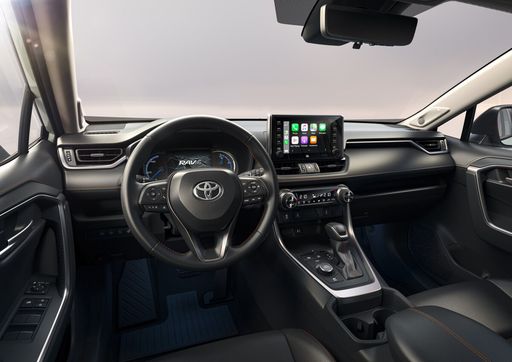
The Toyota RAV4 showcases a rich array of tech, with its standard infotainment system featuring a larger touchscreen and robust smartphone integration. Driver-assistance technologies, such as Toyota Safety Sense, bolster its reputation for safety, including pre-collision systems and dynamic radar cruise control.

Sportage

Final Verdict: Your Ideal SUV

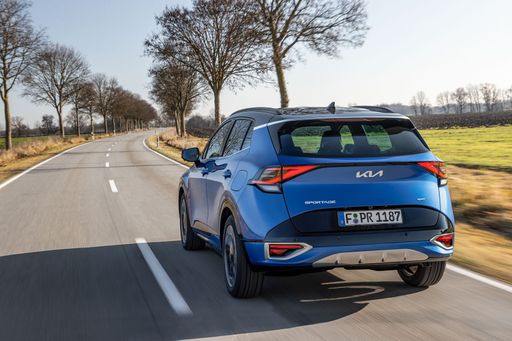
Choosing between the Kia Sportage and Toyota RAV4 ultimately depends on your personal preferences. The Sportage offers a broader engine choice, striking exterior styling, and excellent trunk space. Conversely, the RAV4 places an emphasis on hybrid efficiency with impressive technology and safety features, making it ideal for eco-conscious consumers.

In conclusion, both vehicles provide strong arguments in their favor, and potential buyers are encouraged to consider which aspects matter most to them. Whether your focus is on performance, technology, or fuel efficiency, the Kia Sportage and Toyota RAV4 stand out as top contenders in the compact SUV landscape.

Here’s where it gets real: The technical differences in detail

RAV4

Costs and Efficiency:

Price and efficiency are key factors when choosing a car – and this is often where the real differences emerge.

Kia Sportage is a bit cheaper – starting at 30,200 £ , while the Toyota RAV4 costs 35,100 £ . That’s a price difference of around 4,972 £.

Fuel consumption also shows a difference: the Toyota RAV4 uses 1 L/100km and is substantially more efficient than the Kia Sportage with 2.9 L/100km. The difference is about 1.9 L/100km.

As for electric range, the Toyota RAV4 offers moderately more range – reaching up to 75 km, about 9 km more than the Kia Sportage.

Sportage

Engine and Performance:

Power, torque and acceleration say a lot about how a car feels on the road. This is where you see which model delivers more driving dynamics.

When it comes to engine power, the Toyota RAV4 offers only slightly more power – delivering 306 HP compared to 288 HP. That’s roughly 18 HP more horsepower.

When accelerating from 0 to 100 km/h, the Toyota RAV4 is noticeably quicker – completing the sprint in 6 s, while the Kia Sportage takes 7.5 s. That’s about 1.5 s quicker.

RAV4

Space and Everyday Use:

Cabin size, boot volume and payload all play a role in everyday practicality. Here, comfort and flexibility make the difference.

Both vehicles offer seating for 5 people.

In terms of curb weight, Kia Sportage is somewhat lighter – 1,552 kg compared to 1,745 kg. The difference is around 193 kg.

Looking at boot space, the Kia Sportage offers marginally more boot space – 587 L compared to 580 L. That’s a difference of about 7 L.

When it comes to payload, the Toyota RAV4 carries barely more – 600 kg compared to 580 kg. That’s a difference of about 20 kg.

Who wins the race in the data check?

The Toyota RAV4 is decisively ahead in the objective data comparison.
This result only shows which model scores more points on paper – not which of the two cars feels right for you.

from £35,100
RAV4

Toyota RAV4

  • Engine Type : Full Hybrid, Plugin Hybrid
  • Transmission : Automatic
  • Drive Type : Front-Wheel Drive, All-Wheel Drive
  • Power HP : 218 - 306 HP
  • Consumption L/100km : 1 - 5.6 L/100km
  • Electric Range : 75 km
Toyota RAV4
Kia Sportage

Costs and Consumption

View detailed analysis

Engine and Performance

View detailed analysis

Dimensions and Body

View detailed analysis

Toyota RAV4

The Toyota RAV4 feels like a sensible friend on the road, marrying dependable practicality with a dash of SUV personality that keeps daily driving from turning dull. Comfortable and easy to live with, it looks tough without shouting and quietly gets the job done — a sensible pick for buyers who want versatility without drama.

details

Kia Sportage

The Kia Sportage proves you don't have to choose between style and sensible family motoring, wrapping modern, confident looks around a roomy, well-equipped cabin. It's an easy car to live with — comfortable on daily runs, pleasantly engaging when you want a bit of fun, and kind to your wallet so you can keep smiling at the fuel pump.

details
Toyota RAV4
Kia Sportage

Costs and Consumption

Price
35,100 - 55,700 £
Price
30,200 - 47,100 £
Consumption L/100km
1 - 5.6 L/100km
Consumption L/100km
2.9 - 7.8 L/100km
Consumption kWh/100km
-
Consumption kWh/100km
-
Electric Range
75 km
Electric Range
63 - 66 km
Battery Capacity
-
Battery Capacity
-
co2
22 - 128 g/km
co2
67 - 177 g/km
Fuel tank capacity
55 L
Fuel tank capacity
-

Dimensions and Body

Body Type
SUV
Body Type
SUV
Seats
5
Seats
5
Doors
5
Doors
-
Curb weight
1,745 - 1,910 kg
Curb weight
1,552 - 1,896 kg
Trunk capacity
520 - 580 L
Trunk capacity
526 - 587 L
Length
4,600 mm
Length
-
Width
1,855 mm
Width
1,865 mm
Height
1,685 mm
Height
-
Max trunk capacity
1,604 - 1,690 L
Max trunk capacity
-
Payload
390 - 600 kg
Payload
533 - 580 kg

Engine and Performance

Engine Type
Full Hybrid, Plugin Hybrid
Engine Type
Petrol, Full Hybrid, Diesel MHEV, Plugin Hybrid
Transmission
Automatic
Transmission
Manuel, Automatic
Transmission Detail
CVT
Transmission Detail
Manual Gearbox, Dual-Clutch Automatic, Automatic Gearbox
Drive Type
Front-Wheel Drive, All-Wheel Drive
Drive Type
Front-Wheel Drive, All-Wheel Drive
Power HP
218 - 306 HP
Power HP
136 - 288 HP
Acceleration 0-100km/h
6 - 8.4 s
Acceleration 0-100km/h
7.5 - 11.6 s
Max Speed
180 km/h
Max Speed
-
Torque
-
Torque
250 - 380 Nm
Number of Cylinders
4
Number of Cylinders
4
Power kW
160 - 225 kW
Power kW
100 - 212 kW
Engine capacity
2,487 cm3
Engine capacity
1,598 cm3

General

Model Year
2,024 - 2,025
Model Year
2,025 - 2,026
CO2 Efficiency Class
D, B
CO2 Efficiency Class
F, D, E, G, B
Brand
Toyota
Brand
Kia
DriveDuel uses data analysis and artificial intelligence to evaluate vehicle data and create content. Content is regularly reviewed and improved. The displayed prices are estimates based on German list prices, adjusted to the respective country’s VAT. Country-specific registration taxes are not included. This information is not legally binding.