VS

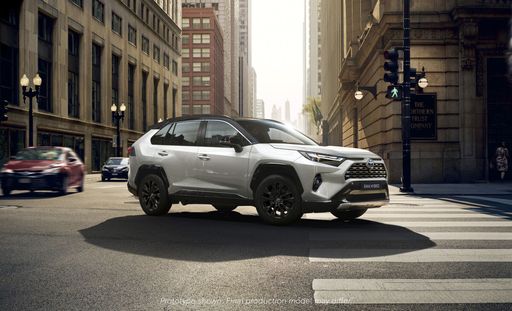
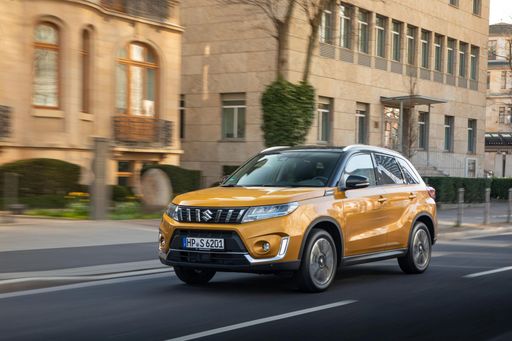
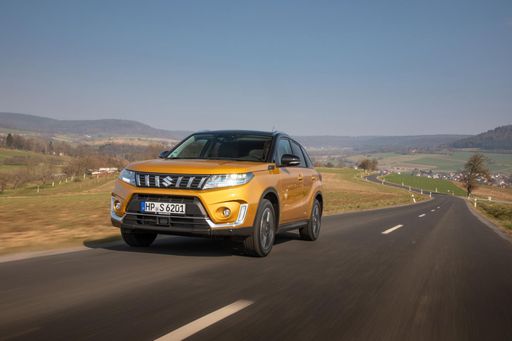
Toyota RAV4 vs Suzuki Vitara comparison

Compare performance (309 HP vs 184 HP), boot space and price (37,700 £ vs 23,600 £ ) at a glance. Find out which car is the better choice for you – Toyota RAV4 or Suzuki Vitara?

Toyota RAV4 vs Suzuki Vitara: Key differences

Toyota RAV4

4.7 (11 Reviews)
rate
  • significantly more power
  • substantially more efficient
  • visibly quicker 0–100 km/h
  • clearly more trunk space
details

Suzuki Vitara

4.5 (8 Reviews)
rate
  • substantially cheaper
  • significantly more electric range
  • markedly lighter
details

All details on performance, efficiency, range and trunk space can be found in the technical comparison below – including user reviews for both models.

By Achim Sedelmaier

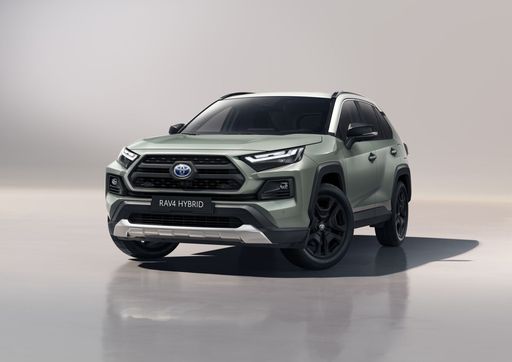
RAV4

When it comes to the competitive world of compact SUVs, the Suzuki Vitara and the Toyota RAV4 stand out as two noteworthy options. Both vehicles blend practicality, performance, and innovation, catering to a diverse audience. In this in-depth comparison, we’ll explore the technical specifications, innovations, and overall driving experience each model offers.
Vitara

Design and Dimensions

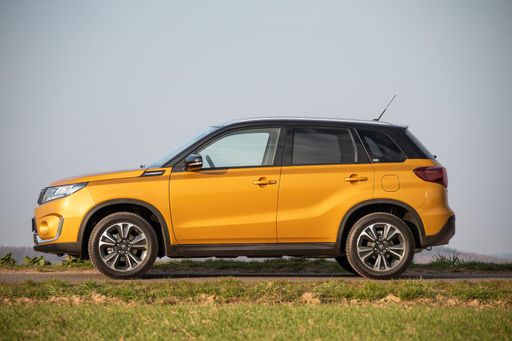
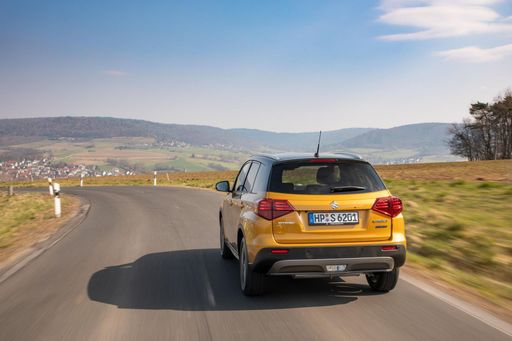
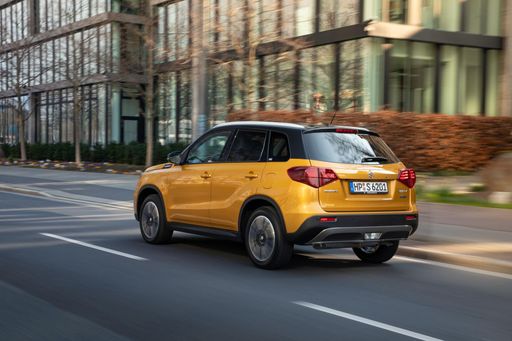
The Suzuki Vitara has a compact footprint, measuring 4185 mm in length, 1775 mm in width, and 1595 mm in height. This makes it easily maneuverable in urban settings while providing ample space for passengers and cargo. With a trunk capacity of 375 liters, it strikes a balance between size and utility.

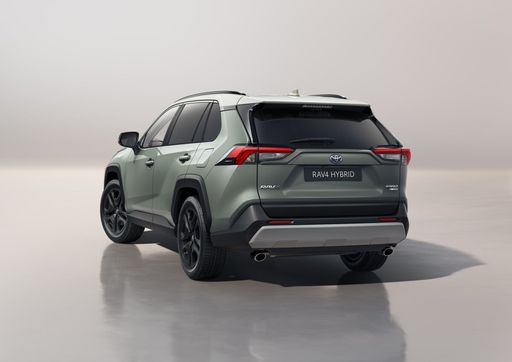
On the other hand, the Toyota RAV4 is noticeably larger, measuring 4600 mm long, 1855 mm wide, and 1685 mm high. Its more substantial trunk capacity of 580 liters further emphasizes its versatility, making the RAV4 a better option for families or those hauling larger loads.

RAV4

Engine Specifications

The engine choices for the Suzuki Vitara include petrol options with mild hybrid technology and a full hybrid variant. The power ranges from 116 to 129 HP, with a 1.4-liter engine being the most efficient, achieving 5.3 L/100km. The Vitara offers both front-wheel drive and all-wheel drive configurations, providing versatility depending on driver needs.

The Toyota RAV4, on the other hand, boasts a more powerful engine lineup, including full and plug-in hybrid options, with power outputs reaching up to 306 HP. Its 2.5-liter engine, coupled with an e-CVT transmission, provides a fuel efficiency starting at 5.6 L/100km, making it a strong contender for those who prioritize power without compromising mileage.

Vitara

Performance and Acceleration

In terms of acceleration, the Suzuki Vitara can go from 0 to 100 km/h in approximately 9.5 seconds for its most powerful variant. This performance is adequate for daily driving needs, but may feel a bit underwhelming for those seeking a sportier experience.

The RAV4 significantly outperforms in this area, with models capable of 0-100 km/h times as low as 6 seconds. This acceleration, paired with a top speed of 180 km/h, makes it a more thrilling choice for drivers who value performance.

RAV4

Innovations and Technologies

Both vehicles incorporate modern technologies to enhance safety and convenience. The Suzuki Vitara features a suite of safety systems under its “Suzuki Safety Support” umbrella, which includes adaptive cruise control, lane departure warning, and automatic emergency braking.

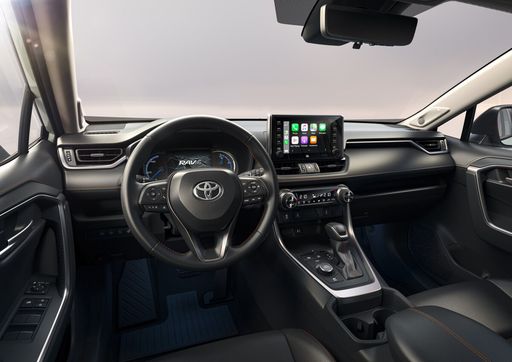
The Toyota RAV4, however, takes the lead with its Toyota Safety Sense, providing advanced driver-assistance systems such as adaptive cruise control, lane tracing assist, and a pre-collision system that enhances overall safety perception. The RAV4 also offers a superior infotainment system that includes a larger touchscreen and more connectivity options.

Vitara

Comfort and Interior Quality

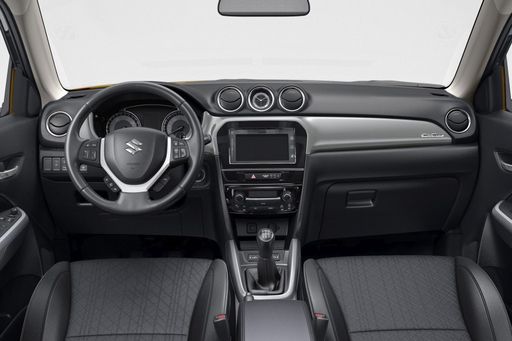
Inside, the Suzuki Vitara presents a comfortable cabin with quality materials and useful features, maintaining a user-friendly layout. However, it tends to have a more utilitarian feel compared to the RAV4.

The Toyota RAV4 offers a more premium atmosphere, with higher-quality materials and advanced infotainment technology. The spacious interior is complemented by comfortable seating and a well-thought-out layout, making it an excellent choice for long journeys.

RAV4

Final Verdict

In conclusion, both the Suzuki Vitara and Toyota RAV4 bring unique strengths to the table. The Vitara is ideal for urban drivers seeking efficiency and compactness, whereas the RAV4 delivers performance and comfort, with advanced features that cater to families and adventure-seekers alike. When deciding between these two models, potential buyers should consider their specific needs regarding space, engine performance, and desired technology features.

Here’s where it gets real: The technical differences in detail

RAV4

Costs and Efficiency:

Price and efficiency are key factors when choosing a car – and this is often where the real differences emerge.

Suzuki Vitara is substantially cheaper – starting at 23,600 £ , while the Toyota RAV4 costs 37,700 £ . That’s a price difference of around 14,134 £.

Fuel consumption also shows a difference: the Toyota RAV4 uses 1.3 L/100km and is substantially more efficient than the Suzuki Vitara with 5.3 L/100km. The difference is about 4 L/100km.

As for electric range, the Suzuki Vitara offers significantly more range – reaching up to 426 km, about 289 km more than the Toyota RAV4.

Vitara

Engine and Performance:

Under the bonnet, it becomes clear which model is tuned for sportiness and which one takes the lead when you hit the accelerator.

When it comes to engine power, the Toyota RAV4 offers significantly more power – delivering 309 HP compared to 184 HP. That’s roughly 125 HP more horsepower.

When accelerating from 0 to 100 km/h, the Toyota RAV4 is visibly quicker – completing the sprint in 5.8 s, while the Suzuki Vitara takes 7.4 s. That’s about 1.6 s quicker.

RAV4

Space and Everyday Use:

Cabin size, boot volume and payload all play a role in everyday practicality. Here, comfort and flexibility make the difference.

Both vehicles offer seating for 5 people.

In terms of curb weight, Suzuki Vitara is markedly lighter – 1,255 kg compared to 1,655 kg. The difference is around 400 kg.

Looking at boot space, the Toyota RAV4 offers clearly more boot space – 514 L compared to 375 L. That’s a difference of about 139 L.

When it comes to payload, the Toyota RAV4 carries visibly more – 610 kg compared to 425 kg. That’s a difference of about 185 kg.

Who wins the race in the data check?

The Toyota RAV4 is clearly superior overall in the objective data comparison.
This result only shows which model scores more points on paper – not which of the two cars feels right for you.

from £37,700
RAV4

Toyota RAV4

  • Engine Type Full Hybrid, Plugin Hybrid
  • Transmission Automatic
  • Drive Type Front-Wheel Drive, All-Wheel Drive
  • Power HP 185 - 309 HP
  • Consumption L/100km 1.3 - 5.3 L/100km
  • Electric Range 133 - 137 km
Toyota RAV4
Suzuki Vitara

Costs and Consumption

View detailed analysis

Engine and Performance

View detailed analysis

Dimensions and Body

View detailed analysis

Toyota RAV4

The Toyota RAV4 is a well-rounded compact SUV that pairs everyday practicality with a comfortable, composed ride and generous cargo space, making it a sensible choice for families and active lifestyles. Its strong reputation for reliability, efficient drivetrains, and straightforward technology gives it wide appeal whether you value economy, comfort, or capability.

details

Suzuki Vitara

The Suzuki Vitara is a practical compact SUV that balances a comfortable, composed ride with easy-to-live-with interior space, making it well suited for daily driving and weekend getaways. It's widely praised for reliable engineering and sensible running costs, offering straightforward value to buyers who want a no-nonsense, economical crossover.

details
Toyota RAV4
Suzuki Vitara

Costs and Consumption

Price
37,700 - 54,200 £
Price
23,600 - 36,800 £
Consumption L/100km
1.3 - 5.3 L/100km
Consumption L/100km
5.3 - 5.8 L/100km
Consumption kWh/100km
-
Consumption kWh/100km
14.9 - 16.6 kWh/100km
Electric Range
133 - 137 km
Electric Range
344 - 426 km
Battery Capacity
-
Battery Capacity
-
co2
30 - 121 g/km
co2
0 - 137 g/km
Fuel tank capacity
-
Fuel tank capacity
-

Dimensions and Body

Body Type
SUV
Body Type
SUV
Seats
5
Seats
5
Doors
-
Doors
-
Curb weight
1,655 - 1,960 kg
Curb weight
1,255 - 1,935 kg
Trunk capacity
446 - 514 L
Trunk capacity
310 - 375 L
Length
-
Length
-
Width
1,880 mm
Width
1,775 - 1,800 mm
Height
-
Height
-
Max trunk capacity
-
Max trunk capacity
-
Payload
515 - 610 kg
Payload
395 - 425 kg

Engine and Performance

Engine Type
Full Hybrid, Plugin Hybrid
Engine Type
Petrol MHEV, Electric
Transmission
Automatic
Transmission
Automatic, Manuel
Transmission Detail
CVT
Transmission Detail
Automatic Gearbox, Reduction Gearbox, Manual Gearbox
Drive Type
Front-Wheel Drive, All-Wheel Drive
Drive Type
Front-Wheel Drive, All-Wheel Drive
Power HP
185 - 309 HP
Power HP
110 - 184 HP
Acceleration 0-100km/h
5.8 - 8 s
Acceleration 0-100km/h
7.4 - 9.6 s
Max Speed
-
Max Speed
-
Torque
-
Torque
193 - 307 Nm
Number of Cylinders
4
Number of Cylinders
4
Power kW
136 - 227 kW
Power kW
81 - 135 kW
Engine capacity
2,487 cm3
Engine capacity
1,373 cm3

General

Model Year
2026
Model Year
2,025 - 2,026
CO2 Efficiency Class
C, D, B
CO2 Efficiency Class
D, E, A
Brand
Toyota
Brand
Suzuki
DriveDuel uses data analysis and artificial intelligence to evaluate vehicle data and create content. Content is regularly reviewed and improved. The displayed prices are estimates based on German list prices, adjusted to the respective country’s VAT. Country-specific registration taxes are not included. This information is not legally binding.