VS

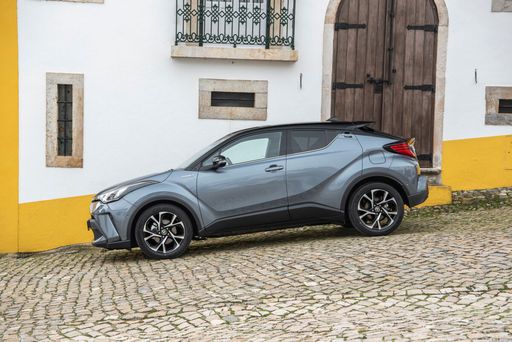
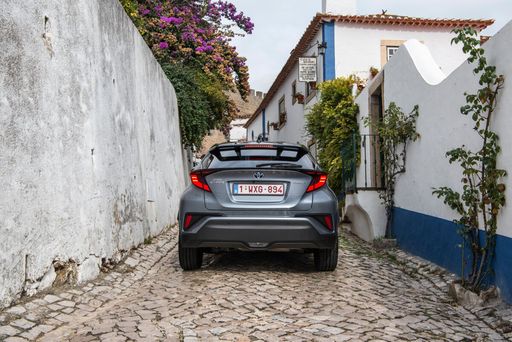
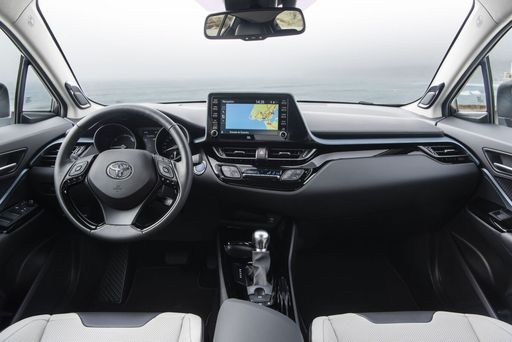
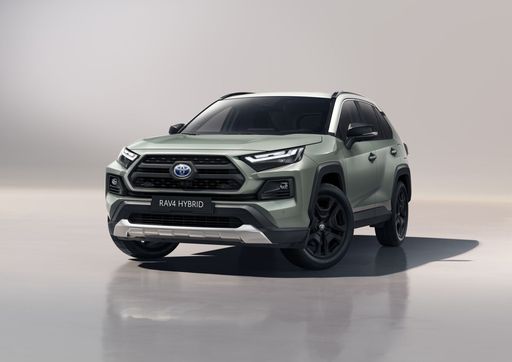
Toyota RAV4 vs Toyota C-HR comparison

Compare performance (306 HP vs 223 HP), boot space and price (35,100 £ vs 29,100 £ ) at a glance. Find out which car is the better choice for you – Toyota RAV4 or Toyota C-HR?

Toyota RAV4 vs Toyota C-HR: Key differences

Toyota RAV4

4.8 (6 Reviews)
rate
  • clearly more power
  • significantly more efficient
  • moderately more electric range
  • markedly quicker 0–100 km/h
  • visibly more trunk space

Toyota C-HR

4.8 (2 Reviews)
rate
  • visibly cheaper
  • somewhat lighter

All details on performance, efficiency, range and trunk space can be found in the technical comparison below – including user reviews for both models.

RAV4

Introduction: The Ultimate Compact SUV Showdown

The automotive market is inundated with compact SUVs, but two stand out for their blend of innovation, performance, and reliability: the Toyota C-HR and the Toyota RAV4. Both models carry the Toyota badge with pride, yet they appeal to different types of consumers. In this article, we delve into a comprehensive comparison of these two SUVs, focusing on their technical aspects, performance metrics, and notable innovations.
C-HR

Design and Dimensions

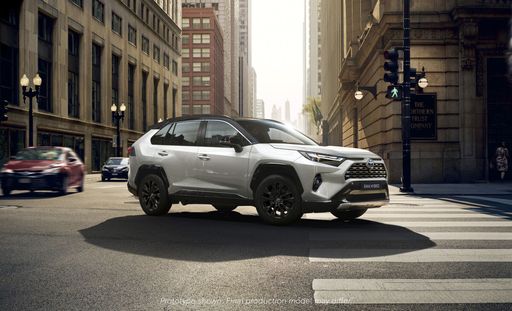
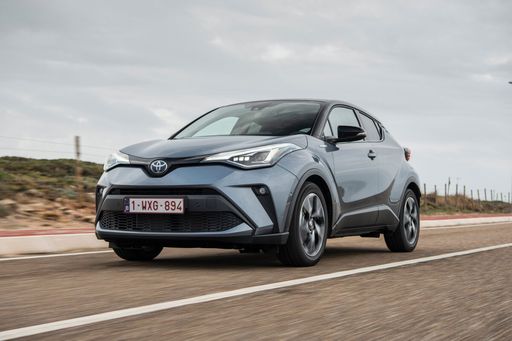
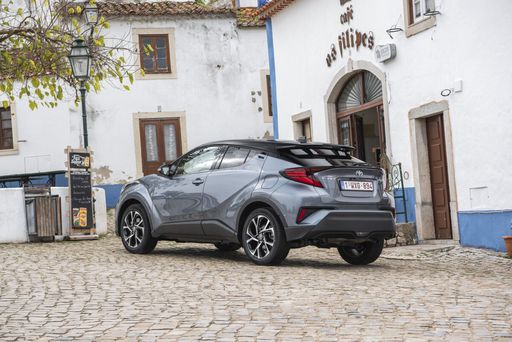
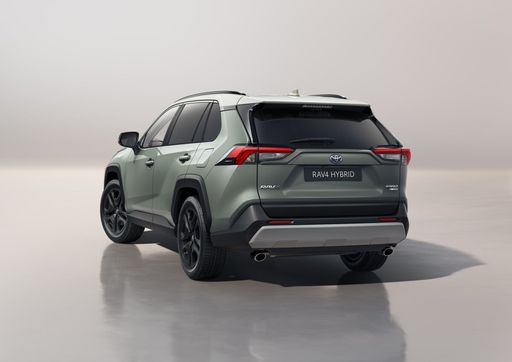
The Toyota C-HR exudes a sporty demeanor with its striking coupe-like silhouette, measuring 4362 mm in length, 1832 mm in width, and standing at 1558 mm high. In contrast, the Toyota RAV4 presents a more robust and traditional SUV stance, stretching 4600 mm long and measuring 1855 mm wide, topped at 1685 mm. Both vehicles feature a five-door configuration and comfortably seat five passengers, yet the RAV4 offers more interior space - a factor worth considering for those with family or cargo needs.

RAV4

Powertrains and Performance: Under the Hood

When it comes to engine options, the C-HR is offered as a Full Hybrid or Plugin Hybrid, with power outputs of 140 HP and up to 223 HP respectively, delivering impressive power while maintaining efficiency. The engine capacities range from 1798 to 1987 cm³, and the vehicle accelerates from 0-100 km/h in as little as 7.4 seconds, depending on the variant. Fuel consumption rates are commendable, with values as low as 4.7 L/100 km.

On the other hand, the RAV4 also showcases a Full Hybrid and Plugin Hybrid lineup, boasting power outputs from 218 HP up to 306 HP. The RAV4’s robust 2487 cm³ engine ensures spirited performance with a 0-100 km/h time of just 6 seconds in its most potent form. Although it has a higher fuel consumption rate of 5.6 L/100 km, its larger engine provides a balance of efficiency and raw power, catering to those who desire a more dynamic driving experience.

C-HR

Innovative Technologies

Both the C-HR and RAV4 are equipped with Toyota's latest technology, including advanced safety features under the Toyota Safety Sense umbrella. This suite offers adaptive cruise control, lane-keeping assistance, and pre-collision systems to ensure driver and passenger safety.

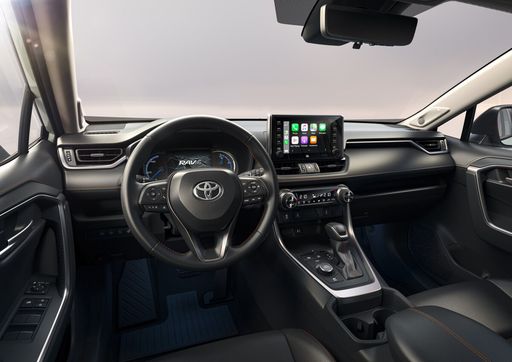
The C-HR emphasizes urban practicality with features such as a uniquely designed infotainment system that integrates seamlessly with smartphones. Conversely, the RAV4 boasts a more spacious layout with an expansive multimedia system and upgraded connectivity options, making it ideal for family road trips.

RAV4

Efficiency and Emissions

Efficiency is a crucial consideration for modern consumers, and both vehicles perform admirably in this area. The C-HR achieves remarkable CO2 emissions, with values between 105-108 g/km, positioning it in the B and C efficiency classes. Its electric range reaches up to 67 km, making it a suitable option for daily commutes.

The larger RAV4, while slightly less efficient with CO2 emissions ranging from 126-128 g/km and an electric range of 75 km, benefits from its fuel tank capacity of 55 liters. The RAV4's ability to cover longer distances with fewer stops is a significant advantage for adventure-seekers or those who frequently travel.

C-HR

Practicality and Cargo Space

When it comes to cargo capacity, the RAV4 reigns supreme, offering between 520 to 580 liters of trunk space, accommodating larger items and making it family-friendly. In comparison, the C-HR, with its more compact design, provides a trunk capacity of 350 to 447 liters, ideal for city dwellers with smaller storage needs.

RAV4

Conclusion: The Right Choice for You

The Toyota C-HR is a fantastic choice for urban drivers seeking a compact, stylish option with impressive fuel efficiency and innovative technology. However, if you require more space, power, and versatility for family outings or adventurous weekends, the Toyota RAV4 emerges as the frontrunner.

Ultimately, both SUVs reflect Toyota’s commitment to quality and innovation. Choosing between them will depend on your lifestyle, preferences, and specific needs. Regardless of the decision, both models promise a blend of reliability and performance, embodying Toyota’s legacy as a leader in the automotive industry.

Here’s where it gets real: The technical differences in detail

RAV4

Costs and Efficiency:

Looking at overall running costs, both models reveal some interesting differences in everyday economy.

Toyota C-HR is visibly cheaper – starting at 29,100 £ , while the Toyota RAV4 costs 35,100 £ . That’s a price difference of around 6,000 £.

Fuel consumption also shows a difference: the Toyota RAV4 uses 1 L/100km and is significantly more efficient than the Toyota C-HR with 2.3 L/100km. The difference is about 1.3 L/100km.

As for electric range, the Toyota RAV4 offers moderately more range – reaching up to 75 km, about 9 km more than the Toyota C-HR.

C-HR

Engine and Performance:

Power, torque and acceleration say a lot about how a car feels on the road. This is where you see which model delivers more driving dynamics.

When it comes to engine power, the Toyota RAV4 offers clearly more power – delivering 306 HP compared to 223 HP. That’s roughly 83 HP more horsepower.

When accelerating from 0 to 100 km/h, the Toyota RAV4 is markedly quicker – completing the sprint in 6 s, while the Toyota C-HR takes 7.4 s. That’s about 1.4 s quicker.

RAV4

Space and Everyday Use:

Whether family car or daily driver – which one offers more room, flexibility and comfort?

Both vehicles offer seating for 5 people.

In terms of curb weight, Toyota C-HR is somewhat lighter – 1,505 kg compared to 1,745 kg. The difference is around 240 kg.

Looking at boot space, the Toyota RAV4 offers visibly more boot space – 580 L compared to 447 L. That’s a difference of about 133 L.

When it comes to payload, the Toyota RAV4 carries clearly more – 600 kg compared to 425 kg. That’s a difference of about 175 kg.

Who wins the race in the data check?

The Toyota RAV4 holds a decisive overall lead in the objective data comparison.
This result only shows which model scores more points on paper – not which of the two cars feels right for you.

from £35,100
RAV4

Toyota RAV4

  • Engine Type : Full Hybrid, Plugin Hybrid
  • Transmission : Automatic
  • Drive Type : Front-Wheel Drive, All-Wheel Drive
  • Power HP : 218 - 306 HP
  • Consumption L/100km : 1 - 5.6 L/100km
  • Electric Range : 75 km
Toyota RAV4
Toyota C-HR

Costs and Consumption

View detailed analysis

Engine and Performance

View detailed analysis

Dimensions and Body

View detailed analysis

Toyota RAV4

The Toyota RAV4 feels like a sensible friend on the road, marrying dependable practicality with a dash of SUV personality that keeps daily driving from turning dull. Comfortable and easy to live with, it looks tough without shouting and quietly gets the job done — a sensible pick for buyers who want versatility without drama.

details

Toyota C-HR

The Toyota C-HR cuts a striking figure with its angular styling and coupe-like profile, so you’ll never go unnoticed in the supermarket car park. It balances everyday practicality with a nimble, city-friendly personality, making routine commutes feel a touch more fun without asking for forgiveness.

details
Toyota RAV4
Toyota C-HR

Costs and Consumption

Price
35,100 - 55,700 £
Price
29,100 - 42,800 £
Consumption L/100km
1 - 5.6 L/100km
Consumption L/100km
2.3 - 5.1 L/100km
Consumption kWh/100km
-
Consumption kWh/100km
-
Electric Range
75 km
Electric Range
66 km
Battery Capacity
-
Battery Capacity
-
co2
22 - 128 g/km
co2
52 - 116 g/km
Fuel tank capacity
55 L
Fuel tank capacity
-

Dimensions and Body

Body Type
SUV
Body Type
SUV
Seats
5
Seats
5
Doors
5
Doors
-
Curb weight
1,745 - 1,910 kg
Curb weight
1,505 - 1,755 kg
Trunk capacity
520 - 580 L
Trunk capacity
350 - 447 L
Length
4,600 mm
Length
-
Width
1,855 mm
Width
1,832 mm
Height
1,685 mm
Height
-
Max trunk capacity
1,604 - 1,690 L
Max trunk capacity
-
Payload
390 - 600 kg
Payload
375 - 425 kg

Engine and Performance

Engine Type
Full Hybrid, Plugin Hybrid
Engine Type
Full Hybrid, Plugin Hybrid
Transmission
Automatic
Transmission
Automatic
Transmission Detail
CVT
Transmission Detail
CVT
Drive Type
Front-Wheel Drive, All-Wheel Drive
Drive Type
Front-Wheel Drive, All-Wheel Drive
Power HP
218 - 306 HP
Power HP
140 - 223 HP
Acceleration 0-100km/h
6 - 8.4 s
Acceleration 0-100km/h
7.4 - 9.9 s
Max Speed
180 km/h
Max Speed
-
Torque
-
Torque
-
Number of Cylinders
4
Number of Cylinders
4
Power kW
160 - 225 kW
Power kW
103 - 164 kW
Engine capacity
2,487 cm3
Engine capacity
1,798 - 1,987 cm3

General

Model Year
2,024 - 2,025
Model Year
2,026
CO2 Efficiency Class
D, B
CO2 Efficiency Class
C, D, B
Brand
Toyota
Brand
Toyota
DriveDuel uses data analysis and artificial intelligence to evaluate vehicle data and create content. Content is regularly reviewed and improved. The displayed prices are estimates based on German list prices, adjusted to the respective country’s VAT. Country-specific registration taxes are not included. This information is not legally binding.