VS

Toyota RAV4 vs Toyota Yaris Cross comparison

Compare performance (306 HP vs 130 HP), boot space and price (35,100 £ vs 23,700 £ ) at a glance. Find out which car is the better choice for you – Toyota RAV4 or Toyota Yaris Cross?

Toyota RAV4 vs Toyota Yaris Cross: Key differences

Toyota RAV4

4.8 (6 Reviews)
rate
  • significantly more power
  • considerably more efficient
  • substantially quicker 0–100 km/h
  • markedly more trunk space

Toyota Yaris Cross

4 (8 Reviews)
rate
  • considerably cheaper
  • significantly lighter

All details on performance, efficiency, range and trunk space can be found in the technical comparison below – including user reviews for both models.

RAV4

Introduction: Compact Versus Mid-Size SUV

In the diverse world of automotive innovation, the competition between compact and mid-size SUVs continues to intensify. Toyota, renowned for its reliability and advanced technology, offers two compelling models: the Toyota Yaris Cross and the Toyota RAV4. While they both cater to the SUV segment and share a brand lineage, they serve distinct purposes for different types of drivers. Let's delve into a comprehensive comparison of these two vehicles, focusing on technical specifications, design, and innovations that make each of them standout choices.
Yaris Cross

Body and Dimensions

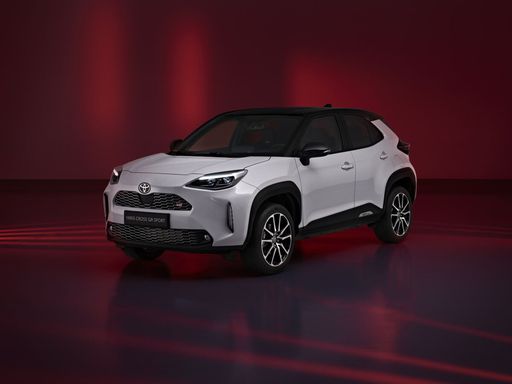
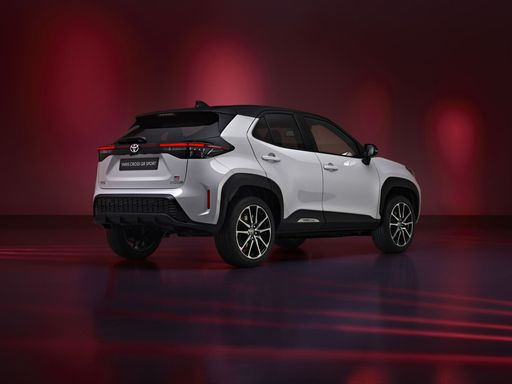
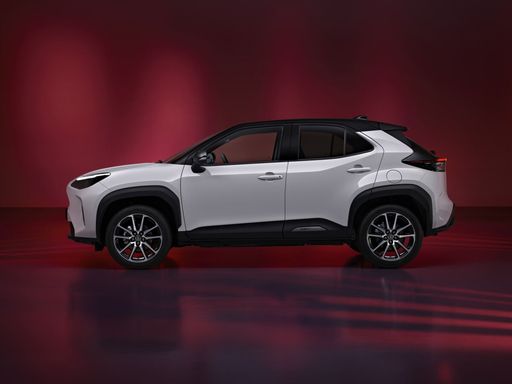
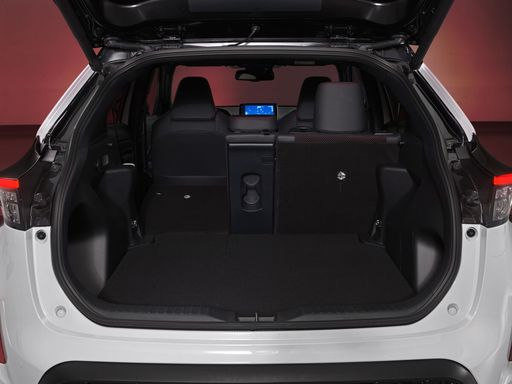
The Toyota Yaris Cross is a compact SUV designed for urban dwellers who prioritize maneuverability without sacrificing space. Its dimensions measure 4180 mm in length, 1765 mm in width, and 1595 mm in height, making it easily navigable in congested city streets. It offers a trunk capacity of 397 liters, ideal for grocery runs and small trips.

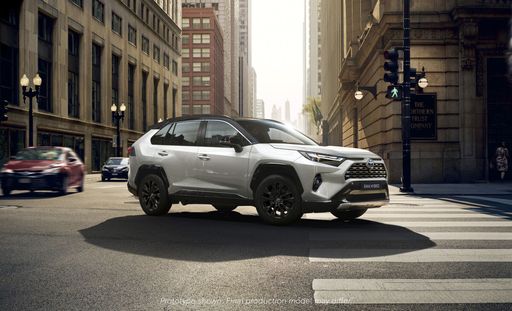
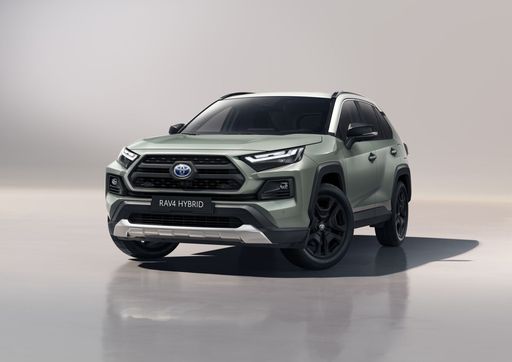
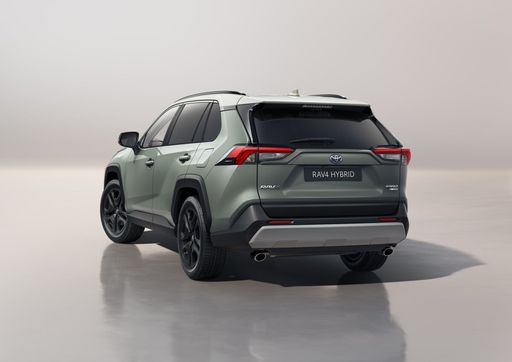
In contrast, the Toyota RAV4 is a mid-size SUV that commands a more robust presence on the road, measuring 4600 mm in length, 1855 mm in width, and 1685 mm in height. It boasts a more spacious trunk capacity, ranging from 520 to 580 liters, catering to families and adventure-seekers who require extra room for luggage and gear.

RAV4

Performance and Engine Options

The Yaris Cross offers a full hybrid engine with options producing either 116 HP or 130 HP from its compact 1.5L engine, allowing for a commendable balance between performance and fuel efficiency, achieving an average consumption of 4.5 to 4.8 L/100 km. The acceleration from 0-100 km/h is respectable, ranging from 10.7 to 11.3 seconds.

On the other hand, the RAV4 steps up with more powerful engine options, boasting capabilities of up to 306 HP with its hybrid and plug-in hybrid configurations. Its larger 2.5L engine allows for a maximum speed of 180 km/h and a more spirited 0-100 km/h time from 6 to 8.4 seconds. However, its fuel consumption is also higher at 5.6 L/100 km on average for hybrid variants.

Yaris Cross

Driving Experience and Handling

With front-wheel drive as standard, the Yaris Cross shines in terms of nimbleness and ease of handling. This makes it user-friendly for city driving and parallel parking. It boasts a curb weight ranging from 1180 to 1290 kg, thus providing a lightweight feel that enhances agility.

The RAV4 offers versatility with both front-wheel and all-wheel drive configurations, making it more suitable for various terrains, including light off-road capabilities. Being heavier, with a weight between 1745 and 1910 kg, it handles the road confidently, providing a stable driving experience even at high speeds.

RAV4

Technological Innovations

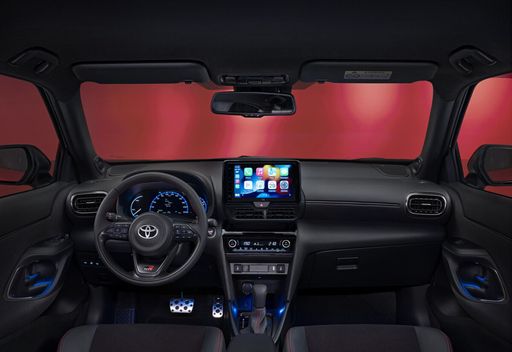
Both models feature Toyota’s latest safety and infotainment systems. The Yaris Cross is equipped with a suite of connectivity options, including a user-friendly touchscreen interface and advanced driver-assistance features, allowing for adaptive cruise control and lane-keeping assist.

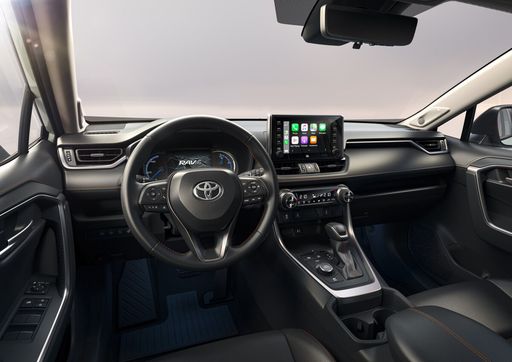
The RAV4 takes technology to the next level with its optional panoramic view monitor, premium audio systems, and a more extensive suite of driver-assist technologies. The inclusion of plug-in hybrid options adds to its appeal, with an electric-only range of up to 75 km for eco-conscious drivers.

Yaris Cross

Conclusion: Which SUV is Right for You?

Ultimately, the choice between the Toyota Yaris Cross and the Toyota RAV4 boils down to personal preferences and needs. If you are seeking a compact SUV that excels in urban environments, the Yaris Cross is a stellar choice. However, if your lifestyle demands a spacious and versatile vehicle that offers impressive power and technology, the RAV4 is your go-to SUV. Both vehicles offer reliable performance and modern features, ensuring that either choice aligns well with the brand's commitment to quality and innovation.

Here’s where it gets real: The technical differences in detail

RAV4

Costs and Efficiency:

Price and efficiency are key factors when choosing a car – and this is often where the real differences emerge.

Toyota Yaris Cross is considerably cheaper – starting at 23,700 £ , while the Toyota RAV4 costs 35,100 £ . That’s a price difference of around 11,443 £.

Fuel consumption also shows a difference: the Toyota RAV4 uses 1 L/100km and is considerably more efficient than the Toyota Yaris Cross with 4.5 L/100km. The difference is about 3.5 L/100km.

Yaris Cross

Engine and Performance:

Power, torque and acceleration are the classic benchmarks for car enthusiasts – and here, some clear differences start to show.

When it comes to engine power, the Toyota RAV4 offers significantly more power – delivering 306 HP compared to 130 HP. That’s roughly 176 HP more horsepower.

When accelerating from 0 to 100 km/h, the Toyota RAV4 is substantially quicker – completing the sprint in 6 s, while the Toyota Yaris Cross takes 10.7 s. That’s about 4.7 s quicker.

RAV4

Space and Everyday Use:

Beyond pure performance, interior space and usability matter most in daily life. This is where you see which car is more practical and versatile.

Both vehicles offer seating for 5 people.

In terms of curb weight, Toyota Yaris Cross is significantly lighter – 1,180 kg compared to 1,745 kg. The difference is around 565 kg.

Looking at boot space, the Toyota RAV4 offers markedly more boot space – 580 L compared to 397 L. That’s a difference of about 183 L.

When it comes to payload, the Toyota RAV4 carries a bit more – 600 kg compared to 510 kg. That’s a difference of about 90 kg.

Who wins the race in the data check?

The Toyota RAV4 is far ahead overall in the objective data comparison.
This result only shows which model scores more points on paper – not which of the two cars feels right for you.

from £35,100
RAV4

Toyota RAV4

  • Engine Type : Full Hybrid, Plugin Hybrid
  • Transmission : Automatic
  • Drive Type : Front-Wheel Drive, All-Wheel Drive
  • Power HP : 218 - 306 HP
  • Consumption L/100km : 1 - 5.6 L/100km
  • Electric Range : 75 km
Toyota RAV4
Toyota Yaris Cross

Costs and Consumption

View detailed analysis

Engine and Performance

View detailed analysis

Dimensions and Body

View detailed analysis

Toyota RAV4

The Toyota RAV4 feels like a sensible friend on the road, marrying dependable practicality with a dash of SUV personality that keeps daily driving from turning dull. Comfortable and easy to live with, it looks tough without shouting and quietly gets the job done — a sensible pick for buyers who want versatility without drama.

details

Toyota Yaris Cross

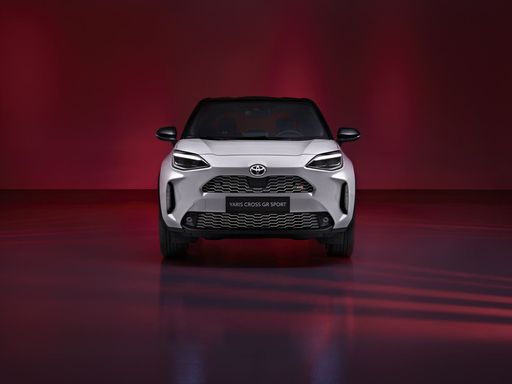
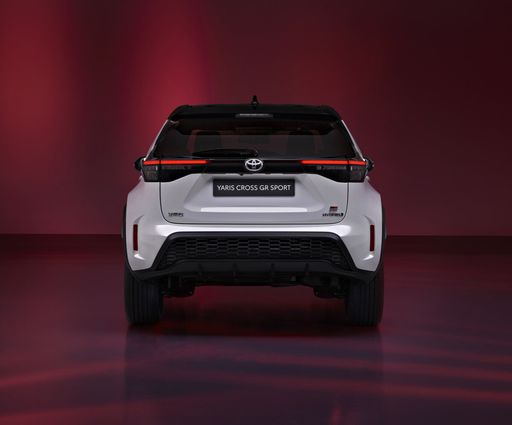
The Toyota Yaris Cross takes the jaunty personality of the Yaris and gives it a taller stance and a bit more practicality, so you get city-friendly agility with added SUV presence. It’s easy to live with, economical on the daily grind, and smartly packaged — a sensible pick for buyers who want fuss-free transport with a touch of character.

details
Toyota RAV4
Toyota Yaris Cross

Costs and Consumption

Price
35,100 - 55,700 £
Price
23,700 - 34,300 £
Consumption L/100km
1 - 5.6 L/100km
Consumption L/100km
4.5 - 4.8 L/100km
Consumption kWh/100km
-
Consumption kWh/100km
-
Electric Range
75 km
Electric Range
-
Battery Capacity
-
Battery Capacity
-
co2
22 - 128 g/km
co2
101 - 108 g/km
Fuel tank capacity
55 L
Fuel tank capacity
-

Dimensions and Body

Body Type
SUV
Body Type
SUV
Seats
5
Seats
5
Doors
5
Doors
-
Curb weight
1,745 - 1,910 kg
Curb weight
1,180 - 1,290 kg
Trunk capacity
520 - 580 L
Trunk capacity
320 - 397 L
Length
4,600 mm
Length
-
Width
1,855 mm
Width
1,765 mm
Height
1,685 mm
Height
-
Max trunk capacity
1,604 - 1,690 L
Max trunk capacity
-
Payload
390 - 600 kg
Payload
485 - 510 kg

Engine and Performance

Engine Type
Full Hybrid, Plugin Hybrid
Engine Type
Full Hybrid
Transmission
Automatic
Transmission
Automatic
Transmission Detail
CVT
Transmission Detail
CVT
Drive Type
Front-Wheel Drive, All-Wheel Drive
Drive Type
Front-Wheel Drive, All-Wheel Drive
Power HP
218 - 306 HP
Power HP
116 - 130 HP
Acceleration 0-100km/h
6 - 8.4 s
Acceleration 0-100km/h
10.7 - 11.3 s
Max Speed
180 km/h
Max Speed
-
Torque
-
Torque
-
Number of Cylinders
4
Number of Cylinders
3
Power kW
160 - 225 kW
Power kW
85 - 96 kW
Engine capacity
2,487 cm3
Engine capacity
1,490 cm3

General

Model Year
2,024 - 2,025
Model Year
2,026
CO2 Efficiency Class
D, B
CO2 Efficiency Class
C
Brand
Toyota
Brand
Toyota
DriveDuel uses data analysis and artificial intelligence to evaluate vehicle data and create content. Content is regularly reviewed and improved. The displayed prices are estimates based on German list prices, adjusted to the respective country’s VAT. Country-specific registration taxes are not included. This information is not legally binding.