VS

Toyota Yaris Cross vs Hyundai Tucson comparison

Compare performance (130 HP vs 288 HP), boot space and price (23,700 £ vs 20,900 £ ) at a glance. Find out which car is the better choice for you – Toyota Yaris Cross or Hyundai Tucson?

Toyota Yaris Cross vs Hyundai Tucson: Key differences

Toyota Yaris Cross

4.3 (14 Reviews)
rate
  • noticeably lighter
details

Hyundai Tucson

3.9 (5 Reviews)
rate
  • a bit cheaper
  • substantially more power
  • considerably more efficient
  • substantially quicker 0–100 km/h
  • clearly more trunk space
details

All details on performance, efficiency, range and trunk space can be found in the technical comparison below – including user reviews for both models.

By Achim Sedelmaier

Yaris Cross

Hyundai Tucson vs. Toyota Yaris Cross: The Ultimate SUV Showdown

As the automotive market continues to evolve, the demand for efficient, stylish, and versatile SUVs has skyrocketed. Two of the most notable contenders in this segment are the Hyundai Tucson and the Toyota Yaris Cross. Both vehicles represent their brands well, offering a blend of comfort, technology, and advanced engineering. However, which one truly stands out? Let's delve deeper into a comparison of these two SUVs focusing on their technical specifications, innovations, and overall performance.
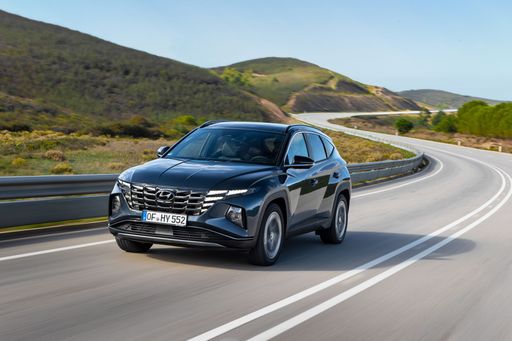
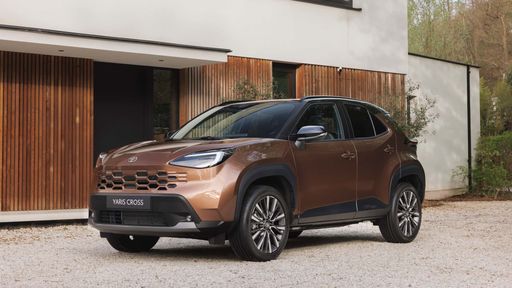
Tucson

Design and Dimensions

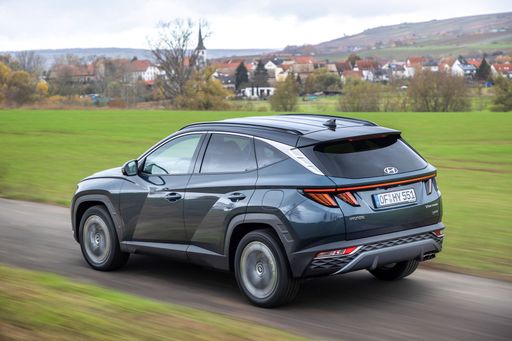
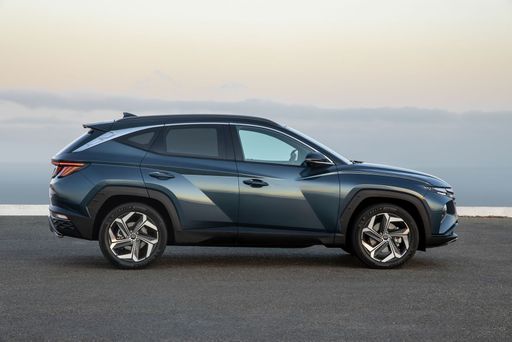
The Hyundai Tucson exhibits bold design elements, featuring a commanding presence with sharp lines and a modern silhouette. Measuring 4510 mm in length and 1865 mm in width, the Tucson ensures ample interior space for passengers and cargo alike. With a height of 1650 mm, it also provides a commanding view of the road.

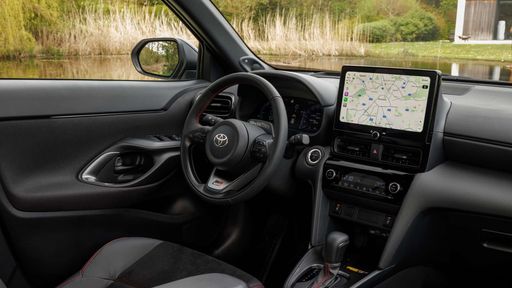
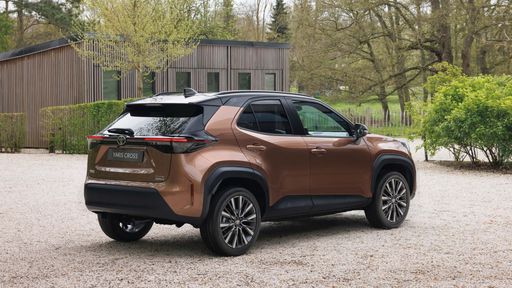
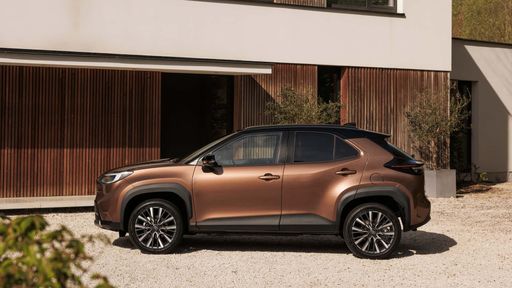
On the other hand, the Toyota Yaris Cross adopts a more compact design, with dimensions of 4180 mm in length and 1765 mm in width, making it a versatile choice for city driving. Standing at 1595 mm high, it’s easier to maneuver in urban environments without sacrificing cabin space for five passengers.

Yaris Cross

Powertrain Options

Under the hood, the Hyundai Tucson offers a diverse range of powertrains, including Diesel MHEV, Petrol MHEV, Petrol, Full Hybrid, and Plugin Hybrid options. This variety caters to different preferences, providing power outputs ranging from 136 HP to an impressive 252 HP. Fuel consumption varies between 5.1 to 6.8 L/100km, emphasizing efficiency alongside performance.

In stark contrast, the Toyota Yaris Cross predominantly features a Full Hybrid system, delivering 116 HP to 130 HP with remarkable fuel efficiency, consuming just 4.5 to 4.8 L/100km. Its 1490 cm3 engine capacity and lightweight structure allow for nimble handling and low emissions—ideal for environmentally conscious drivers.

Tucson

Transmission and Drive

The Tucson's drivetrain options include both Front-Wheel Drive and All-Wheel Drive configurations. It also boasts a range of transmission types, including automatic, manual, and advanced dual-clutch options for those seeking a sportier drive. With acceleration from 0-100 km/h clocking in as low as 7.9 seconds, the Tucson proves itself to be a powerful choice.

The Yaris Cross, while only providing a Front-Wheel Drive option, utilizes a continuously variable transmission (CVT) that ensures a smooth and seamless driving experience. Its acceleration from 0-100 km/h is competitive as well, reaching up to 10.7 seconds—sufficient for everyday use.

Yaris Cross

Technological Innovations

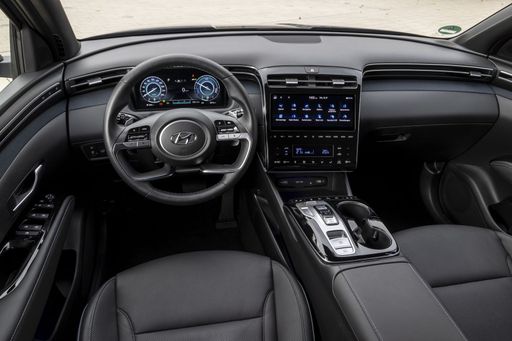
Both vehicles are equipped with an array of technological innovations. The Tucson shines with its advanced safety features, including Hyundai’s SmartSense suite, which offers blind-spot collision-avoidance and highway driving assistance. An intuitive infotainment system with a large touchscreen, smartphone integration, and premium audio options make it a tech-savvy option.

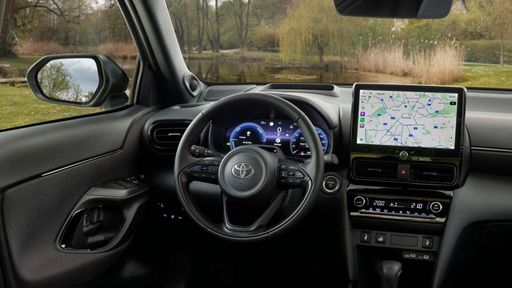
Meanwhile, the Yaris Cross also embraces technology with Toyota Safety Sense, providing adaptive cruise control, lane departure alert, and automatic high beams for enhanced driver assurance. The user-friendly infotainment system is designed with connectivity in mind, featuring smartphone integration but at a slightly less interactive level compared to the Tucson.

Tucson

Space and Practicality

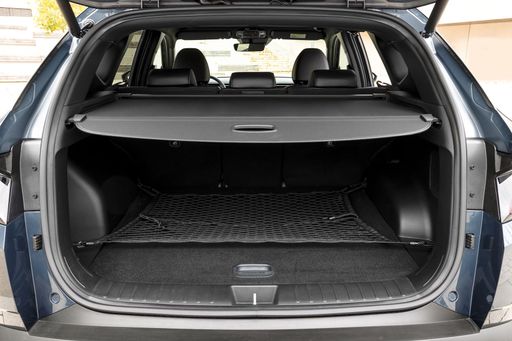
When it comes to practicality, the Hyundai Tucson triumphs with a trunk capacity ranging from 546 to 620 liters, depending on configurations—providing ample space for all your belongings. The Tucson is remarkably spacious for families or adventurers alike, with a payload capacity reaching up to 545 kg.

The Yaris Cross, with its trunk space of 320 to 397 liters, offers a smaller yet functional cargo area. While it provides sufficient room for daily needs, it may not match the Tucson in overall capacity or versatility.

Yaris Cross

Conclusion: Choosing the Right SUV for You

In conclusion, the Hyundai Tucson and Toyota Yaris Cross cater to distinct market segments while sharing the common trait of being well-crafted SUVs. The Tucson excels in versatility with a variety of powertrains and larger cargo capacities, making it ideal for those who prioritize space and performance. Conversely, the Yaris Cross appeals to urban drivers seeking an efficient, compact SUV with state-of-the-art technology.

Your choice between the Tucson and Yaris Cross will ultimately hinge on individual preferences—be it power, practicality, or technological features. Regardless of which SUV you choose, you can rest assured that both models represent the pinnacle of engineering from their respective brands.

Here’s where it gets real: The technical differences in detail

Yaris Cross

Costs and Efficiency:

When it comes to price and running costs, the biggest differences usually appear. This is often where you see which car fits your budget better in the long run.

Hyundai Tucson is a bit cheaper – starting at 20,900 £ , while the Toyota Yaris Cross costs 23,700 £ . That’s a price difference of around 2,794 £.

Fuel consumption also shows a difference: the Hyundai Tucson uses 2.7 L/100km and is considerably more efficient than the Toyota Yaris Cross with 4.5 L/100km. The difference is about 1.8 L/100km.

Tucson

Engine and Performance:

Under the bonnet, it becomes clear which model is tuned for sportiness and which one takes the lead when you hit the accelerator.

When it comes to engine power, the Hyundai Tucson offers substantially more power – delivering 288 HP compared to 130 HP. That’s roughly 158 HP more horsepower.

When accelerating from 0 to 100 km/h, the Hyundai Tucson is substantially quicker – completing the sprint in 7.5 s, while the Toyota Yaris Cross takes 10.7 s. That’s about 3.2 s quicker.

Yaris Cross

Space and Everyday Use:

Cabin size, boot volume and payload all play a role in everyday practicality. Here, comfort and flexibility make the difference.

Both vehicles offer seating for 5 people.

In terms of curb weight, Toyota Yaris Cross is noticeably lighter – 1,180 kg compared to 1,542 kg. The difference is around 362 kg.

Looking at boot space, the Hyundai Tucson offers clearly more boot space – 620 L compared to 397 L. That’s a difference of about 223 L.

When it comes to payload, the Hyundai Tucson carries very slightly more – 545 kg compared to 510 kg. That’s a difference of about 35 kg.

Who wins the race in the data check?

The Hyundai Tucson is decisively ahead in the objective data comparison.
This result only shows which model scores more points on paper – not which of the two cars feels right for you.

from £20,900
Tucson

Hyundai Tucson

  • Engine Type : Petrol, Full Hybrid, Plugin Hybrid, Diesel MHEV
  • Transmission : Manuel, Automatic
  • Drive Type : Front-Wheel Drive, All-Wheel Drive
  • Power HP : 136 - 288 HP
  • Consumption L/100km : 2.7 - 7.6 L/100km
  • Electric Range : 63 - 70 km
Toyota Yaris Cross
Hyundai Tucson

Costs and Consumption

View detailed analysis

Engine and Performance

View detailed analysis

Dimensions and Body

View detailed analysis

Toyota Yaris Cross

The Toyota Yaris Cross takes the jaunty personality of the Yaris and gives it a taller stance and a bit more practicality, so you get city-friendly agility with added SUV presence. It’s easy to live with, economical on the daily grind, and smartly packaged — a sensible pick for buyers who want fuss-free transport with a touch of character.

details

Hyundai Tucson

Hyundai Tucson marries bold, sculpted looks with a clever, roomy cabin that feels smarter than its price tag suggests. It's composed on the road, easy to live with day-to-day, and a sensible choice for buyers who want SUV style without the showroom theatrics.

details
Toyota Yaris Cross
Hyundai Tucson

Costs and Consumption

Price
23,700 - 34,300 £
Price
20,900 - 47,900 £
Consumption L/100km
4.5 - 4.8 L/100km
Consumption L/100km
2.7 - 7.6 L/100km
Consumption kWh/100km
-
Consumption kWh/100km
-
Electric Range
-
Electric Range
63 - 70 km
Battery Capacity
-
Battery Capacity
-
co2
101 - 108 g/km
co2
62 - 172 g/km
Fuel tank capacity
-
Fuel tank capacity
-

Dimensions and Body

Body Type
SUV
Body Type
SUV
Seats
5
Seats
5
Doors
-
Doors
-
Curb weight
1,180 - 1,290 kg
Curb weight
1,542 - 1,893 kg
Trunk capacity
320 - 397 L
Trunk capacity
546 - 620 L
Length
-
Length
-
Width
1,765 mm
Width
1,865 mm
Height
-
Height
-
Max trunk capacity
-
Max trunk capacity
-
Payload
485 - 510 kg
Payload
518 - 545 kg

Engine and Performance

Engine Type
Full Hybrid
Engine Type
Petrol, Full Hybrid, Plugin Hybrid, Diesel MHEV
Transmission
Automatic
Transmission
Manuel, Automatic
Transmission Detail
CVT
Transmission Detail
Manual Gearbox, Dual-Clutch Automatic, Automatic Gearbox
Drive Type
Front-Wheel Drive, All-Wheel Drive
Drive Type
Front-Wheel Drive, All-Wheel Drive
Power HP
116 - 130 HP
Power HP
136 - 288 HP
Acceleration 0-100km/h
10.7 - 11.3 s
Acceleration 0-100km/h
7.5 - 11.6 s
Max Speed
-
Max Speed
-
Torque
-
Torque
250 - 379 Nm
Number of Cylinders
3
Number of Cylinders
4
Power kW
85 - 96 kW
Power kW
100 - 212 kW
Engine capacity
1,490 cm3
Engine capacity
1,598 cm3

General

Model Year
2026
Model Year
2025
CO2 Efficiency Class
C
CO2 Efficiency Class
F, D, E, B
Brand
Toyota
Brand
Hyundai
DriveDuel uses data analysis and artificial intelligence to evaluate vehicle data and create content. Content is regularly reviewed and improved. The displayed prices are estimates based on German list prices, adjusted to the respective country’s VAT. Country-specific registration taxes are not included. This information is not legally binding.