VS

Toyota Yaris Cross vs Vauxhall Frontera comparison

Compare performance (130 HP vs 145 HP), boot space and price (23,700 £ vs 20,700 £ ) at a glance. Find out which car is the better choice for you – Toyota Yaris Cross or Vauxhall Frontera?

Toyota Yaris Cross vs Vauxhall Frontera: Key differences

Toyota Yaris Cross

4.3 (14 Reviews)
rate
  • moderately more efficient
  • a bit lighter
details

Vauxhall Frontera

4.5 (5 Reviews)
rate
  • somewhat cheaper
  • slightly more power
  • a bit quicker 0–100 km/h
  • slightly more trunk space
details

All details on performance, efficiency, range and trunk space can be found in the technical comparison below – including user reviews for both models.

By Achim Sedelmaier

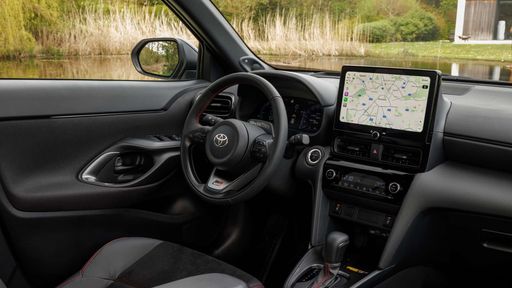
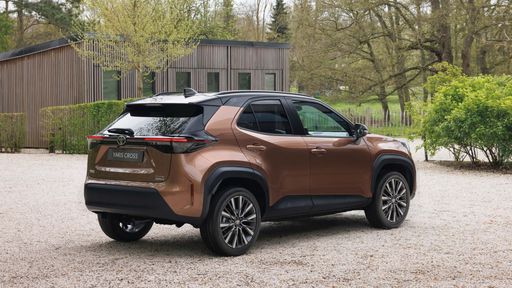
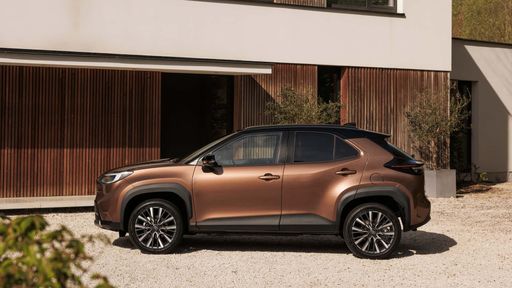
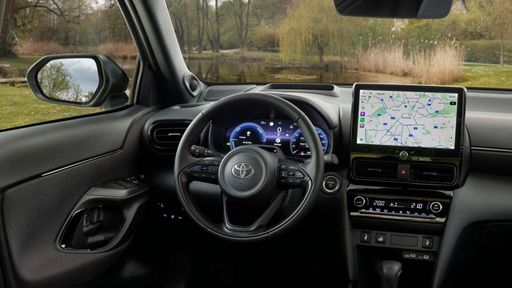
Yaris Cross

Compact SUVs Face-off: Vauxhall Frontera vs. Toyota Yaris Cross

In the bustling world of compact SUVs, two vehicles have captured the attention of enthusiasts and everyday drivers alike: the Vauxhall Frontera and the Toyota Yaris Cross. Both offer a blend of style, efficiency, and innovation, but which one truly stands out? Let's dive into the specifications and see how they stack up against each other.
Frontera

Power and Performance

The Vauxhall Frontera comes with a range of engine types, including electric and petrol MHEV options. With power outputs varying from 110 to 145 HP, drivers can expect different levels of performance. The Frontera's petrol engine delivers power through a dual-clutch automatic transmission, while the electric variant uses a reduction gearbox. Its 0-100 km/h acceleration ranges from 9 to 14.2 seconds, catering to different driving preferences.

In contrast, the Toyota Yaris Cross is equipped with a full hybrid engine delivering 116 to 130 HP. The Yaris Cross employs a CVT automatic transmission, ensuring smooth and efficient power delivery. With a flat 10.7 to 11.3 seconds to hit 100 km/h, the Yaris Cross offers a balanced performance suitable for urban commuting.

Yaris Cross

Fuel Efficiency and Environmental Impact

Fuel efficiency remains a pivotal factor for buyers in the SUV category. The Frontera's petrol variant boasts an impressive consumption of 5.2 L/100km, whereas the electric model achieves between 15.8 and 18.2 kWh/100km. Consistent with its efficiency, the Frontera's CO2 emissions can be as low as 0 g/km, aligning with the CO2 efficiency class of A.

The Yaris Cross counters with remarkable efficiency, boasting a consumption of 4.5 to 4.8 L/100km. While its CO2 emissions range from 101 to 108 g/km, it slots into a C-rated efficiency class, which—though higher than electric competitors—still offers an eco-friendly profile.

Frontera

Space and Practicality

In terms of transport capacity, the Vauxhall Frontera provides a trunk space of 460 liters, expandable to a substantial 1600 liters with seats folded. It also offers versatility with seating configurations for 5 or 7 passengers, catering to larger families or those requiring additional space.

The Toyota Yaris Cross, while slightly more compact, provides a trunk capacity of 397 liters, extendable to 1097 liters. It seats five comfortably, prioritizing a spacious and comfortable ride which is ideal for small families or city dwellers.

Yaris Cross

Exterior Dimensions and Design

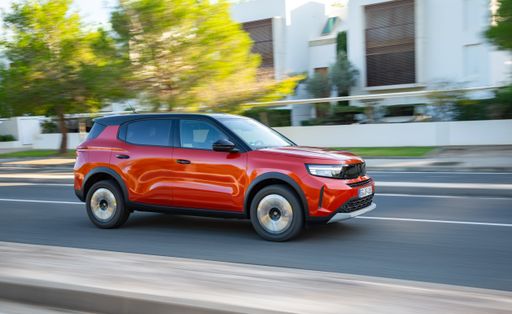
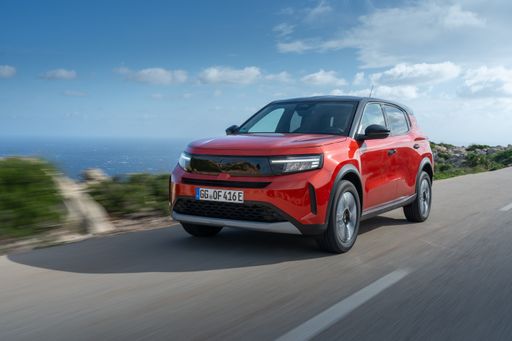
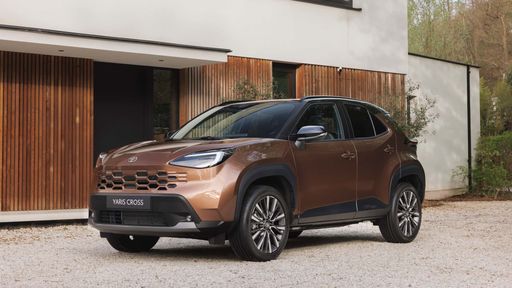
Measuring 4385 mm in length, 1795 mm in width, and 1635 mm in height, the Frontera presents a sturdy yet stylish build. It is slightly larger than the Yaris Cross, which measures 4180 mm in length, 1765 mm in width, and 1595 mm in height. Both models don a modern SUV style, but the Frontera's additional size may appeal to those valuing interior space over a compact footprint.

Frontera

Final Thoughts

The decision between the Vauxhall Frontera and the Toyota Yaris Cross will largely come down to personal preferences and lifestyle needs. The Frontera excels in offering a variety of powertrains and spaciousness, making it suitable for adventure seekers and larger families. On the other hand, the Yaris Cross' hybrid efficiency and compact design may attract urban drivers who prioritize environmental impact without compromising on modern SUV benefits.

In the arena of compact SUVs, both models shine, but each appeals to a distinct audience. Whether you're drawn to cutting-edge hybrid technology or a more traditional SUV experience with electric innovation, there is a compelling choice waiting at the dealership.

Here’s where it gets real: The technical differences in detail

Yaris Cross

Costs and Efficiency:

When it comes to price and running costs, the biggest differences usually appear. This is often where you see which car fits your budget better in the long run.

Vauxhall Frontera is somewhat cheaper – starting at 20,700 £ , while the Toyota Yaris Cross costs 23,700 £ . That’s a price difference of around 2,957 £.

Fuel consumption also shows a difference: the Toyota Yaris Cross uses 4.5 L/100km and is moderately more efficient than the Vauxhall Frontera with 5.2 L/100km. The difference is about 0.7 L/100km.

Frontera

Engine and Performance:

Power, torque and acceleration say a lot about how a car feels on the road. This is where you see which model delivers more driving dynamics.

When it comes to engine power, the Vauxhall Frontera offers slightly more power – delivering 145 HP compared to 130 HP. That’s roughly 15 HP more horsepower.

When accelerating from 0 to 100 km/h, the Vauxhall Frontera is a bit quicker – completing the sprint in 9.1 s, while the Toyota Yaris Cross takes 10.7 s. That’s about 1.6 s quicker.

Yaris Cross

Space and Everyday Use:

Beyond pure performance, interior space and usability matter most in daily life. This is where you see which car is more practical and versatile.

Seats: Vauxhall Frontera offers more seats – 7 vs 5.

In terms of curb weight, Toyota Yaris Cross is a bit lighter – 1,180 kg compared to 1,394 kg. The difference is around 214 kg.

Looking at boot space, the Vauxhall Frontera offers slightly more boot space – 460 L compared to 397 L. That’s a difference of about 63 L.

When it comes to payload, the Vauxhall Frontera carries moderately more – 570 kg compared to 510 kg. That’s a difference of about 60 kg.

Who wins the race in the data check?

The Vauxhall Frontera is clearly superior overall in the objective data comparison.
This result only shows which model scores more points on paper – not which of the two cars feels right for you.

from £20,700
Frontera

Vauxhall Frontera

  • Engine Type : Electric, Petrol MHEV
  • Transmission : Automatic
  • Drive Type : Front-Wheel Drive
  • Power HP : 110 - 145 HP
  • Consumption L/100km : 5.2 - 5.3 L/100km
  • Consumption kWh/100km : 15.8 - 18.3 kWh/100km
  • Electric Range : 308 - 408 km
Toyota Yaris Cross
Vauxhall Frontera

Costs and Consumption

View detailed analysis

Engine and Performance

View detailed analysis

Dimensions and Body

View detailed analysis

Toyota Yaris Cross

The Toyota Yaris Cross takes the jaunty personality of the Yaris and gives it a taller stance and a bit more practicality, so you get city-friendly agility with added SUV presence. It’s easy to live with, economical on the daily grind, and smartly packaged — a sensible pick for buyers who want fuss-free transport with a touch of character.

details

Vauxhall Frontera

The Opel Frontera wears its rugged, go-anywhere intentions proudly, serving up a simple, no-nonsense package that feels as comfortable off the beaten track as it does at the supermarket. It won’t set hearts racing with glamour, but its honest practicality and rugged charm make it a smart pick for buyers who prefer substance over style.

details
Toyota Yaris Cross
Vauxhall Frontera

Costs and Consumption

Price
23,700 - 34,300 £
Price
20,700 - 30,000 £
Consumption L/100km
4.5 - 4.8 L/100km
Consumption L/100km
5.2 - 5.3 L/100km
Consumption kWh/100km
-
Consumption kWh/100km
15.8 - 18.3 kWh/100km
Electric Range
-
Electric Range
308 - 408 km
Battery Capacity
-
Battery Capacity
-
co2
101 - 108 g/km
co2
0 - 119 g/km
Fuel tank capacity
-
Fuel tank capacity
-

Dimensions and Body

Body Type
SUV
Body Type
SUV
Seats
5
Seats
5 - 7
Doors
-
Doors
-
Curb weight
1,180 - 1,290 kg
Curb weight
1,394 - 1,610 kg
Trunk capacity
320 - 397 L
Trunk capacity
460 L
Length
-
Length
-
Width
1,765 mm
Width
1,795 mm
Height
-
Height
-
Max trunk capacity
-
Max trunk capacity
-
Payload
485 - 510 kg
Payload
436 - 570 kg

Engine and Performance

Engine Type
Full Hybrid
Engine Type
Electric, Petrol MHEV
Transmission
Automatic
Transmission
Automatic
Transmission Detail
CVT
Transmission Detail
Reduction Gearbox, Dual-Clutch Automatic
Drive Type
Front-Wheel Drive, All-Wheel Drive
Drive Type
Front-Wheel Drive
Power HP
116 - 130 HP
Power HP
110 - 145 HP
Acceleration 0-100km/h
10.7 - 11.3 s
Acceleration 0-100km/h
9.1 - 14.2 s
Max Speed
-
Max Speed
-
Torque
-
Torque
125 - 230 Nm
Number of Cylinders
3
Number of Cylinders
3
Power kW
85 - 96 kW
Power kW
81 - 107 kW
Engine capacity
1,490 cm3
Engine capacity
1,199 cm3

General

Model Year
2026
Model Year
2025
CO2 Efficiency Class
C
CO2 Efficiency Class
A, D
Brand
Toyota
Brand
Vauxhall
DriveDuel uses data analysis and artificial intelligence to evaluate vehicle data and create content. Content is regularly reviewed and improved. The displayed prices are estimates based on German list prices, adjusted to the respective country’s VAT. Country-specific registration taxes are not included. This information is not legally binding.