VS

Toyota Yaris Cross vs Renault Captur comparison

Compare performance (130 HP vs 158 HP), boot space and price (23,700 £ vs 21,400 £ ) at a glance. Find out which car is the better choice for you – Toyota Yaris Cross or Renault Captur?

Toyota Yaris Cross vs Renault Captur: Key differences

Toyota Yaris Cross

4.2 (15 Reviews)
rate
  • a bit lighter
details

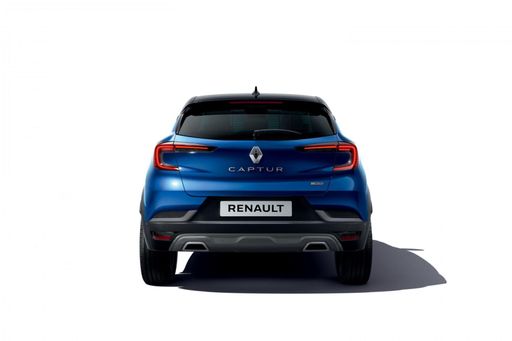
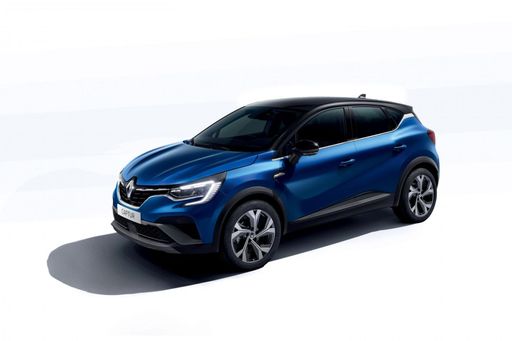
Renault Captur

4.8 (7 Reviews)
rate
  • a bit cheaper
  • a bit more power
  • only slightly more efficient
  • clearly quicker 0–100 km/h
  • marginally more trunk space
details

All details on performance, efficiency, range and trunk space can be found in the technical comparison below – including user reviews for both models.

By Achim Sedelmaier

Yaris Cross

Renault Captur vs Toyota Yaris Cross: the small‑SUV showdown

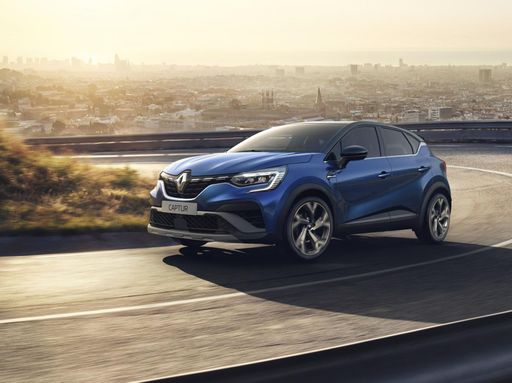
The Renault Captur and Toyota Yaris Cross aim at the same brief but go about it differently, and that’s exactly what makes this matchup interesting. In this Renault Captur VS Toyota Yaris Cross comparison, one leans into calm refinement and cabin versatility while the other majors on effortless efficiency and city ease. The Captur feels a touch more grown‑up and relaxed, the Yaris Cross more pragmatic and thrifty. Both are easy to live with, but they will suit different buyers once you factor in driving character, space tricks and long‑term running feel.
Captur

Driving character: relaxed punch vs urban ease

The Renault Captur comes across as the calmer, more substantial drive, with a bit more shove when you need to merge or overtake. It prefers smooth inputs and rewards with secure, unflustered progress at speed. The Toyota Yaris Cross is happiest in the cut and thrust of town, gliding away smoothly and sipping fuel while feeling light and tidy to place. Ask for maximum acceleration and the Toyota’s drivetrain gets vocal sooner, whereas the Captur stays more composed unless really pressed. If your week mixes ring‑roads and motorways, the Renault’s extra serenity tells; if it’s mostly stop‑start streets, the Toyota’s easygoing nature shines.

Yaris Cross

Comfort and long‑distance manners

The Captur settles into a quieter cruise, and on sensible wheel sizes it irons out a day’s worth of motorway miles without fuss. It can still thump over sharp edges around town, and rear visibility isn’t its strong suit, but overall noise levels are impressively low for the class. The Yaris Cross keeps you fresh on short hops thanks to an intuitive hybrid and simple controls, yet its ride can feel fidgety on poor surfaces, especially on larger wheels. At a steady highway pace it’s stable but not as hushed, and under heavy throttle it raises its voice earlier. Toyota’s optional all‑wheel drive adds welcome winter confidence if you need it, with only a small trade‑off in everyday polish.

Captur

Cabin feel and infotainment

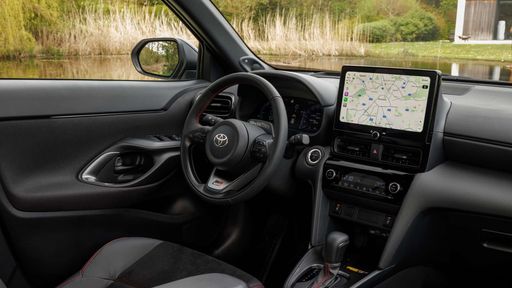
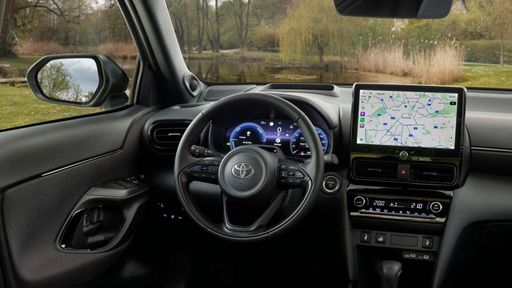
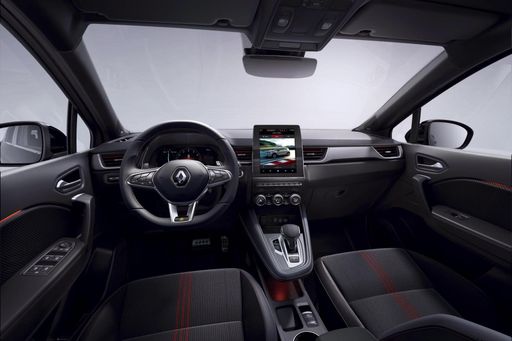
Inside, the Renault Captur looks and feels a notch more upmarket, with nicer touch‑points and a slick, Google‑based system that makes voice navigation and updates painless. The price you pay is fewer physical knobs, which some will miss when adjusting volume or climate on the move. The Toyota Yaris Cross counters with clean, straightforward controls, quicker screens than before and seamless phone mirroring, though its software still feels more functional than fancy. Up front both give you an easy, elevated driving position; the Captur wins on digital polish, the Toyota on no‑nonsense clarity. If you value a modern, connected cockpit, the Renault has the edge; if you want simple and familiar, the Toyota fits better.

Yaris Cross

Space and everyday usability

The Captur’s ace is flexibility: a sliding rear bench and double‑floor boot make it simple to prioritise legroom or luggage on demand. Rear passengers have decent space for the class, though storage back there is limited and the view out is compromised by thick rear pillars. The Yaris Cross offers a big, square boot in two‑wheel‑drive form and an easy loading shape, but the fixed rear bench and tight rear door openings make it less friendly for tall teens or frequent adult passengers. Choose Toyota’s all‑wheel drive and you gain traction but give up some cargo room. For young families juggling buggies and weekly shops, the Renault’s configurable cabin proves handier; for solo drivers or couples who pack light, the Toyota’s straightforward load bay is more than enough.

Captur

Costs, ownership feel and buyer fit

Spec for spec, the Renault Captur often comes in a little keener on price and feels the stronger all‑rounder if your driving includes regular A‑roads and motorways. The Toyota Yaris Cross counters with standout real‑world economy, effortless urban manners and the rare option of all‑wheel drive, which will appeal in hilly or snowy regions. Perceived quality tilts toward the Captur, while Toyota’s reputation for durability and value retention remains a powerful draw. Safety tech breadth is strong on both, though the Renault’s latest rating update didn’t hit the absolute top mark, something cautious buyers may note. If you crave a calmer cruiser with clever flexibility and polished tech, lean Captur; if you want fuss‑free efficiency, tight‑city friendliness and winter‑ready traction, the Yaris Cross is the safer bet—now dive into the specs to see how their hardware underpins these personalities.

Here’s where it gets real: The technical differences in detail

Yaris Cross

Costs and Efficiency:

Price and efficiency are often the first things buyers look at. Here it becomes clear which model has the long-term edge – whether at the pump, the plug, or in purchase price.

Renault Captur is a bit cheaper – starting at 21,400 £ , while the Toyota Yaris Cross costs 23,700 £ . That’s a price difference of around 2,306 £.

Fuel consumption also shows a difference: the Renault Captur uses 4.4 L/100km and is only slightly more efficient than the Toyota Yaris Cross with 4.5 L/100km. The difference is about 0.1 L/100km.

Captur

Engine and Performance:

Power, torque and acceleration say a lot about how a car feels on the road. This is where you see which model delivers more driving dynamics.

When it comes to engine power, the Renault Captur offers a bit more power – delivering 158 HP compared to 130 HP. That’s roughly 28 HP more horsepower.

When accelerating from 0 to 100 km/h, the Renault Captur is clearly quicker – completing the sprint in 8.9 s, while the Toyota Yaris Cross takes 10.7 s. That’s about 1.8 s quicker.

Yaris Cross

Space and Everyday Use:

Beyond pure performance, interior space and usability matter most in daily life. This is where you see which car is more practical and versatile.

Both vehicles offer seating for 5 people.

In terms of curb weight, Toyota Yaris Cross is a bit lighter – 1,180 kg compared to 1,323 kg. The difference is around 143 kg.

Looking at boot space, the Renault Captur offers marginally more boot space – 422 L compared to 397 L. That’s a difference of about 25 L.

When it comes to payload, the Toyota Yaris Cross carries a bit more – 510 kg compared to 453 kg. That’s a difference of about 57 kg.

Who wins the race in the data check?

The Renault Captur stands well ahead of its rival in the objective data comparison.
This result only shows which model scores more points on paper – not which of the two cars feels right for you.

from £21,400
Captur

Renault Captur

  • Engine Type : Full Hybrid, Petrol, Petrol MHEV
  • Transmission : Automatic, Manuel
  • Drive Type : Front-Wheel Drive
  • Power HP : 115 - 158 HP
  • Consumption L/100km : 4.4 - 6 L/100km
Toyota Yaris Cross
Renault Captur

Costs and Consumption

View detailed analysis

Engine and Performance

View detailed analysis

Dimensions and Body

View detailed analysis

Toyota Yaris Cross

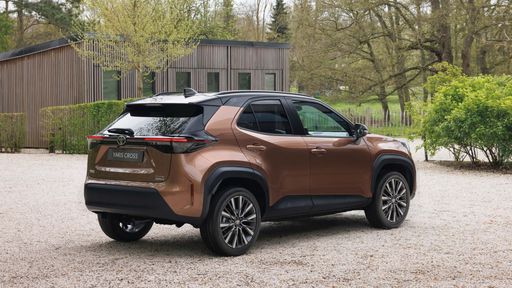
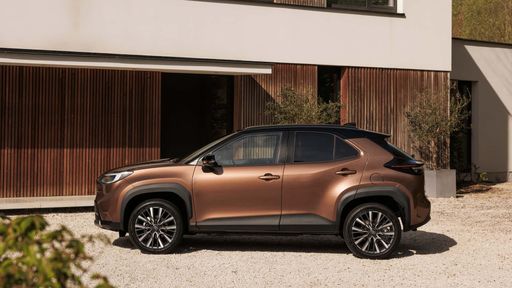
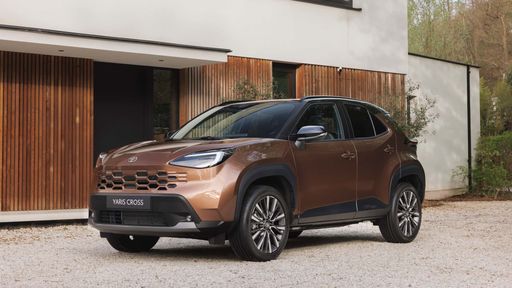
The Toyota Yaris Cross blends the maneuverability of a small hatch with the higher driving position and practicality of a crossover, wrapped in Toyota's dependable build quality. It suits urban buyers who need easy parking, flexible cargo space and a comfortable, economical daily driver.

details

Renault Captur

The Renault Captur is a stylish and practical compact crossover that combines a high seating position and easy manoeuvrability with a comfortable, well‑equipped cabin. Its flexible interior layout and modern infotainment make it a sensible, polished choice for city drivers and small families.

details
Toyota Yaris Cross
Renault Captur

Costs and Consumption

Price
23,700 - 34,300 £
Price
21,400 - 28,400 £
Consumption L/100km
4.5 - 4.8 L/100km
Consumption L/100km
4.4 - 6 L/100km
Consumption kWh/100km
-
Consumption kWh/100km
-
Electric Range
-
Electric Range
-
Battery Capacity
-
Battery Capacity
-
co2
101 - 108 g/km
co2
100 - 137 g/km
Fuel tank capacity
-
Fuel tank capacity
-

Dimensions and Body

Body Type
SUV
Body Type
SUV
Seats
5
Seats
5
Doors
-
Doors
-
Curb weight
1,180 - 1,290 kg
Curb weight
1,323 - 1,441 kg
Trunk capacity
320 - 397 L
Trunk capacity
326 - 422 L
Length
-
Length
-
Width
1,765 mm
Width
1,797 mm
Height
-
Height
-
Max trunk capacity
-
Max trunk capacity
-
Payload
485 - 510 kg
Payload
447 - 453 kg

Engine and Performance

Engine Type
Full Hybrid
Engine Type
Full Hybrid, Petrol, Petrol MHEV
Transmission
Automatic
Transmission
Automatic, Manuel
Transmission Detail
CVT
Transmission Detail
Automatic Gearbox, Manual Gearbox, Dual-Clutch Automatic
Drive Type
Front-Wheel Drive, All-Wheel Drive
Drive Type
Front-Wheel Drive
Power HP
116 - 130 HP
Power HP
115 - 158 HP
Acceleration 0-100km/h
10.7 - 11.3 s
Acceleration 0-100km/h
8.9 - 12.3 s
Max Speed
-
Max Speed
-
Torque
-
Torque
160 - 265 Nm
Number of Cylinders
3
Number of Cylinders
3 - 4
Power kW
85 - 96 kW
Power kW
84 - 116 kW
Engine capacity
1,490 cm3
Engine capacity
1,199 - 1,789 cm3

General

Model Year
2026
Model Year
2025
CO2 Efficiency Class
C
CO2 Efficiency Class
C, D, E
Brand
Toyota
Brand
Renault
DriveDuel uses data analysis and artificial intelligence to evaluate vehicle data and create content. Content is regularly reviewed and improved. The displayed prices are estimates based on German list prices, adjusted to the respective country’s VAT. Country-specific registration taxes are not included. This information is not legally binding.