@ Toyota Motor Corporation
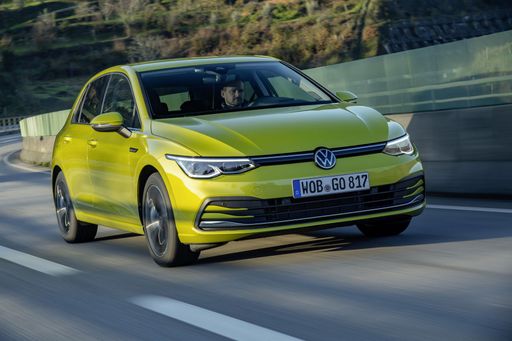
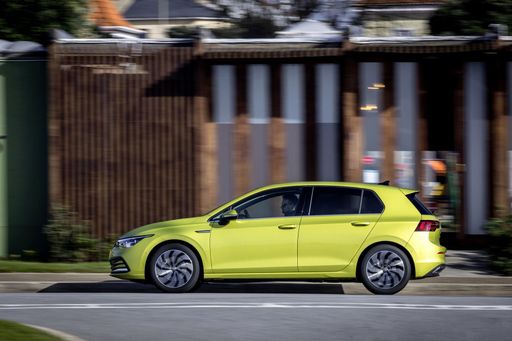
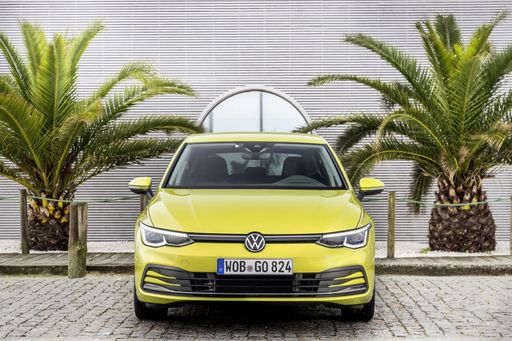
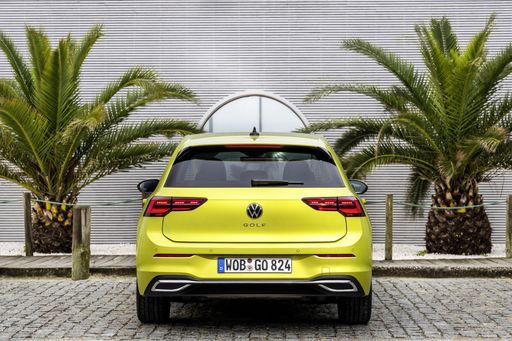
@ Volkswagen AG / VW Media
VS

Toyota Yaris Cross vs VW Golf – Which one offers the better deal?

Compare performance, boot capacity, efficiency and price at a glance.
Find out which car is the better choice for you – Toyota Yaris Cross or VW Golf?

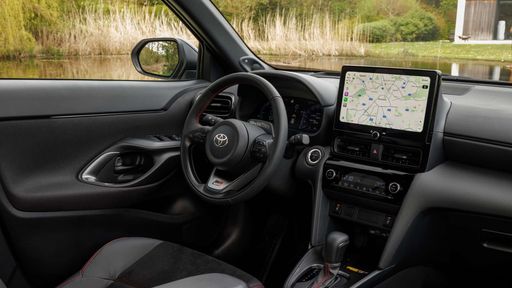
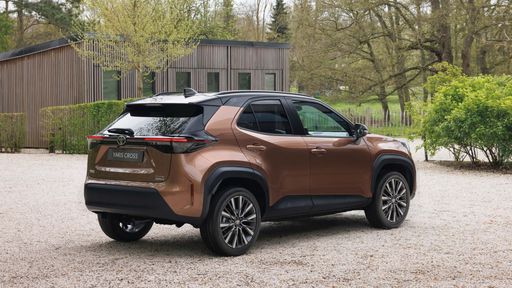
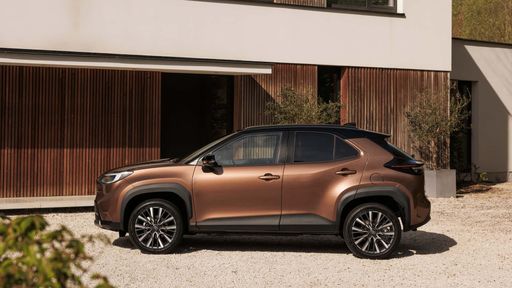
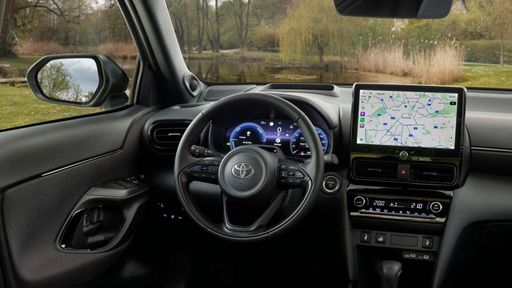
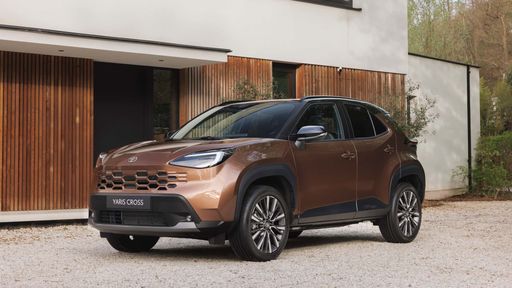
Yaris Cross @ Toyota Motor Corporation

The SUV Metamorphosis: Toyota Yaris Cross vs. The Reliable Hatch: VW Golf

In the world of compact automobiles, the Toyota Yaris Cross and VW Golf stand as titans, each representing distinctive approaches to car design and engineering. The Yaris Cross embodies the versatile allure of the compact SUV, while the Golf epitomizes the classic hatchback's enduring appeal. But which one of these renowned vehicles suits your driving aspirations and lifestyle needs? Let’s delve into their technical aspects, innovations, and dive into a comparative analysis.
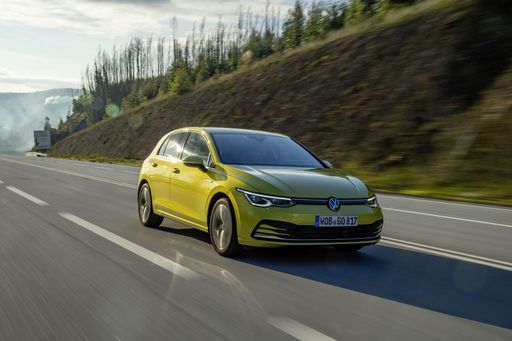
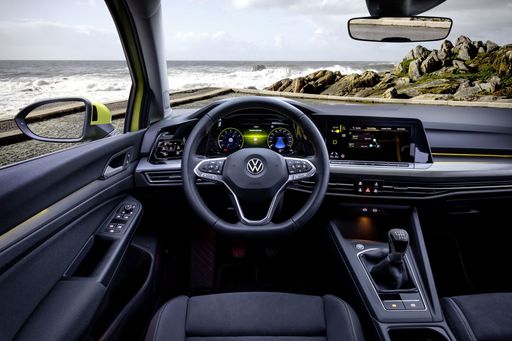
Golf @ Volkswagen AG / VW Media

Engine and Transmission Tech: Hybrid vs. Versatile Power

The Toyota Yaris Cross is a pioneer in the compact SUV segment with its full hybrid engine. Featuring a 1.5-liter three-cylinder engine, it offers power outputs of 116 to 130 HP (85 to 96 kW) and is supported by a continuous variable transmission (CVT). This hybrid engine excels in delivering fuel efficiency, with consumption figures between 4.5 to 4.8 L/100km, making it an environmentally friendly choice with CO2 emissions ranging from 101 to 108 g/km.

On the other hand, the VW Golf offers a diverse array of petrol, diesel, mild hybrid electric vehicle (MHEV), and plug-in hybrid powertrains, with power output from 116 HP in the diesel variant to a staggering 333 HP in the sporty configurations. With transmission options including both automatic dual-clutch and manual gearboxes, the Golf provides driving enthusiasts with an engaging experience. Fuel efficiency varies from 4.3 to 8.5 L/100km, and the plug-in hybrid variant offers an all-electric range of up to 143 km, giving it an edge in urban environments.

Yaris Cross @ Toyota Motor Corporation

Driving Dynamics and Performance

In terms of acceleration, the Yaris Cross takes between 10.7 and 11.3 seconds to reach 0-100 km/h with a top speed of 170 km/h. This is substantial for an SUV of its category, delivering a balance between speed and sustainability. Meanwhile, the Golf showcases its prowess with an exhilarating acceleration from 0-100 km/h in as short as 4.6 seconds, especially in the high-performance models. Maximum speeds range up to 270 km/h, manifesting its sporty DNA.

Golf @ Volkswagen AG / VW Media

Interior Comfort and Utility

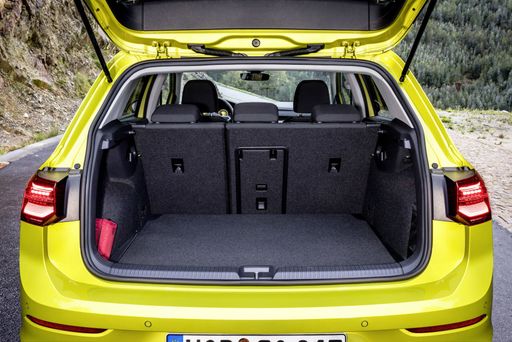
Both vehicles cater to families and adventure seekers with their five-seat capacity. The Yaris Cross edges out in trunk capacity, offering 397 liters compared to the Golf’s 381 liters in its standard model, which translates into greater versatility for weekend trips and outdoor adventures.

The compact dimensions of the Yaris Cross (4180 mm in length, 1765 mm in width, and 1595 mm in height) make it maneuverable in urban environments while still providing the elevated driving position typical of an SUV. The Golf, longer at 4282 mm and with a width of 1789 mm, offers a more traditional hatchback profile with an emphasis on road grip and stability.

Yaris Cross @ Toyota Motor Corporation

Safety and Efficiency Innovations

Safety and efficiency are paramount in modern car design, and neither vehicle disappoints. The Yaris Cross impresses with its hybrid system, which intelligently toggles between power sources to maximize efficiency. It also comes with Toyota’s safety suite, offering peace of mind through advanced driver-assistance systems.

The VW Golf has an edge in technology with an array of trims offering MHEV and plug-in hybrid models, accentuating its commitment to innovation and sustainability. Its high torque output reaching up to 420 Nm in its more powerful variants ensures quick responsiveness and exhilarating driving experiences.

Golf @ Volkswagen AG / VW Media

Final Verdict: Choosing Between Innovation and Versatility

The choice between the Toyota Yaris Cross and the VW Golf ultimately depends on individual preferences and priorities. Those drawn to hybrid efficiency and SUV comfort will appreciate the Yaris Cross. However, drivers desiring a blend of performance, variety in powertrains, and sporty prowess might find the VW Golf more appealing. Both vehicles highlight the rapidly evolving capabilities of modern compact cars while addressing driving needs across different lifestyles.

Here’s where it gets real: The technical differences in detail

Yaris Cross @ Toyota Motor Corporation

Costs and Efficiency:

Looking at overall running costs, both models reveal some interesting differences in everyday economy.

Toyota Yaris Cross has a barely noticeable advantage in terms of price – it starts at 23700 £, while the VW Golf costs 25200 £. That’s a price difference of around 1504 £.

Fuel consumption also shows a difference: VW Golf manages with 1.10 L and is therefore decisively more efficient than the Toyota Yaris Cross with 4.50 L. The difference is about 3.40 L per 100 km.

Golf @ Volkswagen AG / VW Media

Engine and Performance:

Under the bonnet, it becomes clear which model is tuned for sportiness and which one takes the lead when you hit the accelerator.

When it comes to engine power, the VW Golf has a significantly edge – offering 333 HP compared to 130 HP. That’s roughly 203 HP more horsepower.

In acceleration from 0 to 100 km/h, the VW Golf is convincingly quicker – completing the sprint in 4.60 s, while the Toyota Yaris Cross takes 10.70 s. That’s about 6.10 s faster.

In terms of top speed, the VW Golf performs noticeable better – reaching 270 km/h, while the Toyota Yaris Cross tops out at 170 km/h. The difference is around 100 km/h.

Yaris Cross @ Toyota Motor Corporation

Space and Everyday Use:

Whether family car or daily driver – which one offers more room, flexibility and comfort?

Both vehicles offer seating for 5 people.

In curb weight, Toyota Yaris Cross is somewhat lighter – 1180 kg compared to 1307 kg. The difference is around 127 kg.

In terms of boot space, the Toyota Yaris Cross offers minimal more room – 397 L compared to 381 L. That’s a difference of about 16 L.

In maximum load capacity, the VW Golf performs to a small extent better – up to 1237 L, which is about 140 L more than the Toyota Yaris Cross.

When it comes to payload, Toyota Yaris Cross barely noticeable takes the win – 510 kg compared to 508 kg. That’s a difference of about 2 kg.

Who wins the race?

The VW Golf proves to be dominates this comparison and therefore becomes our DriveDuel Champion!
VW Golf is the better all-rounder in this comparison.

from about £25,200
Golf @ Volkswagen AG / VW Media

VW Golf

  • Engine Type : Petrol MHEV, Petrol, Diesel, Plugin Hybrid
  • Transmission : Automatic, Manuel
  • Drive Type : Front-Wheel Drive, All-Wheel Drive
  • Power HP : 116 - 333 HP
  • Consumption L/100km : 1.1 - 8.1 L
  • Electric Range : 131 - 143 km

Toyota Yaris Cross

5 (1)
rate

The Toyota Yaris Cross takes the jaunty personality of the Yaris and gives it a taller stance and a bit more practicality, so you get city-friendly agility with added SUV presence. It’s easy to live with, economical on the daily grind, and smartly packaged — a sensible pick for buyers who want fuss-free transport with a touch of character.

details

VW Golf

The VW Golf remains the everyman’s favourite — cleverly balanced, composed and just posh enough to feel grown-up without pretending to be something it’s not. It slips through town and eats up longer trips with a refined cabin, practical layout and a kindly, capable character that turns everyday driving into something a little bit special.

details
Toyota Yaris Cross
VW Golf
Yaris Cross @ Toyota Motor Corporation
Golf @ Volkswagen AG / VW Media

Costs and Consumption

Price
23700 - 34300 £
Price
25200 - 47600 £
Consumption L/100km
4.5 - 4.8 L
Consumption L/100km
1.1 - 8.1 L
Consumption kWh/100km
-
Consumption kWh/100km
-
Electric Range
-
Electric Range
131 - 143 km
Battery Capacity
-
Battery Capacity
19.70 kWh
co2
101 - 108 g/km
co2
25 - 184 g/km
Fuel tank capacity
36 L
Fuel tank capacity
40 - 55 L

Dimensions and Body

Body Type
SUV
Body Type
Hatchback
Seats
5
Seats
5
Doors
5
Doors
5
Curb weight
1180 - 1290 kg
Curb weight
1307 - 1662 kg
Trunk capacity
320 - 397 L
Trunk capacity
273 - 381 L
Length
4180 mm
Length
4282 - 4296 mm
Width
1765 mm
Width
1789 mm
Height
1595 mm
Height
1454 - 1483 mm
Max trunk capacity
1097 L
Max trunk capacity
1129 - 1237 L
Payload
485 - 510 kg
Payload
438 - 508 kg

Engine and Performance

Engine Type
Full Hybrid
Engine Type
Petrol MHEV, Petrol, Diesel, Plugin Hybrid
Transmission
Automatic
Transmission
Automatic, Manuel
Transmission Detail
CVT
Transmission Detail
Dual-Clutch Automatic, Manual Gearbox
Drive Type
Front-Wheel Drive, All-Wheel Drive
Drive Type
Front-Wheel Drive, All-Wheel Drive
Power HP
116 - 130 HP
Power HP
116 - 333 HP
Acceleration 0-100km/h
10.7 - 11.3 s
Acceleration 0-100km/h
4.6 - 10.2 s
Max Speed
170 km/h
Max Speed
202 - 270 km/h
Torque
-
Torque
220 - 420 Nm
Number of Cylinders
3
Number of Cylinders
4
Power kW
85 - 96 kW
Power kW
85 - 245 kW
Engine capacity
1490 cm3
Engine capacity
1498 - 1984 cm3

General

Model Year
2024 - 2025
Model Year
2024 - 2025
CO2 Efficiency Class
C
CO2 Efficiency Class
D, F, G, C, B
Brand
Toyota
Brand
VW
Is the Toyota Yaris Cross offered with different drivetrains?

Available configurations include Front-Wheel Drive or All-Wheel Drive.

The prices and data displayed are estimates based on German list prices and may vary by country. This information is not legally binding.