VS

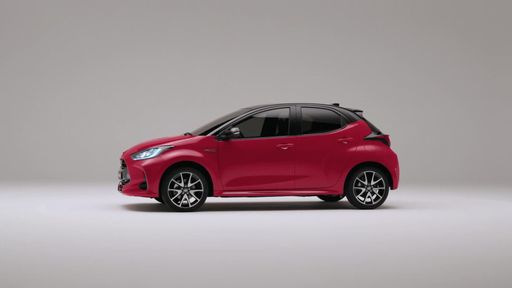
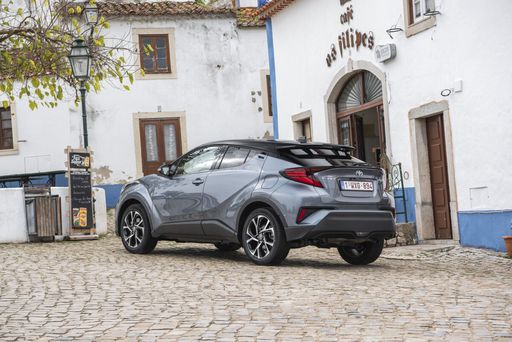
Toyota Yaris vs Toyota C-HR comparison

Compare performance (280 HP vs 223 HP), boot space and price (21,900 £ vs 29,100 £ ) at a glance. Find out which car is the better choice for you – Toyota Yaris or Toyota C-HR?

Toyota Yaris vs Toyota C-HR: Key differences

Toyota Yaris

3.9 (3 Reviews)
rate
  • visibly cheaper
  • clearly more power
  • visibly quicker 0–100 km/h
  • visibly lighter

Toyota C-HR

4.8 (2 Reviews)
rate
  • clearly more efficient
  • noticeably more trunk space

All details on performance, efficiency, range and trunk space can be found in the technical comparison below – including user reviews for both models.

Yaris

Head-to-head: Toyota C-HR VS Toyota Yaris — crossover vs hatchback comparison

The Toyota C-HR VS Toyota Yaris matchup puts a fashion-forward crossover against a compact hatchback in a search-friendly comparison that buyers actually care about. The Toyota C-HR arrives with a taller, sculpted silhouette while the Toyota Yaris keeps things small, simple and city-friendly. This page focuses on how their characters differ in everyday life — think perceived quality, comfort and usability rather than a spec-sheet duel. If you’re choosing between the C-HR’s presence and the Yaris’s practicality, this comparison will highlight the trade-offs that matter at the kerb.
C-HR

Attitude clash: bold statement vs humble efficiency

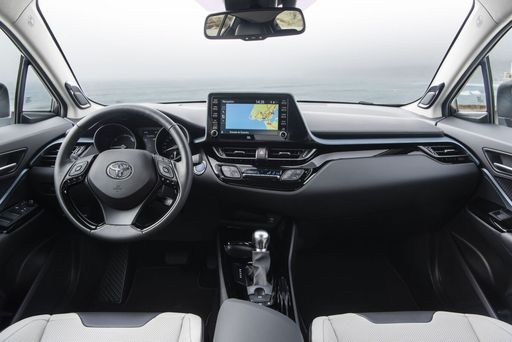
The Toyota C-HR is all about visual drama and a slightly more premium feel, projecting an image that leans toward style and presence, while the Toyota Yaris is refreshingly low-key and function-first. Inside, the C-HR aims for composure and a more mature cabin atmosphere, whereas the Yaris champions straightforward ergonomics and a no-nonsense layout. The contrast is palpable the moment you slide behind the wheel: one wants to be noticed, the other wants to get on with the job. That difference in attitude drives how each car is used and perceived every day.

Yaris

Daily life: which one eases your routine?

For tight city streets and frequent short hops the Toyota Yaris is simply easier to live with — smaller, nimbler and less fiddly in traffic and parking situations. The Toyota C-HR feels more at home on longer commutes and when you need to carry a bit more luggage or family kit, thanks to a roomier feel and a higher driving position. Passengers notice the C-HR’s more composed ride, while drivers in the Yaris will praise its agility and simplicity. Match the car to the route you drive most and you’ll save friction every week.

C-HR

Buying it for image or for sense?

Choosing the Toyota C-HR often reads like a style decision: you get SUV cues and a stronger road presence that can make a small garage feel a bit posher. Picking the Toyota Yaris signals practicality and a preference for uncluttered, cost-conscious ownership rather than show. Both choices are defensible — one because it elevates the everyday, the other because it keeps the everyday efficient. That psychological payoff matters: some buyers want to be seen stepping out of a crossover, others want the quiet satisfaction of a smart, compact hatch.

Who should gravitate to the C-HR?

The Toyota C-HR fits someone who values comfort, a spacious boot for family kit and a higher driving position that makes daily life easier on the back and neck. It’s a good pick when perceived quality and a stronger road presence are part of the purchase brief, and when you’re prepared to trade a bit more cost for those benefits. If you were comparing it with the Toyota Yaris, choose the C-HR when space and relaxed long-distance composure matter more than squeezing into every parking gap. In short, it’s for drivers who want a crossover feel without stepping up to a full-size SUV.

Who should pick the Yaris (and when the C-HR still tempts you)?

The Toyota Yaris suits buyers who prioritise low fuss, tight-town manoeuvrability and straightforward ownership — it’s the practical, city-first choice for commuters and budget-conscious households. If your daily routine is dominated by short trips and tight parking, the Yaris delivers more convenience and less hassle than the C-HR. If the Toyota C-HR was on your shortlist but you care most about running ease and economy, the Yaris is the counter-argument that makes sense in daily life. Still undecided? Scroll down for the detailed figures and measurements to help you pick which Toyota matches your routine.

Here’s where it gets real: The technical differences in detail

Yaris

Costs and Efficiency:

Price and efficiency are often the first things buyers look at. Here it becomes clear which model has the long-term edge – whether at the pump, the plug, or in purchase price.

Toyota Yaris is visibly cheaper – starting at 21,900 £ , while the Toyota C-HR costs 29,100 £ . That’s a price difference of around 7,277 £.

Fuel consumption also shows a difference: the Toyota C-HR uses 2.3 L/100km and is clearly more efficient than the Toyota Yaris with 3.8 L/100km. The difference is about 1.5 L/100km.

C-HR

Engine and Performance:

Power, torque and acceleration are the classic benchmarks for car enthusiasts – and here, some clear differences start to show.

When it comes to engine power, the Toyota Yaris offers clearly more power – delivering 280 HP compared to 223 HP. That’s roughly 57 HP more horsepower.

When accelerating from 0 to 100 km/h, the Toyota Yaris is visibly quicker – completing the sprint in 5.5 s, while the Toyota C-HR takes 7.4 s. That’s about 1.9 s quicker.

Yaris

Space and Everyday Use:

Beyond pure performance, interior space and usability matter most in daily life. This is where you see which car is more practical and versatile.

Both vehicles offer seating for 5 people.

In terms of curb weight, Toyota Yaris is visibly lighter – 1,090 kg compared to 1,505 kg. The difference is around 415 kg.

Looking at boot space, the Toyota C-HR offers noticeably more boot space – 447 L compared to 286 L. That’s a difference of about 161 L.

When it comes to payload, the Toyota Yaris carries a bit more – 525 kg compared to 425 kg. That’s a difference of about 100 kg.

Who wins the race in the data check?

The Toyota C-HR leads convincingly in the objective data comparison.
This result only shows which model scores more points on paper – not which of the two cars feels right for you.

from £29,100
C-HR

Toyota C-HR

  • Engine Type : Full Hybrid, Plugin Hybrid
  • Transmission : Automatic
  • Drive Type : Front-Wheel Drive, All-Wheel Drive
  • Power HP : 140 - 223 HP
  • Consumption L/100km : 2.3 - 5.1 L/100km
  • Electric Range : 66 km
Toyota Yaris
Toyota C-HR

Costs and Consumption

View detailed analysis

Engine and Performance

View detailed analysis

Dimensions and Body

View detailed analysis

Toyota Yaris

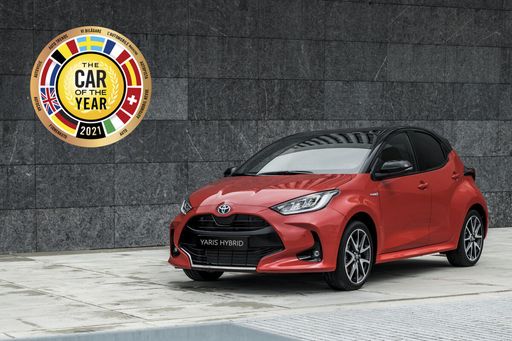
The Toyota Yaris is a sprightly city hatch that packs clever packaging, surprising comfort and fuel-sipping manners into a neat, easy-to-park package. It rewards sensible buyers with low running costs, friendly ergonomics and a forgiving drive, delivered with Japanese reliability and just enough personality to make errands feel a little less ordinary.

details

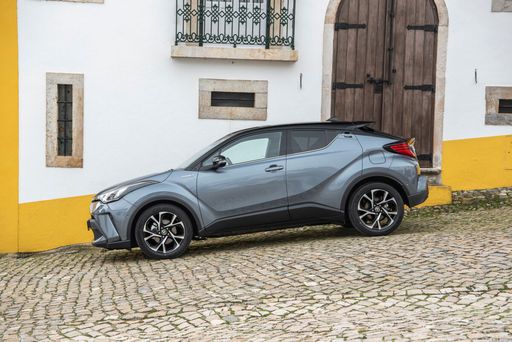
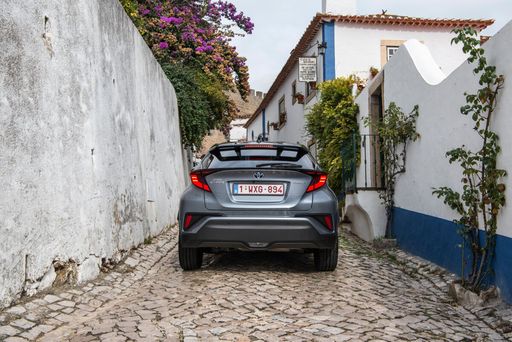
Toyota C-HR

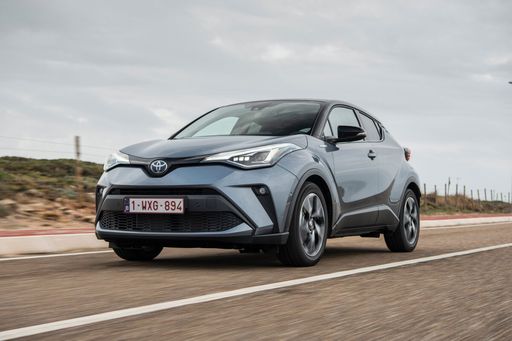
The Toyota C-HR cuts a striking figure with its angular styling and coupe-like profile, so you’ll never go unnoticed in the supermarket car park. It balances everyday practicality with a nimble, city-friendly personality, making routine commutes feel a touch more fun without asking for forgiveness.

details
Toyota Yaris
Toyota C-HR

Costs and Consumption

Price
21,900 - 40,800 £
Price
29,100 - 42,800 £
Consumption L/100km
3.8 - 8.7 L/100km
Consumption L/100km
2.3 - 5.1 L/100km
Consumption kWh/100km
-
Consumption kWh/100km
-
Electric Range
-
Electric Range
66 km
Battery Capacity
-
Battery Capacity
-
co2
87 - 197 g/km
co2
52 - 116 g/km
Fuel tank capacity
-
Fuel tank capacity
-

Dimensions and Body

Body Type
Hatchback
Body Type
SUV
Seats
4 - 5
Seats
5
Doors
-
Doors
-
Curb weight
1,090 - 1,356 kg
Curb weight
1,505 - 1,755 kg
Trunk capacity
141 - 286 L
Trunk capacity
350 - 447 L
Length
-
Length
-
Width
1,745 - 1,805 mm
Width
1,832 mm
Height
-
Height
-
Max trunk capacity
-
Max trunk capacity
-
Payload
289 - 525 kg
Payload
375 - 425 kg

Engine and Performance

Engine Type
Full Hybrid, Petrol
Engine Type
Full Hybrid, Plugin Hybrid
Transmission
Automatic, Manuel
Transmission
Automatic
Transmission Detail
CVT, Manual Gearbox
Transmission Detail
CVT
Drive Type
Front-Wheel Drive, All-Wheel Drive
Drive Type
Front-Wheel Drive, All-Wheel Drive
Power HP
116 - 280 HP
Power HP
140 - 223 HP
Acceleration 0-100km/h
5.5 - 9.7 s
Acceleration 0-100km/h
7.4 - 9.9 s
Max Speed
-
Max Speed
-
Torque
390 Nm
Torque
-
Number of Cylinders
3
Number of Cylinders
4
Power kW
85 - 206 kW
Power kW
103 - 164 kW
Engine capacity
1,490 - 1,618 cm3
Engine capacity
1,798 - 1,987 cm3

General

Model Year
2,026
Model Year
2,026
CO2 Efficiency Class
B, G
CO2 Efficiency Class
C, D, B
Brand
Toyota
Brand
Toyota
DriveDuel uses data analysis and artificial intelligence to evaluate vehicle data and create content. Content is regularly reviewed and improved. The displayed prices are estimates based on German list prices, adjusted to the respective country’s VAT. Country-specific registration taxes are not included. This information is not legally binding.