VS

Volvo EX30 vs smart #1 comparison

Compare performance (428 HP vs 428 HP), boot space and price (33,000 £ vs 31,700 £ ) at a glance. Find out which car is the better choice for you – Volvo EX30 or smart #1?

Volvo EX30 vs smart #1: Key differences

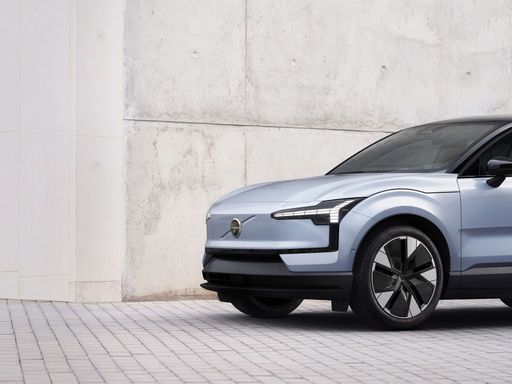
Volvo EX30

3.6 (5 Reviews)
rate
  • barely more electric range
  • very slightly quicker 0–100 km/h

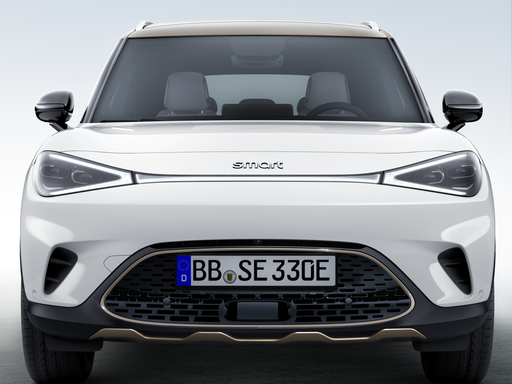
smart #1

  • only slightly cheaper
  • marginally more efficient
  • barely lighter
  • marginally more trunk space

All details on performance, efficiency, range and trunk space can be found in the technical comparison below – including user reviews for both models.

EX30

The Battle of Electric SUVs: Smart #1 vs. Volvo EX30

As the automotive industry leans heavily towards electrification, two standout contenders in the compact electric SUV segment are the Smart #1 and the Volvo EX30. Both vehicles showcase the latest in EV technology and design, offering sustainable driving solutions without compromising on performance or style. Let's dive into the specifics of each model to see how they stack up against each other.
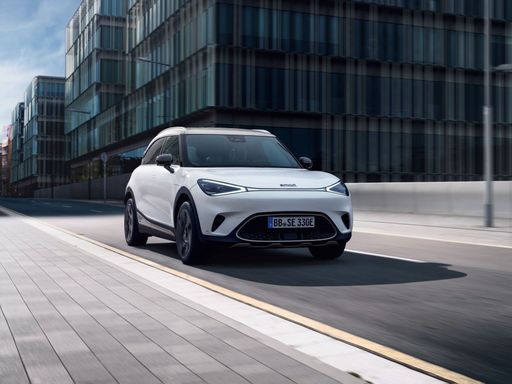
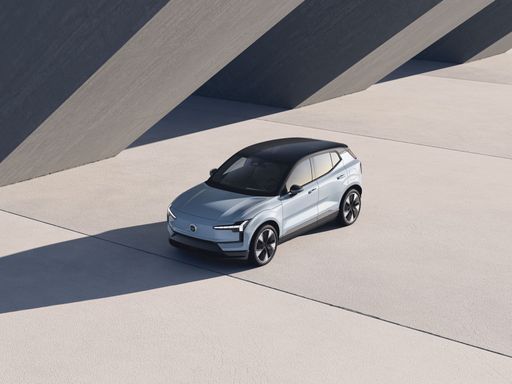
#1

Performance and Power

When it comes to performance, both the Smart #1 and the Volvo EX30 offer impressive specifications. The Smart #1 delivers a power range of 272 to 428 HP with torque figures ranging from 343 to an impressive 584 Nm. Meanwhile, the Volvo EX30 matches the Smart #1 in horsepower at 272 to 428 HP, but offers a slightly lower maximum torque of 543 Nm.

Acceleration-wise, the Smart #1 can sprint from 0 to 100 km/h in a swift 3.9 to 6.7 seconds depending on the variant, whereas the Volvo EX30 performs similarly, achieving the feat in 3.6 to 5.7 seconds. Both SUVs cap their speed at 180 km/h, ensuring that speed is balanced with safety and efficiency.

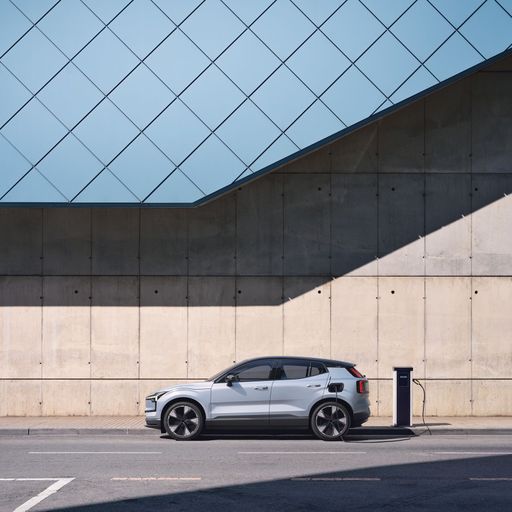
EX30

Electric Range and Efficiency

Range anxiety is a common concern for electric vehicle consumers, and both models offer reassuring figures. The Smart #1 presents a range between 310 to 440 km, while the Volvo EX30 stretches slightly further with a range of 339 to 476 km on a full charge. In terms of energy consumption, the Smart #1 varies from 16.8 to 18.2 kWh/100km, slightly higher than the Volvo EX30 which consumes between 17 to 18.7 kWh/100km.

#1

Battery and Charging

Battery capacity is critical for performance and range. The Smart #1 is available with either a 47 kWh or 62 kWh battery. In comparison, the Volvo EX30 offers a slightly larger capacity, ranging from 49 kWh to 65 kWh. These capacities align with their respective range offerings, providing flexibility based on consumer needs and driving habits.

EX30

Design and Dimensions

Size matters in urban environments, and here both vehicles shine with compact dimensions tailored for city driving. The Smart #1 measures 4270 to 4300 mm in length, 1822 mm in width, and 1636 mm in height, offering a balance of interior space and external dimensions. Contrastingly, the Volvo EX30 is slightly shorter and narrower at 4233 mm in length and 1837 mm in width, with a height of 1549 to 1567 mm, depending on the model.

#1

Interior and Cargo Space

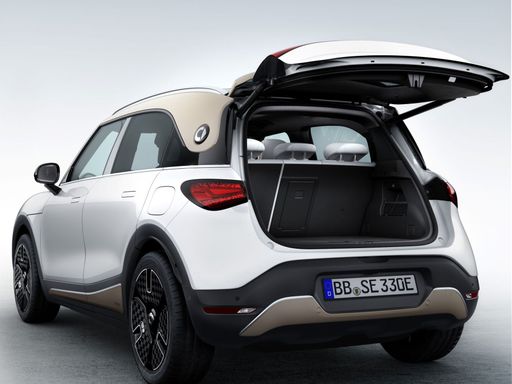
Interior comfort is paramount, with both models seating up to five passengers. When it comes to cargo space, the Smart #1 offers a trunk capacity of 313 to 323 liters, while the Volvo EX30 offers up to 318 liters. Although both provide adequate space for everyday needs, longer trips may require strategic packing.

EX30

Conclusion: Choosing Your Electric Companion

The Smart #1 and Volvo EX30 each bring their unique strengths to the table in the electric SUV category. The Smart #1 offers a slightly more powerful torque and diverse range dimensions, while the Volvo EX30 leads in battery efficiency and extended range. Your choice between these contenders will largely depend on your priorities, whether it be raw acceleration, range, or efficiency. Both models exemplify what it means to drive into the future of automotive design and innovation.

Here’s where it gets real: The technical differences in detail

EX30

Costs and Efficiency:

Price and efficiency are key factors when choosing a car – and this is often where the real differences emerge.

smart #1 is only slightly cheaper – starting at 31,700 £ , while the Volvo EX30 costs 33,000 £ . That’s a price difference of around 1,286 £.

In terms of energy consumption, the smart #1 is marginally more efficient: consuming 16.8 kWh/100km compared to 17 kWh/100km for the Volvo EX30. That’s a difference of about 0.2 kWh/100km.

As for electric range, the Volvo EX30 offers barely more range – reaching up to 476 km, about 36 km more than the smart #1.

#1

Engine and Performance:

Power, torque and acceleration are the classic benchmarks for car enthusiasts – and here, some clear differences start to show.

Both models deliver identical power – 428 HP each.

When accelerating from 0 to 100 km/h, the Volvo EX30 is very slightly quicker – completing the sprint in 3.6 s, while the smart #1 takes 3.9 s. That’s about 0.3 s quicker.

There’s no difference in top speed – both reach 180 km/h.

There’s also a difference in torque: the smart #1 delivers only slightly more torque with 584 Nm compared to 543 Nm. That’s about 41 Nm more.

EX30

Space and Everyday Use:

Cabin size, boot volume and payload all play a role in everyday practicality. Here, comfort and flexibility make the difference.

Both vehicles offer seating for 5 people.

In terms of curb weight, smart #1 is barely lighter – 1,780 kg compared to 1,840 kg. The difference is around 60 kg.

Looking at boot space, the smart #1 offers marginally more boot space – 323 L compared to 318 L. That’s a difference of about 5 L.

For maximum load capacity, the Volvo EX30 offers marginally more capacity – up to 1,000 L, about 14 L more than the smart #1.

When it comes to payload, the smart #1 carries moderately more – 470 kg compared to 390 kg. That’s a difference of about 80 kg.

Who wins the race in the data check?

The smart #1 is barely ahead in the objective data comparison.
This result only shows which model scores more points on paper – not which of the two cars feels right for you.

from £31,700
#1

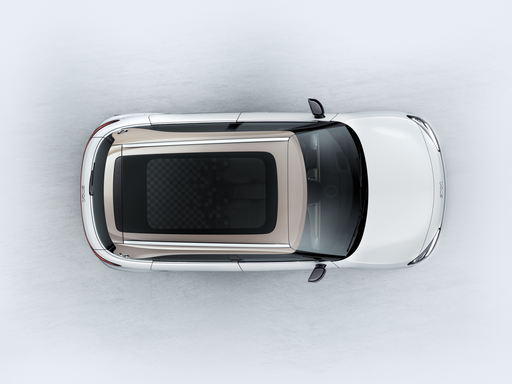
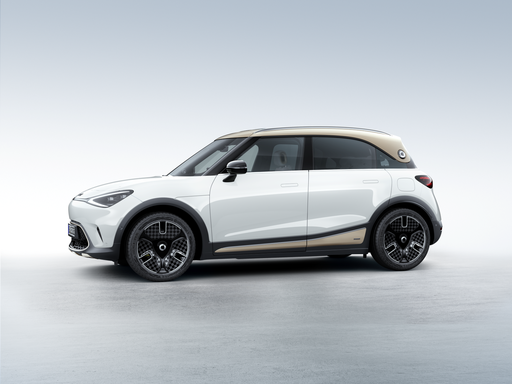
smart #1

  • Engine Type : Electric
  • Transmission : Automatic
  • Drive Type : Rear-Wheel Drive, All-Wheel Drive
  • Power HP : 272 - 428 HP
  • Consumption kWh/100km : 16.8 - 18.2 kWh/100km
  • Electric Range : 310 - 440 km
Volvo EX30
smart #1

Costs and Consumption

View detailed analysis

Engine and Performance

View detailed analysis

Dimensions and Body

View detailed analysis

Volvo EX30

The Volvo EX30 arrives as a compact electric with crisp Scandinavian design and a cheeky personality, proving you can be serious about safety and still enjoy a grin on your commute. Its cabin is cleverly packaged and delightfully easy to live with, offering smart tech and practical touches that make it feel like a grown-up's city car with a sense of fun.

details

smart #1

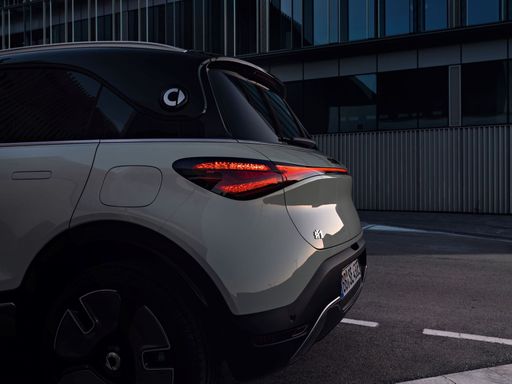
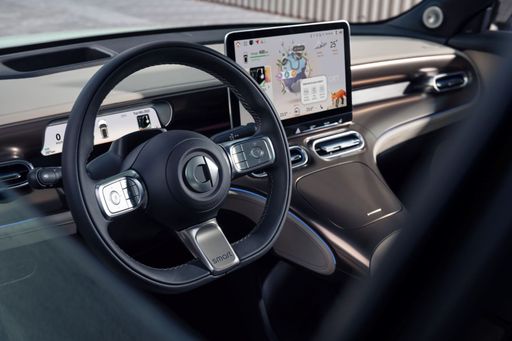
The Smart #1 feels like a breath of fresh air in the compact EV world, pairing playful styling with usable space and a cabin that punches above its size. It skips the fuss and delivers an easygoing, city-friendly driving experience with clever features that make it a sensible, slightly cheeky choice for everyday motoring.

details
Volvo EX30
smart #1

Costs and Consumption

Price
33,000 - 49,100 £
Price
31,700 - 45,000 £
Consumption L/100km
-
Consumption L/100km
-
Consumption kWh/100km
17 - 18.3 kWh/100km
Consumption kWh/100km
16.8 - 18.2 kWh/100km
Electric Range
339 - 476 km
Electric Range
310 - 440 km
Battery Capacity
49 - 65 kWh
Battery Capacity
47 - 62 kWh
co2
0 g/km
co2
0 g/km
Fuel tank capacity
-
Fuel tank capacity
-

Dimensions and Body

Body Type
SUV
Body Type
SUV
Seats
5
Seats
5
Doors
5
Doors
5
Curb weight
1,840 - 1,960 kg
Curb weight
1,780 - 1,900 kg
Trunk capacity
318 L
Trunk capacity
313 - 323 L
Length
4,233 mm
Length
4,270 - 4,300 mm
Width
1,838 mm
Width
1,822 mm
Height
1,550 mm
Height
1,636 mm
Max trunk capacity
1,000 L
Max trunk capacity
976 - 986 L
Payload
370 - 390 kg
Payload
425 - 470 kg

Engine and Performance

Engine Type
Electric
Engine Type
Electric
Transmission
Automatic
Transmission
Automatic
Transmission Detail
Reduction Gearbox
Transmission Detail
Reduction Gearbox
Drive Type
Rear-Wheel Drive, All-Wheel Drive
Drive Type
Rear-Wheel Drive, All-Wheel Drive
Power HP
272 - 428 HP
Power HP
272 - 428 HP
Acceleration 0-100km/h
3.6 - 5.7 s
Acceleration 0-100km/h
3.9 - 6.7 s
Max Speed
180 km/h
Max Speed
180 km/h
Torque
343 - 543 Nm
Torque
343 - 584 Nm
Number of Cylinders
-
Number of Cylinders
-
Power kW
200 - 315 kW
Power kW
200 - 315 kW
Engine capacity
-
Engine capacity
-

General

Model Year
2,024 - 2,025
Model Year
2,023 - 2,024
CO2 Efficiency Class
A
CO2 Efficiency Class
A
Brand
Volvo
Brand
smart
DriveDuel uses data analysis and artificial intelligence to evaluate vehicle data and create content. Content is regularly reviewed and improved. The displayed prices are estimates based on German list prices, adjusted to the respective country’s VAT. Country-specific registration taxes are not included. This information is not legally binding.