VS

Volvo EX40 vs Kia EV3 comparison

Compare performance (442 HP vs 204 HP), boot space and price (45,200 £ vs 30,800 £ ) at a glance. Find out which car is the better choice for you – Volvo EX40 or Kia EV3?

Volvo EX40 vs Kia EV3: Key differences

Volvo EX40

5 (1 Reviews)
rate
  • clearly more power
  • clearly quicker 0–100 km/h
details

Kia EV3

4.7 (3 Reviews)
rate
  • significantly cheaper
  • somewhat more efficient
  • only slightly more electric range
  • somewhat lighter
  • moderately more trunk space
details

All details on performance, efficiency, range and trunk space can be found in the technical comparison below – including user reviews for both models.

By Achim Sedelmaier

EX40

Head-to-head: Kia EV3 VS Volvo EX40 — compact electric crossover comparison

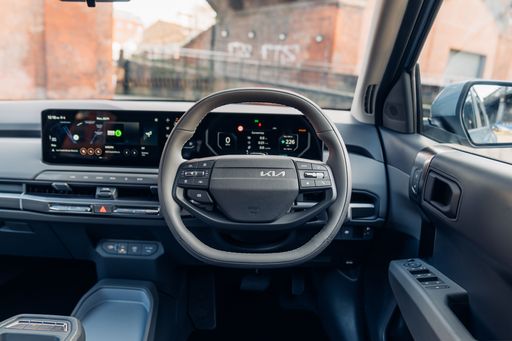
The Kia EV3 and the Volvo EX40 go head-to-head in this compact electric crossover comparison: welcome to the Kia EV3 VS Volvo EX40 page. If you’re hunting for a practical electric crossover or a premium compact EV, this duel is where real-world priorities meet showroom promises. We’ll run through character, daily usability and the kind of drivers each car will actually suit rather than drowning you in spreadsheets. The Kia EV3 and the Volvo EX40 may share the same EV category but they speak very different languages — economy and urban cleverness versus composure and refinement. Think of this as a buyer-focused roadmap to decide which personality fits your driveway.
EV3

Two attitudes on four wheels

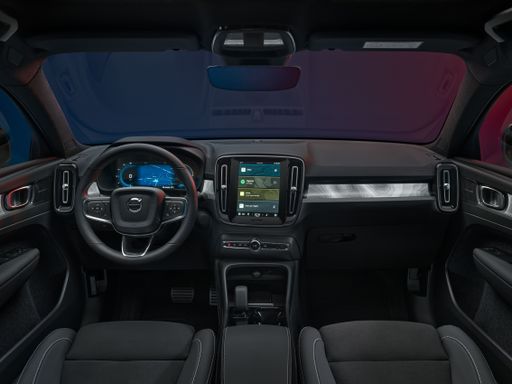
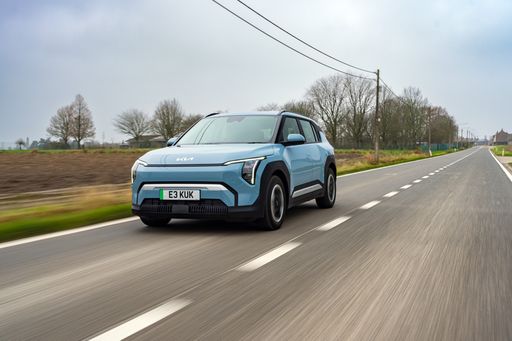
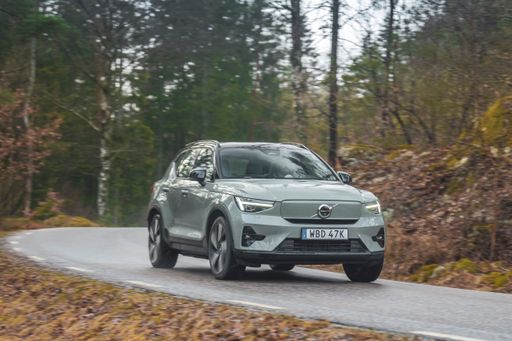
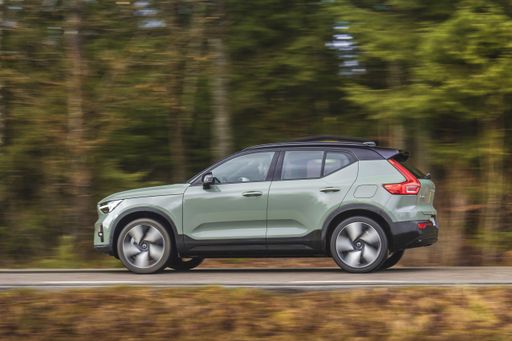
On one side the Kia EV3 feels intentionally down-to-earth: light-footed, efficient and designed to disappear into city life. On the other, the Volvo EX40 projects a quieter kind of confidence — more composed ride, a premium interior vibe and a tech-forward presence that says "this is deliberate." Where the Kia trades flash for friendly pragmatism, the Volvo leans into substance and a sense of occasion. That contrast is obvious the moment you open the doors: the Kia EV3 is cheerful and accessible; the Volvo EX40 is measured and tidy. Both are modern EVs, but their characters appeal to very different sensibilities.

EX40

How they fit into daily life

For daily life the Kia EV3 is happiest in the city — easy to park, forgiving on short hops and built around economical use. The Volvo EX40 shines on longer spells behind the wheel, promising composure on motorways and a cabin that keeps passengers pleasantly cocooned. Families with regular luggage or active weekend plans will notice the Volvo’s tendency to feel a touch more grown-up and secure for distance driving. Conversely, urban commuters and those who prize straightforward, low-cost running will find the Kia’s packaging and user-friendly setup more useful day to day. Neither is a one-trick pony, but how you split time between city streets and long runs will decide which one feels right.

EV3

Buying it for pride or purpose?

Choosing the Kia EV3 often comes down to sensible justification: it’s an easy-to-own EV that doesn’t ask much from you. Buying the Volvo EX40 is as much about the image as the experience — a quieter, more premium statement that reassures on comfort and safety. If you want your car to be a low-drama tool, the Kia lets the numbers and practicality do the talking. If you prefer your car to underline taste and a bit of status while delivering a composed ride, the Volvo answers in kind. Neither choice is purely rational or purely emotional; it’s about which compromise you’re willing to live with every morning.

EX40

Who should lean toward the Kia EV3?

If you’re a value-conscious commuter who measures choices by ease of ownership, running costs and clever space use, the Kia EV3 reads like a practical manifesto. It’s aimed at people who prefer straightforward tech, simple ergonomics and a car that performs its homework without fuss. Think sensible trips to work, school runs and tight-city parking as core strengths, not afterthoughts. For these buyers the Kia’s balance of usability and thrift is the kind of assurance that just makes life easier.

EV3

Who should favor the Volvo EX40 — and where the Kia still tempts

If your buying checklist starts with cabin calm, brand aura and a premium feel, the Volvo EX40 is the more natural fit. It suits drivers who care about a refined ride, neat materials and the sort of presence that turns mundane journeys into something a little more civilized. Status-conscious buyers who want their car to signal taste and safety will prefer the Volvo’s personality, while technically minded owners will appreciate its modern systems. That said, the Kia EV3 remains the smarter pick for anyone who prefers to spend less and get a very usable EV without ceremony. Scroll down to the technical delta when you’re ready for the hard numbers — they’ll tell you exactly where these practical and premium choices diverge.

Here’s where it gets real: The technical differences in detail

EX40

Costs and Efficiency:

Price and efficiency are key factors when choosing a car – and this is often where the real differences emerge.

Kia EV3 is significantly cheaper – starting at 30,800 £ , while the Volvo EX40 costs 45,200 £ . That’s a price difference of around 14,400 £.

In terms of energy consumption, the Kia EV3 is somewhat more efficient: consuming 14.9 kWh/100km compared to 16.6 kWh/100km for the Volvo EX40. That’s a difference of about 1.7 kWh/100km.

As for electric range, the Kia EV3 offers only slightly more range – reaching up to 605 km, about 29 km more than the Volvo EX40.

EV3

Engine and Performance:

Power, torque and acceleration say a lot about how a car feels on the road. This is where you see which model delivers more driving dynamics.

When it comes to engine power, the Volvo EX40 offers clearly more power – delivering 442 HP compared to 204 HP. That’s roughly 238 HP more horsepower.

When accelerating from 0 to 100 km/h, the Volvo EX40 is clearly quicker – completing the sprint in 4.6 s, while the Kia EV3 takes 7.5 s. That’s about 2.9 s quicker.

There’s also a difference in torque: the Volvo EX40 delivers substantially more torque with 670 Nm compared to 283 Nm. That’s about 387 Nm more.

EX40

Space and Everyday Use:

Beyond pure performance, interior space and usability matter most in daily life. This is where you see which car is more practical and versatile.

Both vehicles offer seating for 5 people.

In terms of curb weight, Kia EV3 is somewhat lighter – 1,800 kg compared to 2,040 kg. The difference is around 240 kg.

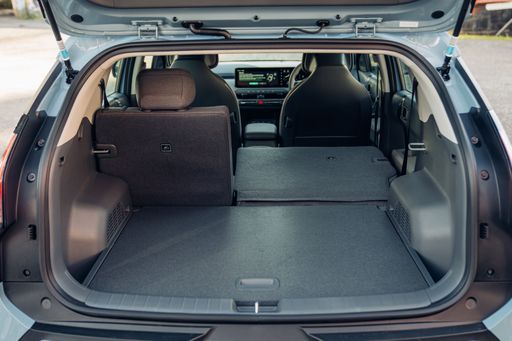
Looking at boot space, the Kia EV3 offers moderately more boot space – 460 L compared to 410 L. That’s a difference of about 50 L.

When it comes to payload, the Volvo EX40 carries very slightly more – 480 kg compared to 470 kg. That’s a difference of about 10 kg.

Who wins the race in the data check?

The Volvo EX40 is clearly superior overall in the objective data comparison.
This result only shows which model scores more points on paper – not which of the two cars feels right for you.

from £45,200
EX40

Volvo EX40

  • Engine Type : Electric
  • Transmission : Automatic
  • Drive Type : Rear-Wheel Drive, All-Wheel Drive
  • Power HP : 238 - 442 HP
  • Consumption kWh/100km : 16.6 - 17.6 kWh/100km
  • Electric Range : 477 - 576 km
Volvo EX40
Kia EV3

Costs and Consumption

View detailed analysis

Engine and Performance

View detailed analysis

Dimensions and Body

View detailed analysis

Volvo EX40

The Volvo EX40 wraps Scandinavian calm and clever practicality into a compact electric package that feels both premium and refreshingly uncomplicated. It's the grown-up answer to flashier rivals — a safe, comfy, and city-friendly EV with thoughtful tech that makes everyday driving quietly satisfying.

details

Kia EV3

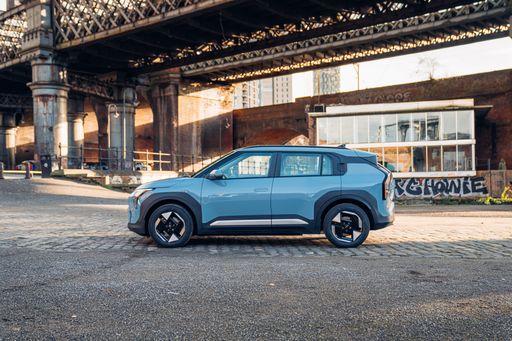
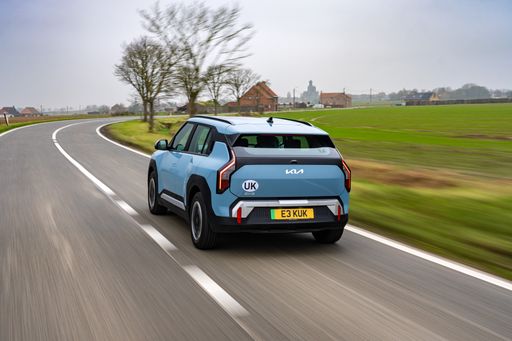
The Kia EV3 arrives as a cheeky, practical electric compact that manages to feel both premium and playful, delivering crisp handling and a roomy cabin that's perfect for urban life. With smart tech, friendly styling and sensible pricing, the EV3 is the kind of car that makes switching to electric feel like a no-brainer without asking you to give anything important up.

details
Volvo EX40
Kia EV3

Costs and Consumption

Price
45,200 - 58,200 £
Price
30,800 - 41,700 £
Consumption L/100km
-
Consumption L/100km
-
Consumption kWh/100km
16.6 - 17.6 kWh/100km
Consumption kWh/100km
14.9 - 16.2 kWh/100km
Electric Range
477 - 576 km
Electric Range
436 - 605 km
Battery Capacity
-
Battery Capacity
58.3 - 81.4 kWh
co2
0 g/km
co2
0 g/km
Fuel tank capacity
-
Fuel tank capacity
-

Dimensions and Body

Body Type
SUV
Body Type
SUV
Seats
5
Seats
5
Doors
-
Doors
5
Curb weight
2,040 - 2,170 kg
Curb weight
1,800 - 1,885 kg
Trunk capacity
410 L
Trunk capacity
460 L
Length
-
Length
4,300 - 4,310 mm
Width
1,863 mm
Width
1,850 mm
Height
-
Height
1,560 - 1,570 mm
Max trunk capacity
-
Max trunk capacity
1,251 L
Payload
430 - 480 kg
Payload
470 kg

Engine and Performance

Engine Type
Electric
Engine Type
Electric
Transmission
Automatic
Transmission
Automatic
Transmission Detail
Reduction Gearbox
Transmission Detail
Reduction Gearbox
Drive Type
Rear-Wheel Drive, All-Wheel Drive
Drive Type
Front-Wheel Drive
Power HP
238 - 442 HP
Power HP
204 HP
Acceleration 0-100km/h
4.6 - 7.3 s
Acceleration 0-100km/h
7.5 - 7.9 s
Max Speed
-
Max Speed
170 km/h
Torque
420 - 670 Nm
Torque
283 Nm
Number of Cylinders
-
Number of Cylinders
-
Power kW
175 - 325 kW
Power kW
150 kW
Engine capacity
-
Engine capacity
-

General

Model Year
2,024 - 2,026
Model Year
2024
CO2 Efficiency Class
A
CO2 Efficiency Class
A
Brand
Volvo
Brand
Kia
DriveDuel uses data analysis and artificial intelligence to evaluate vehicle data and create content. Content is regularly reviewed and improved. The displayed prices are estimates based on German list prices, adjusted to the respective country’s VAT. Country-specific registration taxes are not included. This information is not legally binding.