@ Volvo Cars
@ Volkswagen AG / VW Media
VS

Volvo XC40 vs VW ID.4 – Which car suits you better?

Everyday use, family trips or long-distance drives – here’s where the differences show.
Discover whether Volvo XC40 or VW ID.4 fits your lifestyle better.

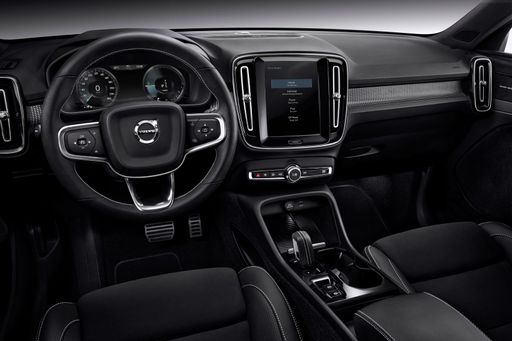
XC40 @ Volvo Cars

Volvo XC40 vs. VW ID.4: The Ultimate SUV Showdown

The 2024 automotive market is rife with innovative SUVs, and two standout contenders are the Volvo XC40 and the VW ID.4. Each caters to a distinct audience with its unique technology, performance, and design. Let's delve into the specifics and see how these SUVs compare.
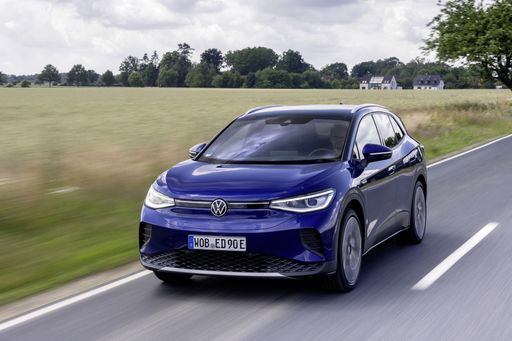
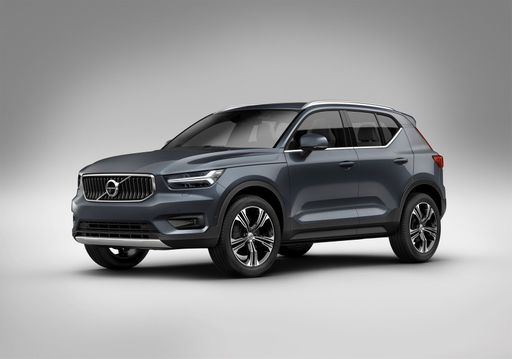
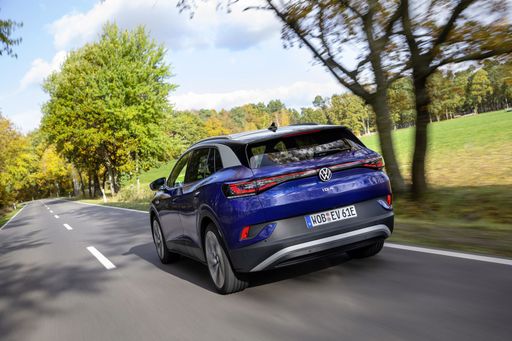
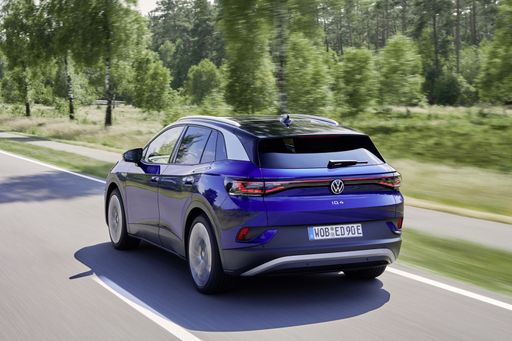
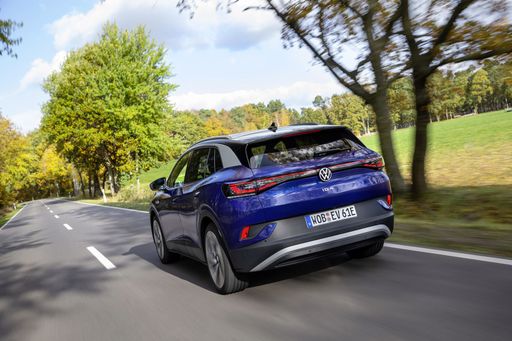
ID.4 @ Volkswagen AG / VW Media

Power and Performance

The Volvo XC40 makes its mark with a Petrol Mild Hybrid Engine (MHEV) that comes in two power outputs: 163 HP and 197 HP. Matched with a dual-clutch automatic transmission and a front-wheel-drive system, the XC40 reaches 0-100 km/h in 8.6 seconds (for the 163 HP variant) to 7.6 seconds (with 197 HP). It boasts a maximum speed of 180 km/h and a torque that ranges from 265 Nm to 300 Nm. The engine's 1969 cm3 capacity and consumption of 6.5 L/100km offer a balanced performance for eco-conscious drivers.

In contrast, the VW ID.4 is an all-electric marvel. Depending on the variant, power ranges from 170 HP to 340 HP. As an electric vehicle, it provides instantaneous torque, varying from 310 Nm to a notable 679 Nm for sure-footed performance. The ID.4 reaches 0-100 km/h in an exhilarating 5.4 seconds to a more measured 9.0 seconds, with a top speed fluctuating between 160 km/h and 180 km/h. Arguably, the ID.4's electric range is a highlight, stretching up to 572 km on a single charge.

XC40 @ Volvo Cars

Dimensions and Design

Both SUVs comfortably seat five passengers and offer ample cargo space. The Volvo XC40 features a trunk capacity of 452 L within its compact structure measuring 4425 mm in length, 1863 mm in width, and 1652 mm in height. This design complements its curb weight of 1688 kg, offering a balanced ride and reasonable payload capacity of 532 kg.

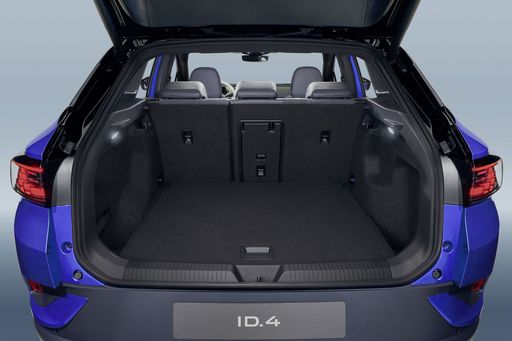
Meanwhile, the VW ID.4 is slightly larger at 4584 mm in length and provides more cargo capacity with its 543 L trunk. Despite its larger dimensions, the ID.4's sleek design ensures a competitive curb weight ranging from 1979 kg to 2261 kg, depending on the model. With a payload capacity nearing 541 kg, it's well-suited for larger families or those needing extra utility.

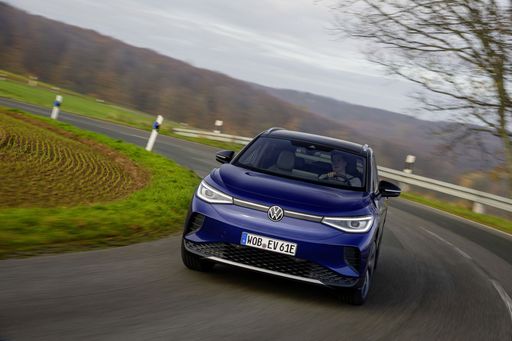
ID.4 @ Volkswagen AG / VW Media

Efficiency and Innovation

The Volvo XC40's CO2 emissions are measured between 147 g/km and 148 g/km, placing it in the CO2 Efficiency Class E. Its hybrid technology aims to balance fuel efficiency with traditional power.

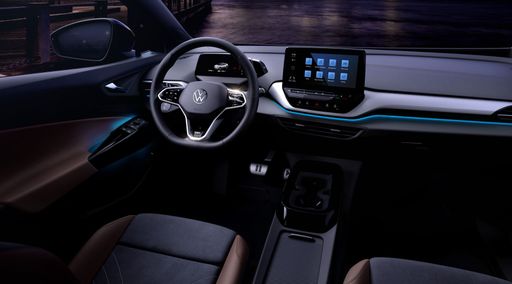
The VW ID.4 takes the lead in eco-credentials with zero tailpipe emissions, falling into the top tier CO2 Efficiency Class A. The efficiency of the ID.4's battery system, varying from 52 kWh to 77 kWh, achieves a consumption as low as 15.8 kWh/100 km, illustrating VW's commitment to sustainable technology.

XC40 @ Volvo Cars

Choosing Your SUV

The choice between the Volvo XC40 and the VW ID.4 hinges on personal preferences and priorities. The XC40 is ideal for those who appreciate the familiarity of a petrol engine with a hybrid twist, delivering solid performance and a stylish design. Conversely, the VW ID.4 caters to forward-thinking drivers seeking an electric vehicle that combines range, power, and eco-friendliness in a modern package.

In the end, both SUVs represent the future of automotive innovation — whether through hybrid capabilities or all-electric powertrains. Your decision ultimately comes down to whether you prefer a petrol hybrid or quintessentially electric drive.

Video - VW ID.4

Here’s where it gets real: The technical differences in detail

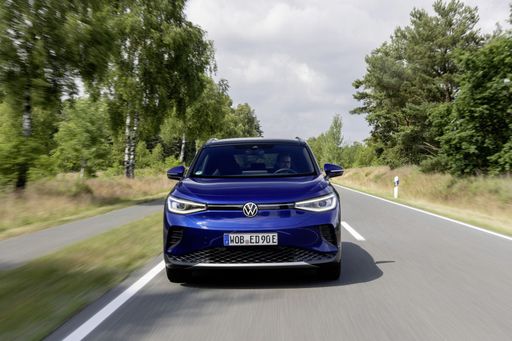
ID.4 @ Volkswagen AG / VW Media

Costs and Efficiency:

Looking at overall running costs, both models reveal some interesting differences in everyday economy.

VW ID.4 has a barely noticeable advantage in terms of price – it starts at 34600 £, while the Volvo XC40 costs 36800 £. That’s a price difference of around 2190 £.

XC40 @ Volvo Cars

Engine and Performance:

Under the bonnet, it becomes clear which model is tuned for sportiness and which one takes the lead when you hit the accelerator.

When it comes to engine power, the VW ID.4 has a decisively edge – offering 340 HP compared to 197 HP. That’s roughly 143 HP more horsepower.

In acceleration from 0 to 100 km/h, the VW ID.4 is clearly quicker – completing the sprint in 5.40 s, while the Volvo XC40 takes 7.60 s. That’s about 2.20 s faster.

There’s no difference in top speed – both reach 180 km/h.

There’s also a difference in torque: VW ID.4 pulls clearly stronger with 679 Nm compared to 300 Nm. That’s about 379 Nm difference.

ID.4 @ Volkswagen AG / VW Media

Space and Everyday Use:

Cabin size, boot volume and payload all play a role in everyday practicality. Here, comfort and flexibility make the difference.

Both vehicles offer seating for 5 people.

In curb weight, Volvo XC40 is slightly lighter – 1688 kg compared to 1975 kg. The difference is around 287 kg.

In terms of boot space, the VW ID.4 offers somewhat more room – 543 L compared to 452 L. That’s a difference of about 91 L.

In maximum load capacity, the VW ID.4 performs somewhat better – up to 1575 L, which is about 247 L more than the Volvo XC40.

When it comes to payload, VW ID.4 slight takes the win – 551 kg compared to 532 kg. That’s a difference of about 19 kg.

Who wins the race?

The VW ID.4 proves to be leaves the rival little chance and therefore becomes our DriveDuel Champion!
VW ID.4 is the better all-rounder in this comparison.

from about £34,600
ID.4 @ Volkswagen AG / VW Media

VW ID.4

  • Engine Type : Electric
  • Transmission : Automatic
  • Drive Type : Rear-Wheel Drive, All-Wheel Drive
  • Power HP : 170 - 340 HP
  • Consumption kWh/100km : 15.6 - 17 kWh
  • Electric Range : 356 - 569 km

Volvo XC40

5 (2)
rate

The Volvo XC40 wraps Scandinavian minimalism into a compact, city-ready SUV with a premium cabin that feels both practical and grown-up. It will suit buyers who prize safety, clever storage and a composed ride, proving that small dimensions don't mean small personality.

details

VW ID.4

4.5 (2)
rate

The VW ID.4 is a calm, roomy electric SUV that turns everyday driving into a quietly confident experience, its practical packaging and smooth manners tailored perfectly for family life. Volkswagen's solid build and intuitive interior tech mean you get electric practicality without the sci‑fi theatrics, making the ID.4 a sensible, surprisingly likable choice for most buyers.

details
Volvo XC40
VW ID.4
XC40 @ Volvo Cars
ID.4 @ Volkswagen AG / VW Media

Costs and Consumption

Price
36800 - 47200 £
Price
34600 - 47200 £
Consumption L/100km
6.50 L
Consumption L/100km
-
Consumption kWh/100km
-
Consumption kWh/100km
15.6 - 17 kWh
Electric Range
-
Electric Range
356 - 569 km
Battery Capacity
-
Battery Capacity
52 - 77 kWh
co2
147 - 148 g/km
co2
0 g/km
Fuel tank capacity
54 L
Fuel tank capacity
-

Dimensions and Body

Body Type
SUV
Body Type
SUV
Seats
5
Seats
5
Doors
5
Doors
5
Curb weight
1688 kg
Curb weight
1975 - 2248 kg
Trunk capacity
452 L
Trunk capacity
543 L
Length
4425 mm
Length
4582 - 4584 mm
Width
1863 mm
Width
1852 mm
Height
1652 mm
Height
1619 - 1634 mm
Max trunk capacity
1328 L
Max trunk capacity
1575 L
Payload
532 kg
Payload
511 - 551 kg

Engine and Performance

Engine Type
Petrol MHEV
Engine Type
Electric
Transmission
Automatic
Transmission
Automatic
Transmission Detail
Dual-Clutch Automatic
Transmission Detail
Reduction Gearbox
Drive Type
Front-Wheel Drive
Drive Type
Rear-Wheel Drive, All-Wheel Drive
Power HP
163 - 197 HP
Power HP
170 - 340 HP
Acceleration 0-100km/h
7.6 - 8.6 s
Acceleration 0-100km/h
5.4 - 9 s
Max Speed
180 km/h
Max Speed
160 - 180 km/h
Torque
265 - 300 Nm
Torque
310 - 679 Nm
Number of Cylinders
4
Number of Cylinders
-
Power kW
120 - 145 kW
Power kW
125 - 250 kW
Engine capacity
1969 cm3
Engine capacity
-

General

Model Year
2024
Model Year
2023 - 2025
CO2 Efficiency Class
E
CO2 Efficiency Class
A
Brand
Volvo
Brand
VW
What drive types are available for the Volvo XC40?

The Volvo XC40 is available as Front-Wheel Drive.

The prices and data displayed are estimates based on German list prices and may vary by country. This information is not legally binding.