VS

Volvo XC90 vs Dacia Jogger comparison

Compare performance (406 HP vs 158 HP), boot space and price (74,300 £ vs 15,400 £ ) at a glance. Find out which car is the better choice for you – Volvo XC90 or Dacia Jogger?

Volvo XC90 vs Dacia Jogger: Key differences

Volvo XC90

5 (1 Reviews)
rate
  • substantially more power
  • markedly more efficient
  • considerably quicker 0–100 km/h
details

Dacia Jogger

4.4 (2 Reviews)
rate
  • considerably cheaper
  • considerably lighter
details

All details on performance, efficiency, range and trunk space can be found in the technical comparison below – including user reviews for both models.

By Achim Sedelmaier

XC90

Introduction: A Clash of Two Worlds

The automotive market continually evolves, offering consumers a wide array of choices. Among the standout names in this year's lineup are the Dacia Jogger and the Volvo XC90, two vehicles that cater to different segments yet share a commitment to practicality and innovation. In this article, we will dissect the technical aspects, innovations, and general performance of these two distinct cars, ultimately aiding you in making an informed choice.
Jogger

Design and Body Type: MPV vs. SUV

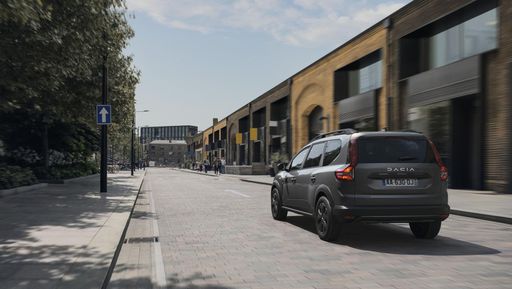
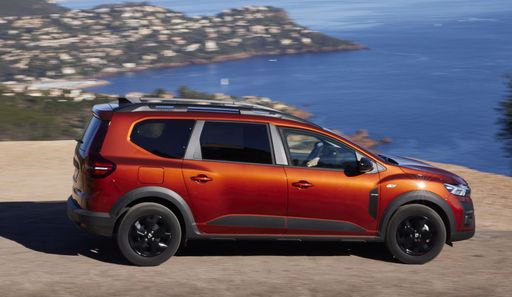
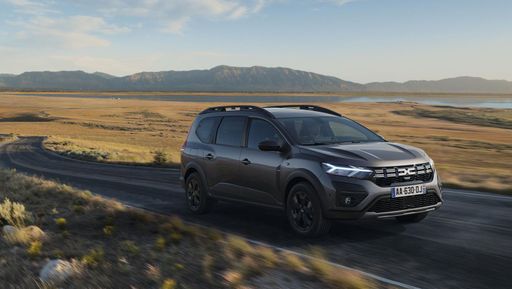
The Dacia Jogger is classified as an MPV (Multi-Purpose Vehicle), designed for families and those who value space and functionality. Measuring 4547 mm in length, 1784 mm in width, and 1674 mm in height, it offers a practical silhouette that’s both agile and accommodating, available in 5 or 7 seat configurations. With a maximum trunk capacity of 607 liters, the Jogger ensures ample cargo space for any journey.

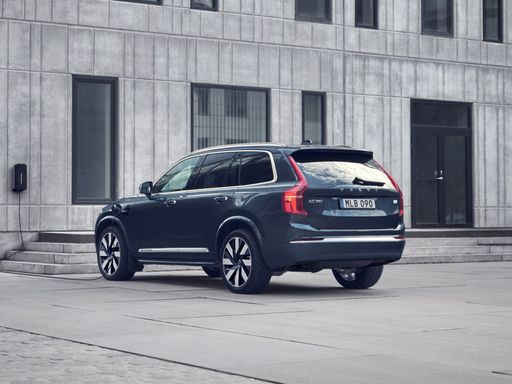
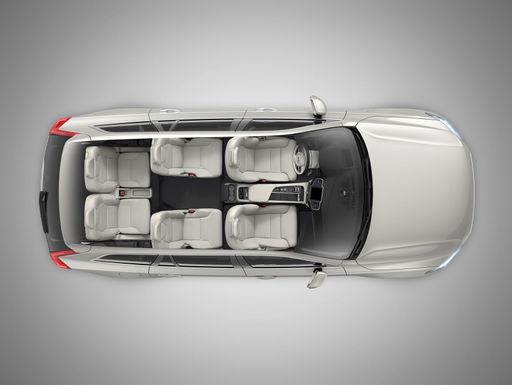
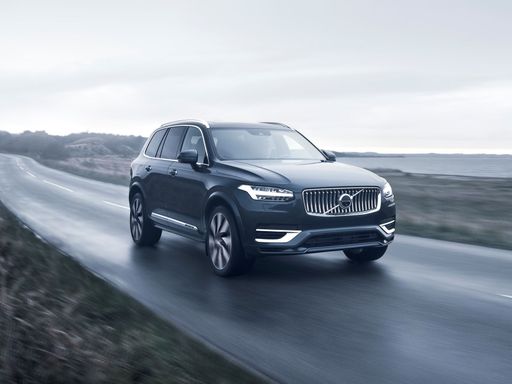
On the other hand, the Volvo XC90 is a premium SUV that literally towers over the Jogger, boasting dimensions of 4953 mm in length, 1923 mm in width, and 1771 mm in height. It also offers seating for up to 7 passengers but compromises trunk space with a maximum volume of 302 liters. The XC90’s robust yet elegant design communicates luxury and capability, making it ideal for both urban driving and off-road excursions.

XC90

Powertrain Options: A World of Choices

The Dacia Jogger offers a diverse set of engine options, including full hybrid, LPG, and petrol engines, with power outputs ranging from 91 HP to 140 HP. The consumption figures are impressive, with hybrid versions offering fuel efficiency as low as 4.7 L/100 km. With a torque range from 170 to 200 Nm and the ability to accelerate from 0-100 km/h in as little as 9.8 seconds, the Jogger is designed for efficiency and practicality.

Conversely, the Volvo XC90 provides a more powerful offering with petrol MHEV and plug-in hybrid options, producing between 250 HP to a staggering 455 HP. While the XC90 is less fuel-efficient at 8.5 L/100 km, it provides exceptional electronic range of up to 71 km in pure electric mode. The acceleration from 0-100 km/h can be as quick as 5.4 seconds, with staggering torque figures peaking at 709 Nm, solidifying its position as a powerhouse in the SUV segment.

Jogger

Transmission and Drive Type: Automatic Dominance

Both vehicles come equipped with automatic transmissions, which enhance ease of driving in urban and highway scenarios. The Dacia Jogger is offered with either manual or automatic gearboxes, ensuring versatility for all types of drivers. Its front-wheel-drive configuration is ideal for daily driving, offering stability and good traction on regular road conditions.

In contrast, the Volvo XC90 features an all-wheel-drive system, which enhances its capability on varied terrains and under adverse weather conditions. This drivetrain, combined with its robust power outputs, allows the XC90 to not only perform well in everyday driving situations but also excel during trips off the beaten path.

XC90

Technological Innovations: Features and Comfort

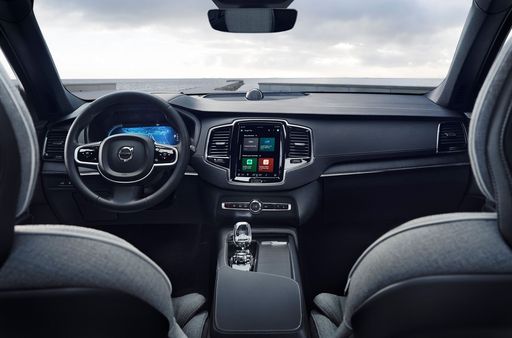
While both vehicles are equipped with essential tech features, the Volvo XC90 truly stands out. It includes advanced safety technologies such as adaptive cruise control, lane-keeping assist, and city safety systems that utilize a sensor-driven approach to prevent collisions. The in-car technology also integrates seamlessly with smartphones, offering a superior user experience.

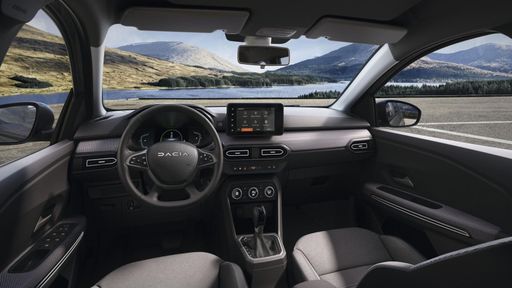
The Dacia Jogger offers a more straightforward tech package aimed at practicality, featuring modern infotainment systems and safety features but lacking some of the premium touches found in the XC90. However, the Jogger’s focus on utility is reflected in its user-friendly setup that appeals to families and everyday users.

Jogger

Conclusion: Choosing Your Champion

In conclusion, the Dacia Jogger and Volvo XC90 serve different purposes but shine in their respective categories. The Jogger excels in affordability, practicality, and fuel efficiency, making it ideal for families. Meanwhile, the XC90 represents the pinnacle of luxury, power, and advanced technology, appealing to those who desire a premium experience.

Your choice will ultimately depend on your needs and lifestyle: Do you prefer the versatility and economy of an MPV, or are you drawn to the luxury and performance of an SUV? Either way, both vehicles have their unique strengths that cater to distinct driving preferences.

Here’s where it gets real: The technical differences in detail

XC90

Costs and Efficiency:

When it comes to price and running costs, the biggest differences usually appear. This is often where you see which car fits your budget better in the long run.

Dacia Jogger is considerably cheaper – starting at 15,400 £ , while the Volvo XC90 costs 74,300 £ . That’s a price difference of around 58,885 £.

Fuel consumption also shows a difference: the Volvo XC90 uses 3.4 L/100km and is markedly more efficient than the Dacia Jogger with 4.5 L/100km. The difference is about 1.1 L/100km.

Jogger

Engine and Performance:

Power, torque and acceleration say a lot about how a car feels on the road. This is where you see which model delivers more driving dynamics.

When it comes to engine power, the Volvo XC90 offers substantially more power – delivering 406 HP compared to 158 HP. That’s roughly 248 HP more horsepower.

When accelerating from 0 to 100 km/h, the Volvo XC90 is considerably quicker – completing the sprint in 5.4 s, while the Dacia Jogger takes 8.9 s. That’s about 3.5 s quicker.

There’s also a difference in torque: the Volvo XC90 delivers considerably more torque with 669 Nm compared to 200 Nm. That’s about 469 Nm more.

XC90

Space and Everyday Use:

Whether family car or daily driver – which one offers more room, flexibility and comfort?

Both vehicles offer seating for 7 people.

In terms of curb weight, Dacia Jogger is considerably lighter – 1,268 kg compared to 2,080 kg. The difference is around 812 kg.

When it comes to payload, the Volvo XC90 carries visibly more – 710 kg compared to 559 kg. That’s a difference of about 151 kg.

Who wins the race in the data check?

The Dacia Jogger is far ahead overall in the objective data comparison.
This result only shows which model scores more points on paper – not which of the two cars feels right for you.

from £15,400
Jogger

Dacia Jogger

  • Engine Type : Petrol, Full Hybrid, LPG
  • Transmission : Manuel, Automatic
  • Drive Type : Front-Wheel Drive
  • Power HP : 110 - 158 HP
  • Consumption L/100km : 4.5 - 7.6 L/100km
Volvo XC90
Dacia Jogger

Costs and Consumption

View detailed analysis

Engine and Performance

View detailed analysis

Dimensions and Body

View detailed analysis

Volvo XC90

The Volvo XC90 is a serene Scandinavian SUV that mixes minimalist luxury with a composed, confidence-inspiring presence — ideal for buyers who want family practicality without sacrificing style. Inside it serves up a calm, well-crafted cabin and user-friendly tech that keeps long journeys pleasant and tantrums to a minimum, making the XC90 a smart, stylish pick for sensible drivers.

details

Dacia Jogger

The Dacia Jogger is a no-nonsense family mover that stretches the idea of value with cavernous practicality and flexible space, perfect for buyers who need a sensible, everyday Swiss Army knife on wheels. It doesn’t try to be glamorous — instead it wins hearts with cheerful thrift, durable materials and honest engineering, giving you useful transport without the pretence.

details
Volvo XC90
Dacia Jogger

Costs and Consumption

Price
74,300 - 84,600 £
Price
15,400 - 23,500 £
Consumption L/100km
3.4 - 8.3 L/100km
Consumption L/100km
4.5 - 7.6 L/100km
Consumption kWh/100km
-
Consumption kWh/100km
-
Electric Range
69 km
Electric Range
-
Battery Capacity
-
Battery Capacity
-
co2
71 - 188 g/km
co2
103 - 138 g/km
Fuel tank capacity
-
Fuel tank capacity
-

Dimensions and Body

Body Type
SUV
Body Type
MPV
Seats
7
Seats
5 - 7
Doors
-
Doors
-
Curb weight
2,080 - 2,350 kg
Curb weight
1,268 - 1,463 kg
Trunk capacity
-
Trunk capacity
160 - 607 L
Length
-
Length
-
Width
1,923 mm
Width
1,784 mm
Height
-
Height
-
Max trunk capacity
-
Max trunk capacity
-
Payload
600 - 710 kg
Payload
384 - 559 kg

Engine and Performance

Engine Type
Petrol MHEV, Plugin Hybrid
Engine Type
Petrol, Full Hybrid, LPG
Transmission
Automatic
Transmission
Manuel, Automatic
Transmission Detail
Automatic Gearbox
Transmission Detail
Manual Gearbox, Automatic Gearbox, Dual-Clutch Automatic
Drive Type
All-Wheel Drive
Drive Type
Front-Wheel Drive
Power HP
250 - 406 HP
Power HP
110 - 158 HP
Acceleration 0-100km/h
5.4 - 7.7 s
Acceleration 0-100km/h
8.9 - 12 s
Max Speed
-
Max Speed
-
Torque
360 - 669 Nm
Torque
190 - 200 Nm
Number of Cylinders
4
Number of Cylinders
3 - 4
Power kW
184 - 299 kW
Power kW
81 - 116 kW
Engine capacity
1,969 cm3
Engine capacity
999 - 1,789 cm3

General

Model Year
2,025 - 2,026
Model Year
2025
CO2 Efficiency Class
G, B
CO2 Efficiency Class
D, E, C
Brand
Volvo
Brand
Dacia
DriveDuel uses data analysis and artificial intelligence to evaluate vehicle data and create content. Content is regularly reviewed and improved. The displayed prices are estimates based on German list prices, adjusted to the respective country’s VAT. Country-specific registration taxes are not included. This information is not legally binding.