VS

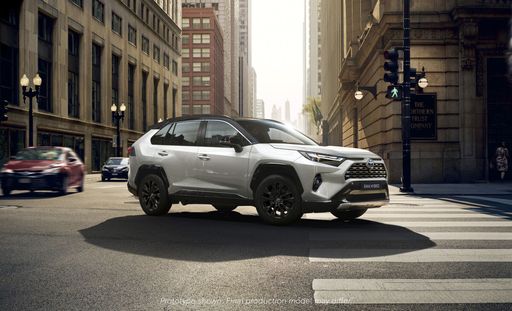
Volvo XC90 vs Toyota RAV4 comparison

Compare performance (406 HP vs 309 HP), boot space and price (74,300 £ vs 37,700 £ ) at a glance. Find out which car is the better choice for you – Volvo XC90 or Toyota RAV4?

Volvo XC90 vs Toyota RAV4: Key differences

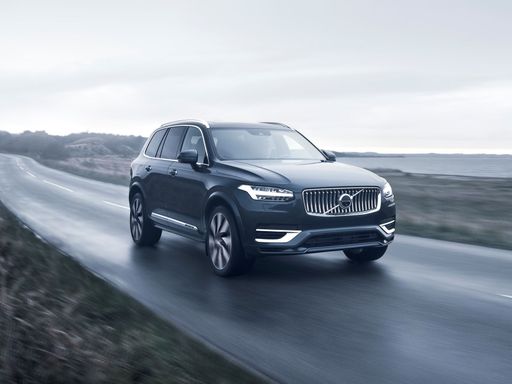
Volvo XC90

5 (3 Reviews)
rate
  • markedly more power
  • very slightly quicker 0–100 km/h
details

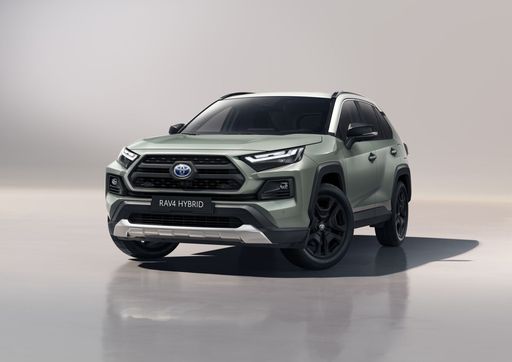
Toyota RAV4

4.7 (12 Reviews)
rate
  • considerably cheaper
  • clearly more efficient
  • significantly more electric range
  • noticeably lighter
details

All details on performance, efficiency, range and trunk space can be found in the technical comparison below – including user reviews for both models.

By Achim Sedelmaier

XC90

Introduction: The Battle of the SUVs

In the ever-evolving world of SUVs, two models stand out: the Toyota RAV4 and the Volvo XC90. Both vehicles offer distinct advantages, catering to different customer preferences and driving needs. This article delves into a detailed comparison of their technical specifications and innovative features to help you decide which SUV suits you best.
RAV4

Design and Dimensions

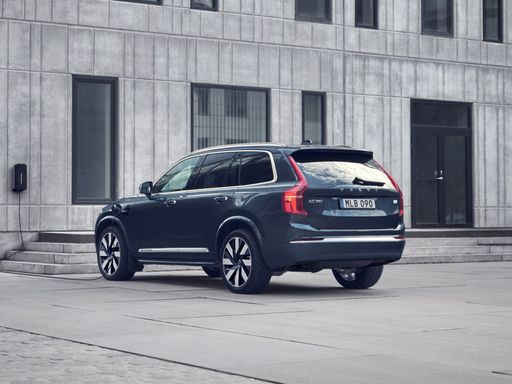
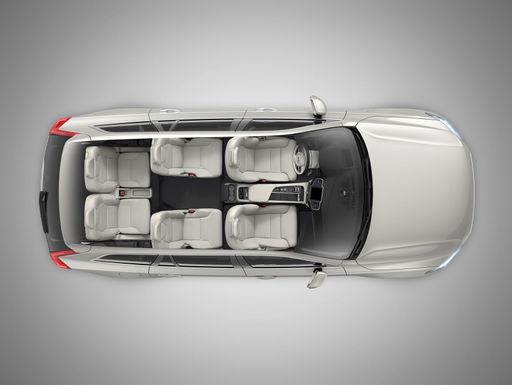
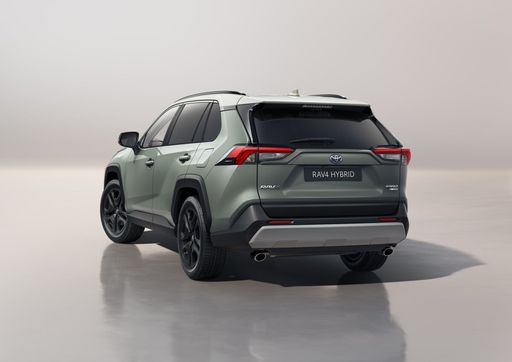
The design of an SUV plays a vital role in its appeal, and both the RAV4 and XC90 have made strong statements in this regard. The RAV4 measures 4600 mm in length, 1855 mm in width, and 1685 mm in height. On the other hand, the XC90 is significantly larger, with a length of 4953 mm, a width of 1923 mm, and a height of 1771 mm. This size difference translates into a more spacious interior in the XC90, which can comfortably accommodate seven passengers compared to the RAV4's five-seat configuration.

XC90

Powertrain and Performance

The Toyota RAV4 offers a variety of engine options, including full hybrid and plug-in hybrid versions. Its power output ranges from 218 to 306 HP, depending on the variant, with a fuel consumption rate as low as 5.6 L/100 km. Acceleration from 0 to 100 km/h ranges from 6 to 8.4 seconds, making it both efficient and peppy for city driving.

In contrast, the Volvo XC90 presents a different approach with its petrol mild-hybrid and plug-in hybrid powertrains. Its power output peaks at an impressive 455 HP, and while its fuel consumption hits about 8.5 L/100 km, it compensates with a swift acceleration of just 5.4 seconds from 0 to 100 km/h in its most powerful variant. The XC90 also boasts a robust torque output ranging from 360 Nm to 709 Nm, enhancing its performance.

RAV4

Transmission and Drive Configuration

Both models come equipped with automatic transmissions, yet they differ in their configuration. The RAV4 utilizes a Continuously Variable Transmission (CVT), offering smooth gear changes and improving fuel efficiency. Customers can opt for either front-wheel drive or all-wheel drive, enhancing versatility in different driving conditions.

Conversely, the XC90 features an automatic gearbox with an all-wheel drive system, designed to provide superior traction and stability in varied road conditions. This makes the XC90 a more appealing option for those who often drive in challenging terrains.

XC90

Interior Features and Comfort

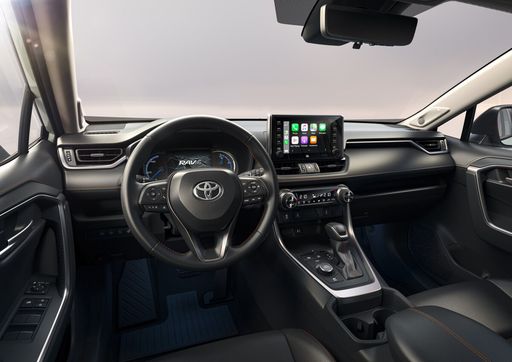
Interior comfort is paramount in any family SUV. The RAV4 features a practical trunk capacity of up to 580 liters, making it ideal for daily errands or road trips. Its flexible seating configuration allows for various setups to maximize cargo space. However, with only five seats, it may not be as accommodating for larger families.

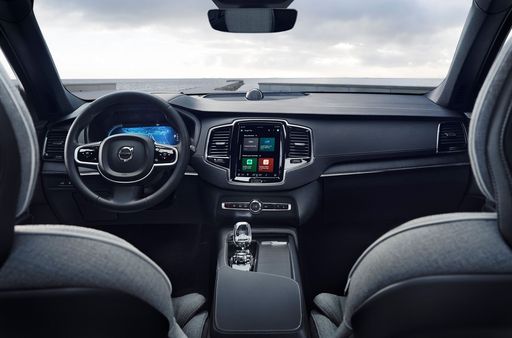
The XC90, with its seven-seat arrangement, sacrifices trunk space, offering up to 302 liters with all seats in use. Still, it compensates with high-quality materials and a luxurious feel. The Volvo's focus on safety and technology offers features that create a serene driving experience, accented by its advanced infotainment system.

RAV4

Fuel Efficiency and Environmental Impact

When it comes to eco-friendliness, the RAV4 excels with a minimum CO2 emission of 126 g/km, placing it in CO2 efficiency class D to B. Additionally, its hybrid options enhance its environmental credentials.

The XC90, while offering a high-performance hybrid option, has a higher CO2 emission level of 191 g/km in its petrol variant, but stands at a commendable 30 g/km for its plug-in hybrid, sitting in class B. This shows Volvo’s commitment to greener technology, making it an attractive choice for environmentally-conscious consumers.

XC90

Conclusion: Choosing the Right SUV for You

Ultimately, the choice between the Toyota RAV4 and the Volvo XC90 hinges on your specific needs. If you prioritize compactness, efficiency, and affordability, the RAV4 shines as an excellent option. On the other hand, if you seek luxury, advanced safety features, and seating for more, the XC90 is hard to ignore. Both vehicles represent their brands well, showcasing innovation and reliability. Choosing one may ultimately boil down to personal preference and lifestyle requirements.

Here’s where it gets real: The technical differences in detail

XC90

Costs and Efficiency:

When it comes to price and running costs, the biggest differences usually appear. This is often where you see which car fits your budget better in the long run.

Toyota RAV4 is considerably cheaper – starting at 37,700 £ , while the Volvo XC90 costs 74,300 £ . That’s a price difference of around 36,600 £.

Fuel consumption also shows a difference: the Toyota RAV4 uses 1.3 L/100km and is clearly more efficient than the Volvo XC90 with 3.4 L/100km. The difference is about 2.1 L/100km.

As for electric range, the Toyota RAV4 offers significantly more range – reaching up to 137 km, about 68 km more than the Volvo XC90.

RAV4

Engine and Performance:

Under the bonnet, it becomes clear which model is tuned for sportiness and which one takes the lead when you hit the accelerator.

When it comes to engine power, the Volvo XC90 offers markedly more power – delivering 406 HP compared to 309 HP. That’s roughly 97 HP more horsepower.

When accelerating from 0 to 100 km/h, the Volvo XC90 is very slightly quicker – completing the sprint in 5.4 s, while the Toyota RAV4 takes 5.8 s. That’s about 0.4 s quicker.

XC90

Space and Everyday Use:

Whether family car or daily driver – which one offers more room, flexibility and comfort?

Seats: Volvo XC90 offers more seats – 7 vs 5.

In terms of curb weight, Toyota RAV4 is noticeably lighter – 1,655 kg compared to 2,080 kg. The difference is around 425 kg.

When it comes to payload, the Volvo XC90 carries somewhat more – 710 kg compared to 610 kg. That’s a difference of about 100 kg.

Who wins the race in the data check?

The Toyota RAV4 holds a decisive overall lead in the objective data comparison.
This result only shows which model scores more points on paper – not which of the two cars feels right for you.

from £37,700
RAV4

Toyota RAV4

  • Engine Type Full Hybrid, Plugin Hybrid
  • Transmission Automatic
  • Drive Type Front-Wheel Drive, All-Wheel Drive
  • Power HP 185 - 309 HP
  • Consumption L/100km 1.3 - 5.3 L/100km
  • Electric Range 133 - 137 km
Volvo XC90
Toyota RAV4

Costs and Consumption

View detailed analysis

Engine and Performance

View detailed analysis

Dimensions and Body

View detailed analysis

Volvo XC90

The Volvo XC90 is a serene Scandinavian SUV that mixes minimalist luxury with a composed, confidence-inspiring presence — ideal for buyers who want family practicality without sacrificing style. Inside it serves up a calm, well-crafted cabin and user-friendly tech that keeps long journeys pleasant and tantrums to a minimum, making the XC90 a smart, stylish pick for sensible drivers.

details

Toyota RAV4

The Toyota RAV4 is a well-rounded compact SUV that pairs everyday practicality with a comfortable, composed ride and generous cargo space, making it a sensible choice for families and active lifestyles. Its strong reputation for reliability, efficient drivetrains, and straightforward technology gives it wide appeal whether you value economy, comfort, or capability.

details
Volvo XC90
Toyota RAV4

Costs and Consumption

Price
74,300 - 84,600 £
Price
37,700 - 54,200 £
Consumption L/100km
3.4 - 8.3 L/100km
Consumption L/100km
1.3 - 5.3 L/100km
Consumption kWh/100km
-
Consumption kWh/100km
-
Electric Range
69 km
Electric Range
133 - 137 km
Battery Capacity
-
Battery Capacity
-
co2
71 - 188 g/km
co2
30 - 121 g/km
Fuel tank capacity
-
Fuel tank capacity
-

Dimensions and Body

Body Type
SUV
Body Type
SUV
Seats
7
Seats
5
Doors
-
Doors
-
Curb weight
2,080 - 2,350 kg
Curb weight
1,655 - 1,960 kg
Trunk capacity
-
Trunk capacity
446 - 514 L
Length
-
Length
-
Width
1,923 mm
Width
1,880 mm
Height
-
Height
-
Max trunk capacity
-
Max trunk capacity
-
Payload
600 - 710 kg
Payload
515 - 610 kg

Engine and Performance

Engine Type
Petrol MHEV, Plugin Hybrid
Engine Type
Full Hybrid, Plugin Hybrid
Transmission
Automatic
Transmission
Automatic
Transmission Detail
Automatic Gearbox
Transmission Detail
CVT
Drive Type
All-Wheel Drive
Drive Type
Front-Wheel Drive, All-Wheel Drive
Power HP
250 - 406 HP
Power HP
185 - 309 HP
Acceleration 0-100km/h
5.4 - 7.7 s
Acceleration 0-100km/h
5.8 - 8 s
Max Speed
-
Max Speed
-
Torque
360 - 669 Nm
Torque
-
Number of Cylinders
4
Number of Cylinders
4
Power kW
184 - 299 kW
Power kW
136 - 227 kW
Engine capacity
1,969 cm3
Engine capacity
2,487 cm3

General

Model Year
2,025 - 2,026
Model Year
2026
CO2 Efficiency Class
G, B
CO2 Efficiency Class
C, D, B
Brand
Volvo
Brand
Toyota
DriveDuel uses data analysis and artificial intelligence to evaluate vehicle data and create content. Content is regularly reviewed and improved. The displayed prices are estimates based on German list prices, adjusted to the respective country’s VAT. Country-specific registration taxes are not included. This information is not legally binding.