VS

VW ID.4 vs VW ID.3 comparison

Compare performance (299 HP vs 231 HP), boot space and price (34,800 £ vs 29,100 £ ) at a glance. Find out which car is the better choice for you – VW ID.4 or VW ID.3?

VW ID.4 vs VW ID.3: Key differences

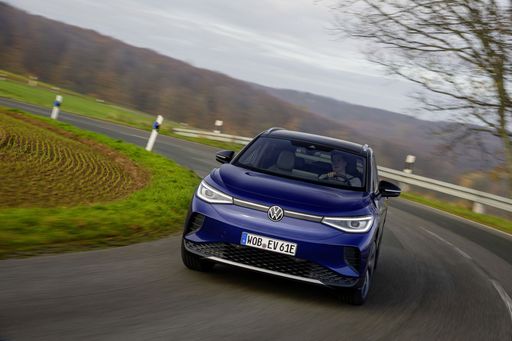
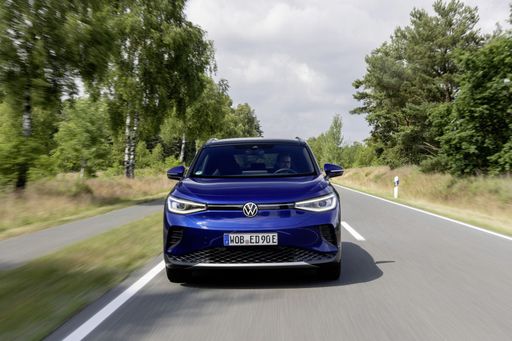
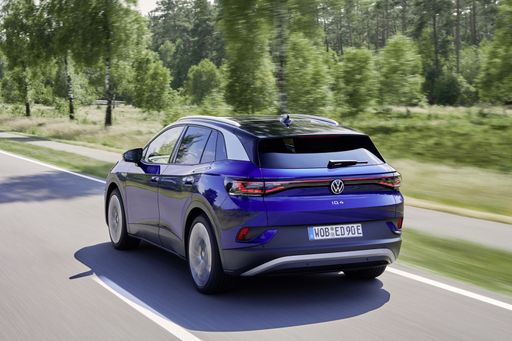
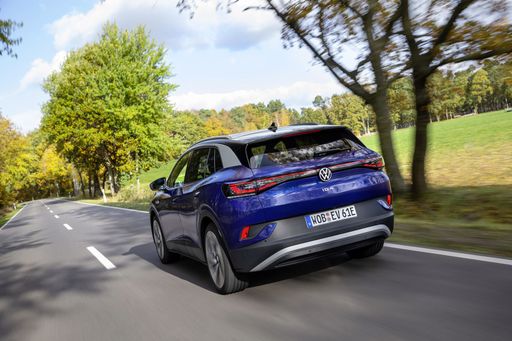
VW ID.4

4.4 (10 Reviews)
rate
  • noticeably more power
  • somewhat quicker 0–100 km/h
details

VW ID.3

4.8 (6 Reviews)
rate
  • somewhat cheaper
  • somewhat more efficient
  • very slightly more electric range
  • very slightly lighter
details

All details on performance, efficiency, range and trunk space can be found in the technical comparison below – including user reviews for both models.

By Achim Sedelmaier

ID.4

VW ID.3 vs VW ID.4: which Volkswagen EV fits your life?

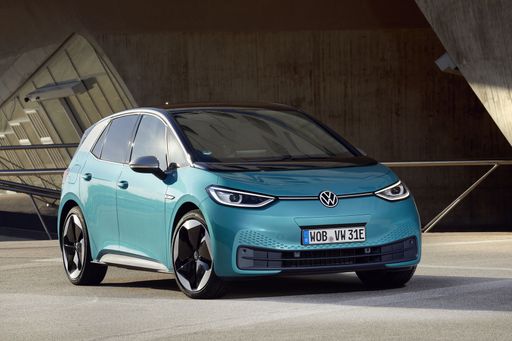
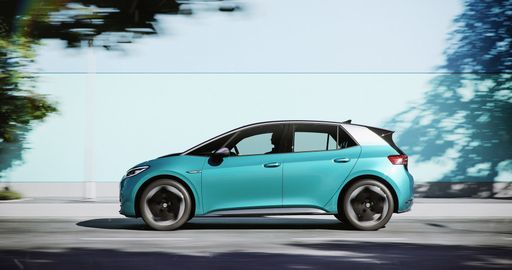
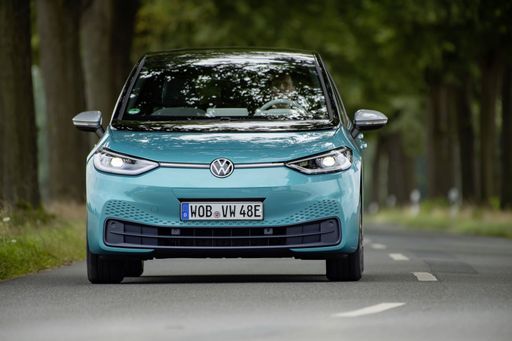
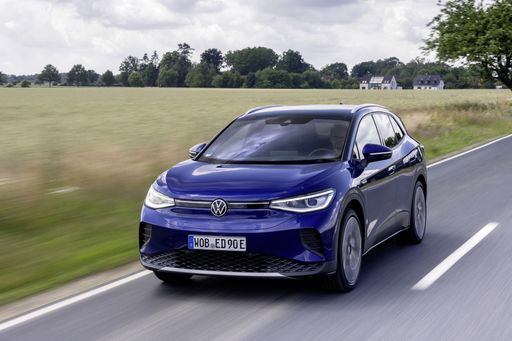
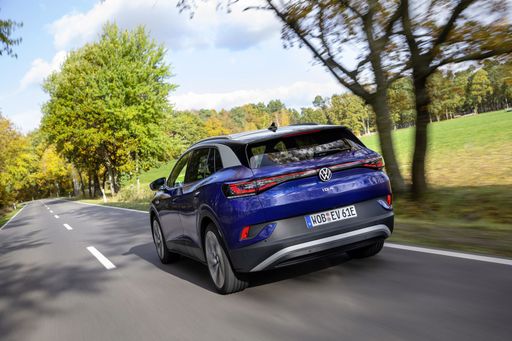
The VW ID.3 and VW ID.4 share a calm, quiet approach to electric driving, but they suit different households. The VW ID.3 plays the compact EV role: easy to place in traffic, efficient to run, and friendlier to tight parking. The VW ID.4 leans into family duties with a higher seating position and far more cargo and rear-seat space. Both have seen useful software and cabin updates, yet their personalities remain clear: city‑savvy hatchback versus roomy electric SUV. Think of this matchup as footprint and price advantage against space and flexibility.
ID.3

Driving character: light-on-its-feet hatchback vs relaxed cruiser

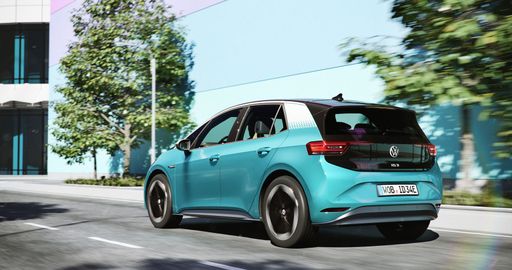
The VW ID.3 feels tidier in town, slipping through gaps and spinning into parking bays with a notably tight turning circle. The VW ID.4 rides with a steadier, more planted gait and a touch more shove when you need to merge or overtake, but you always sense its extra size. Neither chases thrills; both steer lightly and prioritise comfort over feedback, with the ID.3 coming across as the more nimble partner and the ID.4 the calmer, long‑legged one. If your route is full of multi‑storey car parks and narrow streets, the ID.3’s ease takes daily stress off your shoulders. If you value a commanding view and relaxed stability, the ID.4 delivers it with less fuss.

ID.4

Space and practicality: everyday usable vs family-hauling generous

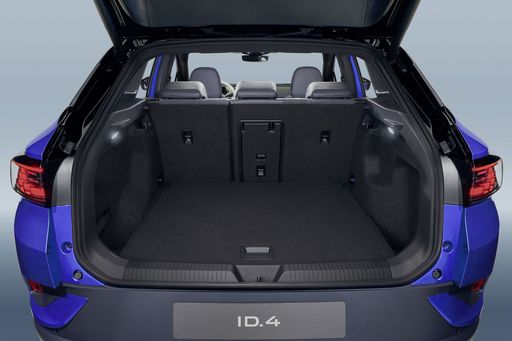
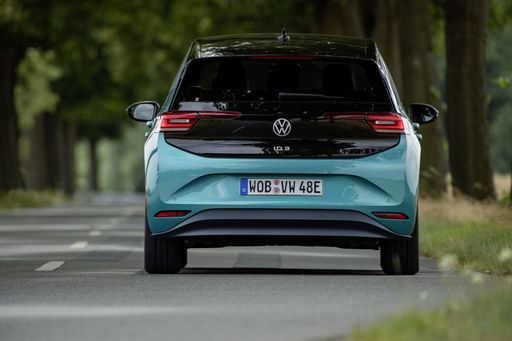
The ID.4’s real trump card is room: adult‑friendly rear seats, wide doors for easy buckling, and a big, square boot that happily swallows pushchairs, sports kits, or a dog crate. The ID.3 uses its compact footprint smartly, with good legroom and a flat rear floor, but its cargo bay asks for more strategic packing on family holidays. Both skip a front trunk, and charging cables live under the rear floor, so quick access is simpler in the SUV’s larger compartment. If you regularly carry bikes, buggies or bulky weekend gear, the ID.4 simply copes with less compromise. If most trips are grocery runs and school drops with the occasional suitcase, the ID.3’s practicality is enough without the bulk.

ID.3

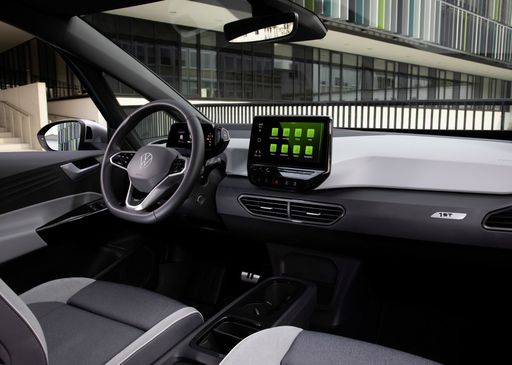
Cabin feel and tech: improved polish meets familiar quirks

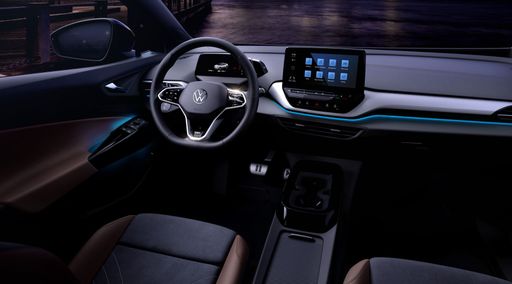
The ID.3’s recent material upgrades lift perceived quality, giving the cabin a cleaner, more solid feel than early cars. The ID.4 counters with a brighter, airier layout and that high, easy‑entry seating, though some glossy plastics still show fingerprints and scuffs. Both now run quicker infotainment with illuminated sliders, but the touch‑first philosophy and menu logic can still frustrate, especially on the move. Driver‑assist features work smoothly and help take the edge off commutes, yet those who crave physical buttons will find more to like elsewhere.

ID.4

Long-distance ease, efficiency and charging rhythm

On the motorway, both Volkswagens are impressively quiet and settled, with the ID.4 feeling particularly unflappable in crosswinds and at a cruise. The ID.3 typically travels a bit farther per kilowatt-hour, stretching stints between stops when you keep speeds sensible. Fast charging is brisk enough in each for effortless road trips, though a few rivals still trim stop times more aggressively. Neither offers true one‑pedal driving, so you’ll blend regen with the brake more than in some competitors. If your priority is covering distance with minimal energy use, the ID.3 has the edge; if you want low‑effort stability with passengers and luggage aboard, the ID.4 suits the brief.

ID.3

Cost, comfort priorities and buyer fit

If you want a compact, efficient everyday EV with a calmer price tag and city‑friendly manners, the VW ID.3 is the smarter fit. If your life revolves around car seats, sports bags and frequent dual‑carriageway journeys, the VW ID.4 earns its keep with space and relaxed pace. Comfort is a shared strength, but they deliver it differently: the ID.3 as a hushed glide in a smaller shell, the ID.4 as a soothing cruiser with family‑first versatility. Use this as your fork in the road, then dive into the detailed breakdown to see how their power, efficiency and usability differences line up with your routine.

Here’s where it gets real: The technical differences in detail

ID.4

Costs and Efficiency:

Looking at overall running costs, both models reveal some interesting differences in everyday economy.

VW ID.3 is somewhat cheaper – starting at 29,100 £ , while the VW ID.4 costs 34,800 £ . That’s a price difference of around 5,644 £.

In terms of energy consumption, the VW ID.3 is somewhat more efficient: consuming 13.9 kWh/100km compared to 15.4 kWh/100km for the VW ID.4. That’s a difference of about 1.5 kWh/100km.

As for electric range, the VW ID.3 offers very slightly more range – reaching up to 629 km, about 59 km more than the VW ID.4.

ID.3

Engine and Performance:

Power, torque and acceleration are the classic benchmarks for car enthusiasts – and here, some clear differences start to show.

When it comes to engine power, the VW ID.4 offers noticeably more power – delivering 299 HP compared to 231 HP. That’s roughly 68 HP more horsepower.

When accelerating from 0 to 100 km/h, the VW ID.4 is somewhat quicker – completing the sprint in 6.1 s, while the VW ID.3 takes 7.1 s. That’s about 1 s quicker.

There’s also a difference in torque: the VW ID.4 delivers visibly more torque with 545 Nm compared to 350 Nm. That’s about 195 Nm more.

ID.4

Space and Everyday Use:

Beyond pure performance, interior space and usability matter most in daily life. This is where you see which car is more practical and versatile.

Both vehicles offer seating for 5 people.

In terms of curb weight, VW ID.3 is very slightly lighter – 1,885 kg compared to 2,065 kg. The difference is around 180 kg.

When it comes to payload, the VW ID.4 carries slightly more – 554 kg compared to 464 kg. That’s a difference of about 90 kg.

Who wins the race in the data check?

The VW ID.4 is far ahead overall in the objective data comparison.
This result only shows which model scores more points on paper – not which of the two cars feels right for you.

from £34,800
ID.4

VW ID.4

  • Engine Type Electric
  • Transmission Automatic
  • Drive Type Rear-Wheel Drive, All-Wheel Drive
  • Power HP 190 - 299 HP
  • Consumption kWh/100km 15.4 - 16.6 kWh/100km
  • Electric Range 425 - 570 km
VW ID.4
VW ID.3

Costs and Consumption

View detailed analysis

Engine and Performance

View detailed analysis

Dimensions and Body

View detailed analysis

VW ID.4

The VW ID.4 is a practical, family-friendly electric SUV that balances everyday usability with a calm, composed driving character. It pairs a roomy, well-finished cabin and easy-to-use tech with predictable handling and convenient charging options, making it a sensible choice for buyers switching to electric.

details

VW ID.3

The VW ID.3 is Volkswagen’s compact electric hatch that prioritizes practical daily usability with a comfortable, modern interior. It delivers a smooth, quiet driving experience and intuitive tech that makes switching to electric straightforward.

details
VW ID.4
VW ID.3

Costs and Consumption

Price
34,800 - 47,600 £
Price
29,100 - 40,800 £
Consumption L/100km
-
Consumption L/100km
-
Consumption kWh/100km
15.4 - 16.6 kWh/100km
Consumption kWh/100km
13.9 - 14.4 kWh/100km
Electric Range
425 - 570 km
Electric Range
410 - 629 km
Battery Capacity
-
Battery Capacity
-
co2
0 g/km
co2
0 g/km
Fuel tank capacity
-
Fuel tank capacity
-

Dimensions and Body

Body Type
SUV
Body Type
Hatchback
Seats
5
Seats
5
Doors
-
Doors
-
Curb weight
2,065 - 2,219 kg
Curb weight
1,885 - 1,966 kg
Trunk capacity
-
Trunk capacity
383 L
Length
-
Length
-
Width
1,852 mm
Width
1,809 mm
Height
-
Height
-
Max trunk capacity
-
Max trunk capacity
-
Payload
525 - 554 kg
Payload
422 - 464 kg

Engine and Performance

Engine Type
Electric
Engine Type
Electric
Transmission
Automatic
Transmission
Automatic
Transmission Detail
Reduction Gearbox
Transmission Detail
Reduction Gearbox
Drive Type
Rear-Wheel Drive, All-Wheel Drive
Drive Type
Rear-Wheel Drive
Power HP
190 - 299 HP
Power HP
170 - 231 HP
Acceleration 0-100km/h
6.1 - 8.5 s
Acceleration 0-100km/h
7.1 - 8 s
Max Speed
-
Max Speed
-
Torque
310 - 545 Nm
Torque
350 Nm
Number of Cylinders
-
Number of Cylinders
-
Power kW
140 - 220 kW
Power kW
125 - 170 kW
Engine capacity
-
Engine capacity
-

General

Model Year
2026
Model Year
2026
CO2 Efficiency Class
A
CO2 Efficiency Class
A
Brand
VW
Brand
VW
DriveDuel uses data analysis and artificial intelligence to evaluate vehicle data and create content. Content is regularly reviewed and improved. The displayed prices are estimates based on German list prices, adjusted to the respective country’s VAT. Country-specific registration taxes are not included. This information is not legally binding.