VS

VW T-Cross vs Skoda Karoq comparison

Compare performance (150 HP vs 190 HP), boot space and price (21,400 £ vs 29,100 £ ) at a glance. Find out which car is the better choice for you – VW T-Cross or Skoda Karoq?

VW T-Cross vs Skoda Karoq: Key differences

VW T-Cross

4.3 (3 Reviews)
rate
  • noticeably cheaper
  • only slightly lighter
details

Skoda Karoq

4.6 (2 Reviews)
rate
  • visibly more power
  • moderately more efficient
  • visibly quicker 0–100 km/h
  • a bit more trunk space
details

All details on performance, efficiency, range and trunk space can be found in the technical comparison below – including user reviews for both models.

By Achim Sedelmaier

T-Cross

Skoda Karoq vs VW T-Cross: A Comprehensive Comparison

In the ever-evolving world of compact SUVs, two contenders have captured the attention of drivers looking for practicality, performance, and style: the Skoda Karoq and the Volkswagen T-Cross. Both vehicles bring a range of advantages and innovations that cater to various preferences and needs. This article dives deep into a comparison of their technical aspects, performance metrics, and overall innovations to help you make an informed decision.
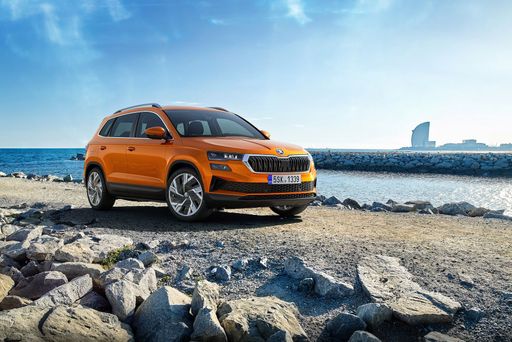
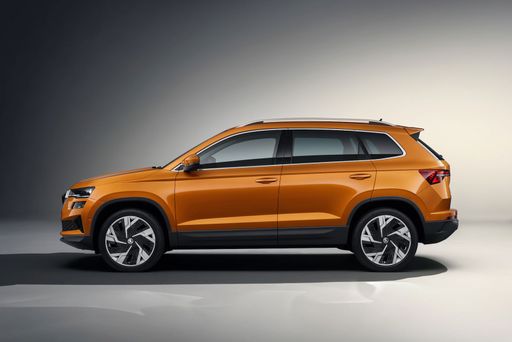
Karoq

Body and Dimensions: Designed for Urban Life

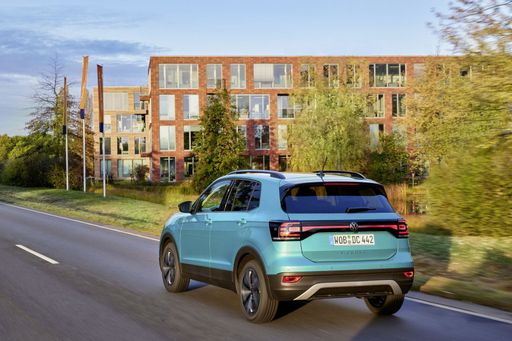
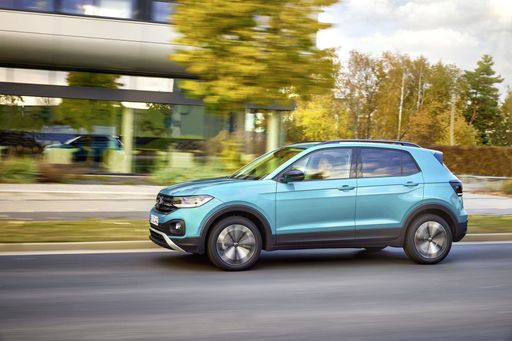
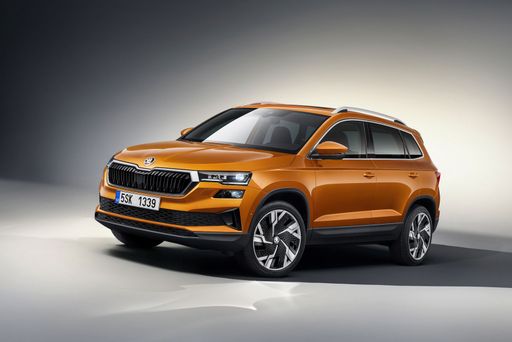
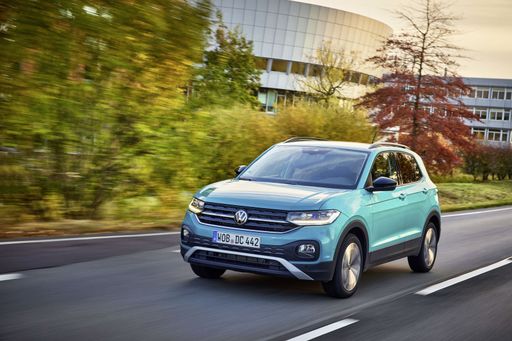
The Skoda Karoq exudes a robust and dynamic SUV design, boasting a length of 4,390 mm and a width of 1,841 mm. It stands tall with varying heights from 1,603 mm to 1,624 mm, depending on the variant. In contrast, the VW T-Cross is slightly more compact at 4,127 mm long and 1,784 mm wide, with a height of 1,573 mm. This makes the T-Cross a bit easier to maneuver in tight urban environments while still providing a spacious interior.

Both models feature a five-door configuration and can comfortably seat five passengers, making them prime candidates for family outings or daily commutes.

T-Cross

Engine Choices: Power and Efficiency

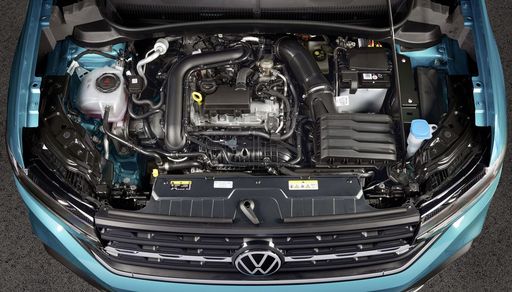
The Skoda Karoq offers an impressive range of engine options, including petrol and diesel variants with power outputs ranging from 115 to a staggering 190 HP. This versatility allows drivers to choose according to their performance needs or fuel economy. The powertrain innovations feature both manual and dual-clutch automatic transmissions. Fuel consumption varies from 4.9 L/100 km to 7.6 L/100 km, providing options for efficiency-focused drivers.

On the other hand, the VW T-Cross is powered solely by petrol engines, delivering outputs from a respectable 95 HP to 150 HP. It also offers manual and automatic transmission choices, with fuel consumption stats ranging from 5.6 L/100 km to 6.0 L/100 km, which remain competitive in the market.

Karoq

Performance Metrics: Acceleration and Handling

When it comes to acceleration, the Skoda Karoq shows impressive figures with a 0-100 km/h time as fast as 7 seconds for its most powerful variant. This performance is reinforced by its all-wheel drive option, providing enhanced traction and responsiveness, especially in challenging driving conditions.

The VW T-Cross, while slightly less powerful, offers a commendable performance with a 0-100 km/h time as low as 8.4 seconds. Although it does not provide an all-wheel-drive variant, its front-wheel-drive system ensures efficiency and lighter handling, making it an ideal choice for city dwellers.

T-Cross

Interior and Space: Comfort Meets Practicality

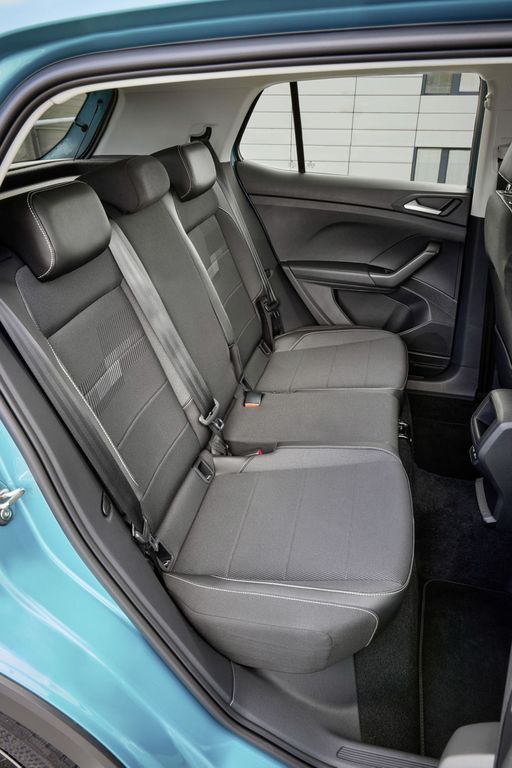
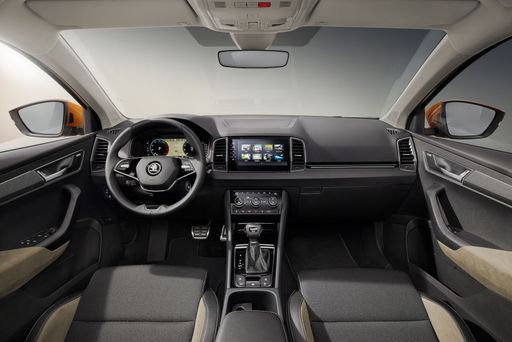
Both vehicles shine when it comes to interior space and comfort. The Skoda Karoq boasts a trunk capacity of 521 liters, allowing for ample storage for luggage or groceries. The interior is adorned with quality materials and a user-friendly infotainment system that enhances the driving experience.

The VW T-Cross, although smaller in trunk capacity at 455 liters, offers a clever use of space and versatility, including its adjustable luggage floor. The T-Cross also matches the Karoq in terms of modern technology and comfort features, ensuring a pleasant ride for both the driver and passengers.

Karoq

Eco-Friendliness: Emissions and Efficiency Classes

In terms of environmental impact, the Skoda Karoq has varying CO2 emissions, ranging from 129 g/km to 174 g/km, depending on the engine variant. With a CO2 efficiency class that includes D and E ratings, it reflects a moderate environmental performance in its class.

The VW T-Cross, with a more focused petrol lineup, has CO2 emissions between 127 g/km and 135 g/km, all categorized under efficiency class D. This slight edge in emissions may appeal to eco-conscious buyers looking for a responsible urban vehicle.

T-Cross

Conclusion: Which SUV Reigns Supreme?

In summary, the choice between the Skoda Karoq and VW T-Cross ultimately hinges on individual preferences and requirements. The Karoq offers a more powerful lineup, diverse engine options, and larger cargo capacity, catering to those who prioritize performance and utility. Meanwhile, the T-Cross appeals to urban drivers seeking efficient operation, compactness, and a smart approach to space.

Both models encapsulate the essence of modern SUVs, combining comfort, advanced technology, and practical design. Whichever you choose, both the Skoda Karoq and VW T-Cross promise to deliver a gratifying driving experience suited for today’s lifestyles.

Here’s where it gets real: The technical differences in detail

T-Cross

Costs and Efficiency:

Price and efficiency are key factors when choosing a car – and this is often where the real differences emerge.

VW T-Cross is noticeably cheaper – starting at 21,400 £ , while the Skoda Karoq costs 29,100 £ . That’s a price difference of around 7,688 £.

Fuel consumption also shows a difference: the Skoda Karoq uses 4.9 L/100km and is moderately more efficient than the VW T-Cross with 5.4 L/100km. The difference is about 0.5 L/100km.

Karoq

Engine and Performance:

Power, torque and acceleration say a lot about how a car feels on the road. This is where you see which model delivers more driving dynamics.

When it comes to engine power, the Skoda Karoq offers visibly more power – delivering 190 HP compared to 150 HP. That’s roughly 40 HP more horsepower.

When accelerating from 0 to 100 km/h, the Skoda Karoq is visibly quicker – completing the sprint in 7 s, while the VW T-Cross takes 8.4 s. That’s about 1.4 s quicker.

There’s also a difference in torque: the Skoda Karoq delivers clearly more torque with 360 Nm compared to 250 Nm. That’s about 110 Nm more.

T-Cross

Space and Everyday Use:

Whether family car or daily driver – which one offers more room, flexibility and comfort?

Both vehicles offer seating for 5 people.

In terms of curb weight, VW T-Cross is only slightly lighter – 1,267 kg compared to 1,380 kg. The difference is around 113 kg.

Looking at boot space, the Skoda Karoq offers a bit more boot space – 521 L compared to 455 L. That’s a difference of about 66 L.

When it comes to payload, the Skoda Karoq carries moderately more – 549 kg compared to 480 kg. That’s a difference of about 69 kg.

Who wins the race in the data check?

The Skoda Karoq stands well ahead of its rival in the objective data comparison.
This result only shows which model scores more points on paper – not which of the two cars feels right for you.

from £29,100
Karoq

Skoda Karoq

  • Engine Type : Petrol, Diesel
  • Transmission : Manuel, Automatic
  • Drive Type : Front-Wheel Drive, All-Wheel Drive
  • Power HP : 115 - 190 HP
  • Consumption L/100km : 4.9 - 7.6 L/100km
VW T-Cross
Skoda Karoq

Costs and Consumption

View detailed analysis

Engine and Performance

View detailed analysis

Dimensions and Body

View detailed analysis

VW T-Cross

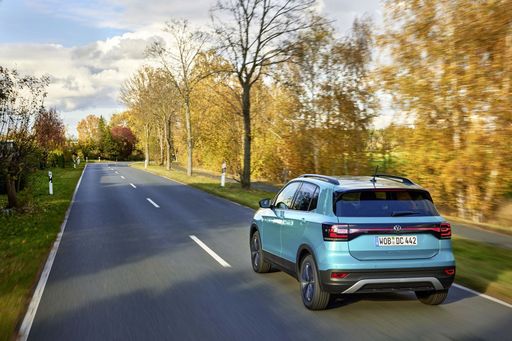
The VW T-Cross turns everyday practicality into a style statement, offering a roomy-feeling cabin, clever storage and playful design that suits town life and family duties alike. On the road it's composed and relaxed, rewarding buyers who want the raised seating and confident presence of an SUV without the weighty compromises.

details

Skoda Karoq

The Skoda Karoq is a smart, unfussy compact SUV that blends roomy practicality with a pleasantly composed driving character. It won’t turn heads at a car meet, but it will make daily life easier with clever storage, sensible ergonomics and a reassuringly grown-up ride.

details
VW T-Cross
Skoda Karoq

Costs and Consumption

Price
21,400 - 32,000 £
Price
29,100 - 41,700 £
Consumption L/100km
5.4 - 6 L/100km
Consumption L/100km
4.9 - 7.6 L/100km
Consumption kWh/100km
-
Consumption kWh/100km
-
Electric Range
-
Electric Range
-
Battery Capacity
-
Battery Capacity
-
co2
124 - 136 g/km
co2
128 - 173 g/km
Fuel tank capacity
-
Fuel tank capacity
50 - 55 L

Dimensions and Body

Body Type
SUV
Body Type
SUV
Seats
5
Seats
5
Doors
-
Doors
5
Curb weight
1,267 - 1,338 kg
Curb weight
1,380 - 1,655 kg
Trunk capacity
455 L
Trunk capacity
521 L
Length
-
Length
4,390 mm
Width
1,784 mm
Width
1,841 mm
Height
-
Height
1,624 mm
Max trunk capacity
-
Max trunk capacity
1,630 L
Payload
463 - 480 kg
Payload
456 - 549 kg

Engine and Performance

Engine Type
Petrol
Engine Type
Petrol, Diesel
Transmission
Manuel, Automatic
Transmission
Manuel, Automatic
Transmission Detail
Manual Gearbox, Dual-Clutch Automatic
Transmission Detail
Manual Gearbox, Dual-Clutch Automatic
Drive Type
Front-Wheel Drive
Drive Type
Front-Wheel Drive, All-Wheel Drive
Power HP
95 - 150 HP
Power HP
115 - 190 HP
Acceleration 0-100km/h
8.4 - 11.3 s
Acceleration 0-100km/h
7 - 11.2 s
Max Speed
-
Max Speed
192 - 210 km/h
Torque
175 - 250 Nm
Torque
200 - 360 Nm
Number of Cylinders
3 - 4
Number of Cylinders
3 - 4
Power kW
70 - 110 kW
Power kW
85 - 140 kW
Engine capacity
999 - 1,498 cm3
Engine capacity
999 - 1,984 cm3

General

Model Year
2,024 - 2,025
Model Year
2025
CO2 Efficiency Class
D, E
CO2 Efficiency Class
D, E, F
Brand
VW
Brand
Skoda
DriveDuel uses data analysis and artificial intelligence to evaluate vehicle data and create content. Content is regularly reviewed and improved. The displayed prices are estimates based on German list prices, adjusted to the respective country’s VAT. Country-specific registration taxes are not included. This information is not legally binding.