VS

VW T-Cross vs Toyota Yaris Cross comparison

Compare performance (150 HP vs 130 HP), boot space and price (21,400 £ vs 23,700 £ ) at a glance. Find out which car is the better choice for you – VW T-Cross or Toyota Yaris Cross?

VW T-Cross vs Toyota Yaris Cross: Key differences

VW T-Cross

4 (5 Reviews)
rate
  • moderately cheaper
  • slightly more power
  • visibly quicker 0–100 km/h
  • a bit more trunk space
details

Toyota Yaris Cross

4.2 (15 Reviews)
rate
  • clearly more efficient
  • very slightly lighter
details

All details on performance, efficiency, range and trunk space can be found in the technical comparison below – including user reviews for both models.

By Achim Sedelmaier

T-Cross

Toyota Yaris Cross vs VW T-Cross: which compact SUV fits your life?

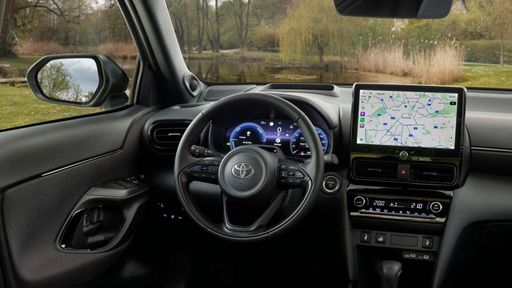
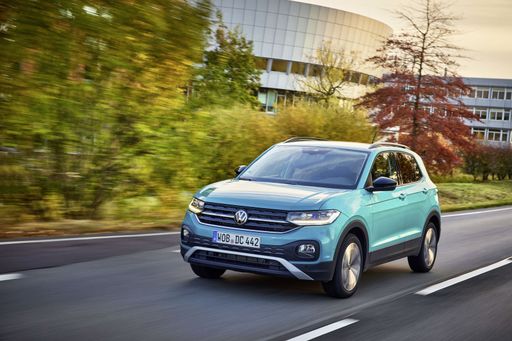
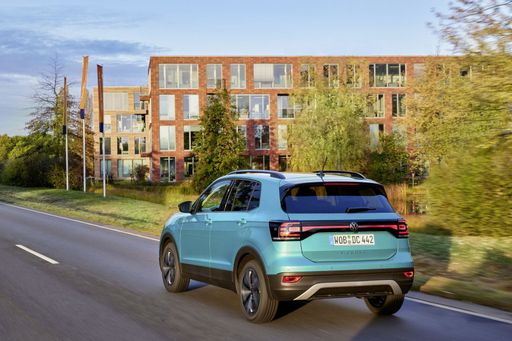
Toyota Yaris Cross VS VW T-Cross is a matchup between two practical small SUVs that take different routes to everyday usefulness. The Toyota Yaris Cross pushes a hybrid-first agenda: effortless city driving, very low running costs and a simple, unpretentious cabin. The VW T‑Cross answers with flexible packaging, a more mature interior feel and a wider spread of petrol powertrains for those who want livelier on‑road performance. In this piece we cut through spec sheets to show how those choices matter in daily life, from parking lot manoeuvres to weekend trips. Read on if you want to know which trade-offs—efficiency versus flexibility, quiet cruising versus usable space—matter most for your routine.
Yaris Cross

Character and driving feel: gentle efficiency or composed confidence?

The Toyota Yaris Cross feels engineered around smooth urban progress: the hybrid system masks clutch and gearbox fuss, delivers frequent electric phases and makes stop‑and‑go commuting pleasantly effortless. The VW T‑Cross, by contrast, drives like a conventional small SUV—more immediate throttle response and a stronger shove when you ask for it, so overtakes feel brisker. Steering in the Yaris Cross tends toward lightness and predictability, which suits city traffic, while the T‑Cross trades a little steering feel for a composed, confidence‑inspiring chassis on faster roads. If you value whispering efficiency and relaxed urban manners the Yaris Cross leans right; if you want a more assertive on‑road presence and quicker pace, the T‑Cross is the clearer character fit.

T-Cross

Comfort and long-distance behavior: subdued economy or adult comfort?

On long trips the two take different approaches: the Toyota Yaris Cross delivers decent front seat comfort but reveals its small‑engine character under sustained load, becoming more audible when you push for overtakes and climbing motorways. The VW T‑Cross generally feels more grown‑up on highways, with supportive seats and an interior that masks refinement issues better, although wind and tyre noise can still appear at higher speeds. Ride quality in the Yaris Cross can feel firmer, especially on larger wheels, while the T‑Cross is tuned toward a steadier, more compliant ride that soaks up distance. For motorway miles and passenger comfort the T‑Cross tends to be the calmer companion; for fuel‑conscious drivers who accept some extra noise, the Yaris Cross rewards with lower running costs.

Yaris Cross

Practicality and family use: clever flexibility versus compact cargo sense

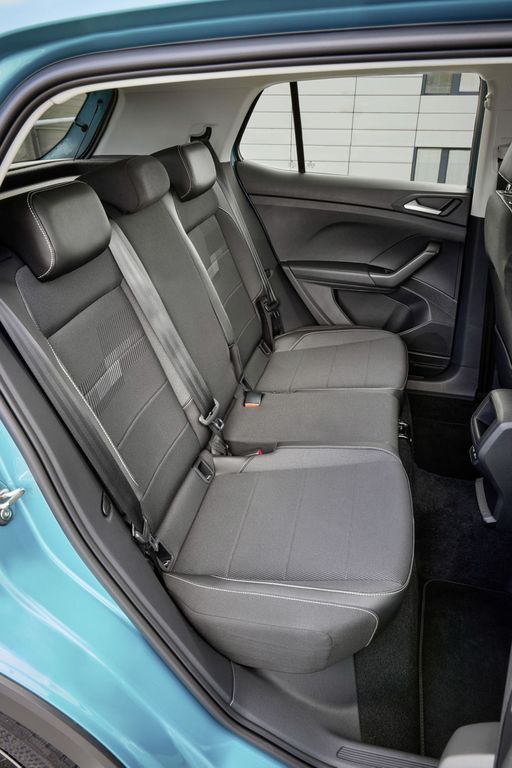
Family life highlights a clear split: the VW T‑Cross gives you a sliding rear bench, easier access and modularity that turns awkward loads into manageable tasks, plus a square, usable boot that suits boxes and buggies. The Toyota Yaris Cross surprises with a very usable luggage area for a compact SUV and a handy variable floor, but its rear legroom is tighter and optional all‑wheel drive eats into cargo space. Both accept child seats and have Isofix anchors, but taller grownups will be more comfortable in the T‑Cross rear seats. Put simply: if you regularly ferry taller passengers or need flexible load layouts, the T‑Cross is the more practical daily partner; if you prize a tidy boot and maximum efficiency in a compact footprint, the Yaris Cross still earns its keep.

T-Cross

City friendliness and usability: hybrid ease versus ergonomic clarity

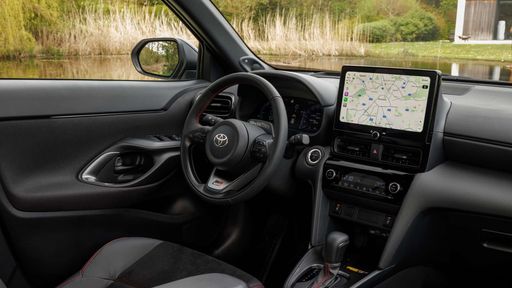
In town the Toyota Yaris Cross feels purpose‑built: the hybrid system and refined auto logic make traffic light cycles almost effortless, parking is simple thanks to compact dimensions, and driver aids reduce stress in dense traffic. The VW T‑Cross is no slouch in the city either—high seating, a small turning circle and intuitive ergonomics make it easy to live with—but lacking a hybrid option it will use more fuel in stop‑start traffic. Interior controls and material quality lean in different directions: the Yaris Cross keeps things straightforward and functional, while the T‑Cross offers a slightly more premium touch at the cost of fiddly touch‑slider controls on some trims. If your daily loop is urban and fuel bills are your top worry, the Yaris Cross is tailored for that rhythm; if you value clearer ergonomics, perceived quality and flexible cabin tricks, the T‑Cross fits better.

Yaris Cross

Buyer fit: who should shortlist which model before the technical deep dive?

Choosing between the Toyota Yaris Cross and the VW T‑Cross comes down to priorities: pick the Yaris Cross if you want the cheapest day‑to‑day running, a relaxed automatic hybrid for city life and a compact SUV that feels simple and reliable. Consider the VW T‑Cross if you need more rear‑seat space, sliding versatility, a more mature interior and stronger on‑road shove when you want it, even at a modest fuel premium. Both suit small families and urban commuters, but the trade‑offs—efficiency and quieter town manners versus cabin flexibility and motorway comfort—are where the decision lands. Below, the technical comparison breaks these everyday differences into concrete figures so you can match them to your real needs.

Here’s where it gets real: The technical differences in detail

T-Cross

Costs and Efficiency:

Price and efficiency are key factors when choosing a car – and this is often where the real differences emerge.

VW T-Cross is moderately cheaper – starting at 21,400 £ , while the Toyota Yaris Cross costs 23,700 £ . That’s a price difference of around 2,297 £.

Fuel consumption also shows a difference: the Toyota Yaris Cross uses 4.5 L/100km and is clearly more efficient than the VW T-Cross with 5.4 L/100km. The difference is about 0.9 L/100km.

Yaris Cross

Engine and Performance:

Power, torque and acceleration are the classic benchmarks for car enthusiasts – and here, some clear differences start to show.

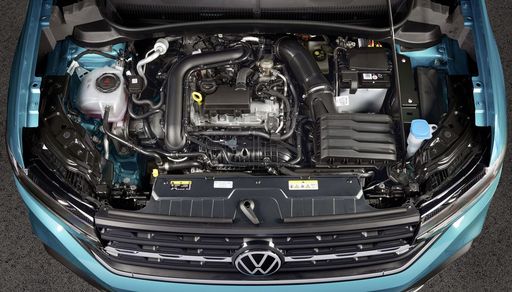
When it comes to engine power, the VW T-Cross offers slightly more power – delivering 150 HP compared to 130 HP. That’s roughly 20 HP more horsepower.

When accelerating from 0 to 100 km/h, the VW T-Cross is visibly quicker – completing the sprint in 8.4 s, while the Toyota Yaris Cross takes 10.7 s. That’s about 2.3 s quicker.

T-Cross

Space and Everyday Use:

Whether family car or daily driver – which one offers more room, flexibility and comfort?

Both vehicles offer seating for 5 people.

In terms of curb weight, Toyota Yaris Cross is very slightly lighter – 1,180 kg compared to 1,267 kg. The difference is around 87 kg.

Looking at boot space, the VW T-Cross offers a bit more boot space – 455 L compared to 397 L. That’s a difference of about 58 L.

When it comes to payload, the Toyota Yaris Cross carries marginally more – 510 kg compared to 480 kg. That’s a difference of about 30 kg.

Who wins the race in the data check?

The VW T-Cross leads convincingly in the objective data comparison.
This result only shows which model scores more points on paper – not which of the two cars feels right for you.

from £21,400
T-Cross

VW T-Cross

  • Engine Type Petrol
  • Transmission Manuel, Automatic
  • Drive Type Front-Wheel Drive
  • Power HP 95 - 150 HP
  • Consumption L/100km 5.4 - 6 L/100km
VW T-Cross
Toyota Yaris Cross

Costs and Consumption

View detailed analysis

Engine and Performance

View detailed analysis

Dimensions and Body

View detailed analysis

VW T-Cross

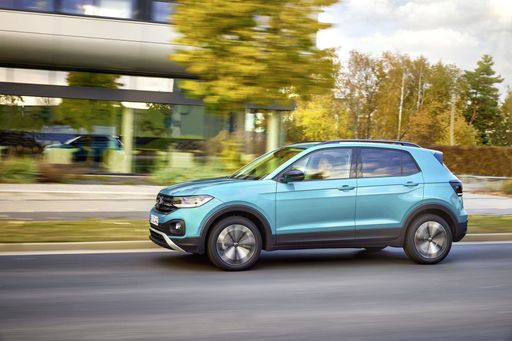
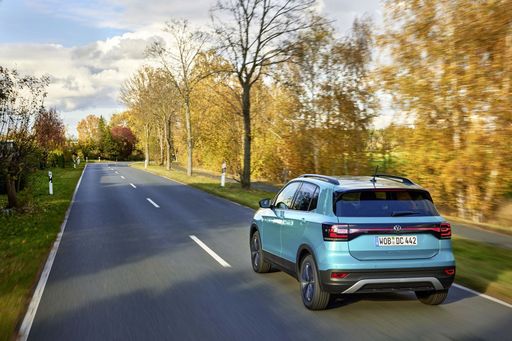
The VW T-Cross is a small, city-friendly crossover that blends practical packaging with easygoing driving manners and a high seating position for good visibility. It’s a sensible, comfortable choice for buyers who want the convenience and style of an SUV without big compromises.

details

Toyota Yaris Cross

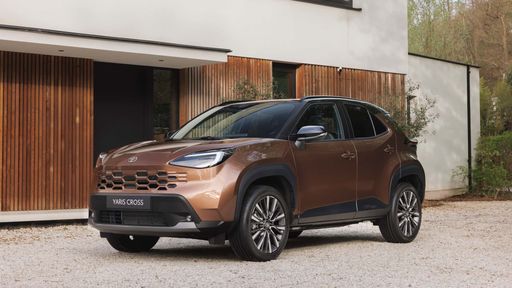
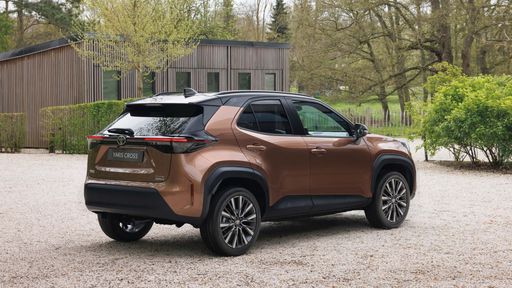
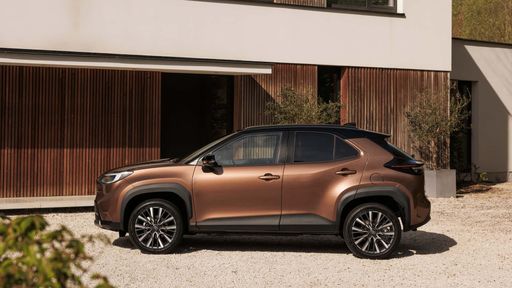
The Toyota Yaris Cross blends the maneuverability of a small hatch with the higher driving position and practicality of a crossover, wrapped in Toyota's dependable build quality. It suits urban buyers who need easy parking, flexible cargo space and a comfortable, economical daily driver.

details
VW T-Cross
Toyota Yaris Cross

Costs and Consumption

Price
21,400 - 32,000 £
Price
23,700 - 34,300 £
Consumption L/100km
5.4 - 6 L/100km
Consumption L/100km
4.5 - 4.8 L/100km
Consumption kWh/100km
-
Consumption kWh/100km
-
Electric Range
-
Electric Range
-
Battery Capacity
-
Battery Capacity
-
co2
124 - 136 g/km
co2
101 - 108 g/km
Fuel tank capacity
-
Fuel tank capacity
-

Dimensions and Body

Body Type
SUV
Body Type
SUV
Seats
5
Seats
5
Doors
-
Doors
-
Curb weight
1,267 - 1,338 kg
Curb weight
1,180 - 1,290 kg
Trunk capacity
455 L
Trunk capacity
320 - 397 L
Length
-
Length
-
Width
1,784 mm
Width
1,765 mm
Height
-
Height
-
Max trunk capacity
-
Max trunk capacity
-
Payload
463 - 480 kg
Payload
485 - 510 kg

Engine and Performance

Engine Type
Petrol
Engine Type
Full Hybrid
Transmission
Manuel, Automatic
Transmission
Automatic
Transmission Detail
Manual Gearbox, Dual-Clutch Automatic
Transmission Detail
CVT
Drive Type
Front-Wheel Drive
Drive Type
Front-Wheel Drive, All-Wheel Drive
Power HP
95 - 150 HP
Power HP
116 - 130 HP
Acceleration 0-100km/h
8.4 - 11.3 s
Acceleration 0-100km/h
10.7 - 11.3 s
Max Speed
-
Max Speed
-
Torque
175 - 250 Nm
Torque
-
Number of Cylinders
3 - 4
Number of Cylinders
3
Power kW
70 - 110 kW
Power kW
85 - 96 kW
Engine capacity
999 - 1,498 cm3
Engine capacity
1,490 cm3

General

Model Year
2,024 - 2,025
Model Year
2026
CO2 Efficiency Class
D, E
CO2 Efficiency Class
C
Brand
VW
Brand
Toyota
DriveDuel uses data analysis and artificial intelligence to evaluate vehicle data and create content. Content is regularly reviewed and improved. The displayed prices are estimates based on German list prices, adjusted to the respective country’s VAT. Country-specific registration taxes are not included. This information is not legally binding.