VS

VW T-Roc vs Dacia Sandero comparison

Compare performance (150 HP vs 122 HP), boot space and price (26,400 £ vs 11,000 £ ) at a glance. Find out which car is the better choice for you – VW T-Roc or Dacia Sandero?

VW T-Roc vs Dacia Sandero: Key differences

VW T-Roc

4.7 (4 Reviews)
rate
  • moderately more power
  • very slightly quicker 0–100 km/h

Dacia Sandero

3.5 (3 Reviews)
rate
  • significantly cheaper
  • very slightly more efficient
  • clearly lighter
  • visibly more trunk space

All details on performance, efficiency, range and trunk space can be found in the technical comparison below – including user reviews for both models.

T-Roc

Dacia Sandero vs. VW T-Roc: A Clash of Classes

The automotive world is often defined by stark contrasts, none more evident than in the match-up between the Dacia Sandero and the VW T-Roc. These models, a hatchback and an SUV respectively, epitomize varied driving experiences, technical specifications, and market niches. Let's delve into their distinctive attributes to offer insight into these automotive contenders.
Sandero

Technical Specifications: Under the Hood

The Dacia Sandero for 2024 comes with a resilient 1.0-liter engine, boasting power outputs ranging from 67 to 110 HP (49 to 81 kW). Drivers can choose between petrol and LPG, with transmission options that include a manual gearbox or a CVT. Meanwhile, the VW T-Roc presents a broader spectrum of engine choices. Ranging from a modest 115 HP (85 kW) to a brawny 300 HP (221 kW), the T-Roc is also available with both manual and dual-clutch automatic transmissions, and in petrol or diesel variants.

Both models prioritize efficiency, with the Sandero’s fuel consumption starting at 5.2 L/100km, aligning closely with T-Roc's starting point of 4.7 L/100km for its diesel versions. Each vehicle, however, exceeds in different areas: while the Sandero is optimized for urban efficiency, the T-Roc includes advanced options like all-wheel drive, designed for versatility and performance in more demanding terrains.

T-Roc

Interior and Comfort

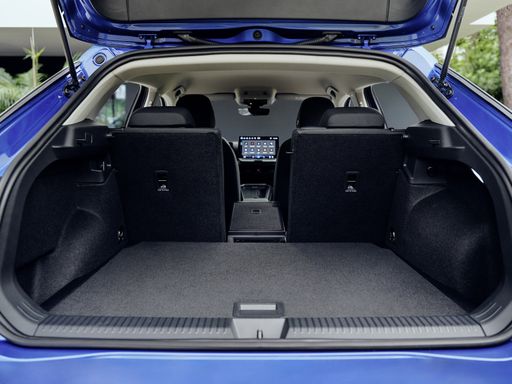
A glance inside reveals both cars seat five comfortably. The Sandero, despite its compact hatchback design, offers a surprisingly roomy trunk with 328 liters of space. Conversely, the T-Roc, true to its SUV roots, provides more cargo options, starting from 284 liters in some configurations up to 445 liters, thanks to its flexible trunk design.

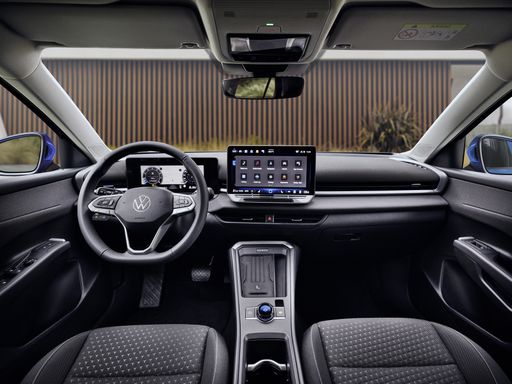
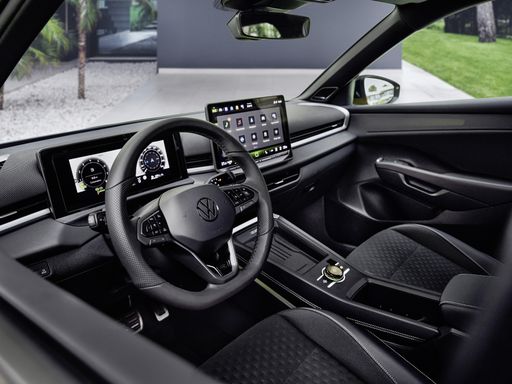
Each vehicle is designed with ergonomics in mind, balancing functionality with aesthetic appeal. The Sandero’s straightforward interior reflects its no-fuss, value-oriented ethos, while the T-Roc’s cabin is a showcase of VW’s commitment to stylish design and modern technology.

Sandero

Performance and Drive

On the road, the Dacia Sandero presents a likable drive, with a top speed of up to 183 km/h and acceleration from 0 to 100 km/h in 10 to 16.7 seconds depending on the engine. It's a car built for practicality and economy, ideal for the budget-conscious consumer.

The VW T-Roc, in contrast, offers a more dynamic ride with its higher-powered engines. With a maximum speed reaching up to 250 km/h and acceleration times as fast as 4.9 seconds from 0 to 100 km/h, the T-Roc appeals to those with a thirst for excitement. Enhanced by VW's known driving technology, it offers superior handling and comfort, even at higher speeds.

T-Roc

CO2 Emissions and Environmental Considerations

Turning to environmental impact, both cars reflect the gradual shift towards greener driving. The Sandero's CO2 emissions range from 105 to 129 g/km, often placing it in the 'C' to 'E' efficiency classes. The T-Roc's CO2 emissions range slightly higher at 125 to 194 g/km, spread across classes 'D' to 'G'. These ratings factor prominently for buyers conscious of their carbon footprint and looking for cost-effective solutions.

Sandero

Conclusion

In the competition between the Dacia Sandero and VW T-Roc, your preference may boil down to what you value most in a car. The Sandero is a testament to affordability and usability, perfect for urban explorers or families on a budget. Meanwhile, the T-Roc, with its diverse engine range and all-terrain capability, beckons to those seeking adventure without compromising on the latest automotive innovations.

Both vehicles showcase impressively distinct advantages, reminding us that diversity in the automotive world ensures that every driver finds their perfect match.

Here’s where it gets real: The technical differences in detail

T-Roc

Costs and Efficiency:

Price and efficiency are often the first things buyers look at. Here it becomes clear which model has the long-term edge – whether at the pump, the plug, or in purchase price.

Dacia Sandero is significantly cheaper – starting at 11,000 £ , while the VW T-Roc costs 26,400 £ . That’s a price difference of around 15,476 £.

Fuel consumption also shows a difference: the Dacia Sandero uses 5.3 L/100km and is very slightly more efficient than the VW T-Roc with 5.5 L/100km. The difference is about 0.2 L/100km.

Sandero

Engine and Performance:

Under the bonnet, it becomes clear which model is tuned for sportiness and which one takes the lead when you hit the accelerator.

When it comes to engine power, the VW T-Roc offers moderately more power – delivering 150 HP compared to 122 HP. That’s roughly 28 HP more horsepower.

When accelerating from 0 to 100 km/h, the VW T-Roc is very slightly quicker – completing the sprint in 8.9 s, while the Dacia Sandero takes 9.7 s. That’s about 0.8 s quicker.

There’s also a difference in torque: the VW T-Roc delivers a bit more torque with 250 Nm compared to 200 Nm. That’s about 50 Nm more.

T-Roc

Space and Everyday Use:

Cabin size, boot volume and payload all play a role in everyday practicality. Here, comfort and flexibility make the difference.

Both vehicles offer seating for 5 people.

In terms of curb weight, Dacia Sandero is clearly lighter – 1,100 kg compared to 1,465 kg. The difference is around 365 kg.

Looking at boot space, the Dacia Sandero offers visibly more boot space – 372 L compared to 284 L. That’s a difference of about 88 L.

When it comes to payload, the VW T-Roc carries somewhat more – 515 kg compared to 436 kg. That’s a difference of about 79 kg.

Who wins the race in the data check?

The Dacia Sandero stands well ahead of its rival in the objective data comparison.
This result only shows which model scores more points on paper – not which of the two cars feels right for you.

from £11,000
Sandero

Dacia Sandero

  • Engine Type : Petrol, LPG
  • Transmission : Manuel, Automatic
  • Drive Type : Front-Wheel Drive
  • Power HP : 67 - 122 HP
  • Consumption L/100km : 5.3 - 7.2 L/100km
VW T-Roc
Dacia Sandero

Costs and Consumption

View detailed analysis

Engine and Performance

View detailed analysis

Dimensions and Body

View detailed analysis

VW T-Roc

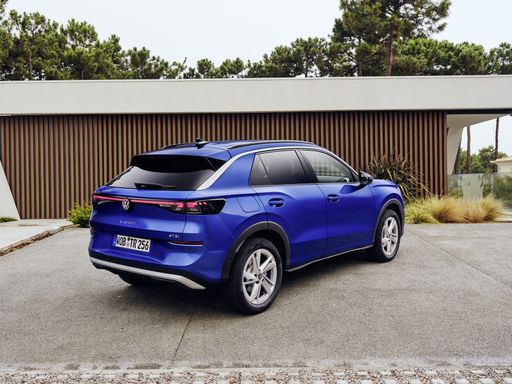
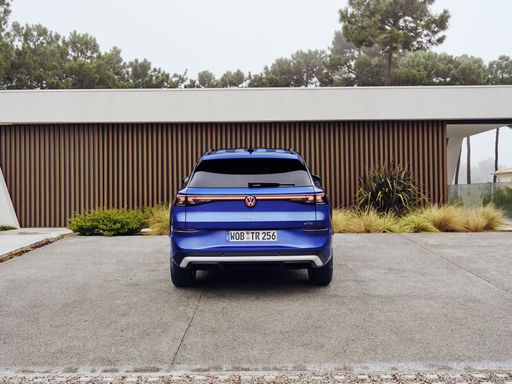
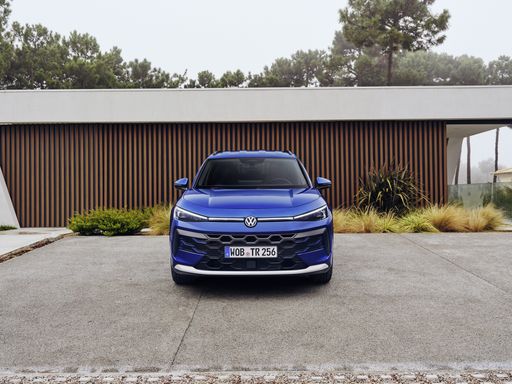
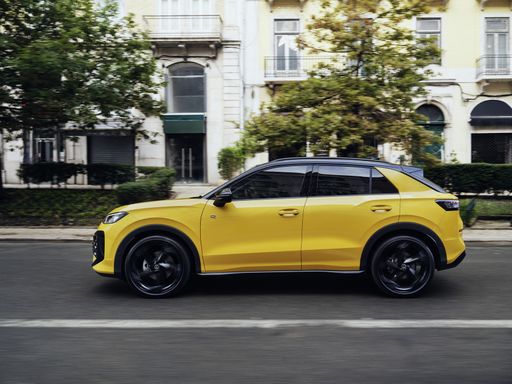
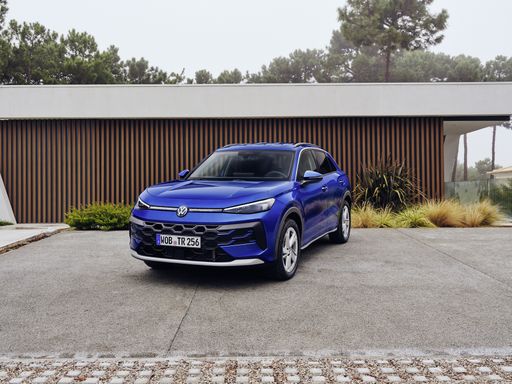
The VW T-Roc mixes cheeky, coupe-like styling with the everyday sense and space of an SUV, so it looks fun without sacrificing family sense. It’s a likeable all-rounder with tidy road manners and plenty of personality, ideal if you want a car that’s practical enough for chores but entertaining enough to enjoy.

details

Dacia Sandero

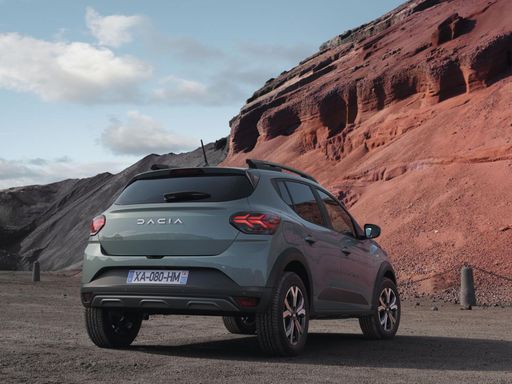
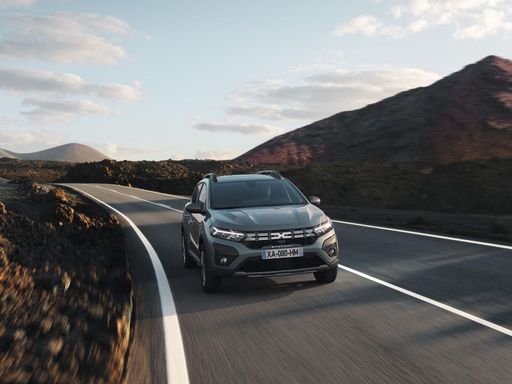
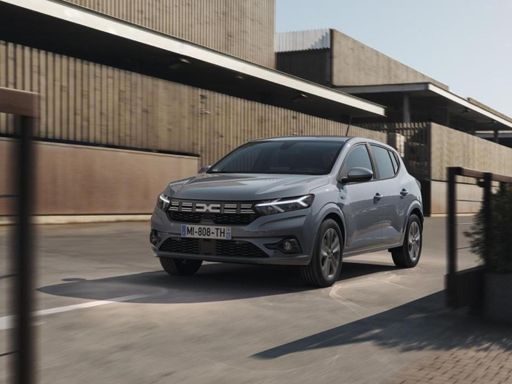
The Dacia Sandero is the everyman's hatchback — unpretentious, practical and brilliantly affordable, with sensible space and straightforward charm where it matters most. It won't wow in the premium lane, but for buyers who want honest, dependable transport without showroom theatrics, the Sandero is a clever, no‑nonsense pick that keeps running costs low and grin levels high.

details
VW T-Roc
Dacia Sandero

Costs and Consumption

Price
26,400 - 38,600 £
Price
11,000 - 16,300 £
Consumption L/100km
5.5 - 6.3 L/100km
Consumption L/100km
5.3 - 7.2 L/100km
Consumption kWh/100km
-
Consumption kWh/100km
-
Electric Range
-
Electric Range
-
Battery Capacity
-
Battery Capacity
-
co2
126 - 143 g/km
co2
111 - 131 g/km
Fuel tank capacity
-
Fuel tank capacity
-

Dimensions and Body

Body Type
SUV
Body Type
Hatchback
Seats
4 - 5
Seats
5
Doors
-
Doors
-
Curb weight
1,465 - 1,539 kg
Curb weight
1,100 - 1,297 kg
Trunk capacity
284 L
Trunk capacity
372 L
Length
-
Length
-
Width
1,811 - 1,828 mm
Width
1,853 mm
Height
-
Height
-
Max trunk capacity
-
Max trunk capacity
-
Payload
368 - 515 kg
Payload
385 - 436 kg

Engine and Performance

Engine Type
Petrol, Petrol MHEV
Engine Type
Petrol, LPG
Transmission
Manuel, Automatic
Transmission
Manuel, Automatic
Transmission Detail
Manual Gearbox, Dual-Clutch Automatic
Transmission Detail
Manual Gearbox, Dual-Clutch Automatic
Drive Type
Front-Wheel Drive
Drive Type
Front-Wheel Drive
Power HP
115 - 150 HP
Power HP
67 - 122 HP
Acceleration 0-100km/h
8.9 - 12.3 s
Acceleration 0-100km/h
9.7 - 16.7 s
Max Speed
-
Max Speed
-
Torque
200 - 250 Nm
Torque
95 - 200 Nm
Number of Cylinders
3 - 4
Number of Cylinders
3
Power kW
85 - 110 kW
Power kW
49 - 90 kW
Engine capacity
999 - 1,498 cm3
Engine capacity
999 - 1,199 cm3

General

Model Year
2,024 - 2,025
Model Year
2,025
CO2 Efficiency Class
E, D
CO2 Efficiency Class
D, C
Brand
VW
Brand
Dacia
DriveDuel uses data analysis and artificial intelligence to evaluate vehicle data and create content. Content is regularly reviewed and improved. The displayed prices are estimates based on German list prices, adjusted to the respective country’s VAT. Country-specific registration taxes are not included. This information is not legally binding.