VS

VW T-Roc vs Ford Kuga comparison

Compare performance (150 HP vs 243 HP), boot space and price (26,400 £ vs 34,200 £ ) at a glance. Find out which car is the better choice for you – VW T-Roc or Ford Kuga?

VW T-Roc vs Ford Kuga: Key differences

VW T-Roc

4.7 (4 Reviews)
rate
  • markedly cheaper
  • barely lighter

Ford Kuga

4.2 (6 Reviews)
rate
  • noticeably more power
  • significantly more efficient
  • noticeably quicker 0–100 km/h

All details on performance, efficiency, range and trunk space can be found in the technical comparison below – including user reviews for both models.

T-Roc

Head-to-head: Ford Kuga VS VW T-Roc — the compact SUV duel

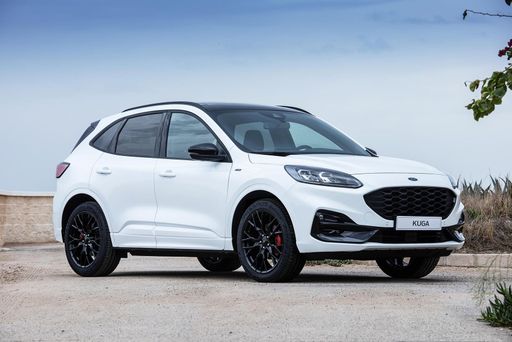
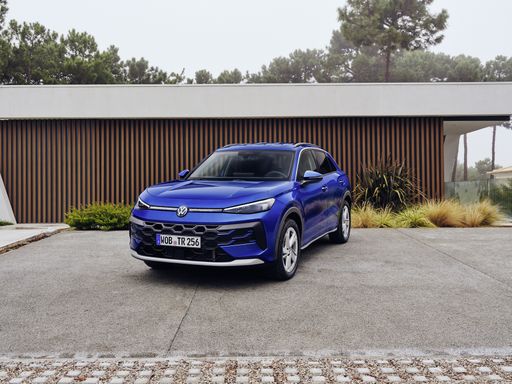
The comparison between the Ford Kuga and the VW T-Roc puts two very different compact SUVs into one frame: one leans toward presence and practicality, the other toward polish and city-friendly charm. Search engines and buyers alike want clarity, so here it is — a direct look at how the Ford Kuga stacks up against the VW T-Roc in everyday life, style and usability. This page sets the scene for people choosing between a more substantial family crossover and a sharper, more urban-oriented compact. Read on if you want to know which of these two SUVs suits your routine, image and garage space without getting lost in spec sheets.
Kuga

Character clash: grown-up gravitas vs cheeky charisma

The Ford Kuga feels like the mature choice — deliberate, composed and geared toward comfort rather than flash — while the VW T-Roc projects a cheeky, youthful energy that’s all about personality and sharp styling. Kuga buyers will notice the sense of mass and refinement when they close the door; T-Roc owners will enjoy the playful cabin accents and exterior lines that stand out in traffic. Where the Ford Kuga aims to reassure you with substance, the VW T-Roc wants to make you smile each time you park it outside a café. Both wear the compact-SUV badge, but they dress it in very different ways.

T-Roc

Daily life: who makes morning routines easier?

For the weekday shuffle and weekend luggage runs the Ford Kuga feels like the practical partner — it’s set up to swallow kit and keep passengers comfortable on longer trips, while the VW T-Roc shines in tighter urban environments where manoeuvrability and easy parking matter. If you’re hauling kids, a pram or a stack of sports gear, the Ford Kuga gives that reassuring “there’s room for everything” vibe, whereas the VW T-Roc rewards you with light-footed steering and a more city-savvy footprint. Both are straightforward to live with, but the balance shifts depending on whether you value space and calm or agility and a livelier drive. Choose the car that best matches where most of your miles are driven — suburb-to-office or city-to-bistro.

Kuga

What it says about you: justification and image

Buying a Ford Kuga broadcasts practicality and quiet competence — you’re after comfort, usability and a sensible presence on the road rather than fashion statements. Choosing a VW T-Roc is more of a style signal: it reads as design-aware, urban and a little more image-conscious without being ostentatious. If you like tech and visual detail that people notice, the VW T-Roc scratches that itch; if you prefer to be comfortable and unbothered by road trips, the Ford Kuga is the one that keeps life simple. Both choices are defensible — they just fit different self-images at the petrol pump and on the driveway.

T-Roc

Who should favour the Ford Kuga

The Ford Kuga suits buyers who prioritise calm, space and a relaxed driving experience above street cred, making it a smart pick for commuters who do steady miles and families that value usability. This is the car for someone who wants fewer compromises on comfort and cargo — the kind of buyer who treats practicality as a feature, not a lesser option. The Ford Kuga doesn’t shout for attention; it quietly gets the job done, which will appeal to buyers who prefer function with a touch of refinement. If you’re the sort who plans routes by convenience and peace of mind, this is where you’ll look first.

Kuga

Who should favour the VW T-Roc (and why the Kuga still matters)

The VW T-Roc is aimed at buyers who want a compact SUV with personality: style-conscious urban drivers, young families who value looks and value, and anyone who prefers nimble city manners to big-boot practicality. It’s the attractive, easy-to-live-with option for those who prize design and a lively driving feel over maximum space, and it rewards owners with a cabin that feels contemporary and social. That said, the Ford Kuga remains a sensible contrast for buyers who need more from their family car, so even if the VW T-Roc tempts you with its charm, give the Ford Kuga a try if luggage space and long-run comfort are on your checklist. Keep reading into the detailed comparison to see how those real-world differences play out in daily use.

Here’s where it gets real: The technical differences in detail

T-Roc

Costs and Efficiency:

Price and efficiency are often the first things buyers look at. Here it becomes clear which model has the long-term edge – whether at the pump, the plug, or in purchase price.

VW T-Roc is markedly cheaper – starting at 26,400 £ , while the Ford Kuga costs 34,200 £ . That’s a price difference of around 7,804 £.

Fuel consumption also shows a difference: the Ford Kuga uses 2.8 L/100km and is significantly more efficient than the VW T-Roc with 5.5 L/100km. The difference is about 2.7 L/100km.

Kuga

Engine and Performance:

Power, torque and acceleration say a lot about how a car feels on the road. This is where you see which model delivers more driving dynamics.

When it comes to engine power, the Ford Kuga offers noticeably more power – delivering 243 HP compared to 150 HP. That’s roughly 93 HP more horsepower.

When accelerating from 0 to 100 km/h, the Ford Kuga is noticeably quicker – completing the sprint in 7.3 s, while the VW T-Roc takes 8.9 s. That’s about 1.6 s quicker.

There’s also a difference in torque: the VW T-Roc delivers marginally more torque with 250 Nm compared to 240 Nm. That’s about 10 Nm more.

T-Roc

Space and Everyday Use:

Cabin size, boot volume and payload all play a role in everyday practicality. Here, comfort and flexibility make the difference.

Both vehicles offer seating for 5 people.

In terms of curb weight, VW T-Roc is barely lighter – 1,465 kg compared to 1,526 kg. The difference is around 61 kg.

When it comes to payload, the Ford Kuga carries barely more – 550 kg compared to 515 kg. That’s a difference of about 35 kg.

Who wins the race in the data check?

The Ford Kuga is decisively ahead in the objective data comparison.
This result only shows which model scores more points on paper – not which of the two cars feels right for you.

from £34,200
Kuga

Ford Kuga

  • Engine Type : Petrol, Full Hybrid, Plugin Hybrid
  • Transmission : Manuel, Automatic
  • Drive Type : Front-Wheel Drive, All-Wheel Drive
  • Power HP : 150 - 243 HP
  • Consumption L/100km : 2.8 - 6.8 L/100km
  • Electric Range : 68 km
VW T-Roc
Ford Kuga

Costs and Consumption

View detailed analysis

Engine and Performance

View detailed analysis

Dimensions and Body

View detailed analysis

VW T-Roc

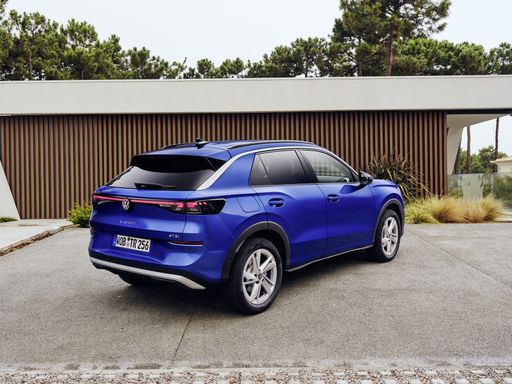
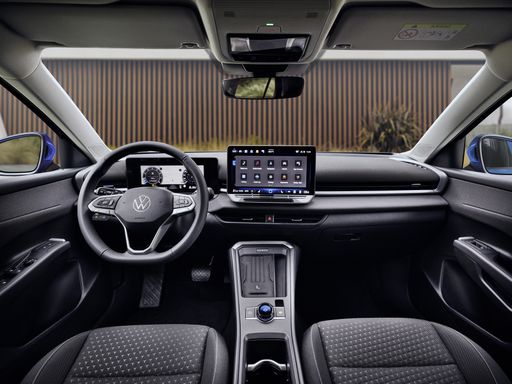
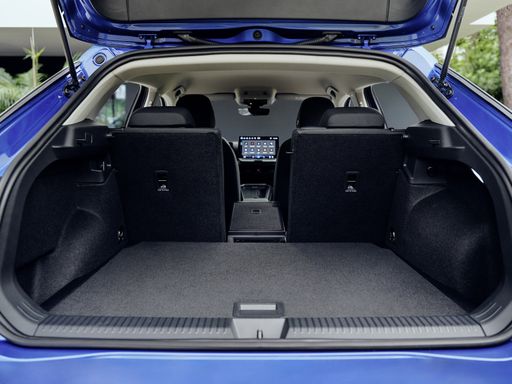
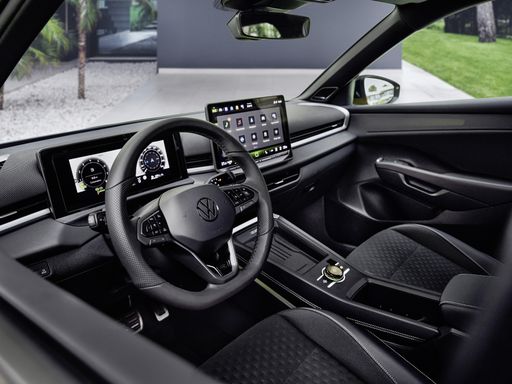
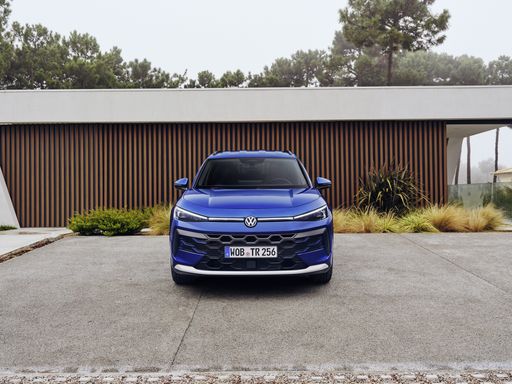
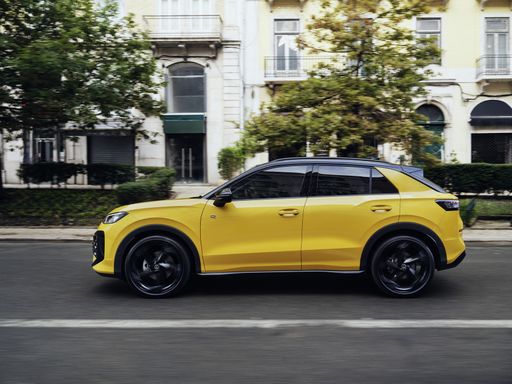
The VW T-Roc mixes cheeky, coupe-like styling with the everyday sense and space of an SUV, so it looks fun without sacrificing family sense. It’s a likeable all-rounder with tidy road manners and plenty of personality, ideal if you want a car that’s practical enough for chores but entertaining enough to enjoy.

details

Ford Kuga

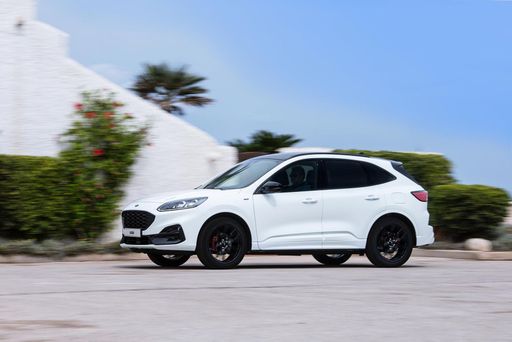
The Kuga is Ford’s adaptable family SUV that blends usable space with a surprisingly lively driving character, making daily commutes and weekend escapes equally enjoyable. With smart interior packaging, an easy-to-use infotainment setup and composed road manners, it’s a sensible choice for buyers who want a bit of fun without the fuss.

details
VW T-Roc
Ford Kuga

Costs and Consumption

Price
26,400 - 38,600 £
Price
34,200 - 46,300 £
Consumption L/100km
5.5 - 6.3 L/100km
Consumption L/100km
2.8 - 6.8 L/100km
Consumption kWh/100km
-
Consumption kWh/100km
-
Electric Range
-
Electric Range
68 km
Battery Capacity
-
Battery Capacity
-
co2
126 - 143 g/km
co2
55 - 154 g/km
Fuel tank capacity
-
Fuel tank capacity
-

Dimensions and Body

Body Type
SUV
Body Type
SUV
Seats
4 - 5
Seats
5
Doors
-
Doors
-
Curb weight
1,465 - 1,539 kg
Curb weight
1,526 - 1,859 kg
Trunk capacity
284 L
Trunk capacity
-
Length
-
Length
-
Width
1,811 - 1,828 mm
Width
1,882 mm
Height
-
Height
-
Max trunk capacity
-
Max trunk capacity
-
Payload
368 - 515 kg
Payload
541 - 550 kg

Engine and Performance

Engine Type
Petrol, Petrol MHEV
Engine Type
Petrol, Full Hybrid, Plugin Hybrid
Transmission
Manuel, Automatic
Transmission
Manuel, Automatic
Transmission Detail
Manual Gearbox, Dual-Clutch Automatic
Transmission Detail
Manual Gearbox, CVT, Automatic Gearbox
Drive Type
Front-Wheel Drive
Drive Type
Front-Wheel Drive, All-Wheel Drive
Power HP
115 - 150 HP
Power HP
150 - 243 HP
Acceleration 0-100km/h
8.9 - 12.3 s
Acceleration 0-100km/h
7.3 - 9.9 s
Max Speed
-
Max Speed
-
Torque
200 - 250 Nm
Torque
240 Nm
Number of Cylinders
3 - 4
Number of Cylinders
3 - 4
Power kW
85 - 110 kW
Power kW
111 - 178 kW
Engine capacity
999 - 1,498 cm3
Engine capacity
1,496 - 2,488 cm3

General

Model Year
2,024 - 2,025
Model Year
2,025
CO2 Efficiency Class
E, D
CO2 Efficiency Class
E, D, B
Brand
VW
Brand
Ford
DriveDuel uses data analysis and artificial intelligence to evaluate vehicle data and create content. Content is regularly reviewed and improved. The displayed prices are estimates based on German list prices, adjusted to the respective country’s VAT. Country-specific registration taxes are not included. This information is not legally binding.