VS

VW T-Roc vs Honda HR-V comparison

Compare performance (150 HP vs 131 HP), boot space and price (26,400 £ vs 29,100 £ ) at a glance. Find out which car is the better choice for you – VW T-Roc or Honda HR-V?

VW T-Roc vs Honda HR-V: Key differences

VW T-Roc

4.8 (6 Reviews)
rate
  • only slightly cheaper
  • slightly more power
  • slightly quicker 0–100 km/h
  • markedly more trunk space
details

Honda HR-V

4.3 (15 Reviews)
rate
  • barely more efficient
  • barely lighter
details

All details on performance, efficiency, range and trunk space can be found in the technical comparison below – including user reviews for both models.

By Achim Sedelmaier

T-Roc

When it comes to compact SUVs, the battle between the Honda HR-V and the VW T-Roc is heating up. Both models offer unique strengths and innovations that cater to different consumer needs. In this comparison, we will delve into their technical specifications, performance, and innovative features to help you decide which is the right fit for you.

HR-V

Powertrains and Performance

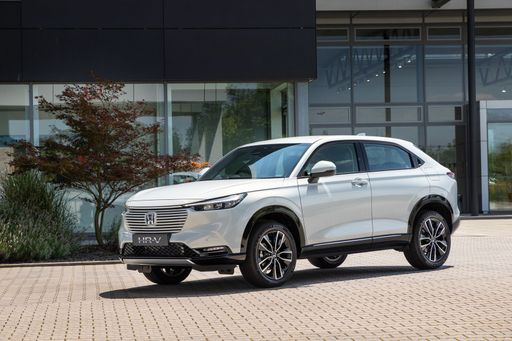
The Honda HR-V, launched in 2022, is powered by a 1.5-liter full hybrid engine that produces an impressive 130 horsepower and 253 Nm of torque. Paired with a continuously variable transmission (CVT) and featuring front-wheel drive, the HR-V delivers a smooth driving experience with a fuel consumption of just 5.4 L/100km. Its acceleration from 0 to 100 km/h can be achieved in 10.7 seconds, making it a practical choice for urban driving.

On the other hand, the VW T-Roc offers a more diverse range of powertrains with both petrol and diesel engines. Depending on the configuration, the T-Roc's horsepower can range from 115 to a staggering 300 HP in the sporty R variant. It provides both manual and dual-clutch automatic transmissions for a more engaging driving experience. With a 0 to 100 km/h acceleration ranging from 4.9 seconds in the R version to 12.3 seconds in the more economical variants, the T-Roc caters to performance enthusiasts and eco-conscious drivers alike.

T-Roc

Dimensions and Interior Space

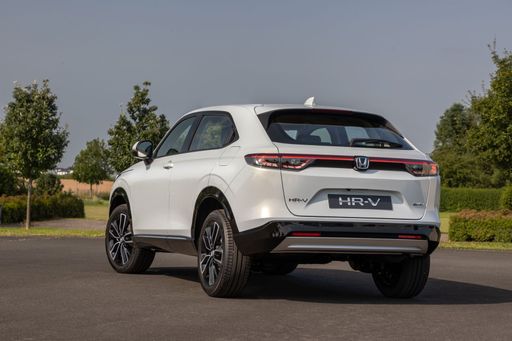
In terms of dimensions, the Honda HR-V measures 4340 mm in length and offers a height of 1582 mm, providing a compact yet spacious interior for its five occupants. Its trunk capacity is laudable at 335 liters, accommodating everyday essentials and luggage with ease.

Conversely, the VW T-Roc’s length varies from 4236 mm to 4271 mm depending on the variant, and its height ranges from 1527 mm to 1584 mm. While it also seats five, the trunk capacity is notably superior, peaking at 445 liters. This variability offers flexibility for users who require more cargo space.

HR-V

Fuel Efficiency and Environmental Impact

Fuel efficiency is a critical factor for many car buyers today. The Honda HR-V stands out with its exceptional efficiency at 5.4 L/100km and relatively low CO2 emissions of 122 g/km, placing it in the CO2 efficiency class D. It utilizes features like regenerative braking and an efficient hybrid engine to minimize its environmental footprint.

In comparison, the VW T-Roc presents a broader spectrum of fuel consumption that varies across its different engine types. The most economical models achieve as low as 4.7 L/100km, while the performance-driven variants might reach up to 8.5 L/100km. Its CO2 emissions range from 125 g/km to 194 g/km, showcasing a mixed efficiency profile that addresses various driving styles and needs.

T-Roc

Innovative Features and Technology

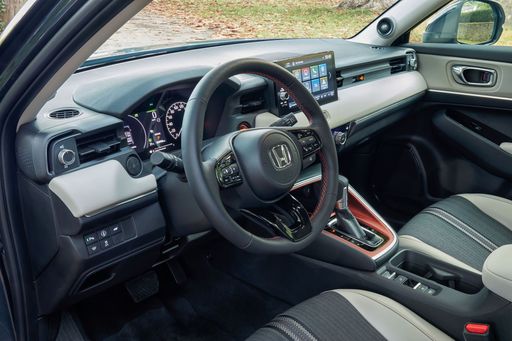
When it comes to technology, both the Honda HR-V and the VW T-Roc are equipped with modern infotainment and safety features. The HR-V features a user-friendly infotainment system with features like Apple CarPlay and Android Auto, enhancing connectivity for tech-savvy drivers.

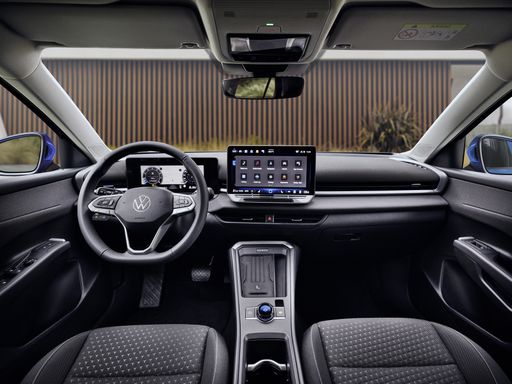
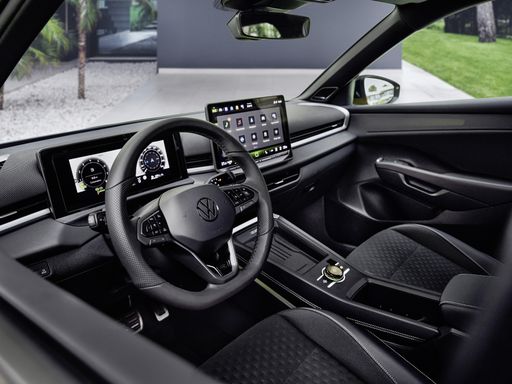
The T-Roc takes a step further, offering advanced driver-assistance systems and an optional Digital Cockpit, which replaces traditional gauges with a customizable 12.3-inch digital display. This feature allows drivers to tailor their driving experience and access vital information at a glance.

HR-V

Conclusion

Ultimately, choosing between the Honda HR-V and the VW T-Roc comes down to personal preference and priorities. The HR-V excels in hybrid efficiency and practical dimensions, while the T-Roc impresses with a wider range of engine options and innovative tech features. Both models hold their ground in the competitive compact SUV market, making them worthy contenders for your next purchase.

Whether you lean towards Honda's reliable efficiency or VW's versatile performance, you cannot go wrong with either of these exceptional vehicles.

Here’s where it gets real: The technical differences in detail

T-Roc

Costs and Efficiency:

Price and efficiency are often the first things buyers look at. Here it becomes clear which model has the long-term edge – whether at the pump, the plug, or in purchase price.

VW T-Roc is only slightly cheaper – starting at 26,400 £ , while the Honda HR-V costs 29,100 £ . That’s a price difference of around 2,619 £.

Fuel consumption also shows a difference: the Honda HR-V uses 5.4 L/100km and is barely more efficient than the VW T-Roc with 5.5 L/100km. The difference is about 0.1 L/100km.

HR-V

Engine and Performance:

Power, torque and acceleration are the classic benchmarks for car enthusiasts – and here, some clear differences start to show.

When it comes to engine power, the VW T-Roc offers slightly more power – delivering 150 HP compared to 131 HP. That’s roughly 19 HP more horsepower.

When accelerating from 0 to 100 km/h, the VW T-Roc is slightly quicker – completing the sprint in 8.9 s, while the Honda HR-V takes 10.6 s. That’s about 1.7 s quicker.

There’s also a difference in torque: the Honda HR-V delivers marginally more torque with 253 Nm compared to 250 Nm. That’s about 3 Nm more.

T-Roc

Space and Everyday Use:

Beyond pure performance, interior space and usability matter most in daily life. This is where you see which car is more practical and versatile.

Both vehicles offer seating for 5 people.

In terms of curb weight, Honda HR-V is barely lighter – 1,452 kg compared to 1,465 kg. The difference is around 13 kg.

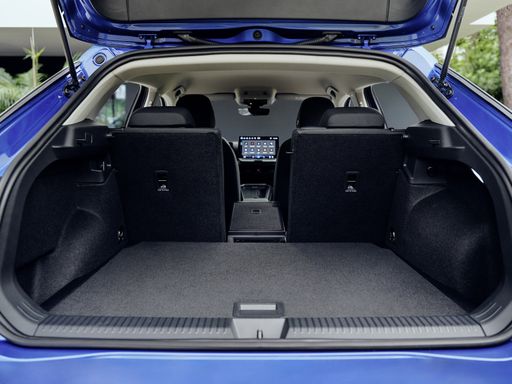
Looking at boot space, the VW T-Roc offers markedly more boot space – 475 L compared to 319 L. That’s a difference of about 156 L.

When it comes to payload, the VW T-Roc carries a bit more – 515 kg compared to 418 kg. That’s a difference of about 97 kg.

Who wins the race in the data check?

The VW T-Roc is far ahead overall in the objective data comparison.
This result only shows which model scores more points on paper – not which of the two cars feels right for you.

from £26,400
T-Roc

VW T-Roc

  • Engine Type Petrol, Petrol MHEV
  • Transmission Manuel, Automatic
  • Drive Type Front-Wheel Drive
  • Power HP 115 - 150 HP
  • Consumption L/100km 5.5 - 6.3 L/100km
VW T-Roc
Honda HR-V

Costs and Consumption

View detailed analysis

Engine and Performance

View detailed analysis

Dimensions and Body

View detailed analysis

VW T-Roc

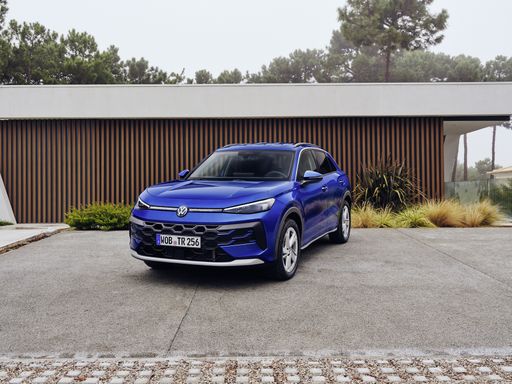
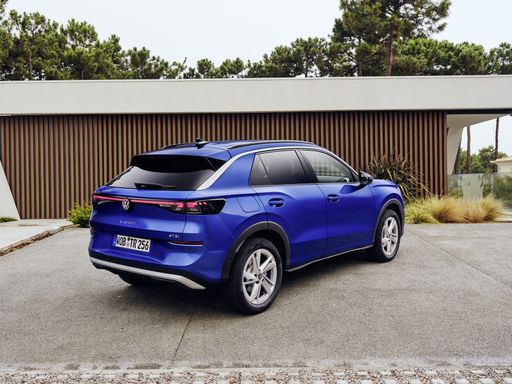
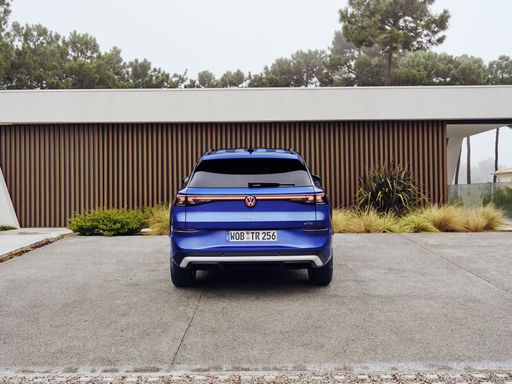
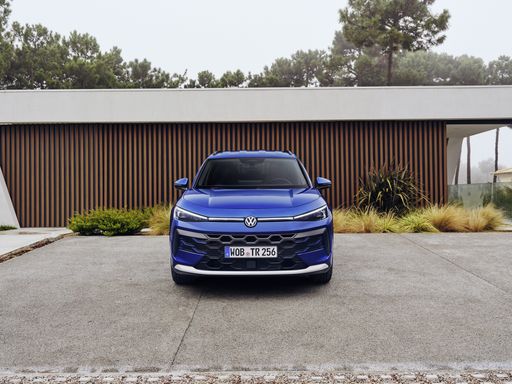
The Volkswagen T‑Roc is a stylish, well-proportioned crossover that blends hatchback agility with SUV presence. It delivers a comfortable cabin, user-friendly tech and a composed ride, making it a sensible choice for buyers who want practicality with a bit of character.

details

Honda HR-V

The Honda HR-V is a compact crossover that blends practical versatility with a comfortable, refined cabin, making it a strong choice for daily driving and weekend trips. Its clever packaging and easy-to-use features give owners flexible cargo space and a confidence-inspiring driving experience without feeling fussy.

details
VW T-Roc
Honda HR-V

Costs and Consumption

Price
26,400 - 38,600 £
Price
29,100 - 34,700 £
Consumption L/100km
5.5 - 6.3 L/100km
Consumption L/100km
5.4 L/100km
Consumption kWh/100km
-
Consumption kWh/100km
-
Electric Range
-
Electric Range
-
Battery Capacity
-
Battery Capacity
-
co2
126 - 143 g/km
co2
122 g/km
Fuel tank capacity
-
Fuel tank capacity
-

Dimensions and Body

Body Type
SUV
Body Type
SUV
Seats
4 - 5
Seats
5
Doors
-
Doors
-
Curb weight
1,465 - 1,539 kg
Curb weight
1,452 kg
Trunk capacity
284 - 475 L
Trunk capacity
319 L
Length
-
Length
-
Width
1,811 - 1,828 mm
Width
1,866 mm
Height
-
Height
-
Max trunk capacity
-
Max trunk capacity
-
Payload
368 - 515 kg
Payload
418 kg

Engine and Performance

Engine Type
Petrol, Petrol MHEV
Engine Type
Full Hybrid
Transmission
Manuel, Automatic
Transmission
Automatic
Transmission Detail
Manual Gearbox, Dual-Clutch Automatic
Transmission Detail
Automatic Gearbox
Drive Type
Front-Wheel Drive
Drive Type
Front-Wheel Drive
Power HP
115 - 150 HP
Power HP
131 HP
Acceleration 0-100km/h
8.9 - 12.3 s
Acceleration 0-100km/h
10.6 - 10.8 s
Max Speed
-
Max Speed
-
Torque
200 - 250 Nm
Torque
253 Nm
Number of Cylinders
3 - 4
Number of Cylinders
4
Power kW
85 - 110 kW
Power kW
96 kW
Engine capacity
999 - 1,498 cm3
Engine capacity
1,498 cm3

General

Model Year
2,024 - 2,025
Model Year
2025
CO2 Efficiency Class
E, D
CO2 Efficiency Class
D
Brand
VW
Brand
Honda
DriveDuel uses data analysis and artificial intelligence to evaluate vehicle data and create content. Content is regularly reviewed and improved. The displayed prices are estimates based on German list prices, adjusted to the respective country’s VAT. Country-specific registration taxes are not included. This information is not legally binding.