VS

VW T-Roc vs Lexus LBX comparison

Compare performance (150 HP vs 136 HP), boot space and price (26,400 £ vs 28,300 £ ) at a glance. Find out which car is the better choice for you – VW T-Roc or Lexus LBX?

VW T-Roc vs Lexus LBX: Key differences

VW T-Roc

4.8 (6 Reviews)
rate
  • marginally cheaper
  • very slightly more power
  • only slightly quicker 0–100 km/h
details

Lexus LBX

5 (2 Reviews)
rate
  • markedly more efficient
  • a bit lighter
details

All details on performance, efficiency, range and trunk space can be found in the technical comparison below – including user reviews for both models.

By Achim Sedelmaier

T-Roc

City Couture vs. Practical Posture

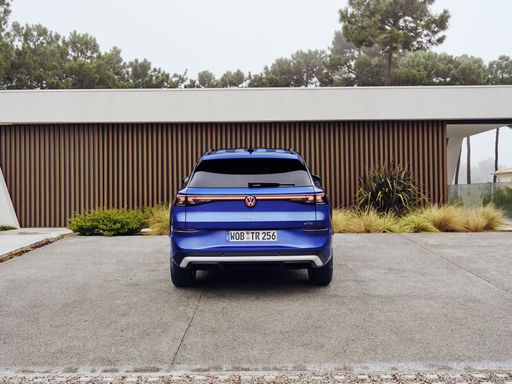
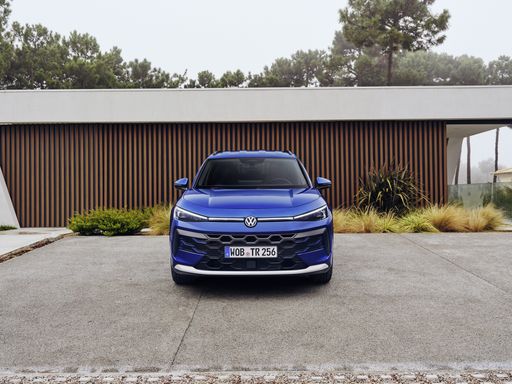
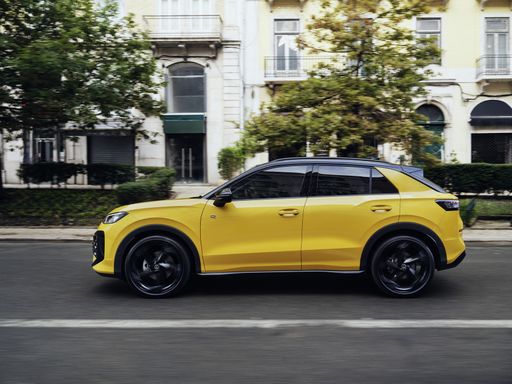
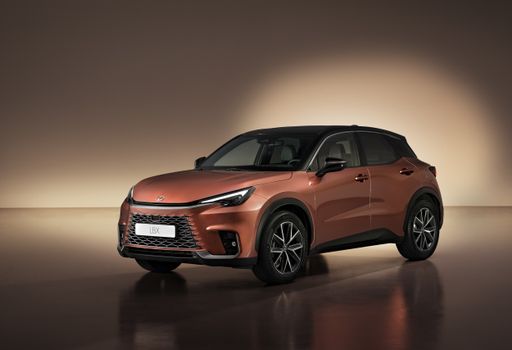
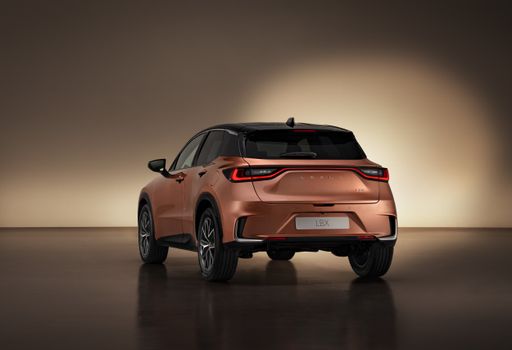
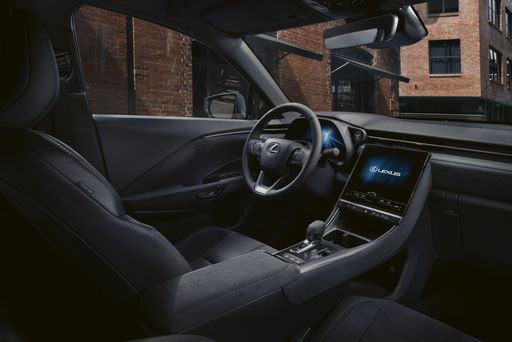
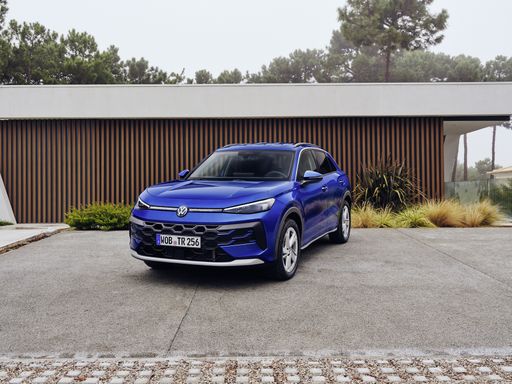
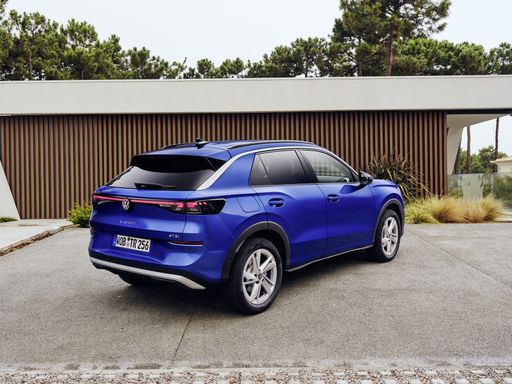
The Lexus LBX arrives like a well-tailored jacket – neat lines, plush finishes and an air of urban exclusivity that draws glances at the lights, while the VW T‑Roc plays a more workaday, confident role with a stance that promises utility over pretension. If you’re buying on style points and interior finesse, the Lexus markets itself as the fashion choice; the T‑Roc makes its case with straightforward, likable design that won’t offend and will adapt. Both have distinct personalities: one leans luxury-minimalism, the other leans robust-common-sense, and your taste in image will steer the decision. Choose whether you want to be admired for refinement or appreciated for no-nonsense practicality.
LBX

Nimble Office Run or Confident Country Road?

Behind the wheel the LBX feels composed and composed again, prioritising smooth responses and a calm cabin that suits tight urban choreography and frequent stop-start traffic, while the VW T‑Roc delivers a more planted, eager character that rewards upfront inputs and feels at home on open roads. The Lexus trades a touch of tautness for serenity, making day-to-day commuting a softer affair, whereas the VW serves drivers who want more communicative steering and a slightly firmer ride. Neither is hardcore sporty, but each provides a distinct emotional note to mundane journeys: one soothes, the other engages. Think about whether you prefer to be cocooned or nudged into involvement on every corner.

T-Roc

Practical Matters: How Much Fits Into Your Life?

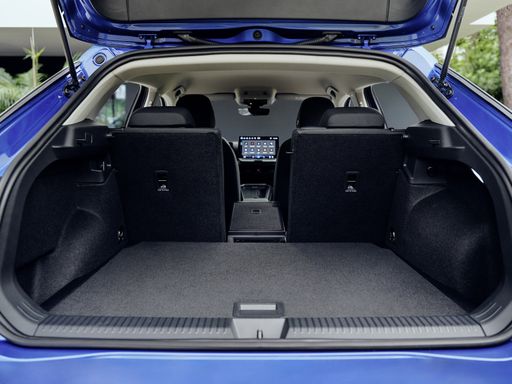
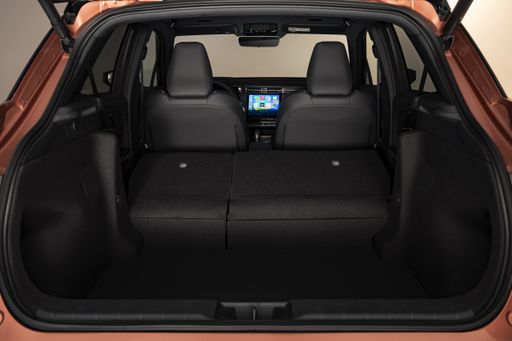
When life gets real — car seats, weekend gear and supermarket runs — the T‑Roc’s pragmatic layout and flexible storage make it simpler to live with if versatility is a top priority, while the LBX focuses on intelligent packaging and easy urban handling that keep daily routines effortless but might ask you to prioritise passengers over cargo. The Lexus scores on clever touches and a feeling of thoughtful ergonomics, but for buyers who frequently haul kit or fit varied family needs, the Volkswagen’s more utilitarian approach will often prove less fussy. Both cabins are designed to be user-friendly, yet they make different compromises between style and capacity. Your lifestyle checklist will quickly reveal which trade-off you can live with day after day.

LBX

Cabin Comfort: Quiet Luxury or Familiar Cosiness?

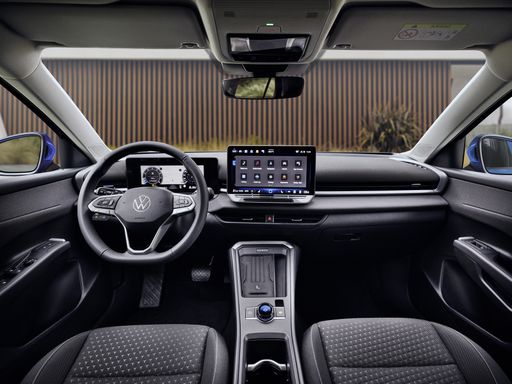
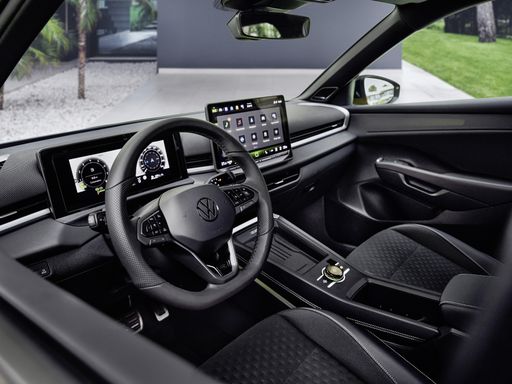
The Lexus cabin leans into premium materials and a tranquillity that masks the city’s chaos, creating an experience that feels distinctly bought-up and considered, whereas the VW T‑Roc relies on solid build quality and ergonomics that are pleasantly familiar and immediately intuitive. Seats, switchgear and finishes in the LBX aim to elevate the mood, while the T‑Roc delivers dependable comfort with slightly greater breadth for multiple occupants. Sound insulation and atmosphere tip toward the Lexus for serene motoring, but the Volkswagen’s interior is honest and purpose-driven, which will suit buyers who prize function as much as feel. Decide whether you want a calm, upscale cocoon or a reliably comfortable cabin that gets the job done.

T-Roc

Daily Usability and Driver Aids

Both cars come bundled with modern convenience and safety features that smooth out repetitive driving chores, yet they take different roads to the same destination: the Lexus integrates tech to preserve a relaxed driving experience and refined control, while the VW T‑Roc emphasises clarity and directness in its driver interface so commuters can quickly adapt. The Lexus may feel more like a pampering assistant, quietly stepping in where needed, whereas the Volkswagen lays out functionality in a straightforward, easily learnt way. For buyers who value minimal fuss and a soothing interface, the LBX has appeal, while those who prefer to remain hands-on with clear, conventional controls will gravitate to the T‑Roc. Your tolerance for tech polish versus pragmatic clarity will determine which cockpit feels more natural.

LBX

Ownership: Everyday Costs, Care and Character

Long-term satisfaction isn’t just about how a car drives on day one but how it behaves across ownership, and the Lexus leans on a reputation for refinement and efficiency that can make daily life feel effortless, while the Volkswagen pitches itself as the sensible choice with straightforward service routines and broad parts availability. Resale perception, dealer experiences and perceived reliability feed into the ownership story: the LBX carries a premium aura that some buyers prize, while the T‑Roc offers an accessible, no-nonsense proposition for those who want simple, predictable running. Consider how much you value that luxury sheen against the peace of mind of conventional, well-understood ownership. That balance often matters more than any single spec sheet bullet point.

T-Roc

Which Suit Are You Wearing Today?

If your driving life is city-shaped, image-conscious and you enjoy a quiet, refined cocoon, the Lexus LBX will speak to your tastes; if you need room to adapt, want a car that feels at home with kit and passengers, or prioritise straightforward usability, the VW T‑Roc makes a persuasive case. Both appeal to sensible buyers, but they target different emotional tones — one leans premium and composed, the other practical and unpretentious. Keep reading to see how these traits add up in our full DriveDuel verdict; the DriveDuel Champion will be revealed afterwards, so stick around to find out which car earns the crown.

Here’s where it gets real: The technical differences in detail

T-Roc

Costs and Efficiency:

Price and efficiency are often the first things buyers look at. Here it becomes clear which model has the long-term edge – whether at the pump, the plug, or in purchase price.

VW T-Roc is marginally cheaper – starting at 26,400 £ , while the Lexus LBX costs 28,300 £ . That’s a price difference of around 1,839 £.

Fuel consumption also shows a difference: the Lexus LBX uses 4.5 L/100km and is markedly more efficient than the VW T-Roc with 5.5 L/100km. The difference is about 1 L/100km.

LBX

Engine and Performance:

Under the bonnet, it becomes clear which model is tuned for sportiness and which one takes the lead when you hit the accelerator.

When it comes to engine power, the VW T-Roc offers very slightly more power – delivering 150 HP compared to 136 HP. That’s roughly 14 HP more horsepower.

When accelerating from 0 to 100 km/h, the VW T-Roc is only slightly quicker – completing the sprint in 8.9 s, while the Lexus LBX takes 9.2 s. That’s about 0.3 s quicker.

There’s also a difference in torque: the VW T-Roc delivers noticeably more torque with 250 Nm compared to 185 Nm. That’s about 65 Nm more.

T-Roc

Space and Everyday Use:

Beyond pure performance, interior space and usability matter most in daily life. This is where you see which car is more practical and versatile.

Both vehicles offer seating for 5 people.

In terms of curb weight, Lexus LBX is a bit lighter – 1,280 kg compared to 1,465 kg. The difference is around 185 kg.

When it comes to payload, the VW T-Roc carries marginally more – 515 kg compared to 475 kg. That’s a difference of about 40 kg.

Who wins the race in the data check?

The VW T-Roc holds a narrow overall lead in the objective data comparison.
This result only shows which model scores more points on paper – not which of the two cars feels right for you.

from £26,400
T-Roc

VW T-Roc

  • Engine Type : Petrol, Petrol MHEV
  • Transmission : Manuel, Automatic
  • Drive Type : Front-Wheel Drive
  • Power HP : 115 - 150 HP
  • Consumption L/100km : 5.5 - 6.3 L/100km
VW T-Roc
Lexus LBX

Costs and Consumption

View detailed analysis

Engine and Performance

View detailed analysis

Dimensions and Body

View detailed analysis

VW T-Roc

The VW T‑Roc feels noticeably more grown‑up than before, with a much nicer cabin, sensible physical controls and a calm, well‑insulated ride that makes long trips comfortable. It’s compact and city‑friendly with practical rear seating, but the sloping roofline reduces rear headroom and tempting options can quickly push the price up, so buyers after maximum space or a sporty feel may want to consider alternatives.

details

Lexus LBX

The Lexus LBX wraps premium touches and a surprisingly spacious cabin into a compact crossover that’s perfectly at home in town or heading out on longer drives. It wears the badge with quiet confidence, serving up a refined ride and clever packaging for buyers who want Lexus polish without shouting for attention.

details
VW T-Roc
Lexus LBX

Costs and Consumption

Price
26,400 - 38,600 £
Price
28,300 - 40,000 £
Consumption L/100km
5.5 - 6.3 L/100km
Consumption L/100km
4.5 - 4.8 L/100km
Consumption kWh/100km
-
Consumption kWh/100km
-
Electric Range
-
Electric Range
-
Battery Capacity
-
Battery Capacity
-
co2
126 - 143 g/km
co2
102 - 110 g/km
Fuel tank capacity
-
Fuel tank capacity
-

Dimensions and Body

Body Type
SUV
Body Type
SUV
Seats
4 - 5
Seats
5
Doors
-
Doors
-
Curb weight
1,465 - 1,539 kg
Curb weight
1,280 - 1,365 kg
Trunk capacity
284 L
Trunk capacity
-
Length
-
Length
-
Width
1,811 - 1,828 mm
Width
1,825 mm
Height
-
Height
-
Max trunk capacity
-
Max trunk capacity
-
Payload
368 - 515 kg
Payload
455 - 475 kg

Engine and Performance

Engine Type
Petrol, Petrol MHEV
Engine Type
Full Hybrid
Transmission
Manuel, Automatic
Transmission
Automatic
Transmission Detail
Manual Gearbox, Dual-Clutch Automatic
Transmission Detail
CVT
Drive Type
Front-Wheel Drive
Drive Type
Front-Wheel Drive, All-Wheel Drive
Power HP
115 - 150 HP
Power HP
136 HP
Acceleration 0-100km/h
8.9 - 12.3 s
Acceleration 0-100km/h
9.2 - 9.6 s
Max Speed
-
Max Speed
-
Torque
200 - 250 Nm
Torque
185 Nm
Number of Cylinders
3 - 4
Number of Cylinders
3
Power kW
85 - 110 kW
Power kW
100 kW
Engine capacity
999 - 1,498 cm3
Engine capacity
1,490 cm3

General

Model Year
2,024 - 2,025
Model Year
2025
CO2 Efficiency Class
E, D
CO2 Efficiency Class
C
Brand
VW
Brand
Lexus
DriveDuel uses data analysis and artificial intelligence to evaluate vehicle data and create content. Content is regularly reviewed and improved. The displayed prices are estimates based on German list prices, adjusted to the respective country’s VAT. Country-specific registration taxes are not included. This information is not legally binding.