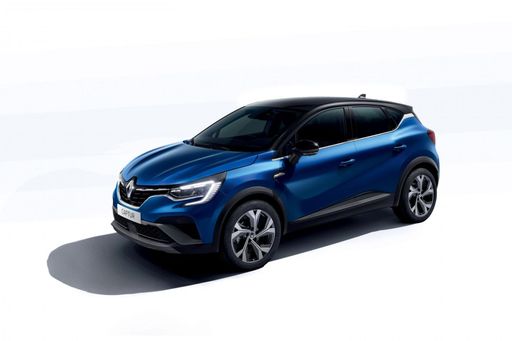
VS

VW T-Roc vs Renault Captur comparison

Compare performance (150 HP vs 158 HP), boot space and price (26,400 £ vs 21,100 £ ) at a glance. Find out which car is the better choice for you – VW T-Roc or Renault Captur?

VW T-Roc vs Renault Captur: Key differences

VW T-Roc

4.7 (4 Reviews)
rate

Renault Captur

4.8 (5 Reviews)
rate
  • clearly cheaper
  • barely more power
  • markedly more efficient
  • a bit lighter
  • clearly more trunk space

All details on performance, efficiency, range and trunk space can be found in the technical comparison below – including user reviews for both models.

T-Roc

Renault Captur vs VW T-Roc: Which Compact SUV Takes the Crown?

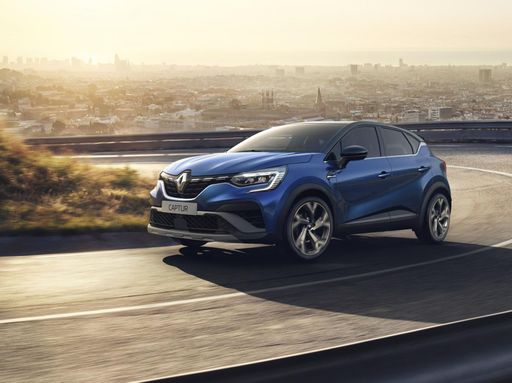
In the competitive world of compact SUVs, the Renault Captur and the VW T-Roc are standout models that promise a blend of performance, innovation, and style. Both offer the versatility and practicality that modern drivers demand, making the choice between them a challenging one. Here, we delve into the technical aspects and unique features of these two automotive titans.
Captur

Power and Performance

The 2024 model of the Renault Captur offers multiple engine types, including full hybrids, petrol mild hybrids, LPG, and pure petrol variants, ensuring a spectrum of options for diverse driving preferences. With power outputs ranging from 91 HP to 158 HP, and torque peaking at 270 Nm, the Captur promises a dynamic driving experience. Acceleration from 0-100 km/h varies from 8.5 seconds for the more powerful engines to 14.3 seconds for its less potent counterparts, with top speeds ranging between 168 km/h and 180 km/h.

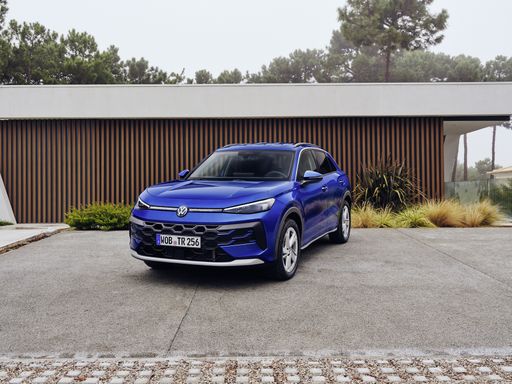
Meanwhile, the VW T-Roc offers both petrol and diesel options with power ranging from 115 HP to an impressive 300 HP. Its top-performing variant reaches 0-100 km/h in just 4.9 seconds, making it a strong contender for those who crave speed. With its maximum speed capping at 250 km/h, the T-Roc stands out in terms of sheer performance, enhanced by torque ratings reaching up to 400 Nm.

T-Roc

Efficiency and Economical Operation

The Renault Captur's hybrid options deliver low fuel consumption figures, with the most efficient recording 4.7 L/100 km and CO2 emissions starting at 106 g/km. This makes the Captur an attractive option for environmentally conscious drivers.

The T-Roc also shines with commendable efficiency, particularly in its diesel variants, achieving fuel consumption as low as 4.7 L/100 km and CO2 emissions from 125 g/km. However, the larger, more potent engines note higher emissions, which prospective buyers may need to consider.

Captur

Comfort and Practicality

Both SUVs offer comfortable seating for five, but the T-Roc edges out in practical space with a trunk capacity reaching up to 445 liters compared to the Captur's 422 liters. The Renault Captur measures 4,239 mm in length and 1,797 mm in width, whereas the T-Roc is slightly longer at 4,271 mm and marginally wider at 1,819 mm, potentially providing a roomier interior.

T-Roc

Innovation and Features

Technological innovation is a priority for both brands. The Captur offers a hybrid powertrain with a dedicated 0.6 kWh battery, promoting electric-assisted driving. Meanwhile, the T-Roc boasts advanced drivetrains with options for all-wheel drive, enhancing its versatility across different terrains. Volkswagen's dual-clutch automatic transmissions enable smoother shifts, accentuating the driving experience.

Captur

The Verdict

Choosing between the Renault Captur and the VW T-Roc depends largely on the buyer's priorities. If efficiency and eco-friendliness are high on your list, the Captur's hybrid options stand out. For those who value performance and dynamic driving, the T-Roc’s higher-powered engines and all-wheel-drive capability offer compelling advantages.

Ultimately, both the Renault Captur and the VW T-Roc showcase superb engineering and innovation, each with its unique strengths. Whether you prioritize spirited driving or reducing your ecological footprint, these compact SUVs deliver in spades, making either a worthwhile investment.

Here’s where it gets real: The technical differences in detail

T-Roc

Costs and Efficiency:

Looking at overall running costs, both models reveal some interesting differences in everyday economy.

Renault Captur is clearly cheaper – starting at 21,100 £ , while the VW T-Roc costs 26,400 £ . That’s a price difference of around 5,310 £.

Fuel consumption also shows a difference: the Renault Captur uses 4.4 L/100km and is markedly more efficient than the VW T-Roc with 5.5 L/100km. The difference is about 1.1 L/100km.

Captur

Engine and Performance:

Power, torque and acceleration say a lot about how a car feels on the road. This is where you see which model delivers more driving dynamics.

When it comes to engine power, the Renault Captur offers barely more power – delivering 158 HP compared to 150 HP. That’s roughly 8 HP more horsepower.

Both models accelerate almost equally fast – 8.9 s from 0 to 100 km/h.

There’s also a difference in torque: the Renault Captur delivers marginally more torque with 265 Nm compared to 250 Nm. That’s about 15 Nm more.

T-Roc

Space and Everyday Use:

Whether family car or daily driver – which one offers more room, flexibility and comfort?

Both vehicles offer seating for 5 people.

In terms of curb weight, Renault Captur is a bit lighter – 1,323 kg compared to 1,465 kg. The difference is around 142 kg.

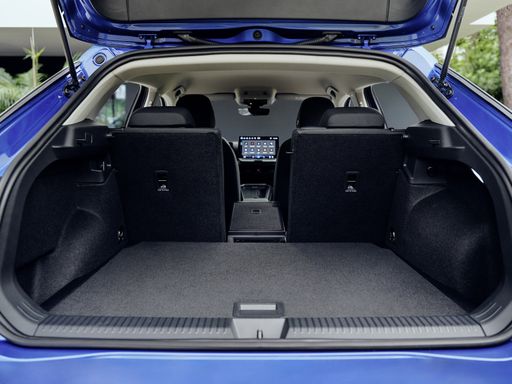
Looking at boot space, the Renault Captur offers clearly more boot space – 422 L compared to 284 L. That’s a difference of about 138 L.

When it comes to payload, the VW T-Roc carries a bit more – 515 kg compared to 453 kg. That’s a difference of about 62 kg.

Who wins the race in the data check?

The Renault Captur holds a decisive overall lead in the objective data comparison.
This result only shows which model scores more points on paper – not which of the two cars feels right for you.

from £21,100
Captur

Renault Captur

  • Engine Type : Full Hybrid, Petrol, Petrol MHEV
  • Transmission : Automatic, Manuel
  • Drive Type : Front-Wheel Drive
  • Power HP : 115 - 158 HP
  • Consumption L/100km : 4.4 - 6 L/100km
VW T-Roc
Renault Captur

Costs and Consumption

View detailed analysis

Engine and Performance

View detailed analysis

Dimensions and Body

View detailed analysis

VW T-Roc

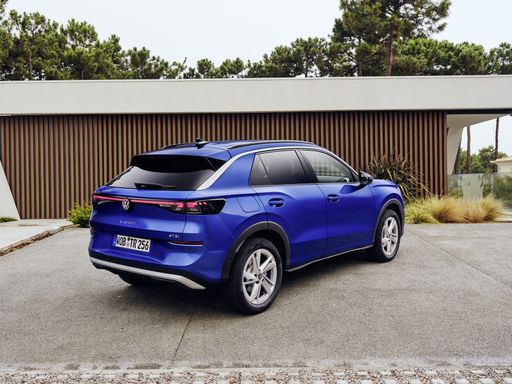
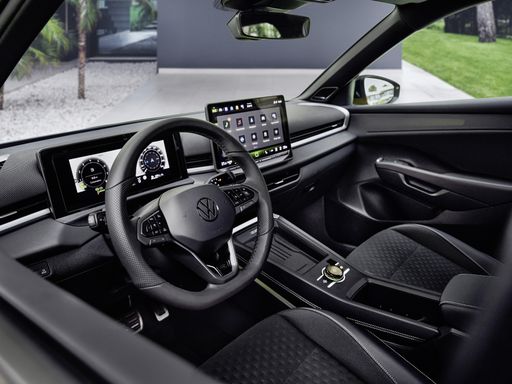
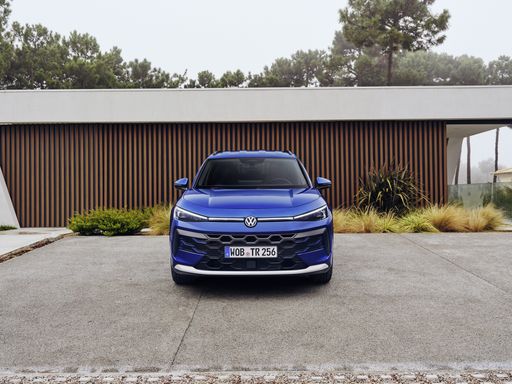
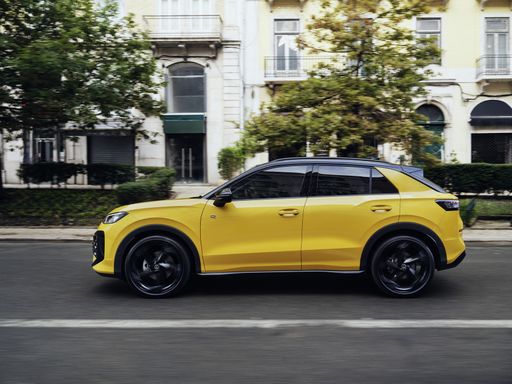
The VW T-Roc mixes cheeky, coupe-like styling with the everyday sense and space of an SUV, so it looks fun without sacrificing family sense. It’s a likeable all-rounder with tidy road manners and plenty of personality, ideal if you want a car that’s practical enough for chores but entertaining enough to enjoy.

details

Renault Captur

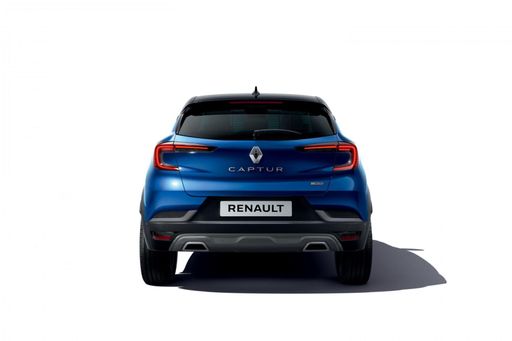
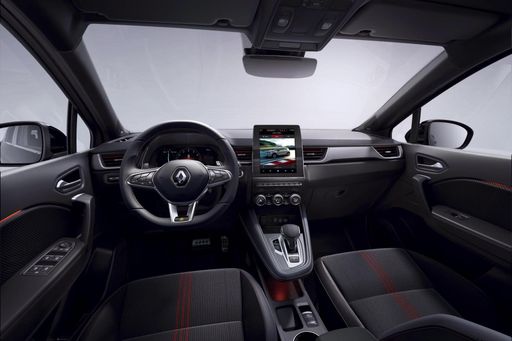
The Renault Captur is a cheeky little crossover that pairs city-friendly agility with a roomy, well-thought-out cabin and enough style to turn heads at the lights. It’s a sensible choice for buyers who want practical versatility and a dash of personality on their daily drives, without taking itself too seriously.

details
VW T-Roc
Renault Captur

Costs and Consumption

Price
26,400 - 38,600 £
Price
21,100 - 28,400 £
Consumption L/100km
5.5 - 6.3 L/100km
Consumption L/100km
4.4 - 6 L/100km
Consumption kWh/100km
-
Consumption kWh/100km
-
Electric Range
-
Electric Range
-
Battery Capacity
-
Battery Capacity
-
co2
126 - 143 g/km
co2
100 - 137 g/km
Fuel tank capacity
-
Fuel tank capacity
48 L

Dimensions and Body

Body Type
SUV
Body Type
SUV
Seats
4 - 5
Seats
5
Doors
-
Doors
5
Curb weight
1,465 - 1,539 kg
Curb weight
1,323 - 1,441 kg
Trunk capacity
284 L
Trunk capacity
326 - 422 L
Length
-
Length
4,239 mm
Width
1,811 - 1,828 mm
Width
1,797 mm
Height
-
Height
1,575 mm
Max trunk capacity
-
Max trunk capacity
1,363 L
Payload
368 - 515 kg
Payload
447 - 453 kg

Engine and Performance

Engine Type
Petrol, Petrol MHEV
Engine Type
Full Hybrid, Petrol, Petrol MHEV
Transmission
Manuel, Automatic
Transmission
Automatic, Manuel
Transmission Detail
Manual Gearbox, Dual-Clutch Automatic
Transmission Detail
Automatic Gearbox, Manual Gearbox, Dual-Clutch Automatic
Drive Type
Front-Wheel Drive
Drive Type
Front-Wheel Drive
Power HP
115 - 150 HP
Power HP
115 - 158 HP
Acceleration 0-100km/h
8.9 - 12.3 s
Acceleration 0-100km/h
8.9 - 12.3 s
Max Speed
-
Max Speed
180 km/h
Torque
200 - 250 Nm
Torque
160 - 265 Nm
Number of Cylinders
3 - 4
Number of Cylinders
3 - 4
Power kW
85 - 110 kW
Power kW
84 - 116 kW
Engine capacity
999 - 1,498 cm3
Engine capacity
1,199 - 1,789 cm3

General

Model Year
2,024 - 2,025
Model Year
2,025
CO2 Efficiency Class
E, D
CO2 Efficiency Class
C, D, E
Brand
VW
Brand
Renault
DriveDuel uses data analysis and artificial intelligence to evaluate vehicle data and create content. Content is regularly reviewed and improved. The displayed prices are estimates based on German list prices, adjusted to the respective country’s VAT. Country-specific registration taxes are not included. This information is not legally binding.