VS

VW T-Roc vs Skoda Karoq comparison

Compare performance (150 HP vs 190 HP), boot space and price (26,400 £ vs 29,100 £ ) at a glance. Find out which car is the better choice for you – VW T-Roc or Skoda Karoq?

VW T-Roc vs Skoda Karoq: Key differences

VW T-Roc

4.8 (6 Reviews)
rate
  • slightly cheaper
details

Skoda Karoq

4.6 (2 Reviews)
rate
  • noticeably more power
  • a bit more efficient
  • visibly quicker 0–100 km/h
  • barely lighter
  • barely more trunk space
details

All details on performance, efficiency, range and trunk space can be found in the technical comparison below – including user reviews for both models.

By Achim Sedelmaier

T-Roc

Skoda Karoq VS VW T-Roc: which compact SUV fits you best?

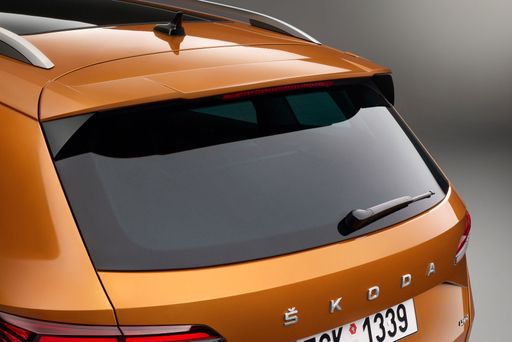
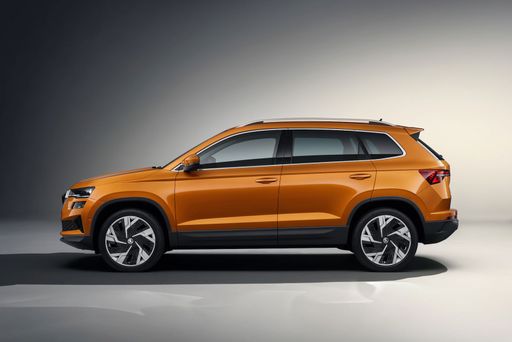
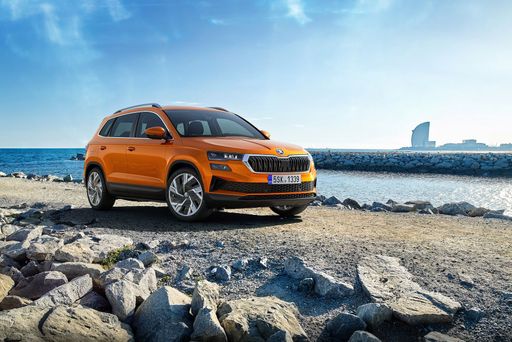
The Skoda Karoq and the VW T-Roc aim at the same family-friendly sweet spot, but they go about it differently. Think of the Karoq as the pragmatic one: big on space, clear to use, and soothing on long trips. The T-Roc feels more premium and tech-forward, with a quieter cabin ambience and a slicker showroom appeal. Powertrains underline the split too—Karoq leans on straightforward petrol and efficient diesel options, while the T-Roc focuses on hybridised petrol with DSG. This Skoda Karoq VS VW T-Roc comparison makes those everyday differences tangible so you can pick by how you actually live, not just by a spec sheet.
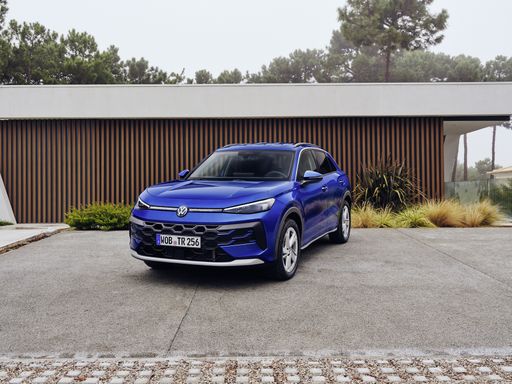
Karoq

Cabin feel and perceived quality

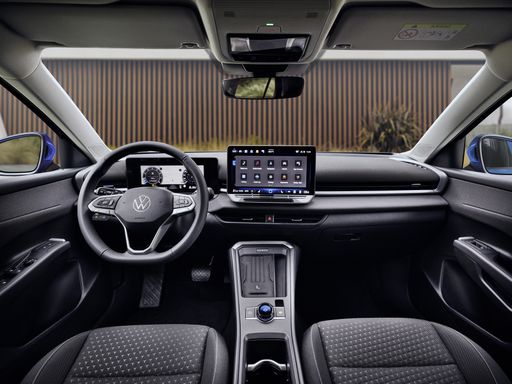
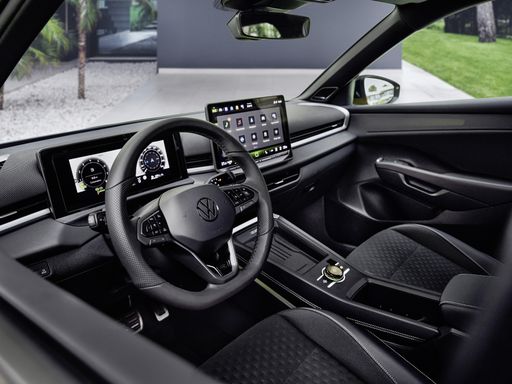
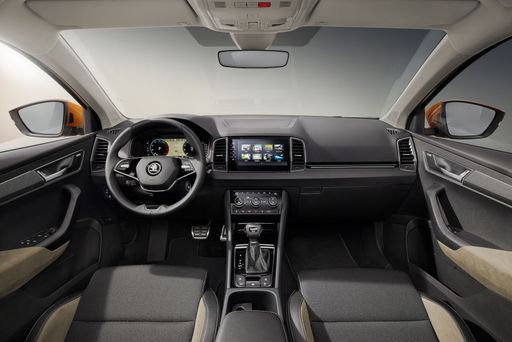
The VW T-Roc greets you with richer materials, a more modern design vibe and a noticeably hushed atmosphere, especially at a cruise. The Skoda Karoq counters with simple, logical controls that reduce distraction and a generally sturdier, no-nonsense feel, even if some lower plastics are plainer. Infotainment approaches differ: the Karoq’s menus are easy to grasp and quick to operate, while the T-Roc’s bigger, sharper system looks smarter but its touch sliders and rotary controller take acclimatisation. If you value plush touchpoints and an “almost‑Tiguan” impression, the T-Roc plays to that taste. If you want clarity-first ergonomics that just work, the Karoq feels more at home.

T-Roc

Ride comfort and motorway manners

Both settle into long journeys well, but the Skoda Karoq has that relaxed, quietly confident gait that makes miles melt away. The VW T-Roc is also composed and quiet, and its optional adaptive damping can broaden the comfort window if your routes vary. Wheel choice matters on both; go sensible on rim size and they ride with more polish, go oversized and you’ll feel more thump over sharp edges. In performance feel, the Karoq’s stronger engine options give easier overtakes when loaded or on inclines. The T-Roc’s mild-hybrid setup is smooth and easygoing, better for calm cruising than spur-of-the-moment bursts.

Karoq

Space, practicality and family usability

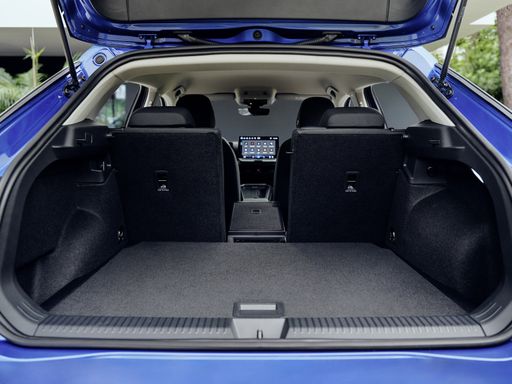
The Skoda Karoq majors on usable space: a big, square boot, handy hooks and nets, and the optional VarioFlex rear seats that turn family chaos into order. That flexibility—sliding, folding, even removing seats—makes the Karoq an everyday load wizard. The VW T-Roc’s boot is a healthy size with a variable floor and a smart 40:20:40 split for skis or pushchairs, but it lacks a sliding bench and can leave an inner lip with the floor set low. Day to day, the Karoq simply swallows more and adapts more. If you carry dogs, bikes or DIY gear, the Karoq feels purpose-built; if you mostly juggle people plus occasional long items, the T-Roc’s layout is neat and fuss-free.

T-Roc

City friendliness and easy living

The Skoda Karoq is a stress reducer in town: good outward visibility, light controls and straightforward camera assistance take the edge off tight car parks. The VW T-Roc feels equally compact from behind the wheel and its steering is delightfully light, though the rising window line and chunky rear pillars mean you’ll rely on cameras more often. The T-Roc’s DSG can hesitate if you jab the throttle in stop‑and‑go; the Karoq’s simple, consistent control layout and clear sightlines make low‑speed manoeuvres feel natural. For frequent parallel parking and school runs with big bags, the Karoq is the easier tool. For darting through gaps and feeling tidy in traffic, the T-Roc has a slightly nimbler vibe.

Karoq

Costs, tech choices and buyer fit

Pricing strategies differ: the VW T-Roc often entices with a strong safety and tech story but climbs quickly with options, while the Skoda Karoq delivers big-value usability yet charges extra for its smartest practicality features. Efficiency splits by use case—on long runs the Karoq, especially as a diesel, tends to sip less, whereas the T-Roc’s mild-hybrid shines more in mixed or urban driving but isn’t a motorway marvel. Drivetrain choice is also a decider: the Karoq’s broader engine lineup and tow friendliness suit caravans, trailers and heavy holiday loads; the T-Roc’s hybridised, DSG-only approach suits buyers who want smooth simplicity and modern assistance. Choose the Karoq if space, calm long-haul comfort and fuss-free controls top your list. Choose the T-Roc if you prioritise a posher cabin feel, up-to-date driver aids and an easygoing hybrid character—then dive into the technical comparison to lock in which one truly matches your routine.

Here’s where it gets real: The technical differences in detail

T-Roc

Costs and Efficiency:

Price and efficiency are often the first things buyers look at. Here it becomes clear which model has the long-term edge – whether at the pump, the plug, or in purchase price.

VW T-Roc is slightly cheaper – starting at 26,400 £ , while the Skoda Karoq costs 29,100 £ . That’s a price difference of around 2,644 £.

Fuel consumption also shows a difference: the Skoda Karoq uses 4.9 L/100km and is a bit more efficient than the VW T-Roc with 5.5 L/100km. The difference is about 0.6 L/100km.

Karoq

Engine and Performance:

Power, torque and acceleration say a lot about how a car feels on the road. This is where you see which model delivers more driving dynamics.

When it comes to engine power, the Skoda Karoq offers noticeably more power – delivering 190 HP compared to 150 HP. That’s roughly 40 HP more horsepower.

When accelerating from 0 to 100 km/h, the Skoda Karoq is visibly quicker – completing the sprint in 7 s, while the VW T-Roc takes 8.9 s. That’s about 1.9 s quicker.

There’s also a difference in torque: the Skoda Karoq delivers noticeably more torque with 360 Nm compared to 250 Nm. That’s about 110 Nm more.

T-Roc

Space and Everyday Use:

Cabin size, boot volume and payload all play a role in everyday practicality. Here, comfort and flexibility make the difference.

Both vehicles offer seating for 5 people.

In terms of curb weight, Skoda Karoq is barely lighter – 1,380 kg compared to 1,465 kg. The difference is around 85 kg.

Looking at boot space, the Skoda Karoq offers barely more boot space – 521 L compared to 475 L. That’s a difference of about 46 L.

When it comes to payload, the Skoda Karoq carries barely more – 549 kg compared to 515 kg. That’s a difference of about 34 kg.

Who wins the race in the data check?

The Skoda Karoq holds a decisive overall lead in the objective data comparison.
This result only shows which model scores more points on paper – not which of the two cars feels right for you.

from £29,100
Karoq

Skoda Karoq

  • Engine Type Petrol, Diesel
  • Transmission Manuel, Automatic
  • Drive Type Front-Wheel Drive, All-Wheel Drive
  • Power HP 115 - 190 HP
  • Consumption L/100km 4.9 - 7.6 L/100km
VW T-Roc
Skoda Karoq

Costs and Consumption

View detailed analysis

Engine and Performance

View detailed analysis

Dimensions and Body

View detailed analysis

VW T-Roc

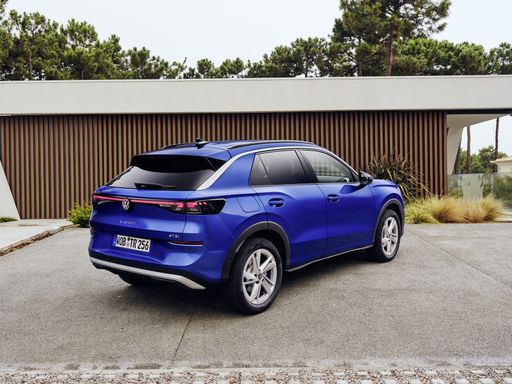
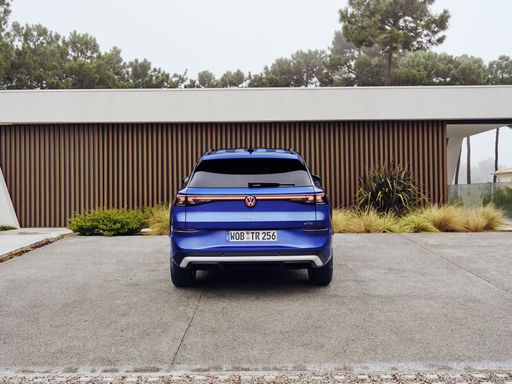
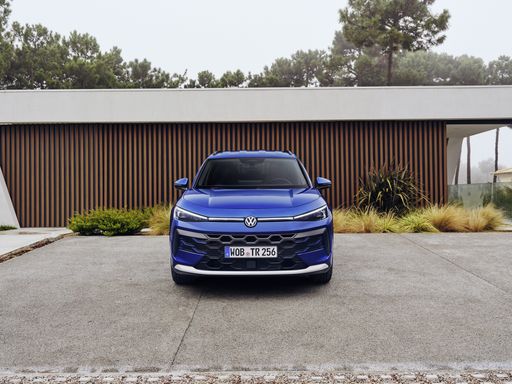
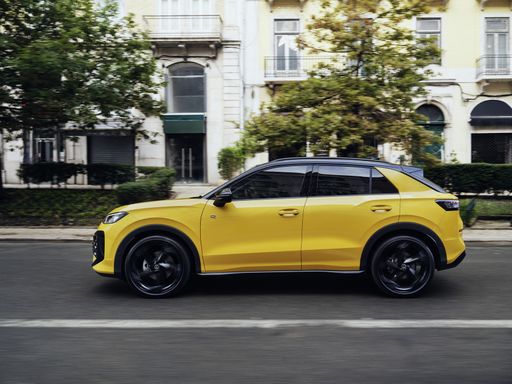
The Volkswagen T‑Roc is a stylish, well-proportioned crossover that blends hatchback agility with SUV presence. It delivers a comfortable cabin, user-friendly tech and a composed ride, making it a sensible choice for buyers who want practicality with a bit of character.

details

Skoda Karoq

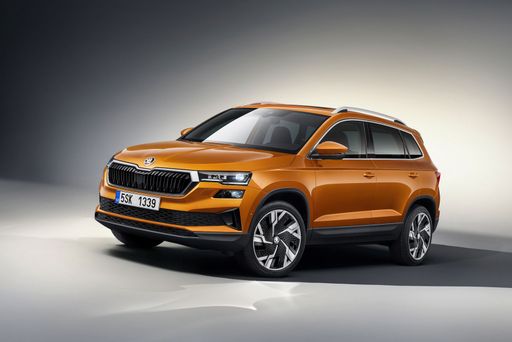
Skoda Karoq is a smartly packaged compact SUV that balances practical family-friendly space with composed handling, making daily drives feel easy and assured. Its straightforward design, roomy cabin with clever storage solutions, and sensible equipment make it a strong choice for buyers seeking value and versatility without fuss.

details
VW T-Roc
Skoda Karoq

Costs and Consumption

Price
26,400 - 38,600 £
Price
29,100 - 41,700 £
Consumption L/100km
5.5 - 6.3 L/100km
Consumption L/100km
4.9 - 7.6 L/100km
Consumption kWh/100km
-
Consumption kWh/100km
-
Electric Range
-
Electric Range
-
Battery Capacity
-
Battery Capacity
-
co2
126 - 143 g/km
co2
128 - 173 g/km
Fuel tank capacity
-
Fuel tank capacity
-

Dimensions and Body

Body Type
SUV
Body Type
SUV
Seats
4 - 5
Seats
5
Doors
-
Doors
-
Curb weight
1,465 - 1,539 kg
Curb weight
1,380 - 1,655 kg
Trunk capacity
284 - 475 L
Trunk capacity
521 L
Length
-
Length
-
Width
1,811 - 1,828 mm
Width
1,841 mm
Height
-
Height
-
Max trunk capacity
-
Max trunk capacity
-
Payload
368 - 515 kg
Payload
456 - 549 kg

Engine and Performance

Engine Type
Petrol, Petrol MHEV
Engine Type
Petrol, Diesel
Transmission
Manuel, Automatic
Transmission
Manuel, Automatic
Transmission Detail
Manual Gearbox, Dual-Clutch Automatic
Transmission Detail
Manual Gearbox, Dual-Clutch Automatic
Drive Type
Front-Wheel Drive
Drive Type
Front-Wheel Drive, All-Wheel Drive
Power HP
115 - 150 HP
Power HP
115 - 190 HP
Acceleration 0-100km/h
8.9 - 12.3 s
Acceleration 0-100km/h
7 - 11.2 s
Max Speed
-
Max Speed
-
Torque
200 - 250 Nm
Torque
200 - 360 Nm
Number of Cylinders
3 - 4
Number of Cylinders
3 - 4
Power kW
85 - 110 kW
Power kW
85 - 140 kW
Engine capacity
999 - 1,498 cm3
Engine capacity
999 - 1,984 cm3

General

Model Year
2,024 - 2,025
Model Year
2025
CO2 Efficiency Class
E, D
CO2 Efficiency Class
D, E, F
Brand
VW
Brand
Skoda
DriveDuel uses data analysis and artificial intelligence to evaluate vehicle data and create content. Content is regularly reviewed and improved. The displayed prices are estimates based on German list prices, adjusted to the respective country’s VAT. Country-specific registration taxes are not included. This information is not legally binding.