VS

VW T-Roc vs Volvo XC40 comparison

Compare performance (150 HP vs 197 HP), boot space and price (26,400 £ vs 36,800 £ ) at a glance. Find out which car is the better choice for you – VW T-Roc or Volvo XC40?

VW T-Roc vs Volvo XC40: Key differences

VW T-Roc

4.7 (4 Reviews)
rate
  • clearly cheaper
  • slightly more efficient
  • somewhat lighter

Volvo XC40

5 (4 Reviews)
rate
  • visibly more power
  • slightly quicker 0–100 km/h
  • clearly more trunk space

All details on performance, efficiency, range and trunk space can be found in the technical comparison below – including user reviews for both models.

T-Roc

First Look: Scandinavian Calm vs. Continental Zing

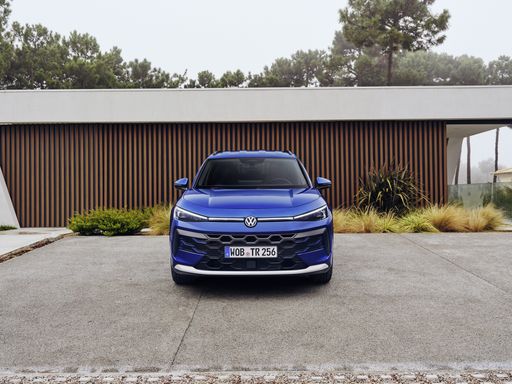
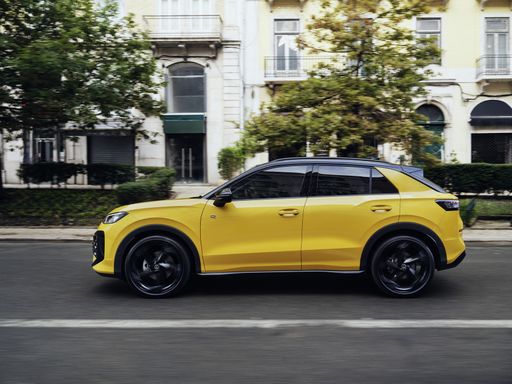
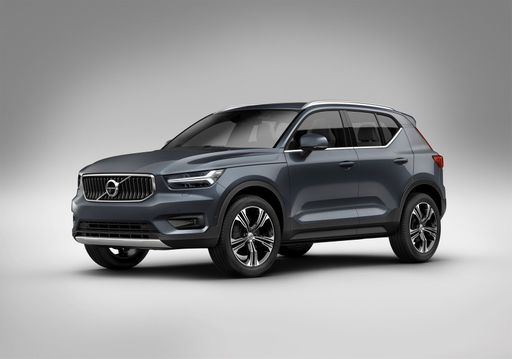
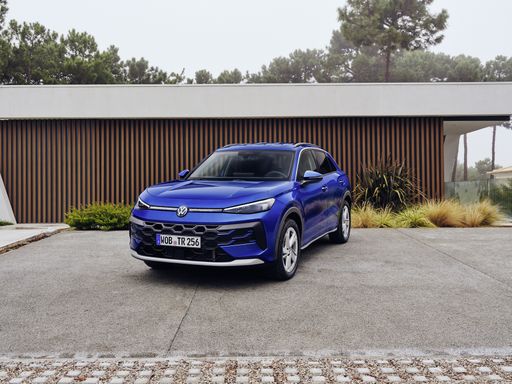
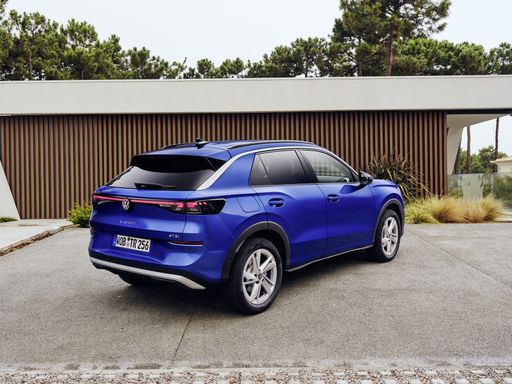
The moment you walk up to the two, you get two very different promises — the Volvo XC40 presents itself with a quiet, understated confidence, while the VW T‑Roc trades subtlety for a cheeky, more expressive stance. Materials and finishes feel deliberately different: one leans toward premium restraint, the other toward youthful, urban energy. That contrast sets the tone for buyers who care more about cultivated presence versus playful character.
XC40

City Living: Nimbleness and Everyday Sense

In tight urban environments the T‑Roc shows its strengths with a perky, easy-going nature that makes threading through traffic and parking feel less of a chore, whereas the XC40 rewards you with a steadier, more assured ride that soaks up city irregularities without fuss. Visibility and ergonomics are tuned for different priorities — one favors rapid, confident moves, the other prioritizes a calmer, more composed approach to daily driving. Both are practical for town life, but they suit slightly different temperaments behind the wheel.

T-Roc

Long Drives: Comfort That Keeps You Going

On long stretches the XC40 leans into comfort with seats and suspension that encourage relaxed miles and a cabin mood that resists fatigue, while the T‑Roc keeps things a touch livelier, which can be engaging or tiring depending on how you like to cruise. Noise insulation and body composure underline the XC40’s focus on serene travel, while the T‑Roc’s firmer setup rewards drivers who prefer more direct feedback. Pick the one that complements your touring style rather than your headline stat sheet.

XC40

Cabin Life: Everyday Practicality and Usability

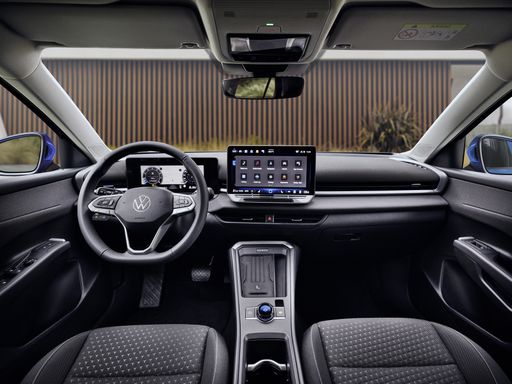
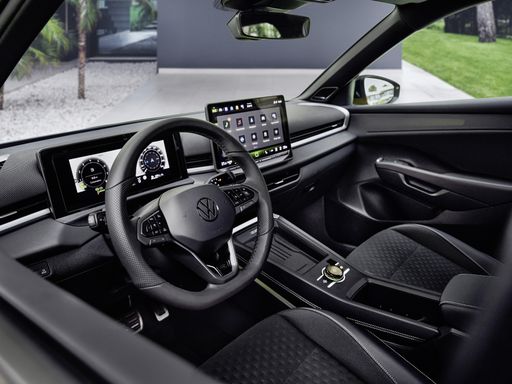
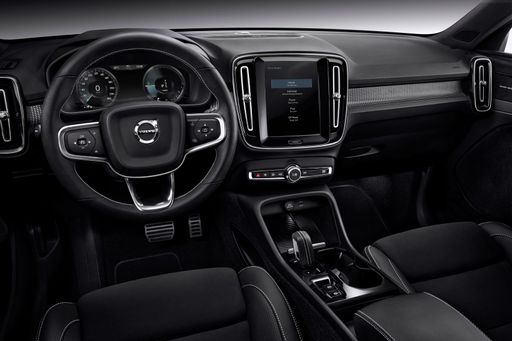
Both cabins are built with real-life use in mind, but they solve everyday tasks differently: the XC40 favors thoughtful, minimalist storage and a calm control layout, while the T‑Roc mixes clever cubbies with a more conventional, user-friendly switchgear approach. Infotainment and interface logic feel intuitive in their own ways — one asks you to slow down and appreciate the design, the other gets you up and running with minimal fuss. For families and commuters, the decision will come down to how you prefer to interact with the car day in, day out.

T-Roc

Behind the Wheel: Poise Versus Playfulness

Drive the XC40 and you’ll notice a composed, confidence-inspiring temperament that encourages relaxed progress without drama; the T‑Roc answers with a lighter, more reactive personality that makes city corners feel like opportunities rather than chores. Steering and suspension tuning highlight those differences rather than contradict them, so the experience really becomes a matter of taste. Both are competent, but they reward different styles of driving pleasure.

XC40

Value, Ownership and Who It Suits

Perceived quality, running sensibilities and standard spec levels shape each car’s appeal: the Volvo leans toward buyers who prize refinement and a polished ownership feel, while the T‑Roc will attract shoppers who want a sprightly, sensible package that slots neatly into everyday life. Consider who you are — daily commuter, style-conscious urbanite, or family ferry — and the purchase rationale becomes clearer. Either way, both offer sensible packages that deserve consideration on their own terms.

T-Roc

Ask Yourself: Which One Matches Your Life?

If you prize serene refinement and a calm long-distance companion, your instincts will pull one way; if you crave a chirpier, more extroverted companion for city life, you’ll head the other. Neither is an obvious misfit in normal family or commuter roles, but their personalities are distinct enough that preference matters more than specs. Keep reading to see how our judges scored them — the DriveDuel Champion will be revealed afterwards.

Here’s where it gets real: The technical differences in detail

T-Roc

Costs and Efficiency:

Price and efficiency are key factors when choosing a car – and this is often where the real differences emerge.

VW T-Roc is clearly cheaper – starting at 26,400 £ , while the Volvo XC40 costs 36,800 £ . That’s a price difference of around 10,324 £.

Fuel consumption also shows a difference: the VW T-Roc uses 5.5 L/100km and is slightly more efficient than the Volvo XC40 with 6.5 L/100km. The difference is about 1 L/100km.

XC40

Engine and Performance:

Power, torque and acceleration say a lot about how a car feels on the road. This is where you see which model delivers more driving dynamics.

When it comes to engine power, the Volvo XC40 offers visibly more power – delivering 197 HP compared to 150 HP. That’s roughly 47 HP more horsepower.

When accelerating from 0 to 100 km/h, the Volvo XC40 is slightly quicker – completing the sprint in 7.6 s, while the VW T-Roc takes 8.9 s. That’s about 1.3 s quicker.

There’s also a difference in torque: the Volvo XC40 delivers a bit more torque with 300 Nm compared to 250 Nm. That’s about 50 Nm more.

T-Roc

Space and Everyday Use:

Cabin size, boot volume and payload all play a role in everyday practicality. Here, comfort and flexibility make the difference.

Both vehicles offer seating for 5 people.

In terms of curb weight, VW T-Roc is somewhat lighter – 1,465 kg compared to 1,688 kg. The difference is around 223 kg.

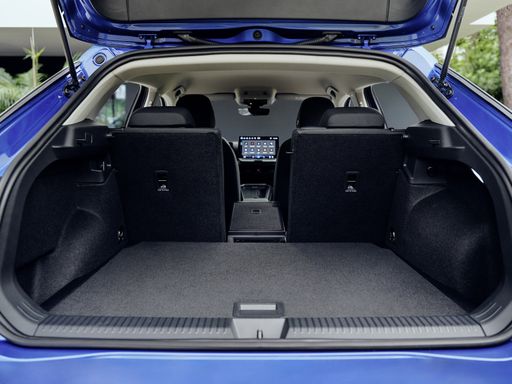
Looking at boot space, the Volvo XC40 offers clearly more boot space – 452 L compared to 284 L. That’s a difference of about 168 L.

When it comes to payload, the Volvo XC40 carries marginally more – 532 kg compared to 515 kg. That’s a difference of about 17 kg.

Who wins the race in the data check?

The Volvo XC40 comes out clearly ahead in the objective data comparison.
This result only shows which model scores more points on paper – not which of the two cars feels right for you.

from £36,800
XC40

Volvo XC40

  • Engine Type : Petrol MHEV
  • Transmission : Automatic
  • Drive Type : Front-Wheel Drive
  • Power HP : 163 - 197 HP
  • Consumption L/100km : 6.5 L/100km
VW T-Roc
Volvo XC40

Costs and Consumption

View detailed analysis

Engine and Performance

View detailed analysis

Dimensions and Body

View detailed analysis

VW T-Roc

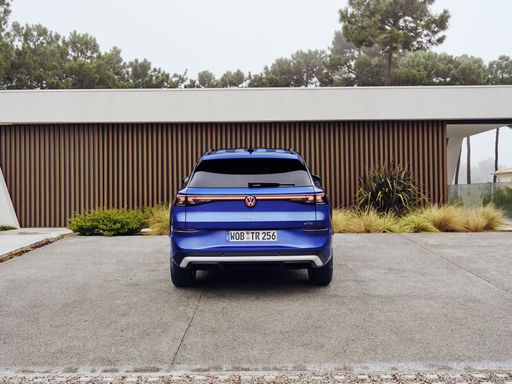
The VW T-Roc mixes cheeky, coupe-like styling with the everyday sense and space of an SUV, so it looks fun without sacrificing family sense. It’s a likeable all-rounder with tidy road manners and plenty of personality, ideal if you want a car that’s practical enough for chores but entertaining enough to enjoy.

details

Volvo XC40

The Volvo XC40 wraps Scandinavian minimalism into a compact, city-ready SUV with a premium cabin that feels both practical and grown-up. It will suit buyers who prize safety, clever storage and a composed ride, proving that small dimensions don't mean small personality.

details
VW T-Roc
Volvo XC40

Costs and Consumption

Price
26,400 - 38,600 £
Price
36,800 - 47,200 £
Consumption L/100km
5.5 - 6.3 L/100km
Consumption L/100km
6.5 L/100km
Consumption kWh/100km
-
Consumption kWh/100km
-
Electric Range
-
Electric Range
-
Battery Capacity
-
Battery Capacity
-
co2
126 - 143 g/km
co2
147 - 148 g/km
Fuel tank capacity
-
Fuel tank capacity
54 L

Dimensions and Body

Body Type
SUV
Body Type
SUV
Seats
4 - 5
Seats
5
Doors
-
Doors
5
Curb weight
1,465 - 1,539 kg
Curb weight
1,688 kg
Trunk capacity
284 L
Trunk capacity
452 L
Length
-
Length
4,425 mm
Width
1,811 - 1,828 mm
Width
1,863 mm
Height
-
Height
1,652 mm
Max trunk capacity
-
Max trunk capacity
1,328 L
Payload
368 - 515 kg
Payload
532 kg

Engine and Performance

Engine Type
Petrol, Petrol MHEV
Engine Type
Petrol MHEV
Transmission
Manuel, Automatic
Transmission
Automatic
Transmission Detail
Manual Gearbox, Dual-Clutch Automatic
Transmission Detail
Dual-Clutch Automatic
Drive Type
Front-Wheel Drive
Drive Type
Front-Wheel Drive
Power HP
115 - 150 HP
Power HP
163 - 197 HP
Acceleration 0-100km/h
8.9 - 12.3 s
Acceleration 0-100km/h
7.6 - 8.6 s
Max Speed
-
Max Speed
180 km/h
Torque
200 - 250 Nm
Torque
265 - 300 Nm
Number of Cylinders
3 - 4
Number of Cylinders
4
Power kW
85 - 110 kW
Power kW
120 - 145 kW
Engine capacity
999 - 1,498 cm3
Engine capacity
1,969 cm3

General

Model Year
2,024 - 2,025
Model Year
2,024
CO2 Efficiency Class
E, D
CO2 Efficiency Class
E
Brand
VW
Brand
Volvo
DriveDuel uses data analysis and artificial intelligence to evaluate vehicle data and create content. Content is regularly reviewed and improved. The displayed prices are estimates based on German list prices, adjusted to the respective country’s VAT. Country-specific registration taxes are not included. This information is not legally binding.